

How Custom VAPT strategies can help attain Cybersecurity and ensure Compliance for Saudi startups and enterprises?
About 73% of Saudi Arabian businesses have experienced at least one cyberattack in 2024. This statistic is enough to highlight how critical it has become to carry out VAPT (Vulnerability Assessment and Penetration Testing).
No matter what you are as a business (startup or an established firm), know that your cybersecurity needs are unique. This is because the one-size-fits-all VAPT model no longer works in Saudi Arabia’s diverse business environment.
Navigating complex regulatory frameworks while protecting your digital assets is where the true challenge lies. And Saudi Arabia is significantly strict when it comes to following its NCA (National Cybersecurity Authority) guidelines, SAMA (Saudi Arabian Monetary Authority) requirements, and PDPL (Personal Data Protection Law).
These don’t end there. Businesses must also consider cultural factors, say managing Islamic finance compliance and operations during Ramadan. This guide explores how businesses from those in NEOM’s futuristic enterprises to traditional companies in Mecca’s commercial sectors can implement VAPT strategies tailored to their size, industry, and regulatory needs.
What is VAPT and how it helps improve cybersecurity for Saudi Business Leaders?
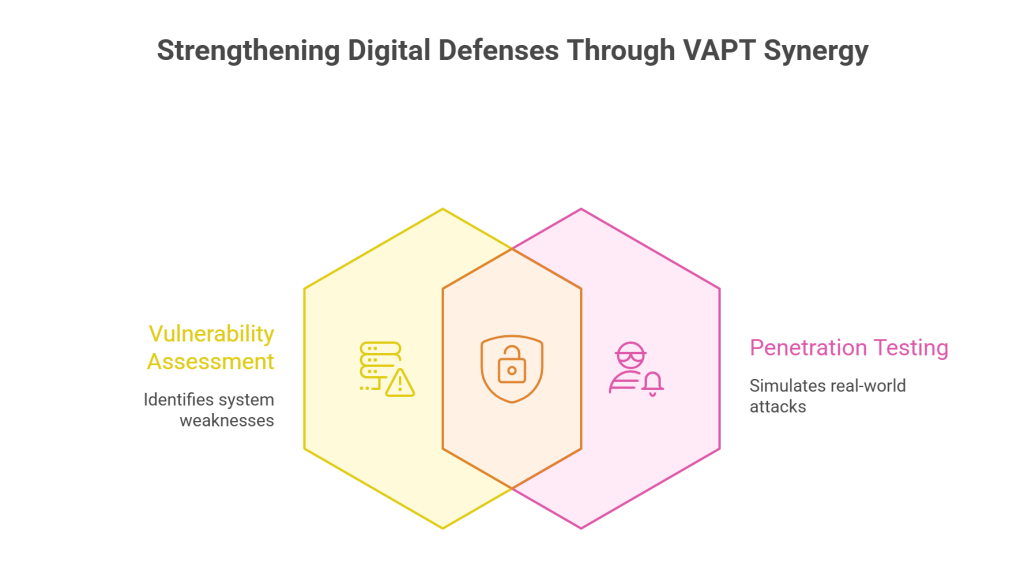
VAPT is like having a professional security consultant test every lock, window, and door in your building, but for your digital infrastructure.
- Vulnerability Assessment: Identifies every potential flaw in your defenses, i.e., outdated software, misconfigured servers, etc.
- Penetration Testing: A “fire drill,” in which cybersecurity professionals engage in, thinking like real-world hackers to simulate attacks. and ensure that your defenses can handle pressure.
VAPT is crucial for Saudi businesses, for it drives digital transformation under Vision 2030. Since the latter covers investments in smart cities like NEOM and The Red Sea Project, these can significantly expand the cyberattack surface.
Also, with ransomware attacks surging to 43%, explicitly targeting Saudi businesses in 2024, the cybersecurity market is further expected to reach $6.65 billion by 2029.
Want to know what PDPL, SAMA, and SDAIA compliance encompass in this regard? Here’s a breakdown.
- PDPL Compliance: Needed for businesses exclusively processing personal data.
- SAMA Regulations: Focus on regular security assessments for financial institutions.
- Saudi Data & AI Authority (SDAIA): Necessitates “appropriate technical and organizational measures” to protect personal data.
Complying with the above regulations strictly mandate ensuring full-fledged security. VAPT is the word, for it’s more of a regulatory necessity than being just a best practice.
What You Should Know About Industry-Specific Saudi VAPT Compliance?
Regulatory requirements are sector (industry)-specific in Saudi Arabia. You’ve SAMA-regulated financial services, which require you to conduct
- Quarterly vulnerability assessments
- Annual penetration tests
- Install real-time monitoring systems
- Maintain Islamic banking compliance.
SAMA applies not only to banks, but also to enterprises providing financial services, such as insurance companies, fintech startups, and investment firms.
If you’re a healthcare provider in Saudi Arabia, VAPT Compliance requires you to:
- Protect patient data
- Secure medical devices
- Abide by other relevant health data regulations in the Kingdom, precisely CBAHI (Central Board for Accreditation of Healthcare Institutions).
Government contractors complying with NCA standards should:
- Strictly consider safeguarding critical infrastructure
- Undertake security clearance-level assessments
- Consider government network integration testing that also applies to defense contractors, public utilities, and telecommunication..
For E-commerce and retail sector, prioritize:
- Securing payment gateways
- Protect customer data
- Ensure compliance with cross-border data transfers
- Enhance data security during Ramadan shopping peaks
Implementing Custom VAPT Strategies for Saudi Businesses
Regardless of who you’re serving, building trust is what counts, and that comes with securing your clients’ data without any compromise.
To implement VAPT in Saudi Arabia, follow these five steps:
Step 1 : Saudi Regulatory Compliance Assessment (2-3 weeks)
Involves identifying applicable regulations (NCA, SAMA, PDPL), documenting data processing activities, reviewing Vision 2030 requirements, and assessing Arabic language compliance.
Step 2 : Business Context Analysis (1-2 weeks)
Considers factors like geographic operations, cultural practices (e.g., Ramadan), and international connections.

Step 3 : Risk-Based Scope Definition (1 week)
Prioritizes testing based on critical infrastructure, customer-facing systems, financial systems, and third-party integrations.
Step 4 : Customized Testing Execution (2-8 weeks)
Tests during peak business hours to identify and mitigate regional threats. Also ensures Arabic system security and validates local compliance.
Step 5 : Reporting and Remediation to meet Saudi-Specific Compliance (2-4 weeks)
Provides actionable results with regulatory mapping, executive summaries in the Arabic language, Vision 2030 alignment, and recommendations for local vendor adherence.
Custom VAPT Strategic Solutions for Startups in Saudi Arabia
Saudi Arabia’s startup ecosystem is thriving. From fintech in Riyadh’s King Abdullah Financial District to sprawling e-commerce platforms, these are impressively transforming the Kingdom into a regional startup hub.
Investing in security with effective and customized VAPT implementation strategies can further add value in these efforts. Look for challenges, such as limited resources and budgets that can otherwise delimit these pursuits though.
Securing both Arabic and English interfaces is also mandatory, combined with securely handling payment processing apps and preventing region-specific cyber threats. These tasks are further challenged when considering Islamic finance options and conserving startup capital.
To address these challenges, you need to adopt VAPT approaches that are not only practical, but are also cost-effective, such as:
Automated vulnerability scanning
Costing 500-1,500 SAR/month for web applications and basic infrastructure, this method covers specific Saudi features like Arabic language scanning and relevant regional compliance requirements.
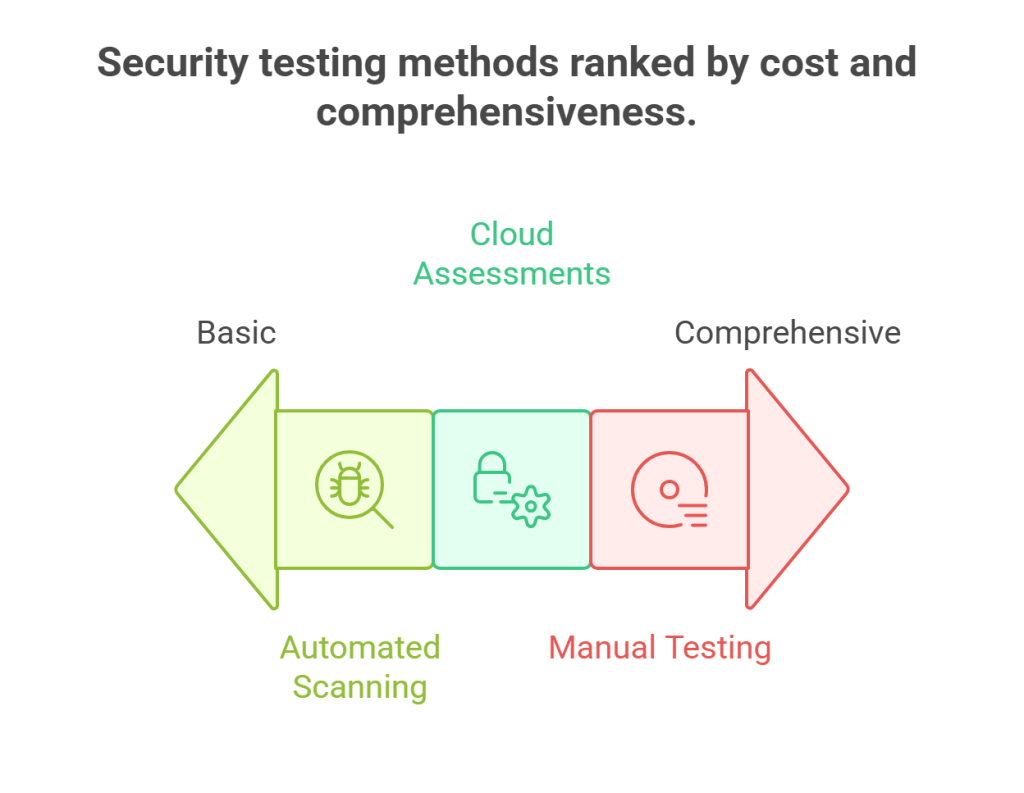
Targeted manual testing
The cost of this security testing procedure ranges 5,000-15,000 SAR/quarter and mainly concerns securing payment systems and data handling. Targeted manual testing is critically required for startups to comply with PDPL, also to ensure Islamic finance compatibility.
Cloud security assessments
Considered essential for protecting AWS, Azure, or Google Cloud configurations and ensuring data residency and cross-border compliance, cost security assessments can cost anywhere from 3,000 to 8,000 SAR biannually.
Case Study of Successful VAPT Implementation by Startups in Saudi
A Riyadh-based e-commerce startup could successfully implement VAPT to secure its web and mobile apps by initially performing automated scanning and later on, manual penetration testing for payment processing apps and data storage platforms.
The company achieved PDPL compliance after investing well over 35,000 SAR. Credit mainly owes to their regular (monthly) automated scans combined with quarterly manual testing, preceded by PDPL compliance audit and remediation. VAPT strategy through these measures remarkably helped them save over 500,000 SAR.
Also Read : Enhancing Compliance with Saudi Arabia’s PDPL: The Role of VAPT in Safeguarding Personal Data
This way, they could finally secure their growth by receiving 5,000+ bulk daily orders, remarkably up from an initial processing of over 1,000 orders daily from the time of their inception.
VAPT Scaling for SMEs to achieve Secure Growth in Saudi Arabia
Small and Medium Enterprises (SMEs) form the backbone of the Kingdom’s economy. As their security needs evolve with their growth, so should their cybersecurity strategy too, by adapting to size and complexity.
This is similar to an expanding office space with growing requirements.
Stage 1: Early Growth (20-50 employees)
From managing multiple office locations to meeting potential industry-specific regulatory requirements, SMEs face considerable challenges.
Since network segmentation and ensuring VPN security are also prime to their operations,
SME obligations don’t stop there. These include cultural considerations by installing multi-city Arabic/English communication systems.
Stage 2: Established SME (50-200 employees)
Infrastructure becomes more complex when ERP systems, third-party vendor security validations, and possible regional expansion require advanced compliance with certifications like ISO 27001.
The SME VAPT Maturity Model scales security strategies as businesses grow. Let’s now see how.
- Level 1: Foundation (2,000-5,000 SAR monthly): SMEs conduct quarterly vulnerability scans, annual penetration tests, and basic PDPL compliance assessments.
- Level 2: Growth (5,000-12,000 SAR monthly): Includes monthly automated scanning, quarterly manual testing, and assessing network segmentation with regional threat intelligence integration.
- Level 3: Maturity (12,000-25,000 SAR monthly): Ongoing vulnerability monitoring, performing bi-annual penetration testing, and red team exercises to improve incident response.
With SAMA (Saudi Arabian Monetary Authority) setting cybersecurity requirements for SMEs operating in the financial sector, these are expected to scale with their assets.
- Tier 1 Financial SMEs (assets <1 billion SAR): Undertake a basic cybersecurity framework Implementation, conduct annual assessments, report incidents to SAMA, and ensure customer data protection.
- Tier 2 Financial SMEs (assets 1-10 billion SAR): Enhance cybersecurity frameworks, run security tests bi-annual, real-time threat monitoring, and improve business continuity.
SMEs should seek expert guidance on legal and regulatory compliance by consulting with SAMA publications and legal counsel.
Comprehensive Security and Enterprise VAPT Excellence for Large-Scale Saudi Businesses
Cybersecurity challenges increase in complexity as organizations grow. This is no exception for Saudi-based large enterprises, especially those supporting Vision 2030 (SABIC facilities, major banks, and government contractors) face complex cybersecurity challenges.
Since these organizations often operate across multiple cities, regions, and countries, multiple regulatory jurisdictions, cultural and linguistic diversity, Islamic business practices, and critical infrastructure adaptation can significantly complicate efforts to retain security.
Addressing these challenges effectively definitely mandates adopting advanced VAPT methodologies such as:
- Multi-Vector Threat Simulations that mimic external attacks, attempt Saudi-specific social engineering, assess physical security, simulate supply chain attacks, test lateral movements, and evaluate privileged access.
- Continuous security validation by undertaking real-time threat simulations, purple team exercises, automated testing of critical systems, and VAPT findings-integrated threat hunting.
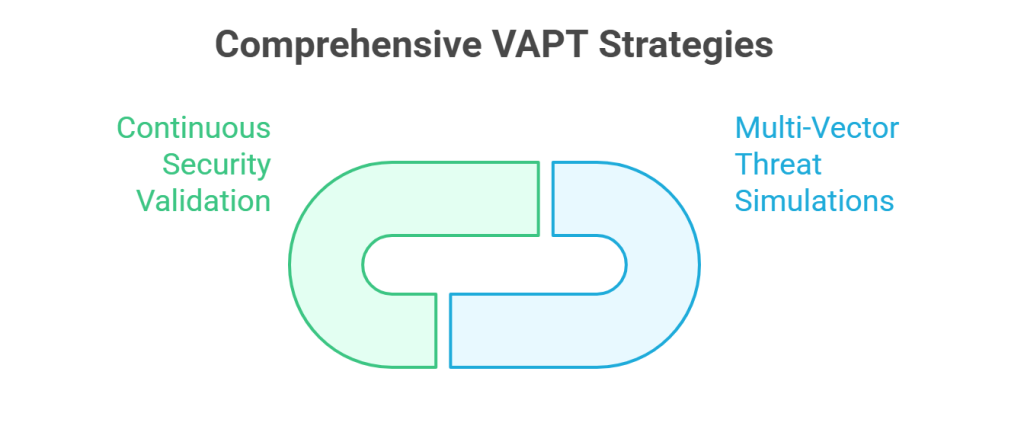
Additionally, you have Regulatory Compliance at Scale that necessitates integrating multi-framework compliance into NCA, SAMA, PDPL, ISO 27001, NIST, and Vision 2030 alignment.
The Enterprise VAPT Implementation Timeline
- Phase 1 (Months 1-3): Involves asset inventory, regulatory mapping, and landscape analysis.
- Phase 2 (Months 4-8): includes advanced testing like red team engagements and supply chain assessments.
- Phase 3 (Months 9-12 and ongoing): Continuous improvement, quarterly assessments, and Vision 2030-aligned strategic reviews.
An enterprise-specific case study of a Saudi Healthcare Network highlights the benefits of VAPT undertakings. The network, with facilities in Riyadh, Jeddah, and Dammam, faced innumerable PDPL compliance challenges.
The VAPT strategy covered a 3-month comprehensive baseline assessment that included:
- Medical device security testing
- Patient data flow analysis
- Cross-facility data sharing validation
- Arabic language system testing
These resulted in a 97% reduction in vulnerabilities with full PDPL compliance, zero patient data incidents, and preventing about a 15+ million SAR in potential breach costs.
All the above instances clearly suggest implementing customized VAPT strategies for businesses across industries can effectively help secure their processes while maintaining compliance.
Regional Success Stories of Startups Implementing VAPT Strategies
How Fintech Startups Group Cut Security Costs Through VAPT Implementation across Saudi Arabia?
A group of 15 fintech startups in Riyadh’s King Abdullah Financial District required cost-effective VAPT solutions while ensuring SAMA compliance readiness.
The Solution
Obtained a collaborative VAPT program that shared resources, reducing individual costs by 60%. Group training on Saudi cybersecurity regulations, collective threat intelligence sharing, and standardized compliance documentation all helped these startups achieve baseline security compliance within six months, with cost savings exceeding 2 million SAR annually.
In Jeddah’s Islamic Port, a major import/export company required comprehensive security for complex international data flows and managed Islamic trade finance systems.
The solution comprised VAPT tailored to their needs. These included:
- Port authority system integration security
- Validating Islamic finance platform
- Assessing multi-currency transactions
- Meeting international regulatory compliance requirements.
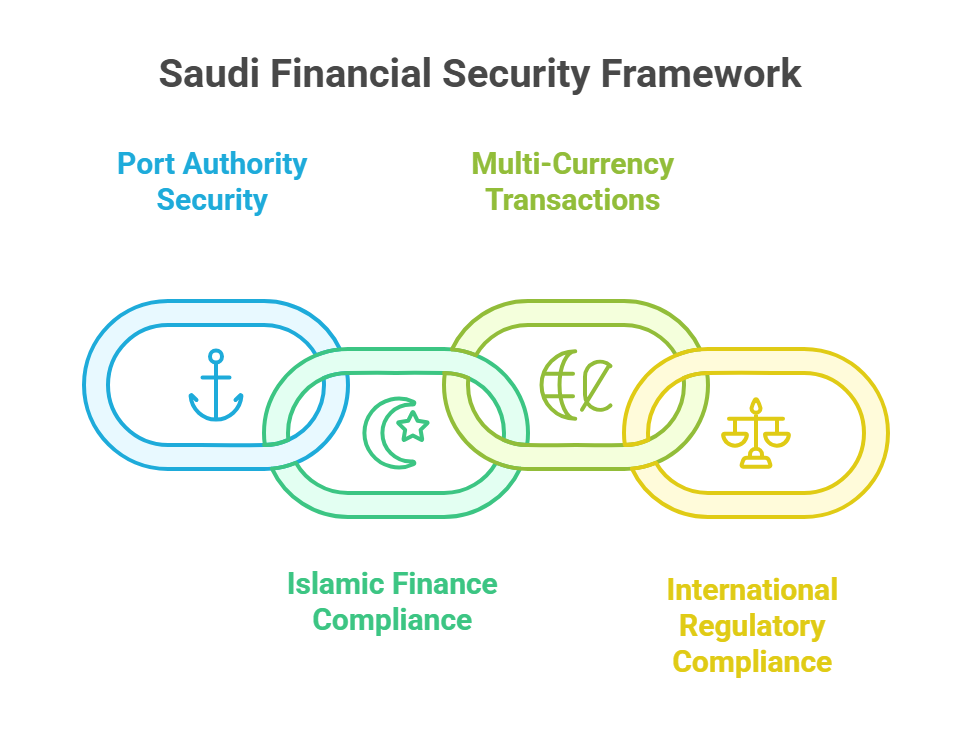
As a result of these efforts, the company could successfully expand to 12 additional countries, maintaining full regulatory compliance and zero security incidents.
A petrochemical manufacturing facility in Al Khobar required an industrial control system (ICS) security testing without any disruption to its 24/7 production. The VAPT approach leveraged non-disruptive testing methodologies for this matter that involved:
- Production environment simulation
- ICS-specific vulnerability assessments
- Supply chain security validation
The result was a prompt identification and remediation of 43 critical vulnerabilities, ensuring compliance with both industrial safety and cybersecurity requirements with zero production disruption.
The Saudi VAPT Provider Selection Guide
Choosing the right VAPT provider for your Saudi Arabian business requires carefully evaluating their regulatory expertise, local market knowledge, and technical standards adopted.
Essential Qualifications for Saudi VAPT Providers
Saudi regulatory expertise: Should assist financial sector clients with the NCA and SAMA compliance frameworks, offer guidance for PDPL implementation, and demonstrate a profound understanding of Vision 2030 alignment.
Also read: SAMA Compliance as a Competitive Advantage: Enhancing Trust and Security in the Financial Sector
Local market knowledge: Be fluent in both Arabic and English languages, display expertise in cultural business practices (Islamic calendar and working hours). Should possess a sound knowledge of threat intelligence specific to Saudi Arabia and MENA.
The provider should also partner effectively with Saudi technology vendors and regulatory bodies.
Technical Excellence is measured by international certifications (CISSP, CEH, OSCP, CISA) and industry-specific expertise in finance, healthcare, and critical government infrastructure.
They should also display advanced testing capabilities, such as red team exercises, IoT security, and cloud security, along with a commitment to provide continuous improvement, updating methodologies, and integrating threat intelligence.
Red Flags to Avoid
- Providers lacking specific Saudi regulatory experience
- Offering generic assessments
- Do not support Arabic communication
- Have no local presence
- Providing unrealistically low pricing.
How to select the Right VAPT Provider in Saudi Arabia?
Before selecting the right VAPT provider for your Saudi business, consider inquiring about their regulatory expertise.
Suggested questions to ask include:
- How many Saudi organizations have you helped achieve PDPL compliance for?
- How fluently can your VAPT Specialists handle both Arabic and English languages?
- What specific testing methodologies do you adopt when helping us achieve industrial and national compliance?
Advanced VAPT Techniques for Saudi Arabia’s Islamic Finance System
Saudi Arabia’s Islamic finance system faces unique cyber threats. This is particularly attributable to its digital innovation goals set against that of Vision 2030 with simultaneously evolving regional operations.
Safeguarding the system has now become highly crucial, given the dominant impact that the KSA (Kingdom of Saudi Arabia) has achieved in the global Islamic finance market.
VAPT strategies should also consider integrating Shariah compliance into Islamic banking systems, i.e., the Sukuk trading platforms, Zakat calculation, and Halal investment screening.
Technical considerations are also mandatory when testing Arabic interfaces, securing Islamic calendar (Hijri) systems, supporting multi-currency transactions, and ensuring regulatory reporting security for the Saudi Arabian Monetary Authority.
While the Vision 2030 Digital Infrastructure Security emphasizes testing smart city implementations, IoT devices, and 5G networks, this should also consider validating digital government services.
Equal consideration should be bestowed on ensuring security for sustainable technology and maintaining global connectivity.
Cross-GCC Security Coordination is essential for Saudi businesses operating in the Gulf Cooperation Council (GCC) region. VAPT strategies must validate multi-jurisdiction regulatory compliance, assess cross-border data transfer security, and incorporate regional threat intelligence.
Incident response coordination capabilities across the GCC and cultural considerations, such as multi-language system testing and regional holiday calendars, should be incorporated as well. Also, consider it crucial to validate local partnership security across the borders.
How KPIs Help Determine Successful VAPT Implementation for Saudi Businesses?
If as a Saudi-based business, you’re keen to implement VAPT successfully, you should simultaneously determine how compliance focused your metrics are in this regard.
You should also consider the impact of these metrics on your business, as well as their success indicators when operating your business in Saudi Arabia.
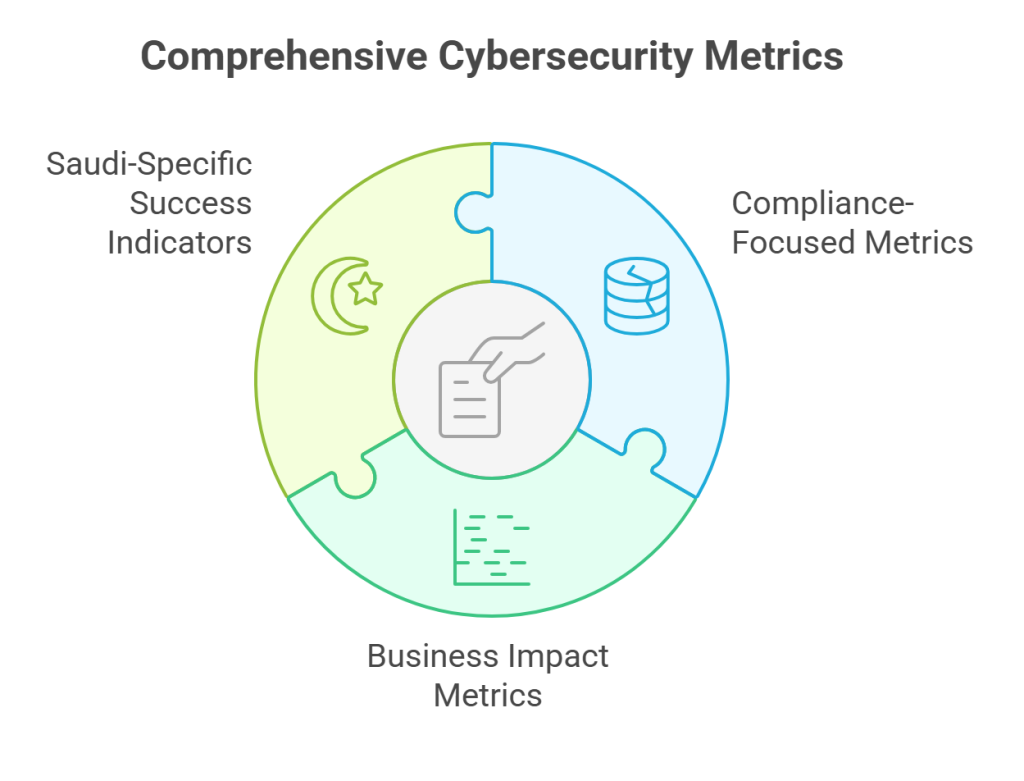
Here’s a quick breakdown of these stated success metrics:
Compliance-Focused Metrics
Know how well you process or handle your customers’ data.
Shows how well you embed data privacy into your systems right from the beginning.
You can detect and resolve security flaws within the minimal time possible to ensure security and compliance.
Your willingness to accurately report security incidents to applicable regulatory authorities depicts you care enough about ensuring data privacy for your customers in the region you operate.
All the above parameters count when integrating cybersecurity for your business continuity.
Business Impact Metrics
Demonstrate operational excellence by integrating strong security metrics like ‘Mean Time to Detect (MTTD), thus preventing costly data breaches and earning trust and credibility.
Improving security awareness by providing security training to employees and third-party vendors to increase security scores.
Saudi-Specific Success Indicators
You demonstrate good cultural integration when you engage in integrating Islamic business practice, Arabic language security testing, and detecting regional threats.
Ensure a threat-resistant regional cybersecurity ecosystem while contributing to Vision 2030 alignment and leadership.
As Saudi Arabia gears up for Vision 2030, adopting a robust VAPT strategy is one you cannot miss to maintain tight security that goes beyond meeting regulatory requirements.
Staying proactive or vigilant is the new normal, which Saudi businesses should adapt to. However, they can only achieve this through ensuring security in every aspect of their operations.
Our comprehensive VAPT implementation guide at Wattlecorp is designed to offer a custom-built VAPT implementation strategy for your business by executing critical security assessments that match your specific needs. In the process, we can also help you ensure continuous improvement and regulatory excellence for you.
In aligning our VAPT efforts with national goals and imbibing local cultural values, you attain a secure business and digital future with capitalized growth opportunities in Saudi Arabia’s fast-evolving economy.
Need help meeting regulatory standards while staying secure in Saudi Arabia? Be rest assured as our team will be there to guide you through the process.
Visit our penetration testing services page and select the range and package that best suits your business needs.
Security is the first step to compliance. Stay protected, stay vigilant, no matter your business size. Book a VAPT assessment.
VAPT strategies for businesses FAQs
1.What is the difference between VAPT and regular security audits in Saudi Arabia?
Through manual penetration testing and automated scans, VAPT tests and strengthens your defenses under simulated attack conditions. Security audits, on the other hand, only tend to verify the presence of security controls. VAPT is crucial for Saudi businesses because it not only assists with meeting regulatory requirements, but also tightens those security controls.
2.How often should different types of Saudi businesses conduct VAPT?
VAPT frequency is based on the severity of risks your company faces in terms of security. It also considers your business size and complexity.
Small businesses should conduct monthly automated scans with quarterly manual testing for high-risk systems.
Medium-sized enterprises need weekly scans and quarterly testing for securing their critical systems.
Larger enterprises require continuous scanning with monthly and quarterly manual testing.
All businesses should conduct VAPT after major system changes or security incidents.
Proactive VAPT assessments help detect and mitigate flaws before these get into the hackers’ hands.
3.Can small Saudi businesses afford comprehensive VAPT services?
Yes, small Saudi businesses can afford VAPT with the right budgeting. For 5,000-15,000 SAR annually, businesses can use automated vulnerability scanning and perform annual manual testing.
Data breach in Saudi Arabia exceeds 500,000 SAR in Saudi Arabia. However, VAPT’s protective shield is valuable and priceless. You cannot expect a smarter investment than this to achieve long-term security.