

Preparing for Data Protection Audits: Leveraging VAPT to Ensure Compliance with DPDPA
Key Takeaways:
- Know why businesses that deal with personal or sensitive data need strong security and DPDPA compliance.
- Explains how a data protection audit forms the base for understanding data flows, risks, and compliance gaps.
- Step-by-step view of building a DPDPA-friendly audit process for your company.
- Security practices we follow to make a defensive environment.
- General mistakes companies make and easy tips to avoid them.
- Explains how to figure out whether your business needs a DPO.
- Guidance on how to choose the best data protection audit providers.
What is the DPDPA of India?
The Digital Personal Data Protection Act (DPDPA), 2023, is India’s data security framework. This act outlines a set of rules for how organizations must collect, store, process, and share the digital personal data of people in India. The country’s Ministry of Electronics and Information Technology introduced the most-awaited finalized version of DPDPA on November 14 this year.
According to the DataQuest report on the final DPDPA compliance rules for 2025, the government has given businesses 18 months to meet the requirements fully. Consent managers need to comply within one year, while rules related to breach reporting and how long data can be stored will roll out gradually over the full 18 months.
The purpose of building this act is to make data handling accountable. It also ensures that individuals can control their personal information, including rights to access, correct the data, erasure, and withdrawal of consent.
Why do businesses in India need a DPDPA audit?
Digitally enabled data of any individual must be protected. For that purpose, every country has its own specified data protection laws and measures, and here in India, it is DPDPA. Some businesses in India might not be aware of whether they are complying with the act. In such a case, audits are crucial, as they help you find gaps before regulators identify them.
Earlier this year, TOI reported that India faced a huge financial loss of ₹22,845.73 crore last year due to evolving cyber fraud. This is also a cue to consider DPDPA adherence. There are also multiple other reasons why your business in India must prioritize data protection audits:
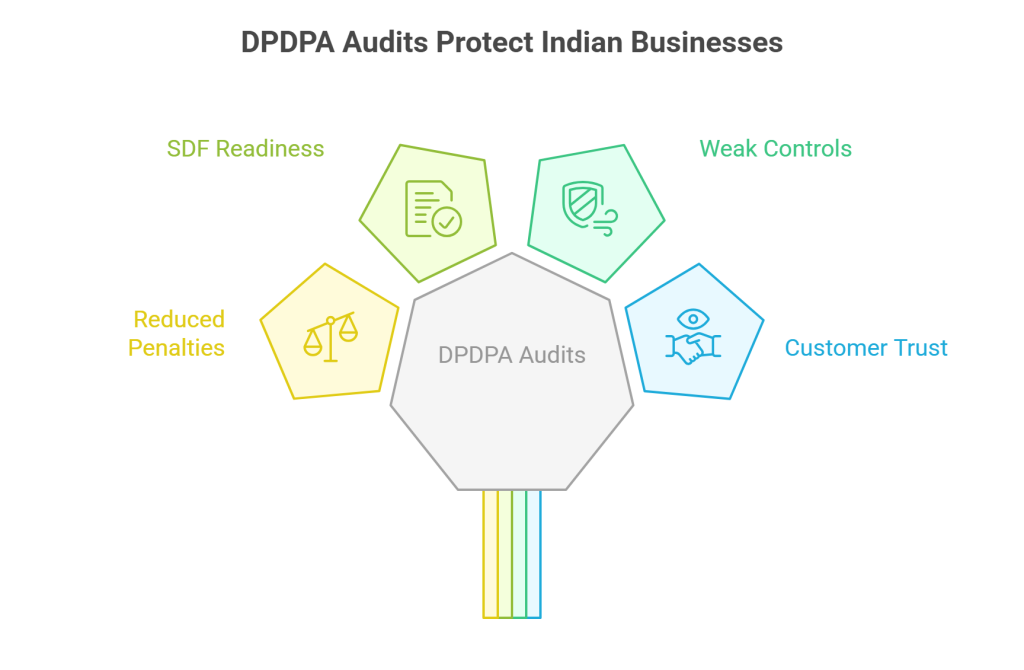
- The DPDPA empowers the regulator to impose significant penalties, like huge fines for security lapses. Getting audited reduces that risk.
- Entities likely to be notified as Significant Data Fiduciaries (SDFs) must perform periodic impact assessments and audits so that proactive auditing demonstrates readiness.
- Doing audits helps in identifying weak controls that lead to breaches.
- Customers, partners, and regulators increasingly demand proof of data-responsible behavior because they are concerned about the safety of their data. Here, audits provide that proof.
Steps to Follow in India to Implement a Data Protection Audit
Governance
Start by preparing a clear governance structure. Assign a senior leader as the audit sponsor and form a cross-functional team that includes members from legal, privacy, IT/security, and business teams. If you think your organization may be classified as an SDF, strengthen this structure and involve the board early.
Data Mapping
Next, map data and identify the need for this audit. Create a data inventory and data flow maps that show where personal data is collected, stored, transmitted, and processed, including third-party processors and cloud services. This inventory serves as a key element in any data protection audit.
Policy Assessment
Conduct a gap analysis against the DPDPA principles. You must consider lawful processing, notice, and consent. There are also other concerns to note, including limitation of purpose, data minimization, rights handling, breach response, and cross-border data transfers under India’s DPDPA. This helps identify weaknesses across compliance and governance practices accomplished.
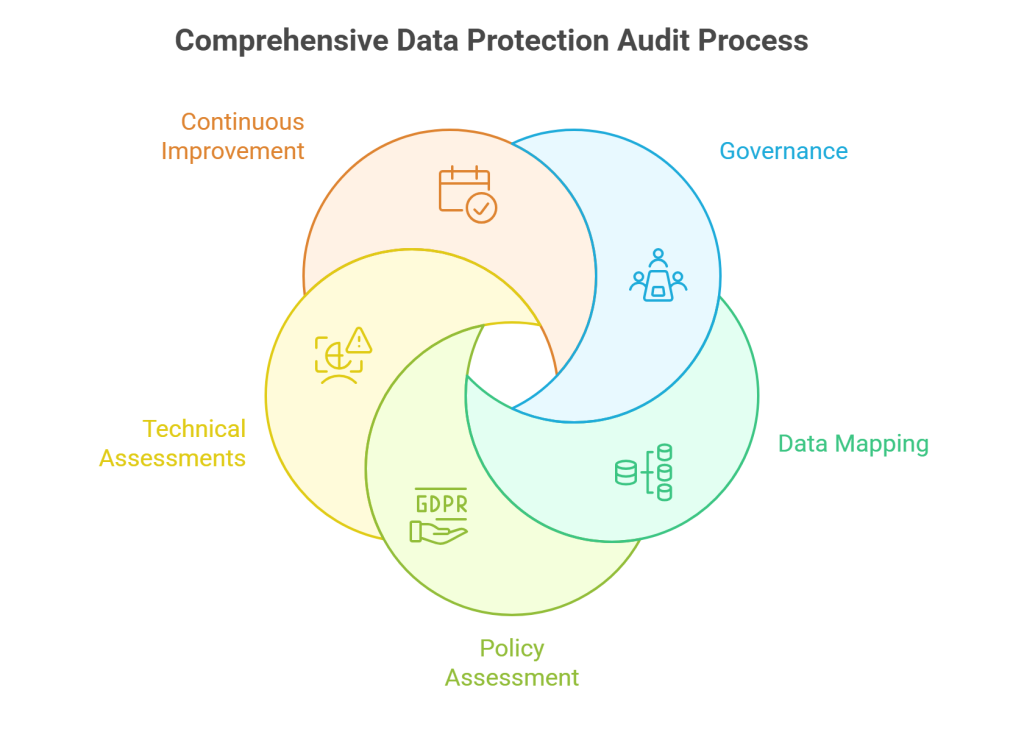
Technical Assessments and Remediation
In addition to the policy reviews, it is important to perform VAPT for your public-facing apps, internal network vulnerability assessments, and secure configuration reviews for cloud and databases. Also conduct Data Protection Impact Assessments for high-risk processing.
Post this process, draft a remediation plan based on the findings and assign clear owners while prioritizing the issues according to the threat impact they pose.
Also Read : The Role of Data Protection Officers in SaaS Companies: A Mandate Under the DPDPA
Continuous Improvement
When this entire process is followed, the audit findings must be documented with evidence and the remedial measures. Following this, implement an ongoing audit calendar with regular reviews while recording the detected gaps and the measures taken.
Common Pitfalls and Measures to Follow
| Common Pitfalls | Tips to Avoid Them |
| Assuming documentation equals compliance. | Regularly validate that policies are implemented across operations and not just written down. |
| Siloing privacy as a legal issue. | Build a cross-functional privacy culture involving product, HR, security, and marketing teams. |
| Less aware of the vendor and third-party risks. | Take necessary steps and ask them to prove their own compliance practices. |
| Having no clear records of consent logs, DPIAs, or breach timelines. | Maintain centralized record management and automate audit trails when identified. |
| Showing less priority for technical issues. | Integrate VAPT and remediation into your standard security lifecycle. |
How VAPT Practice Helps Achieve DPDPA Compliance
Through the technical process of Vulnerability Assessment and Penetration Testing (VAPT), experts can help in identifying the security weaknesses and prioritize what needs initial attention. While this practice is not mandated by the DPDPA, VAPT is an important best practice that helps organizations identify threat-prone areas and proves that the business has implemented essential security safeguards.
Also Read : Navigating Cross-Border Data Transfers Under India’s DPDPA
When Should You Have a Data Protection Officer?
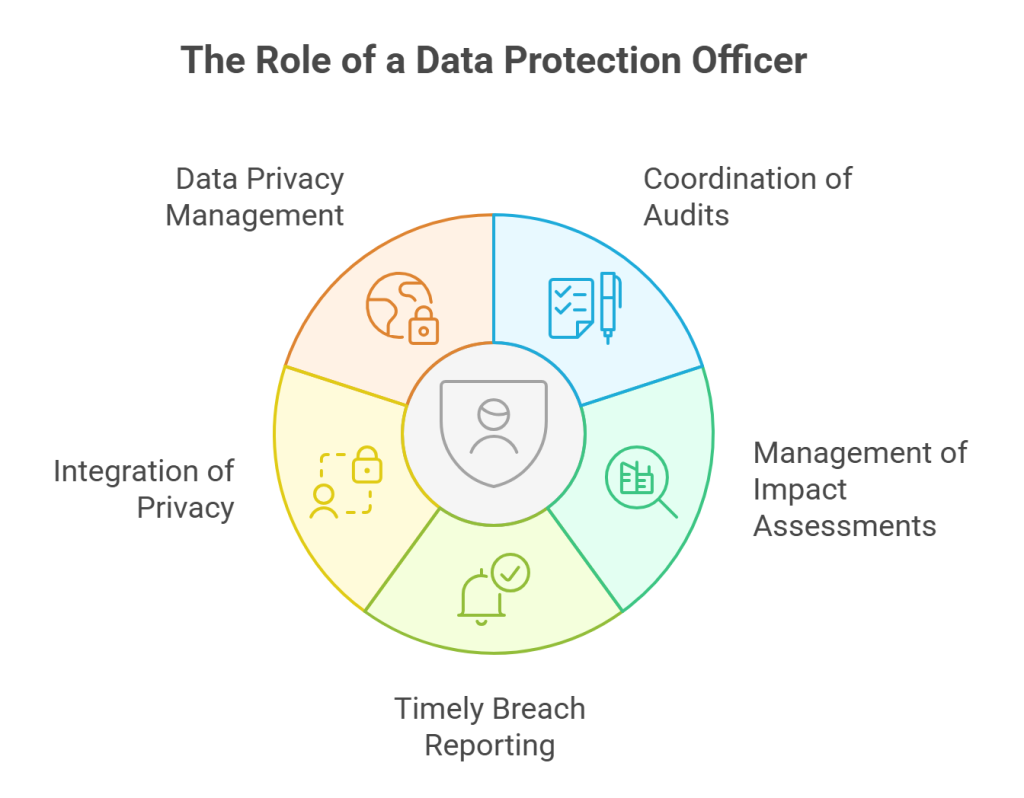
For most organizations, having a dedicated privacy lead, otherwise a data privacy officer, is a best practice. Though such professional is not a mandatory one for all businesses, having a DPO helps in efficiently coordinating audits, managing impact assessments, ensuring timely breach reporting, and helping integrate privacy into processes.
If your organization processes large volumes of personal data, sensitive categories, or profiles users for behavioral targeting, you must consider assigning a DPO. The role ensures that data privacy is consistently managed across different functions aligned with your business’s data.
Businesses today, especially those handling large volumes of crucial or sensitive personal data, are becoming increasingly vulnerable to advanced cyber threats.
When data travels across multiple systems, teams, vendors, and cloud environments, even a small gap in security can cause serious impacts, and you will be charged with heavy penalties. This is why you need a strong security posture that aligns with India’s DPDPA requirements.
Data protection audits are a necessary practice to be followed in businesses that ethically manage the data they process. These audits should be done specifically by trained data audit experts who have exceptional experience in handling such scenarios proficiently.
Wattlecorp has such professionals who have executed numerous audit implementations, VAPT engagements, and compliance assessments across diverse industries. We follow ethical cybersecurity practices and identify the vulnerable spots, list out the priority threats, and initiate remedial measures to build a secure environment perfectly aligned with the DPDPA rules of India.
Data Protection Audits FAQs
1.How can organisations build a data protection audit program aligned with DPDPA requirements?
Start by mapping all personal data you collect, store, and process. If you don’t have DPO, you can assign an expert who checks policies, consent, security controls, breach readiness, and do technical assessments like VAPT or DPIAs, and verifies if your organization aligns with the DPDPA rule. Audit not only help in spotting gaps and threat factors, but at the end of this process, necessary measures are implemented to secure the data involved in business.
2.How do I select reputable penetration testing companies in India to support DPDPA audit preparation?
Choose companies who have a strong track record of successful audits. You must also check their client base and proven years of cybersecurity expertise. Make sure they provide clear remediation guidance, not just reports on the identified concerns. Providers like Wattlecorp stand out because of their extensive audit experience and hands-on security testing capabilities.

 Qatar Cybersecurity Boardroom Accountability: Why QCB and NCSA Now Expect Executive Ownership
Key Takeaways: Cybersecurity in Qatar is increasingly becoming an executive governance responsibility, with national cybersecurity initiatives and sector-specific requirements encouraging organizations to establish stronger leadership oversight. QCB and NCSA play important roles in strengthening cybersecurity governance in Qatar, with QCB focusing on financial sector requirements and NCSA supporting national-level cybersecurity coordination and guidance. Executives can’t […]
 Data Privacy Consulting for Saudi Enterprises: How to Operationalize PDPL Data Subject Rights in 2026
Key Takeaways: The Saudi data protection law may apply to organizations outside the Kingdom when they process personal data related to individuals in Saudi Arabia, meaning geographic location alone does not automatically exclude an organization from PDPL obligations. PDPL data subject rights span access, correction, deletion, and consent withdrawal, and enterprises are on the hook […]
 Third-Party Vendor Security Risk Assessment Under DPDP: A Guide for Indian Enterprises
Key Takeaways: Third-party vendor risk assessment with DPDP practices helps Indian enterprises to verify that external partners handle personal data with adequate safeguards. The Digital Personal Data Protection Act holds data fiduciaries accountable for vendor conduct, which makes due diligence a legal and operational necessity. A structured vendor security questionnaire, covering encryption, access control, and […]
 Virtual CISO Services for UAE Free Zone Startups: Affordable Security Leadership for Growing Companies
Key Takeaways: Most startups already hold sensitive data such as customer info, source code, financials, long before they feel big enough to take security seriously, and that’s exactly when the risk starts. A virtual CISO gets you someone who’s done this before, setting up strategy and guiding compliance, without the cost of putting a full-time […]
 SOC as a Service for Indian BFSI and FinTech Companies: 24/7 Monitoring for CERT-In Readiness
Key Takeaways: SOC as a Service for BFSI and FinTech India gives banks, NBFCs, insurers and digital lenders continuous security visibility without the cost and hiring effort of building an in-house operations centre. CERT-In directions require regulated entities to report qualifying cyber incidents within six hours of detection, and implementing SOC for BFSI and FinTech […]
 SOC as a Service in India: How It Works, Pricing, and Why Businesses Need It
Key Takeaways: SOC as a Service helps Indian businesses to get 24×7 security monitoring without huge cost and complexity of building a full in-house security operations center. A managed SOC check and analyse beyond basic log monitoring, which combining SIEM, threat intelligence, analyst-led alert triage, incident escalation, reporting, and security response support. SOC as a […]