

SOC as a Service for Indian BFSI and FinTech Companies: 24/7 Monitoring for CERT-In Readiness
Key Takeaways:
- SOC as a Service for BFSI and FinTech India gives banks, NBFCs, insurers and digital lenders continuous security visibility without the cost and hiring effort of building an in-house operations centre.
- CERT-In directions require regulated entities to report qualifying cyber incidents within six hours of detection, and implementing SOC for BFSI and FinTech India is structured to help organisations meet that narrow reporting window.
- Continuous monitoring delivered through SOC as a Service for BFSI and FinTech India shortens the time attackers spend undetected inside payment gateways, core banking platforms and mobile lending applications, which lowers both financial and reputational exposure.
- A properly scoped SOC for BFSI and FinTech India engagement brings log retention, correlation, threat hunting and incident response together under one accountable service instead of scattered tools.
- Selecting the right SOC partner depends on sector-specific experience, familiarity with Indian regulatory expectations, and integration with parallel security assessments such as mobile app penetration testing India.
Financial services in India have moved almost entirely onto digital rails. Core banking systems, UPI-linked wallets, lending apps and insurance portals now process transactions around the clock, and attackers have adjusted their targeting accordingly.
For most BFSI and FinTech organisations, the security question is no longer whether an incident will occur but how quickly it will be noticed and reported. This is where SOC as a Service for BFSI and FinTech India has become a practical operating requirement rather than an optional upgrade.
A Security Operations Centre delivered as a managed security service gives financial institutions continuous monitoring, trained analysts and a documented response process without the multi-year effort of staffing an internal team.
For companies regulated under RBI guidelines and CERT-In directions, this 24/7 monitoring model creates a repeatable path to demonstrate readiness during the audits and incident disclosures.
Let’s understand that what SOC as a Service for BFSI and FinTech India covers, why always-on monitoring matters and how BFSI enterprises can evaluate a provider before signing a contract.
Why BFSI and FinTech Platforms Face a Different Threat Profile
Banks, NBFCs and FinTech companies, which hold customer financial data, transaction histories and identity documents in one place, which makes them a consistent target rather than an occasional one. The common attack patterns include credential stuffing against mobile banking apps, fraudulent transaction attempts through compromised APIs, ransomware aimed at core systems, and social engineering directed at customer support desks.
Digital lending platforms carry an added layer of risk because it deals with loan disbursement, KYC verification and repayment tracking often run through third-party integrations, each one representing as a potential entry point.
This is why SOC as a Service for BFSI and FinTech India service is typically scoped around transaction monitoring, API security, and identity behaviour analytics, it is not just perimeter defence.
A firewall or antivirus alone cannot flag an authenticated session, which starts behaving abnormally, but a SOC analyst assists in reviewing correlated logs. Institutions that may make delay in implementing SOC as a Service for BFSI and FinTech India often discover gaps in the visibility only after an incident that has already caused damage.
What SOC as a Service Means for BFSI and FinTech Companies
A managed SOC combines a security information and event management platform, trained threat analysts, and an incident response process, delivered as a subscription rather than an in-house security build. Therefore, what is SOC as a service for BFSI and FinTech for India companies in practical terms?
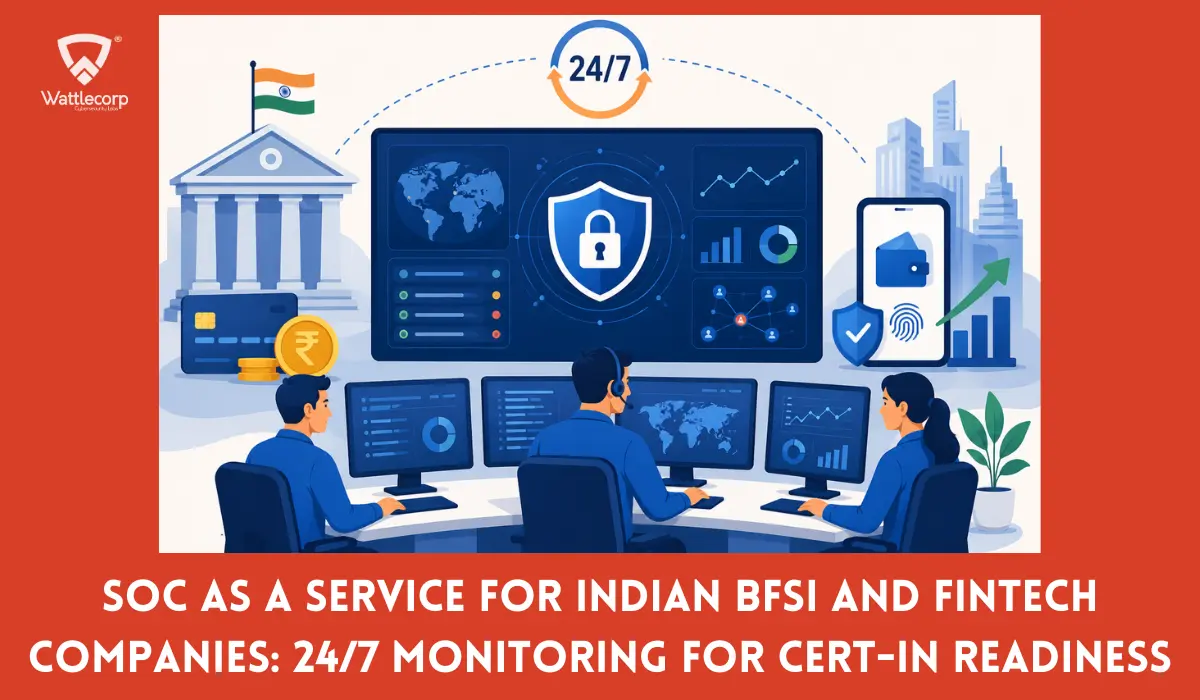
It means that an external team continuously ingests logs from firewalls, endpoints, cloud workloads, banking applications and identity systems, correlates that data for suspicious patterns, and escalates confirmed incidents through a predefined workflow.
Also Read : SOC Challenges and Best Practices to Overcome Them
For a mid-sized NBFC or FinTech company India, this removes the burden of recruiting and retaining a 24×7 analyst rota, which is one of the hardest staffing challenges in Indian cybersecurity right now given the shortage of experienced SOC talent.
SOC as a Service for BFSI and FinTech India engagements typically include tiered alerting, monthly compliance reporting and a direct escalation path to the client’s internal security or compliance lead. In practice, this is the operational backbone of SOC as a Service for BFSI and FinTech India, connecting detection to a documented, auditable response.
CERT-In Readiness and Why the Six-Hour Window Matters
CERT-In’s directions, issued under Section 70B of the Information Technology Act, require service providers, intermediaries, data centres, body corporates and government organisations to report specified categories of cyber incidents within six hours of noticing them.
The same directions mandate that ICT system logs be retained for a rolling period of 180 days within Indian jurisdiction, that system clocks be synchronised to approved NTP sources, and that entities designate a point of contact for CERT-In communication.
Meeting a six-hour reporting deadline is difficult without continuous monitoring already running in the background. SOC as a Service helps Indian BFSI and FinTech companies prepare for CERT-In reporting because continuous monitoring enables rapid detection, log correlation and initial triage immediately after suspicious activity is observed, allowing organizations to use the reporting window more efficiently.
Also Read : CERT-IN Empanelled VAPT: Why Indian Companies Should Choose CERT-IN Approved Firms in 2026
SOC monitoring practices that support CERT-In readiness for Indian FinTech companies typically include pre-configured incident classification, retained logs mapped to CERT-In’s Annexure categories, and a documented point of contact who can respond the moment an alert is confirmed.
RBI’s own guidance on digital lending and regulated entities reinforces this expectation, requiring lenders to maintain sound operational controls around technology-driven processes, which naturally extends to how incidents are detected and escalated. Aligning SOC as a Service for BFSI and FinTech India with these two regulatory frameworks together, rather than treating them separately, keeps reporting obligations and operational controls consistent.
Why 24/7 Monitoring Is Non-Negotiable for Digital Lending and FinTech Platforms
Digital lending and payment platforms do not observe business hours, and neither do the people attempting to breach them. 24/7 security monitoring is important for Indian digital lending and financial platforms, because a loan disbursement engine or a UPI settlement layer processing transactions overnight is just as exposed at 3 a.m. as it is at noon, and a delayed response to a fraudulent transaction pattern can translate directly into financial loss.
SOC as a Service for BFSI and FinTech India addresses this by maintaining analyst coverage across all shifts, rather than relying on a daytime team that reviews overnight alerts the next morning.
For lending platforms specifically, this coverage extends to monitoring loan origination systems, repayment gateways and third-party lending service provider integrations, all of which fall under increased regulatory scrutiny following RBI’s digital lending guidelines.
Choosing the Right SOC Partner for Indian BFSI and FinTech Firms
A managed SOC checklist for BFSI companies under Indian cybersecurity expectations generally includes the following components, all of which sit under a well-scoped SOC as a Service for BFSI and FinTech India engagement. The core capabilities a managed SOC should cover are:
- Log ingestion and correlation across core banking systems, mobile applications, cloud infrastructure and identity providers.
- 24×7 alert triage with defined severity tiers and escalation timelines aligned to the six-hour CERT-In window.
- Threat intelligence integration covering financial-sector-specific indicators of compromise.
- Detection and investigation of transaction anomalies, privileged account activity, and API abuse.
- Compliance-ready reporting mapped to RBI and CERT-In documentation formats.
- Incident response coordination, including containment steps and post-incident forensic support.
These components reflect the SOC as a service for BFSI and FinTech best practices India organisations are increasingly expected to follow, alongside broader SOC as a service for BFSI and FinTech security controls India such as endpoint detection, network segmentation monitoring and privileged access review.
A recurring SOC as a service for BFSI and FinTech risk assessment India exercise also helps prioritise which systems receive the deepest monitoring coverage, since not every application carries the same exposure.
The Connection Between Mobile App Penetration Testing and SOC Readiness
Most Indian FinTech companies operate primarily through mobile applications, which makes application-layer security a direct input into SOC effectiveness. Mobile app penetration testing India connected to SOC readiness, because a SOC can only monitor and respond to what it knows to look for, and penetration testing identifies the specific vulnerabilities, insecure API calls and authentication weaknesses that attackers are likely to exploit first. Feeding these findings into the SOC’s detection rules means alerts are tuned to real weaknesses in the application rather than generic signatures.
Organisations that run mobile app penetration testing India assessments alongside SOC as a Service for BFSI and FinTech India typically see fewer false positives and faster confirmation of genuine incidents, because the analyst team already understands where the application is most likely to be tested by an attacker.
Strengthening BFSI and FinTech Security with Managed SOC
Regulatory expectations around incident reporting are only going to tighten, and BFSI and FinTech companies operating in India no longer have the option of treating monitoring as an afterthought. Wattlecorp helps banks, NBFCs and FinTech companies achieve continuous visibility, structured incident response, and CERT-In readiness through managed SOC services.
Continuous visibility, documented processes and reporting discipline are now baseline requirements rather than differentiators. Building this capability in-house takes time that most organisations do not have, which is why an increasing number of banks, NBFCs and digital lenders are turning to SOC as a Service for BFSI and FinTech India instead of a purely internal build.
Where required, CERT-In Compliance Consulting Service in India can also support the alignment of log retention, incident reporting, escalation workflows, and response documentation with CERT-In expectations.
SOC as a Service for BFSI and FinTech India FAQs
1.What is SOC as a Service for BFSI and FinTech companies in India?
2. How does SOC as a Service support CERT-In readiness?
3. Why do Indian FinTech and digital lending platforms need 24/7 monitoring?
4. What logs and alerts should a managed SOC monitor for BFSI companies?
5. How is mobile app penetration testing India connected to SOC readiness?

 SOC as a Service for Indian BFSI and FinTech Companies: 24/7 Monitoring for CERT-In Readiness
Key Takeaways: SOC as a Service for BFSI and FinTech India gives banks, NBFCs, insurers and digital lenders continuous security visibility without the cost and hiring effort of building an in-house operations centre. CERT-In directions require regulated entities to report qualifying cyber incidents within six hours of detection, and implementing SOC for BFSI and FinTech […]
 SOC as a Service in India: How It Works, Pricing, and Why Businesses Need It
Key Takeaways: SOC as a Service helps Indian businesses to get 24×7 security monitoring without huge cost and complexity of building a full in-house security operations center. A managed SOC check and analyse beyond basic log monitoring, which combining SIEM, threat intelligence, analyst-led alert triage, incident escalation, reporting, and security response support. SOC as a […]
 Mobile App Security Testing for Indian Digital Lending Apps RBI, DPDP and API Risk Checklist
Key Takeaways: Mobile app security testing forms an important part of meeting RBI cybersecurity expectations, secure application development practices, and periodic security assessment requirements for digital lending platforms. APIs in lending apps are constantly under attack. Broken object-level authorization, data leaking where it shouldn’t, weak token validation, and missing rate limiting, these aren’t edge cases, […]
 Cybersecurity Risk Assessment for Saudi Supply Chain Vendors Under Aramco and NCA Expectations
Key Takeaways: Cybersecurity risk assessment becomes a practical requirement for proving security maturity, with protecting vendor relationships, and moving forward in procurement processes with Aramco and critical infrastructure clients. Vendors will need to provide evidence of access review documentation, patch deployment, monitoring artifacts, technical assessment results and more that demonstrates the controls in place are […]
 Qatar Personal Data Privacy Compliance: Security Controls for Data Protection Readiness
Key Takeaways: Qatar’s Personal Data Privacy Protection Law applies to organizations that process personal data within its scope, including many businesses handling personal data of individuals in Qatar. Non-compliance isn’t just risky; it can result in hefty fines, operational chaos, and serious damage to your company’s reputation. Personal data privacy compliance Qatar isn’t just about […]
 Azure Server Hardening for UAE Businesses: Securing Microsoft Cloud Against Misconfigurations
Key Takeaways: Azure server hardening UAE addresses the fundamental shared responsibility gap many organizations struggle with where Microsoft secures the cloud platform itself, but your organization must secure everything running on it, from configurations to identities to access controls. When Azure misconfigurations go unnoticed, they don’t quietly sit there. They actively create exploitable pathways, which […]