


Data Privacy Consulting for Saudi Enterprises: How to Operationalize PDPL Data Subject Rights in 2026
Key Takeaways:
- The Saudi data protection law may apply to organizations outside the Kingdom when they process personal data related to individuals in Saudi Arabia, meaning geographic location alone does not automatically exclude an organization from PDPL obligations.
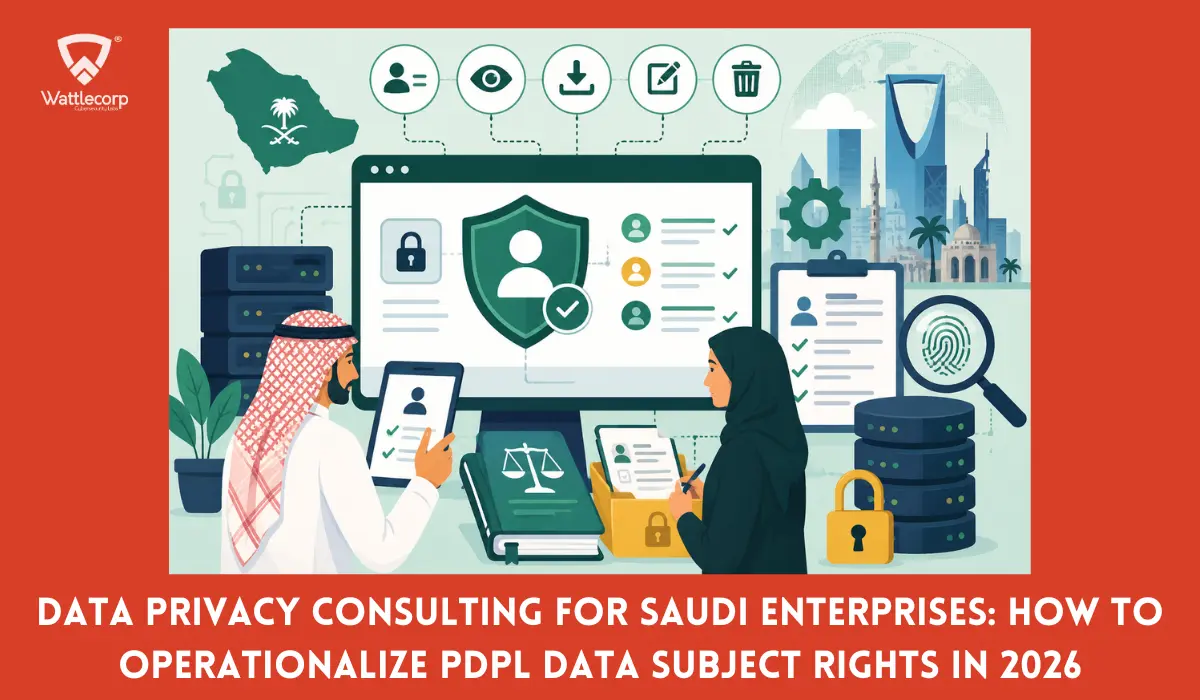
- PDPL data subject rights span access, correction, deletion, and consent withdrawal, and enterprises are on the hook to respond within tight, regulator-set timelines.
- Putting data subject rights processes into practice under Saudi PDPL isn’t something a policy document alone can handle, it takes legal, IT, HR, and marketing teams working together.
- Organizations handling sensitive data at scale or managing cross-border transfers, which including flows tied to the UAE, are required to appoint a data protection officer in Saudi Arabia.
- Combining PDPL compliance consulting for Saudi enterprises with regular technical security testing strengthens both the procedural and technical foundations of compliance under the Saudi data protection law.
Saudi Arabia’s data protection law has moved into a phase of active, well-documented enforcement, and the shift is already visible in the fines and formal decisions regulators have issued. For any enterprise operating inside the Kingdom, or simply serving customers-based enterprises, the Saudi data protection law is no longer a future item on a compliance roadmap. It’s a live operational requirement, and every misstep now carries really financial and legal consequences.
Understanding the Saudi data protection law, formally known as the Personal Data Protection Law (PDPL), is the first step. Building internal machinery to honor it in daily operations is the harder, more important step, and it’s where most organizations still fall short.
Learn what data subject rights mean under the Saudi data protection law and why 2026 is the year enterprises must move from policy documents to working processes. And, how PDPL compliance Saudi Arabia programs are structured in practice, and how targeted data privacy consulting Saudi Arabia support can help you close the gap.
Also compare how Saudi Arabia’s framework differs from other regional and global models, that including the UAE’s data protection regime, so leadership teams can benchmark their own maturity accordingly.
Understanding the Saudi Data Protection Law and Its Scope
The Saudi data protection law governs how personal data belonging to individuals inside the Kingdom is collected, processed, stored, shared, and eventually destroyed. It applies to public and private organizations physically based in Saudi Arabia, and critically to any foreign entity that processes the personal data of Saudi residents, regardless of where its servers or headquarters sit. A data protection officer can support eligible organizations in overseeing these obligations and coordinating privacy compliance activities.
Under the Saudi data protection law, personal data includes obvious identifiers such as names and national ID numbers, but also digital markers like IP addresses and geolocation data, along with sensitive categories such as biometric records, health information, and financial details.
Every stage of the data lifecycle is regulated, which is why enterprises comparing their approach against neighboring markets like the UAE often discover their existing UAE-oriented privacy programs need meaningful rework before they satisfy Saudi requirements.
Scoping the law correctly is also the foundation of any credible PDPL compliance Saudi Arabia program. Enterprises that misjudge scope, assuming, for example, that a UAE-registered entity with no local office is automatically exempt often discover the gap only after a regulator notice arrives.
What Are PDPL Data Subject Rights, and Why Do They Matter in 2026?
PDPL data subject rights give individuals inside Saudi Arabia real, enforceable control over their own information not just a policy statement on paper. Under Saudi data protection law, a person can ask an organization what data it holds on to them, push back on records that are wrong, request that their data be deleted, and pull back consent they’d previously given, whenever they choose.
Also Read : Achieving PDPL Compliance in Saudi Arabia: Expert Tips for 2026
None of these are theoretical. Regulators actually expect controllers to act within set timelines, and current guidance suggests some requests must be handled in as little as ten business days. This is exactly where things get tricky for global enterprises comparing PDPL data subject rights to GDPR data subject rights. The two frameworks look similar on the surface; both give individuals control over access, correction, and deletion, but the resemblance only goes so far.
The Saudi model adds its own layer of obligations on top of that shared foundation: mandatory controller registration through SDAIA’s National Data Governance Platform, a hard 72-hour breach notification window, and response deadlines for data subject requests that are set locally and often tighter than what companies are used to. Businesses that try to lift a GDPR compliance playbook and drop it into their Saudi operations or assume their existing UAE setup will just carry over, tend to miss these details, and that’s usually where the trouble starts.
Why Operationalizing PDPL Rights Is the Real Challenge
Understanding PDPL data subject rights on paper is one thing. Knowing how to operationalize PDPL data subject rights in Saudi Arabia in practice is another matter entirely, and it’s the gap where most enterprises stumble.
Operationalization means building a repeatable, auditable workflow, a documented intake channel for requests, identity verification steps, internal routing to the systems where the data lives, a defined turnaround time, and a record of the resolution for regulator review.
Enterprises that treat this only as a legal exercise, rather than an operational one, tend to fail audits. Data subject rights processes under Saudi PDPL need to touch data mapping, IT systems, customer service teams, HR, and marketing functions simultaneously, because personal data rarely lives in a single database.
Getting this coordination right is exactly why data privacy consulting Saudi Arabia engagements exist: to translate legal text into a functioning, cross-departmental process that regulators can inspect on short notice, and why so many mature PDPL compliance Saudi Arabia programs are built with outside consulting support rather than in isolation.
Building a Data Subject Rights Workflow: A Practical Roadmap
A workable approach to PDPL operationalization typically follows these steps:
- Data mapping and discovery: Identify every system, vendor, and department that touches Saudi resident personal data. You cannot fulfill a deletion or access request for data you cannot locate.
- Intake and verification: Establish a single, documented channel for data subject requests, with identity verification to prevent fraudulent claims.
- Internal routing and SLA tracking: Define which teams’ action which request types and track them against statutory deadlines rather than internal guesswork.
- Response and evidencing: Document how each request was resolved, since regulators can request evidence of compliance retroactively.
- Continuous review: Revisit the workflow as new systems, vendors, or markets (including cross-border transfers involving the UAE or other Gulf jurisdictions) are introduced.
Also Read : Navigating Saudi Arabia’s Personal Data Protection Law (PDPL ): Key Compliance Requirements for Businesses
This structured approach forms the backbone of effective PDPL compliance Saudi Arabia programs, and it’s the same methodology reputable data privacy consulting Saudi Arabia firms use when guiding enterprise clients through their first regulatory audit. Enterprises that skip any single step in this roadmap typically discover their PDPL compliance Saudi Arabia posture looks solid on paper but collapses the moment a real data subject request arrives.
What Changes for PDPL Compliance in 2026?
Several shifts define what changes for Saudi data protection law amendments in 2026 compared to the earlier transitional period. Enforcement committees have moved from warnings to formal decisions, with dozens of cases already resulting in significant fines.
Response windows to regulator notifications have tightened to as little as five days once an indictment is issued through the electronic portal. Cross-border data transfer rules, including a four-step risk assessment model, now apply to any data leaving the Kingdom, an important requirement under the Saudi data protection law that significantly affects multinational enterprises operating across Saudi Arabia, the UAE, and beyond.
For enterprises still treating PDPL compliance in Saudi Arabia as a static policy document, 2026 is the year that approach stops working. Regulators are actively auditing registered controllers, and gaps between written policy and actual operational practice are exactly what enforcement actions expose. Any credible PDPL compliance strategy under the Saudi data protection law must assume active scrutiny, not future scrutiny.
Why VAPT Services Support PDPL Compliance Initiatives
Legal compliance under the Saudi data protection law can’t stand alone without technical assurance behind it. That’s where Wattlecorp’s VAPT services Saudi engagements come in, catching gaps like unpatched systems, weak access controls, and exposed databases before they trigger the breaches the law’s 72-hour notification rule is meant to catch.
Pairing PDPL compliance consulting for Saudi enterprises with regular technical assessments gives regulators the procedural and technical evidence they expect during an audit. The right partner will help you to understand both the legal text and the operational realities of implementing it across complex, multi-market organizations, including those with parallel obligations in the UAE.
From data mapping and DPO advisory to data subject rights processes under the Saudi PDPL and cross-border transfer assessments, we help turn the legal framework into a working program with tailored support for the Saudi data protection law compliance journey here.
Saudi Data Protection Law FAQs
1. What are PDPL data subject rights in Saudi Arabia?
2. How can organizations operationalize PDPL compliance?
3. When should organizations appoint a Personal Data Protection Officer?
4. How should enterprises respond to access, correction, and deletion requests?
5. Why should VAPT support PDPL compliance initiatives?

 Data Privacy Consulting for Saudi Enterprises: How to Operationalize PDPL Data Subject Rights in 2026
Key Takeaways: The Saudi data protection law may apply to organizations outside the Kingdom when they process personal data related to individuals in Saudi Arabia, meaning geographic location alone does not automatically exclude an organization from PDPL obligations. PDPL data subject rights span access, correction, deletion, and consent withdrawal, and enterprises are on the hook […]
 Third-Party Vendor Security Risk Assessment Under DPDP: A Guide for Indian Enterprises
Key Takeaways: Third-party vendor risk assessment with DPDP practices helps Indian enterprises to verify that external partners handle personal data with adequate safeguards. The Digital Personal Data Protection Act holds data fiduciaries accountable for vendor conduct, which makes due diligence a legal and operational necessity. A structured vendor security questionnaire, covering encryption, access control, and […]
 Virtual CISO Services for UAE Free Zone Startups: Affordable Security Leadership for Growing Companies
Key Takeaways: Most startups already hold sensitive data such as customer info, source code, financials, long before they feel big enough to take security seriously, and that’s exactly when the risk starts. A virtual CISO gets you someone who’s done this before, setting up strategy and guiding compliance, without the cost of putting a full-time […]
 SOC as a Service for Indian BFSI and FinTech Companies: 24/7 Monitoring for CERT-In Readiness
Key Takeaways: SOC as a Service for BFSI and FinTech India gives banks, NBFCs, insurers and digital lenders continuous security visibility without the cost and hiring effort of building an in-house operations centre. CERT-In directions require regulated entities to report qualifying cyber incidents within six hours of detection, and implementing SOC for BFSI and FinTech […]
 SOC as a Service in India: How It Works, Pricing, and Why Businesses Need It
Key Takeaways: SOC as a Service helps Indian businesses to get 24×7 security monitoring without huge cost and complexity of building a full in-house security operations center. A managed SOC check and analyse beyond basic log monitoring, which combining SIEM, threat intelligence, analyst-led alert triage, incident escalation, reporting, and security response support. SOC as a […]
 Mobile App Security Testing for Indian Digital Lending Apps RBI, DPDP and API Risk Checklist
Key Takeaways: Mobile app security testing forms an important part of meeting RBI cybersecurity expectations, secure application development practices, and periodic security assessment requirements for digital lending platforms. APIs in lending apps are constantly under attack. Broken object-level authorization, data leaking where it shouldn’t, weak token validation, and missing rate limiting, these aren’t edge cases, […]