

Transition Of ISO 27001:2013 to 2022 In Saudi Arabia – Complete Guide
Increased digitization has bestowed innumerable benefits on businesses, but it has given rise to numerous challenges in terms of cybersecurity. Businesses today use information security management systems, or ISMS, for secure management of their sensitive data, which could belong to customers, employees, and partners.
Regulatory bodies around the world have published standards that include a set of best practices to protect sensitive information, increase cyber resilience, and mitigate risks of malicious cyberattacks.
ISO 27001:2022 for ISMS is a global standard published by the ISO, or International Organization for Standardization (ISO), that provides a framework to establish, deploy, operate, supervise, review, maintain, and constantly enhance an organization’s ISMS in KSA. The standard lays out a risk-based, systematic approach to safeguarding and managing critical information to ensure that it stays confidential, credible, and available.
An organization in Saudi Arabia with ISO 27001 certification has been audited by an independent body, which has verified that its ISMS complies with the ISO 27001:2022 standard. It means that the organization has implemented the security controls as recommended by the standard and is committed to safeguarding its sensitive information and managing its security risks.
The first ISO standard for ISMS was published in 2005, following which there was a major revamp in 2013. Most organizations today have this certification. Minor changes were made to the standard in 2018, but in 2022, big changes have been brought in. Organizations must upgrade to ISO 27001:2022 to stay in compliance with the standard.
How Many Versions Of ISO 27001 Are There?
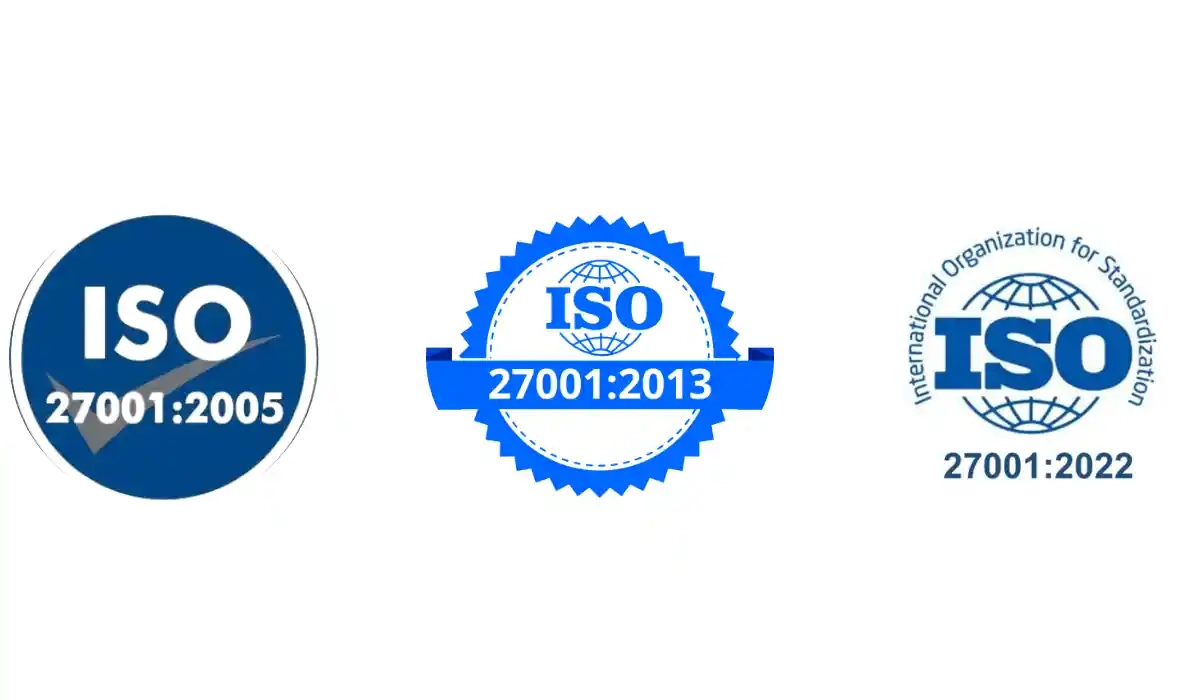
1) ISO 27001:2005
The first standard published in 2005 provided guidelines required to set up, implement, and sustain an ISMS based on a PDCA, or Plan, Do, Check, Act cycle.
2) ISO/27001:2013
The 2013 update brought major changes and updates to the standard, and it was more closely aligned with other standards like ISO 9001 and ISO 14001. This version stressed more about managing risk and introduced Annex A for information security right into the standard’s main body.
3) ISO 27001:2022
This is the latest version, released in 2022. Substantial changes were introduced, and some updates were made as well.
What Has Changed From ISO 27001:2013 To 2022?
There are quite a few changes to the ISO 27001 standard in 2022; let’s see what they are:
Continued Improvement
Organizations in Saudi Arabia are required to monitor their ISMS and make improvements continually to ensure that their information assets are effectively protected.
Cybersecurity And Privacy Receive More Importance
The new standard places more stress than before on privacy and cybersecurity for protecting critical information and mitigating the risk of cyberattacks.
New Change Management Requirements
Change management requirements have been updated in ISO 27001:2022. The new standard sets out how the changes to the ISMS need to be executed so that they are done carefully and securely.
New Supplier Risk Management Requirements
Requirements have been introduced to the standard to ensure that an organization’s vendors do not pose security threats to its information assets.
Annex A Restructuring
Annex A was introduced in 2013, and it underwent a major restructuring in 2022. It is a checklist of security controls that organizations in Saudi Arabia need to implement. The restructuring has simplified the process and reflects a greater emphasis on risk management. 11 new controls were added, while 57 were merged into 24 controls; 23 controls got new names and 35 were untouched. Overall, the number of controls was reduced from 114 to 93.
The controls are now divided into four themes, unlike the previous division of 14 categories: organizational, people, physical, and technical.
The new controls are:
- Configuration Management
- Masking Data
- Prevention Of Data Leakage
- ICT Readiness For Business Continuity
- Deleting Information
- Information Security For Using Cloud Services
- Monitoring Activities
- Monitoring Physical Security
- Secure Coding
- Threat Intelligence
- Web Filtering
Controls also have the following attributes: Cybersecurity concepts, Control type, Information security properties, Operational capabilities, and Security domains, to simplify their categorization.
While ISO certifications are not mandatory, they are desirable, and in the wake of severe cyberattacks, it is highly recommended that organizations in Saudi Arabia get certified. The latest version is also highly aligned with mandatory global regulations like GDPR, SAMA, HIPAA, etc., so it simplifies matters if you have the ISO 27001:2022 certification.
Organizations are required to transition to the latest version of the ISO standard within three years to adhere to the latest version and use the best practices in ISMS and data protection.
How Can You Obtain The ISO 27001:2022 Certification In Saudi Arabia?
These are the steps involved in getting certified:

- Organizational Context: You need to have a clear picture of the context of the organization, both internal and external, including its scope, goals, and requirements for information security.
- Ensure Management Commitment: The top management must be committed to implementing and maintaining an ISMS in Saudi Arabia that is aligned with the ISO 27001 requirements.
- Gap Analysis: A comprehensive evaluation of the current security practices must be carried out to compare them with the requirements of the standard. This will help you identify the steps required to get certified.
- Risk Evaluation: Carry out a thorough evaluation of the risks and mention risk treatment measures and controls.
- ISMS Establishment: develop your policies, processes, and procedures for the ISMS, and document them meticulously. Set out the roles and responsibilities for deploying and sustaining the ISMS, including security control selection, evaluating risk, etc. Your ISMS policy must define the commitment of the organization to information security, along with creating the structure to define the targets and objectives. The documentation and records must be appropriately controlled and secured.
- Implementing: deploy the required security controls as set out in your ISMS documentation, including employee training, implementation of technical controls, creating procedures for incident response, and handling known vulnerabilities. This will help in securing ISMS operations. Proper asset management, controlling access, handling relationships with suppliers, physical security, and cryptography, are all part of this.
- Resource Allocation: assign the resources you need, like infrastructure and personnel, required to support implementing and maintaining the ISMS in Saudi Arabia.
- Communication and Training: put systems in place to communicate information security policies, measures, and procedures both internally and externally. Encourage employees to familiarize themselves with the risks and responsibilities associated with information security. Make sure you provide adequate training to employees and see to it that competent employees are assigned important roles in the process.
- Internal Audit: Carry out an internal audit to evaluate the alignment of your ISMS with ISO 27001:2022 in Saudi Arabia, identifying areas of improvement. Take remedial action to resolve those issues.
- Management Review assesses the ISMS’ overall performance in a management review meeting, by checking control efficacy and going over the audit reports to verify that your ISMS is in line with organizational objectives.
- Choosing the Certification Body: select an authorized body to carry out the external audit for the ISO 27011:2022 certification in Saudi.
- External Audit: The certification body may split the audit into two parts, stages 1 and 2, with a basic review on-site to check your readiness for certification first. They will go over your documentation, verify that the required controls are in place, and assess how prepared you are for the next stage. Then they will execute a detailed audit to check how effective your ISMS is; employee interviews and operational efficiency checks of controls will be conducted, and they will review the evidence of your ISMS complying with the requirements.
- Findings and Remedial Measures: The auditing body may suggest remedial actions to be taken to address non-conformance or security risks, which must be completed within a specified timeframe.
- Certification: After the audits, the body will review the reports and check if your organization has satisfied the requirements for the new standard in Saudi Arabia, and accordingly, you will be issued the certificate.
You need to keep in mind that the certification body will execute regular surveillance audits to ensure that your ISMS stays aligned with the requirements of the standard, providing opportunities for continued improvement.
It is advised that you create procedures to detect, report, and respond to adverse information security incidents, take remedial measures to resolve nonconformities, and continually improve your ISMS to ensure effectiveness.
Specific details and requirements can change depending on the size and complexity of your organization and the certification body you choose. We recommend you consult an expert ISO 27001 consultant in Saudi Arabia, like Wattlecorp, to ensure a smooth certification process.
Why Should You Implement ISO 27001 In Saudi Arabia?
It offers several benefits, like:
- It helps organizations comply with legal and regulatory requirements
- Better information security
- Improved risk management
- Continued improvement
- Builds trust and confidence in customers
- Gives a competitive edge
- Enhanced business opportunities
- Better preparedness to respond to cybersecurity incidents
- Improves security posture
- Demonstrates your commitment to data protection
Don’t waste time; get ISO 27001:2022 certified in Saudi Arabia. The experts at Wattlecorp will help ensure a smooth transition.

 Qatar Cybersecurity Boardroom Accountability: Why QCB and NCSA Now Expect Executive Ownership
Key Takeaways: Cybersecurity in Qatar is increasingly becoming an executive governance responsibility, with national cybersecurity initiatives and sector-specific requirements encouraging organizations to establish stronger leadership oversight. QCB and NCSA play important roles in strengthening cybersecurity governance in Qatar, with QCB focusing on financial sector requirements and NCSA supporting national-level cybersecurity coordination and guidance. Executives can’t […]
 Data Privacy Consulting for Saudi Enterprises: How to Operationalize PDPL Data Subject Rights in 2026
Key Takeaways: The Saudi data protection law may apply to organizations outside the Kingdom when they process personal data related to individuals in Saudi Arabia, meaning geographic location alone does not automatically exclude an organization from PDPL obligations. PDPL data subject rights span access, correction, deletion, and consent withdrawal, and enterprises are on the hook […]
 Third-Party Vendor Security Risk Assessment Under DPDP: A Guide for Indian Enterprises
Key Takeaways: Third-party vendor risk assessment with DPDP practices helps Indian enterprises to verify that external partners handle personal data with adequate safeguards. The Digital Personal Data Protection Act holds data fiduciaries accountable for vendor conduct, which makes due diligence a legal and operational necessity. A structured vendor security questionnaire, covering encryption, access control, and […]
 Virtual CISO Services for UAE Free Zone Startups: Affordable Security Leadership for Growing Companies
Key Takeaways: Most startups already hold sensitive data such as customer info, source code, financials, long before they feel big enough to take security seriously, and that’s exactly when the risk starts. A virtual CISO gets you someone who’s done this before, setting up strategy and guiding compliance, without the cost of putting a full-time […]
 SOC as a Service for Indian BFSI and FinTech Companies: 24/7 Monitoring for CERT-In Readiness
Key Takeaways: SOC as a Service for BFSI and FinTech India gives banks, NBFCs, insurers and digital lenders continuous security visibility without the cost and hiring effort of building an in-house operations centre. CERT-In directions require regulated entities to report qualifying cyber incidents within six hours of detection, and implementing SOC for BFSI and FinTech […]
 SOC as a Service in India: How It Works, Pricing, and Why Businesses Need It
Key Takeaways: SOC as a Service helps Indian businesses to get 24×7 security monitoring without huge cost and complexity of building a full in-house security operations center. A managed SOC check and analyse beyond basic log monitoring, which combining SIEM, threat intelligence, analyst-led alert triage, incident escalation, reporting, and security response support. SOC as a […]