


Enhancing Compliance with Saudi Arabia’s PDPL: The Role of VAPT in Safeguarding Personal Data
A Comprehensive Guide to Saudi Arabia’s PDPL and VAPT Compliance
In an increasingly tumultuous transnational relations, safeguarding personal data is the call of the hour. With Saudi Arabia’s goal of transforming the Kingdom’s technology and data governance, the Saudi Data and Artificial Intelligence Authority (SDAIA) introduced PDPL.
Personal Data Protection Law provides strict guidelines on how personal data should be retrieved and shared by any organization. As all organizations within KSA and outside are subject to this law, you may have many questions in your mind.
This guide will answer all your queries and help you understand PDPL compliance.
Why Saudi Arabia Introduced PDPL Compliance?
The Personal Data Protection Law of the Kingdom of Saudi Arabia, along with its implementing regulations, which came into force on 14 September 2023, was the first comprehensive data privacy regulation implemented in KSA.
Now, let’s understand the reasoning behind KSA introducing SDAIA PDPL compliance:
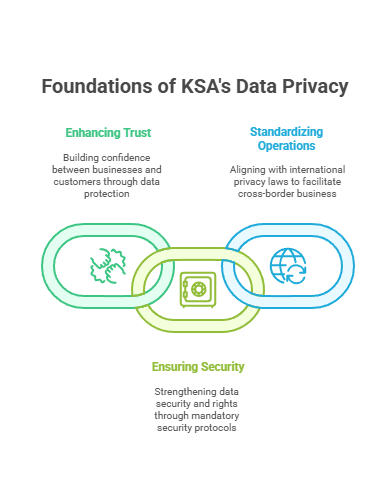
- To enhance trust between companies and customers by safeguarding individuals’ data.
- To ensure data security and strengthen Saudi residents’ data rights by mandating organizations to undergo security protocols.
- To standardize cross-border business operations by aligning with international privacy law, like the GDPR.
The Key Features of Saudi Arabia’s Personal Data Protection Law
1. Consent Comes First
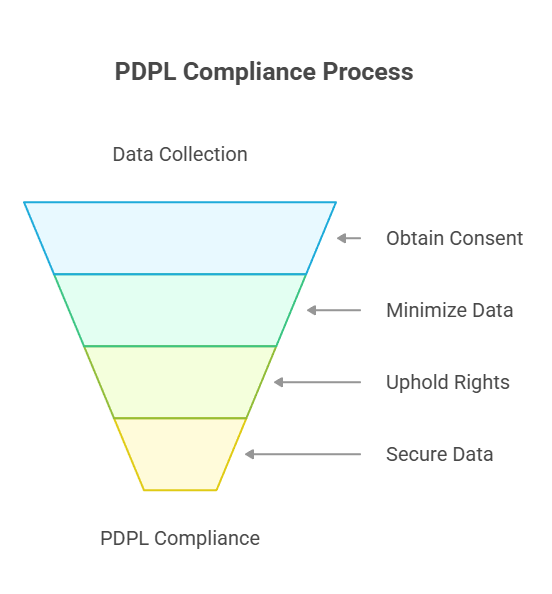
Businesses must collect clear, informed, written consent from the individual, ensure the consent is well documented, and make it easier to withdraw at any time.
2. PDPL’s Data Minimization Rule
The PDPL mandates that personal data must be relevant and limited to what is necessary for processing purposes.
3. Data Subject Rights
Under PDPL, people have clear rights to request correction, deletion access to their data, and the right to object to data processing.
4. Prioritize Security & Risk Management
Organizations are responsible for implementing appropriate technical and organizational measures. This is to ensure the confidentiality, integrity, and availability of personal data.
5. Handle Cross-Border Data Carefully
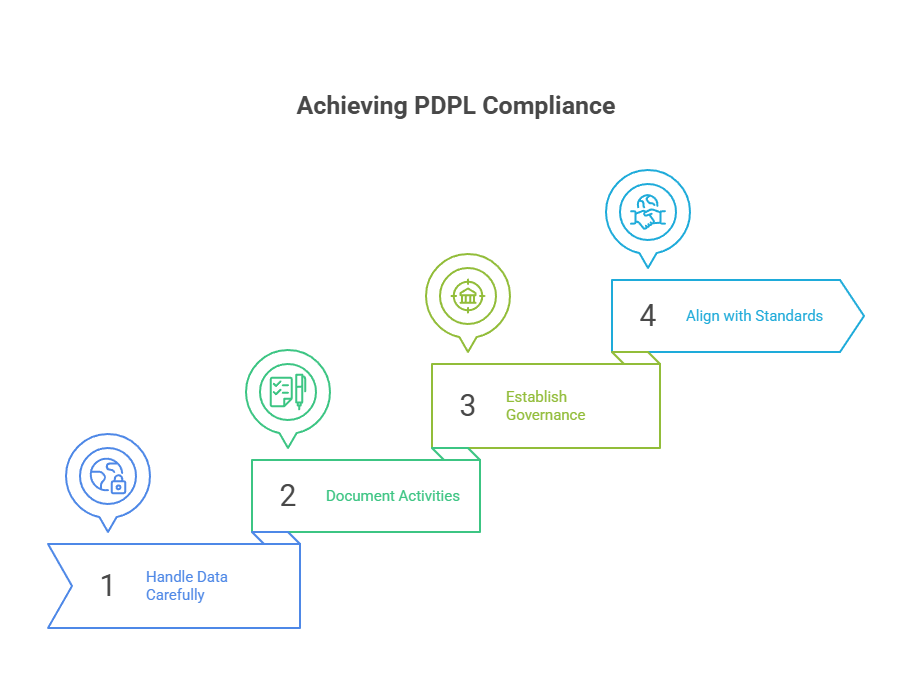
The law restricts sending personal data outside the Kingdom unless specific conditions are met, such as adequate protection levels or individual consent.
6. Document Everything
Businesses must maintain comprehensive records of all data processing activities and demonstrate compliance during audits or investigations by SDAIA.
7. Establish Strong Data Governance
Establish internal policies, assign roles such as a DPO, and ensure regular training to build a strong culture of data protection.
8. Alignment with Broader Data Management Standards
PDPL is designed to reflect international best practices and aligns closely with GDPR principles, allowing businesses to streamline global compliance efforts.
What Is VAPT and Why It’s Essential for Data Protection in KSA?
Vulnerability Assessment and Penetration Testing is a proactive solution that helps companies detect security vulnerabilities and fix them before they are exploited to cause any breach.
As VAPT can identify the underlying security risk and fix it, it makes it easier for organizations to comply with industry-specific regulatory frameworks.
Conducting VAPT tests can ensure cybersecurity and overall governance, which are central for regulations like ISO 27001, PCI DSS, and PDPL.
VAPT is highly useful to secure personal data, which is the key requirement for PDPL, thus ensuring PDPL compliance. VAPT helps to uncover the security gaps, making your system more resilient, which can lead to full PDPL compliance.
Also Read : 5 Signs Your Business Needs VAPT Immediately
Implementing VAPT for PDPL Compliance: Best Practices in 2025
Regular VAPT testing can ensure personal data is stored and transmitted securely. This can also help authorities believe that your organization is committed to achieving proactive security.
But how can it be achieved? Let’s look into the best practices.
Step-by-step breakdown:
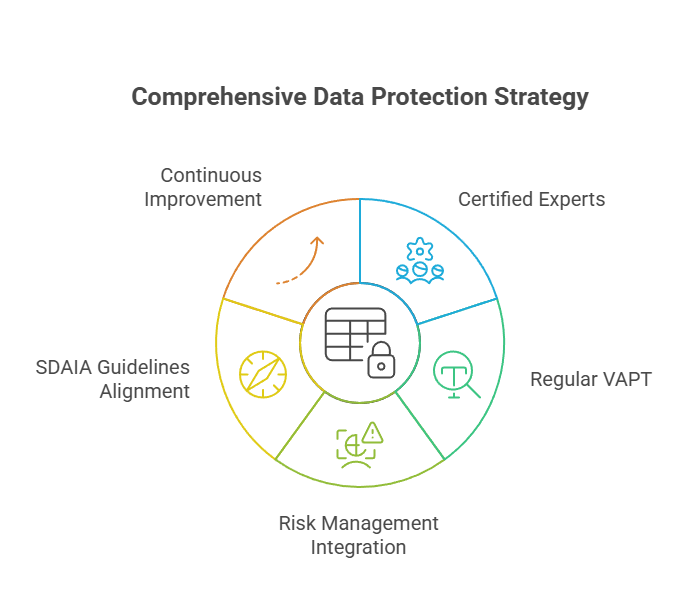
1. Choose Certified Experts
Go for a company that can provide PDPL compliance services in KSA, as well as one that can provide penetration testing services.
2. Conduct VAPT Regularly
For better data protection experts recommend conducting quarterly or bi-annual VAPT. This helps identify vulnerabilities within the data system.
3. Integrate with Risk Management
VAPT testing supports risk assessment, risk mitigation strategy, management processes, reporting, and overall assessment. To effectively identify vulnerabilities before hackers exploit them.
4. Align with SDAIA Guidelines
Ensure the VAPT providers you choose are directly aligned with SDAIA guidelines. Wattlecorp provides the best PDPL compliance services in KSA that adhere to SDAIA guidelines.
5. Use Findings for Continuous Improvement
The assessment result of VAPT can be leveraged to update the privacy policies, enhance the security infrastructure, and train employees on the dos and don’ts.
How Does the KSA Personal Data Protection Law Impact Cross-Border Businesses?
PDPL compliance is meant to be effective for lawful transfers of personal data inside and outside the KSA. The following are some global implications for businesses:
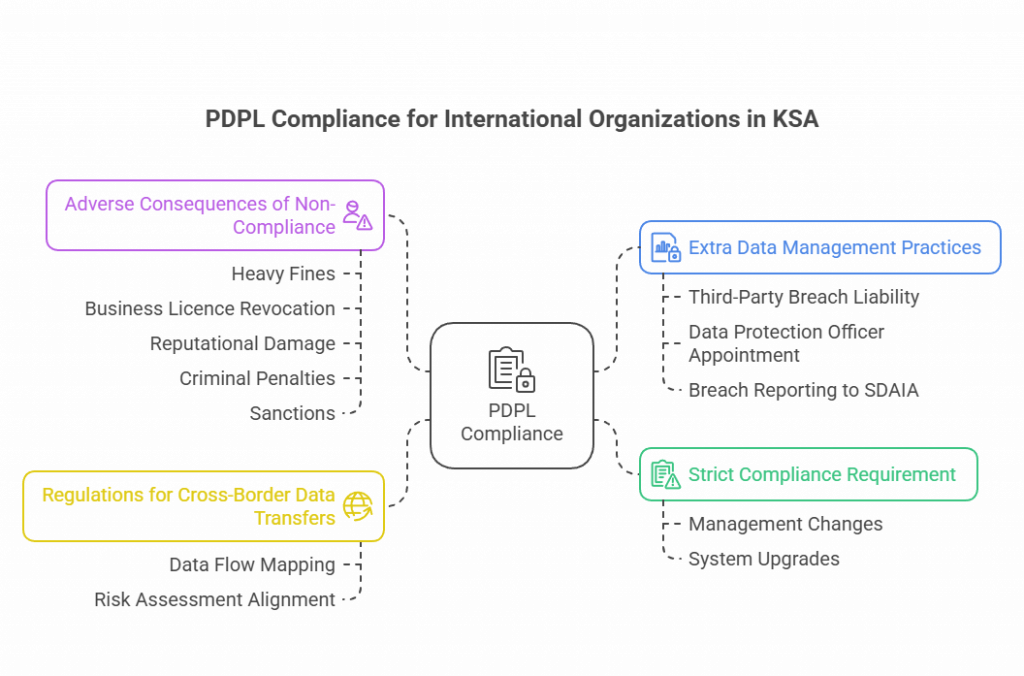
Strict Compliance Requirement
All international organizations operating within the limits of KSA or processing Saudi Arabia’s residents’ data must adhere to PDPL compliance to avoid heavy penalties and legal follow-ups. Organizations are supposed to make management changes and system upgrades to comply with PDPL.
Adverse Consequences of Non-Compliance
- KSA authorities can impose heavy fines.
- They can revoke your business licence.
- Reputational damage and loss of trust from customers.
- Criminal penalties with lawsuits can be a huge issue if your organization provides unauthorized approval of sensitive personal data.
- You may be subjected to sanctions all the while disrupting your operations.
Also Read : Ensuring Data Privacy Compliance: Essential Steps for Your Business
Regulations for Cross-Border Data Transfers
While transmitting personal data outside of KSA, organizations should take extra measures to ensure that the data processing is lawful. The organization should ensure safe data transfer with best practices.
In order to safeguard the cross-border operations, companies should map out the data flow. Review the necessary data transfer procedures such that they align with KSA’s risk assessment guidelines.
Extra Data Management Practices
KSA personal data protection law, organizations are liable for third-party breaches. Hence, extra measures have to be taken such that they comply with local laws. If applicable, organizations should appoint a data protection officer (DPO), and the breaches are to be promptly reported to SDAIA.
Choosing the right service is the stepping stone to achieving PDPL compliance. Choose a service that provides VAPT compliance, risk assessments, and full PDPL compliance solutions in KSA.
If you are looking for the best Data Privacy Consulting Services in Saudi Arabia, look no further. Wattlecorp’s exceptional services ensure your business stays aligned with PDPL compliance requirements.
Why Wattlecorp stands out in KSA:
- From India to Central America, the UAE, and now Saudi Arabia, Wattlecorp’s cybersecurity services are trusted across the Globe, making them experts in global compliance.
- Wattlecorp’s vision of “safer-future” caters to a compliance-first approach.
- Help you build better privacy measures, thus safeguarding your business from legal penalties.
Get your business PDPL compliance ready and stay away from hefty fines. Contact us today.
PDPL Compliance FAQs
1.What is PDPL compliance in Saudi Arabia?
Ans: Saudi Arabia’s PDPL regulates the processing of any type of personal data obtained through any source and is processed in any form, such as electronically or via paper. This law applies to you whether your company processes personal data within KSA territory or processes KSA residents’ data outside the KSA.
2.What are the top 10 questions businesses have about PDPL compliance?
Ans: The most common questions include:
1. What is the PDPL?
2. When did it come into effect?
3. Who must comply with the law?
4. What are the penalties for non-compliance?
5. How do we secure personal data?
6. What role does VAPT play?
7. Can data be transferred outside Saudi Arabia?
8. What are consent and retention requirements?
9. How do we handle a data breach?
10. What kind of documentation is required?
Wattlecorp’s experts can help with all the queries through tailored PDPL compliance services in KSA.
3.What happens if we fail to comply with data protection in Saudi Arabia?
Ans: The consequence of non-compliance with KSA personal data protection law can vary from legal penalties to authorities suspending your business license. Under PDPL, the fine can rise to SAR 5,000,000 for a data breach. Apart from all this, reputational damage is another concern you will need to address.

 Mobile Application Penetration Testing for Qatar Government Digital Services: NCSA- Aligned Security Assurance
Key Takeaways: Mobile Application Penetration Testing Qatar must cover the app, device storage, APIs, authentication and third-party components. Qatar’s NCSA assurance environment combines the National Information Assurance (NIA) Standard, the National Information Security Compliance Framework (NISCF) and accredited security assessment services. OWASP MASVS defines mobile security controls, while MASTG supplies practical test methods for Android […]
 Qatar Data Protection Law: Implementing PDPPL Data Subject Rights Processes for Businesses
Key Takeaways: The Qatar Data Protection Law (Law No. 13 of 2016) for Personal Data Privacy Protection, grants individuals specific rights such as right to access, correct, erase, object, withdraw consent, and right to be notified of processing or inaccurate disclosure. Beyond having a privacy policy, businesses or controllers, under Article 11 of Personal Data […]
 AI Governance for Indian Enterprises: Building Internal Controls Before Key DPDP Obligations Take Effect
Key Takeaways: The DPDP Act does not contain AI-specific provisions. Its requirements, however, apply in situations when an AI system processes digital personal data within its territorial and material scope. India is working on building a broader governance framework around safety, accountability, transparency and trust via programs like the IndiaAI Mission. Indian organizations should inventory […]
 Cloud Security Audit for UAE Government Cloud Migration: NCAP and Security Requirements
Key Takeaways: A cloud security audit UAE helps government entities identify security, governance, configuration, access, data-protection and resilience gaps, before and after shifting critical workloads to the cloud. UAE National Cloud Security Policy has defined cloud governance, data security, data sovereignty, IAM, incident management, resilience, portability and cloud operations requirements. The National Cyber Accreditation Program […]
 Data Privacy Consulting UAE – Building a PDPL-Compliant Data Governance Program
Key Takeaways: PDPL compliance requires ongoing operational governance that goes beyond policies to demonstrate how personal data is collected, used, protected, transferred, retained, and deleted. Data mapping helps businesses move from reactive compliance to proactive risk management by establishing a comprehensive inventory of the data ecosystem, helping build a mature data privacy and governance program. […]
 Saudi Arabia’s Critical Systems Controls: What CSP-Linked Enterprises Must Comply With in 2026
Key Takeaways: The Critical Systems Cybersecurity Controls (CSCC) are more applicable to critical systems than to all IT assets owned or operated by an organization. To be in full compliance or to remain in full compliance with CSCC, organizations must maintain continuous adherence to NCA ECC. CSCC has 32 core controls and 73 sub-controls across […]