


How Much Does VAPT Cost in India in 2026? Pricing Guide in INR
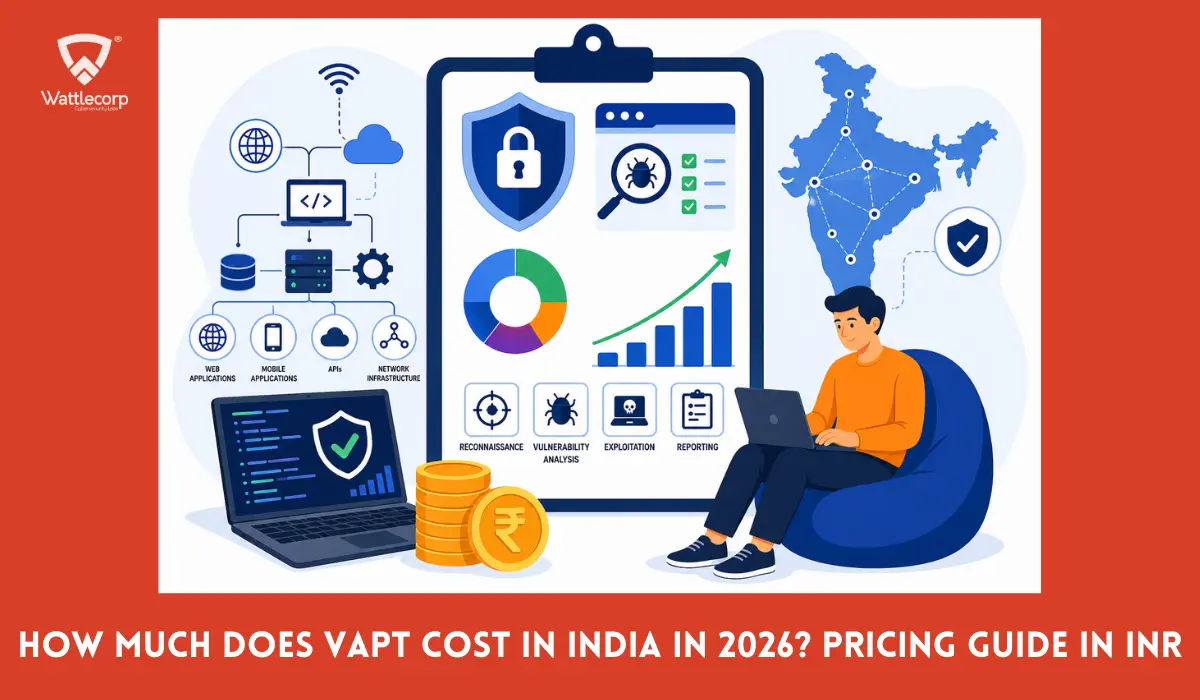
Key Takeaways:
- The three significant factors that shape the VAPT cost in India are scope, methodology and environmental complexity.
- Remediation/retesting is generally billed separately and thus it is important to read your quote before signing.
- Any significant change to your technology environment, whether a new app, cloud migration, or third-party integration, is a sign to schedule a VAPT.
Why Understanding VAPT Cost Matters in 2026 in India?
Securing an organisation’s digital ecosystem should never be considered as the least priority in the IT budget. Cybersecurity is a major concern now and DQ India reported recently that India is expected to increase cybersecurity spending significantly in 2026 to address rising cyber threats and meet evolving regulatory requirements.
As organisations work to strengthen their defences, Vulnerability Assessment and Penetration Testing, also VAPT, has become a business necessity rather than an optional service. But before taking action, one question usually comes first: how much does VAPT cost in India?
This guide answers that question in detail. Whether you are a new venture or an established enterprise, understanding VAPT cost in India is the first step to budgeting wisely. Here’s everything you need to know.
What Is VAPT and Why Indian Businesses Must Prioritize?
VAPT is a regulated security testing process done by trained professionals. It consists of two testing approaches, Vulnerability Assessment and Penetration Testing. The initial testing phase involves identifying and classifying vulnerabilities through automated and manual assessment techniques and is often mandated under regulatory frameworks.
Following this is the Penetration Testing/Pentesting, involves simulating real-world attacks to validate exploitability and assess the potential impact of identied vulnerabilities. As a result of both these processes businesses can detect risks and prepare before they cause significant damage.
For businesses operating in India, The Reserve Bank of India, SEBI, IRDAI, and the CERT-In framework all either mandate or strongly recommend periodic security testing.
However, VAPT should not be viewed only as a compliance requirement. The financial impact and the reputational damage caused by a breach can be far higher than the cost of prevention. This is already reflected in a recent IBM study which states that the average cost of a data breach in India reached ₹220 million in 2025, marking a 13% increase from the previous year.
So when comparing the losses, penalties and deterred trust from consumers, knowing the VAPT cost in India is a sensible investment for businesses.
Estimated VAPT Cost in India in 2026
The charges businesses spend on VAPT differ vastly. It is mainly based on the complexity of the industry, size of the organization, type of asset being tested, and the compliance focus. A definite and fixed pricing is difficult to list. However, we have sorted a standard pricing range for each type of testing.
| VAPT Type | Scope | Approx. Cost (INR) |
| Small Web Application | No complex logic and less page | ₹25,000 to ₹60,000 |
| Medium Web Application | Assess dynamic content, login features, APIs | ₹60,000 to ₹1,50,000 |
| Larger Web Application | Desktop / enterprise apps for firms like e-commerce, banking, fintech | ₹1,50,000 to ₹4,00,000 and above |
| Mobile Application | iOS or Android app | ₹60,000 to ₹2,00,000 |
| Internal Network/Infrastructure | Up to 50 IPs | ₹80,000 to ₹2,00,000 |
| External Network | up to 25 IPs | ₹40,000 to ₹1,20,000 |
| Cloud Security | AWS, Azure, GCP environment | ₹1,00,000 to ₹5,00,000 and above |
| Larger Scale Project | For multi-cloud environments & detailed compliance assessment | ₹5,00,000 to ₹10,00,000 and above |
Though this is a standard pricing range for specific VAPT procedures, the charges may go beyond or lower based on the number of assets, testing techniques experts follow and how often your business needs retesting.
What Factors Affect VAPT Pricing in India?
When you are taking efforts in building defenses, you need to understand what drives the VAPT audit cost in India. Here are some of the primary aspects that influence the VAPT cost in India.
Scope and Number of Assets
When an environment has more assets, naturally the testing hours increase with higher cost. A single-application engagement significantly costs less than a multi-tier environment. In here, it involves several web portals, a mobile app, and 100-plus IP addresses, where there needs more experts involved impacting the cost.
Testing Methodology
Some organizations opt for automated testing, where the vulnerability assessment is done in automated mode and the pricing is less, but it also comes with the risk of complex vulnerabilities unnoticed. Other technique is manual testing, which complements automated scanning, enabling identification of complex vulnerabilities that include business logic flaws.
In an advanced level, experts follow various testing techniques like: Black box, White box, Grey box and Red teaming.
- Black box testing mimics an external attacker with no prior knowledge of the system. This testing is a baseline approach and usually very cost effective.
- Grey box testing is done when the tester has partial knowledge about the APIs and the design documentation.
- White box testing involves full access to source code and architecture. It is comparatively the most expensive option as it involves thorough screening with experts with in-depth knowledge.
- Red Teaming is a more advanced, goal- driven adversary simulation exercise that evaluates detection and response capabilities beyond conventional VAPT practice.
Also Read : Understanding Your VAPT Report: A Complete VAPT Report Guide for Indian Businesses
Environment Complexity
A simple landing website costs far less to test than a multi-tier banking application. Cloud-native architectures, IoT ecosystems, and microservices environments introduce broader attack surfaces, including API exposures, identify misconfigurations, and container security risks, that require specialised tools and expertise which naturally influences higher cost.
Retesting and Remediation Validation
After the VAPT engagement the vulnerabilities and risk factors are identified. The detected issues are ranked based on the severity. Based on this the expert team recommend remediation that can solve the specific concern. Post the remediation, most environments require retesting to verify if the environment is secure and it involves additional cost.
Compliance Reporting Requirements
If your business needs the VAPT report formatted specifically for a regulatory body like SEBI, RBI, IRDAI, or ISO/IEC 27001, then there is additional effort in structuring the findings to meet those framework.
Executive-level reports, board presentations, and DPDPA-aligned documentation also attract a premium.
Major Benefits of Implementing VAPT in Indian Enterprises
Compliance Readiness
For businesses operating under RBI, SEBI, or DPDPA frameworks, VAPT provides documented evidence that an organisation has assessed its security posture and identified potential risks. It is a crucial part of demonstrating compliance, and without it, compliance audits can become significantly harder to pass.
Finding Vulnerabilities Earlier
Attackers easily exploit known vulnerabilities before security teams take measures fixing them. In such cases, VAPT helps Indian businesses detect those gaps early and reduce the risk of exposure.
Also Read : VAPT Remediation Verification: How to Ensure Vulnerabilities Are Properly Fixed
Protection of Customer Data and Brand Trust
A cyberattack that can avail access to customer financial or health data to attackers can destroy an organization’s trust built over years. Conducting VAPT helps strengthen defences, prevent such attacks, and protect customer trust while reducing customer churn.
Checklist on Choosing the Right VAPT Company in India
There are a wide range of VAPT providers in India who focus from large enterprises to startup firms. When comparing different ventures to find the best VAPT cost in India, you need to assess if the provider can fulfill the below criteria also:
CERT-In Empanelment
Always verify that the vendor is empanelled with the Indian Computer Emergency Response Team. CERT-In empanelment helps ensure regulatory acceptance and confirms that the provider meets baseline compliance standards for security assessments in India.
Domain and Sector Expertise
A firm with deep experience in banking will understand RBI’s specific audit expectations. Similarly, verify if the professional testers have in-depth industry-oriented training and hands on experience. Moreover, refer their clients and discuss about industry-specific case studies.
Methodology Transparency
A credible VAPT provider will clearly help you determine whether they follow OWASP, PTES, NIST, or a combination of methodologies. Practical answers with solid proof are evidence of quality service providers.
Report Quality and Post-Test Support
VAPT is not performed solely on finding vulnerabilities. It also helps your team understand and resolve them before they turn harmful. This is why it is necessary to check the expertise by reviewing the quality of sample reports. Look for clear severity ratings, practical remediation steps, and risk explanations instead of basic scanner output.
How to Choose a VAPT Company That Fits Your Budget in India
With the surge of AI-driven threats and compliance requirements, vulnerability assessment cannot be considered as the least priority. Though this pushing need is driving organizations to analyse an appropriate VAPT cost in India, it is equally important to find a right provider.
Wattlecorp has trained professionals with in-depth knowledge in regional regulatory rules, industry relevant exposure and experience in detecting vulnerable areas in different organizations before challenging instances occur.
What sets Wattlecorp different is the transparency in reporting, genuine understanding about the evolving threat environment, compliance requirements, and years of penetration testing expertise. By partnering with this firm, your organization is built secure and audit ready.
VAPT Cost in India FAQs
1.What factors affect VAPT pricing in India?
The main factors are the number and type of assets being tested, the testing methodology (black, grey, or white box), complexity of the target system, CERT-In empanelment of the auditor, whether retesting is included, and the compliance reporting format required.
2.Does VAPT pricing include compliance reporting and retesting?
Not always. Basic VAPT packages cover testing and a technical report. Compliance-formatted reports and retest cycles are usually quoted separately. Before signing the contract verify in detail what all comes under the testing service.
3.How often should Indian businesses conduct VAPT?
Frequency depends on your sector and how rapidly your technology changes. Banking and fintech firms should do tests on quarterly basis or after every major release. Most regulated industries benefit from bi-annual testing. General SMEs should conduct VAPT at minimum once a year and after any significant infrastructure or application change.

 Mobile Application Penetration Testing for Qatar Government Digital Services: NCSA- Aligned Security Assurance
Key Takeaways: Mobile Application Penetration Testing Qatar must cover the app, device storage, APIs, authentication and third-party components. Qatar’s NCSA assurance environment combines the National Information Assurance (NIA) Standard, the National Information Security Compliance Framework (NISCF) and accredited security assessment services. OWASP MASVS defines mobile security controls, while MASTG supplies practical test methods for Android […]
 Qatar Data Protection Law: Implementing PDPPL Data Subject Rights Processes for Businesses
Key Takeaways: The Qatar Data Protection Law (Law No. 13 of 2016) for Personal Data Privacy Protection, grants individuals specific rights such as right to access, correct, erase, object, withdraw consent, and right to be notified of processing or inaccurate disclosure. Beyond having a privacy policy, businesses or controllers, under Article 11 of Personal Data […]
 AI Governance for Indian Enterprises: Building Internal Controls Before Key DPDP Obligations Take Effect
Key Takeaways: The DPDP Act does not contain AI-specific provisions. Its requirements, however, apply in situations when an AI system processes digital personal data within its territorial and material scope. India is working on building a broader governance framework around safety, accountability, transparency and trust via programs like the IndiaAI Mission. Indian organizations should inventory […]
 Cloud Security Audit for UAE Government Cloud Migration: NCAP and Security Requirements
Key Takeaways: A cloud security audit UAE helps government entities identify security, governance, configuration, access, data-protection and resilience gaps, before and after shifting critical workloads to the cloud. UAE National Cloud Security Policy has defined cloud governance, data security, data sovereignty, IAM, incident management, resilience, portability and cloud operations requirements. The National Cyber Accreditation Program […]
 Data Privacy Consulting UAE – Building a PDPL-Compliant Data Governance Program
Key Takeaways: PDPL compliance requires ongoing operational governance that goes beyond policies to demonstrate how personal data is collected, used, protected, transferred, retained, and deleted. Data mapping helps businesses move from reactive compliance to proactive risk management by establishing a comprehensive inventory of the data ecosystem, helping build a mature data privacy and governance program. […]
 Saudi Arabia’s Critical Systems Controls: What CSP-Linked Enterprises Must Comply With in 2026
Key Takeaways: The Critical Systems Cybersecurity Controls (CSCC) are more applicable to critical systems than to all IT assets owned or operated by an organization. To be in full compliance or to remain in full compliance with CSCC, organizations must maintain continuous adherence to NCA ECC. CSCC has 32 core controls and 73 sub-controls across […]