

Brute Force Attacks

All about Brute Force Attacks
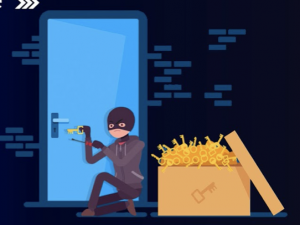
A common technique used by cybercriminals to gain unauthorized access into user profiles is brute force attacks. It is a well-known technique not just among ethical hackers, but also among knowledgeable people outside the field. But what is brute force?
What are Brute Force Attacks?
The basic form of brute force attacks is checking a large list of usernames and passwords to get the right combination of lists and usernames. This is done by cross-checking both entries to find the right one. These days, cybercriminals gather a huge amount of information about the target and create a wordlist using that information. The process has been automated using these methods.
In web applications, brute force attacks are used to find hidden pages within a website or application. This is done by creating a wordlist of the known pages and then attacking the authentication.
Tools and Techniques for Brute Force
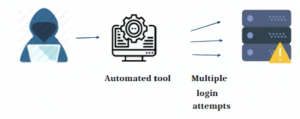
While brute force refers to the mode of attack that gains unauthorized access, that isn’t the technique or tool used for the same. There are different tools and techniques used for brute force attacks.
The different types of brute force attacks depend on the way it does repeat checking for passwords. Some of the common brute force attack mechanisms include Dictionary Attacks
, Rainbow Table Attacks, and Credential Stuffing. Dictionary attacks refer to the creation of a wordlist and then checks individually from the list, also known as a dictionary to find the right one.
Read More about Top 3 Steganography Tools
A Rainbow Table Attack finds the hash function corresponding to the password with the target user and then is used to access the database. The most common type of attack is called Credential Stuffing. Credential Stuffing finds the right username and password which is available based on data breaches that had happened on the dark web. The lesser amounts of time consumption and increasing success rate make Credential Stuffing reliable software.
Just like the technique used for brute force, there are a few tools as well. Some of the well-known brute force tools include THC-Hydra, John the Ripper, and Aircrack-ng. THC-Hydra is well known due to its simplistic nature and ability to brute-force more than 50 protocols across multiple operating systems. The ability of John the Ripper to detect and dynamically play across different websites makes it a good addition. Another good tool used for WiFi password cracking is Aircrack-ng which is a packet sniffer used in networking. Another example of a tool in brute force is Dirbuster, specializes in web application attacks.
Eviction and Avoiding
Brute force attacks can be easily identified with frequent monitoring of the logs. In cases where multiple failed login attempts are detected by the presence of multiple failed logins from the same IP address. Login attempts with multiple username attempts from the same IP address point to the same. These are all examples of situations where brute force attacks have taken place.
While there are no surefire ways to get rid of brute force attacks, there are possibilities to reduce the attempts and make it difficult for such attacks to be successfully done. The best bet is to create a complex password for your accounts so it gets difficult to obtain. Another way is to create different passwords for different accounts. In cases where you have only one password, cybercriminals have instant access all others once one of them is logged in. Using Recaptcha helps in avoiding multiple login attempts.
Read More about How to Create a Strong Password
Contributors: Sherin Saji, Labeeb Ajmal

 Mobile Application Penetration Testing for Qatar Government Digital Services: NCSA- Aligned Security Assurance
Key Takeaways: Mobile Application Penetration Testing Qatar must cover the app, device storage, APIs, authentication and third-party components. Qatar’s NCSA assurance environment combines the National Information Assurance (NIA) Standard, the National Information Security Compliance Framework (NISCF) and accredited security assessment services. OWASP MASVS defines mobile security controls, while MASTG supplies practical test methods for Android […]
 Qatar Data Protection Law: Implementing PDPPL Data Subject Rights Processes for Businesses
Key Takeaways: The Qatar Data Protection Law (Law No. 13 of 2016) for Personal Data Privacy Protection, grants individuals specific rights such as right to access, correct, erase, object, withdraw consent, and right to be notified of processing or inaccurate disclosure. Beyond having a privacy policy, businesses or controllers, under Article 11 of Personal Data […]
 AI Governance for Indian Enterprises: Building Internal Controls Before Key DPDP Obligations Take Effect
Key Takeaways: The DPDP Act does not contain AI-specific provisions. Its requirements, however, apply in situations when an AI system processes digital personal data within its territorial and material scope. India is working on building a broader governance framework around safety, accountability, transparency and trust via programs like the IndiaAI Mission. Indian organizations should inventory […]
 Cloud Security Audit for UAE Government Cloud Migration: NCAP and Security Requirements
Key Takeaways: A cloud security audit UAE helps government entities identify security, governance, configuration, access, data-protection and resilience gaps, before and after shifting critical workloads to the cloud. UAE National Cloud Security Policy has defined cloud governance, data security, data sovereignty, IAM, incident management, resilience, portability and cloud operations requirements. The National Cyber Accreditation Program […]
 Data Privacy Consulting UAE – Building a PDPL-Compliant Data Governance Program
Key Takeaways: PDPL compliance requires ongoing operational governance that goes beyond policies to demonstrate how personal data is collected, used, protected, transferred, retained, and deleted. Data mapping helps businesses move from reactive compliance to proactive risk management by establishing a comprehensive inventory of the data ecosystem, helping build a mature data privacy and governance program. […]
 Saudi Arabia’s Critical Systems Controls: What CSP-Linked Enterprises Must Comply With in 2026
Key Takeaways: The Critical Systems Cybersecurity Controls (CSCC) are more applicable to critical systems than to all IT assets owned or operated by an organization. To be in full compliance or to remain in full compliance with CSCC, organizations must maintain continuous adherence to NCA ECC. CSCC has 32 core controls and 73 sub-controls across […]