

Sama Cyber Security Framework: A Detailed Guide

You must have heard about the SAMA Cybersecurity framework whenever the topic of data protection or cybersecurity comes up. We are living in an era of massive and extensive digital proliferation. While this brings with it several inherent advantages, it also gives rise to mischief makers. Malicious individuals are coming up with innovative ways to hack into systems and steal sensitive data that could cause grave damage to the victims. Unsurprisingly, cybersecurity has gained paramount importance today, and any business that deals with sensitive or critical customer information gives top priority to data protection.
Unlike earlier, there is widespread awareness regarding the severity and potential damage caused by cyberattacks, and the importance of implementing cybersecurity measures. Private entities and government organizations alike today want to have the most robust cyber protection possible. It is also mandated by law in most countries. Information assets and online services have become critical for businesses, government agencies, and individuals too; safeguarding them is essential for the economy as well as national security.
What Is a Cybersecurity Framework?
The business environment is intensely competitive, and everyone wants to deliver seamless customer experiences. They want to ensure that their systems are always up and capable of providing service and reassure customers regarding the safety of their information.
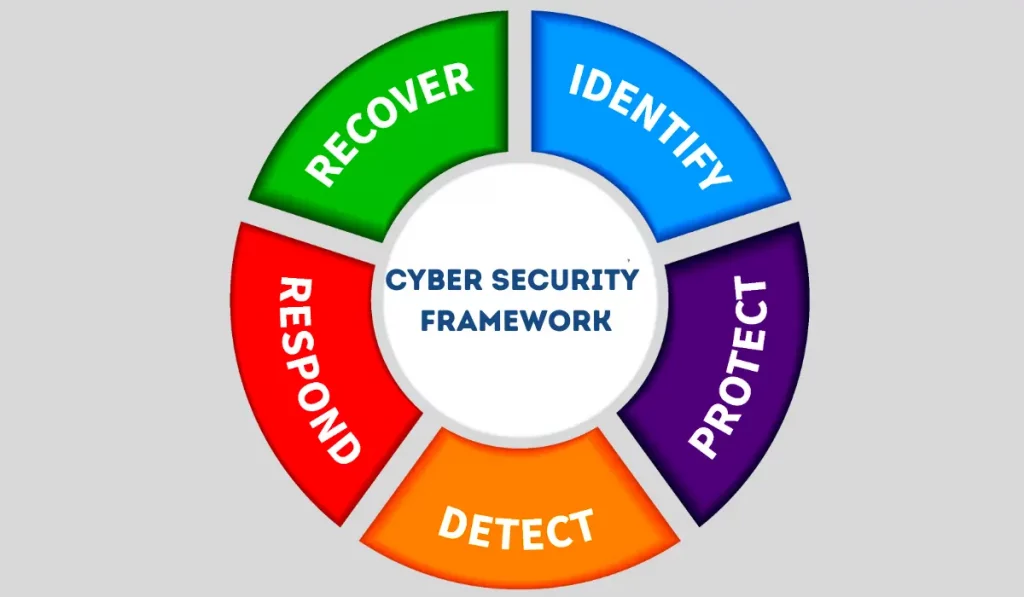
You can think of a Cybersecurity Framework like a rulebook or a set of guidelines and best practices that help you thwart cyber attacks and safeguard data; it helps you to ascertain your risk tolerance and implement controls.
Saudi Arabia continued to roll out the 5G network while also trying to monitor the emerging vulnerabilities it was exposed to. The GCC countries had rapidly adopted digitalization, which also increased their risk exposure. The rapid digital proliferation, geopolitical situation, vast deposits of natural resources, and the immense wealth in Saudi Arabia, made it a high-level, frequent target of malicious cyber-attacks.
It became imperative to craft strategies and regulations to build, maintain, and improve cybersecurity. As per a poll conducted recently by KPMG CEO Outlook, 20% of CEOS in Saudi stated that their biggest challenge was cybersecurity.
What is SAMA? Why was it formulated?
The SAMA cybersecurity framework was created by the Central Bank of KSA, the Saudi Arabian Monetary Authority (SAMA), with a view to strengthening the cyber resilience of organizations by adopting the best practices and standards prevalent globally. They made it mandatory for all entities to implement a specific level of cyber security measures that would allow them to thwart cyber-attacks.
In keeping with its commitment to boost cybersecurity, SAMA Saudi Arabia came out with its first version of the Cyber Security Framework or SAMA CSF. The central bank mentioned in the introduction that with the emergence of technological advancements and innovative services like blockchain and fintech, new regulations were essential to protect against new threats.
The SAMA IT governance framework is exhaustive and strict and defines the important goals and principles of cybersecurity that regulated entities must implement and attain. SAMA has split them into four major domains of cybersecurity, namely, Risk Management and Compliance, Leadership and Governance, and Operations and Technology.
The SAMA CSF controls all the cybersecurity activities of the organizations regulated by SAMA.
Let us look at the objectives of the SAMA regulations with regard to member organizations:
- Formulating a common approach to deal with cyber-security
- Ensuring a proper maturity level of cyber security controls
- Effective management and mitigation of cyber security risk
What kinds of organizations must comply with the SAMA cybersecurity framework guidelines?
The SAMA framework monitors and regulates cybersecurity activities of all the member organizations in Saudi Arabia that fall in its ambit, like:
- Banks
- Financing companies
- Insurance and reinsurance companies
- Credit bureaus
- Financial market infrastructure
What is the Scope of the SAMA Cyber Security Framework?
The SAMA IT Security Framework describes the basic goals and principles member organizations need to follow to initiate, implement, maintain, supervise, and improve cyber security controls. The framework also affords an exhaustive suite of cybersecurity controls that help protect the information assets in member organizations, their subsidiaries, customers, employees, and third-party associates.
While it often overlaps with corporate policies that deal with issues like security and fraud detection and management, the SAMA Cybersecurity Policy does not expressly mention security requirements for these areas that are not related to cybersecurity.
The Cybersecurity Framework Saudi Arabia outlines cybersecurity controls for information assets regulated by SAMA, like:
- Electronic data
- Tangible records: Paper documents that are hard copies of electronic information
- Electronic machines like ATMs and computers
- Databases, software, apps, electronic services, etc.
- Devices used for storage, like hard disks, USB sticks, and DVDs.
- Technical infrastructure including equipment, premises, communication networks, etc.
What are the Benefits of SAMA CSF ?
The member organizations enjoy several benefits like a strong infrastructure that includes preventive and analytical measures required for the rapid identification and resolution of cybersecurity risks.
Organizations also are able to evaluate and identify the maturity levels of various controls, relevant checks, and so on. Financing, banking, and insurance companies can be better equipped to deal with cybersecurity problems by adopting SAMA Cybersecurity Standards. By complying with the framework, businesses can gain the trust of their customers and assure them that their critical data is safe, thereby boosting brand reputation.
SAMA launched the CTI or Cyber Threat Intelligence principles in March 2022, making it an integral and critical part of the framework. It was also mandatory for organizations to be in compliance with SAMA cybersecurity requirements.
These principles can be used by financial institutions to enhance the management of the threat environment and generate practical and valuable threat intelligence. The framework also makes it mandatory for organizations to spread awareness about cyber security and cyber attacks within the organization through employee training programs.
The cyber threat intelligence principles define the best practices to generate, manage, and distribute threat intelligence that financial institutions in Saudi must follow, including Core, Operation, Strategic, Tactical, and technical principles.
Core CTI Principles
These are the basic principles and form the foundation for the other threat intelligence categories. They involve the activities necessary to plan, create, and distribute CTI.
Strategic CTI Principles
These are connected to a dedicated threat intelligence approach that involves the activities required to recognize the aims and intentions of malicious actors, and what motivates them.
Operational CTI Principles
These focus on actions necessary to recognize the mode of operations, strategies, and behaviors used by the malicious entities.
Technical CTI Principles
These principles involve the actions required to identify the technical aspects and indicators of cyber-attacks.
It is crucial that member organizations implement all the principles mentioned above; however, the decision of when all of them should be fully implemented is left to the organizations.
Remember, if you’re a financial institution operating in Saudi and you have outsourced your Cyber Threat Intelligence capabilities, you must communicate to the service provider that these principles need to be implemented in your organization.
SAMA Cybersecurity Framework: A Requisite for Financial Security
The SAMA Cyber Security Framework is a risk-based framework that provides distinct goals and objectives of Cyber Security that member organizations need to implement and achieve. The SAMA cybersecurity framework checklist guides organizations on the required controls they need to consider to be in compliance with SAMA CSF.

Thanks to the SAMA cybersecurity framework checklist, banks, insurers, and other financial institutions are today well aware of the nature of their information assets along with their scope and the cyber threats they are vulnerable to. These threats exponentially increase whenever new technologies emerge or new services are introduced.
The Saudi Central Bank quickly realized that merely requesting or recommending financial institutions like banks to adopt the framework voluntarily would not result in full adoption, and complete adoption of the SAMA CSF was essential to achieve robust cyber resilience and safeguard all electronic data.
How Can Wattlecorp Help in Achieving SAMA CSF Compliance?
Wattlecorp has experienced ISMA-certified auditors with the expertise and knowledge required to ensure that your organization is in compliance with SAMA CSF. We provide hand-holding support at every phase of the implementation, eliminating guesswork and putting you at ease. We help implement all the checks and controls so that no unauthorized individual can access any document on your system. Our vast experience in SAMA Compliance consulting and Cybersecurity solutions enables us to identify your risk profile and identify the gaps in your compliance.
We provide recommendations on plugging the gap and bringing your organization up-to-date with all the requirements of SAMA compliance framework. Our expertise guarantees that without compromising on quality or thoroughness, we will complete our audit, analysis, recommendation, and implementing controls in the least possible time. Wattlecorp will carry out vulnerability assessments on a regular basis to ensure that your organization has no security gaps; if we find any, we fix them right away.
Wattlecorp offers sophisticated firewalls and other water-tight security measures to help you protect your sensitive data.
If your organization has not yet implemented the SAMA CSF controls and is not in full compliance with the framework, get in touch with us now!

 Data Privacy Consulting for Saudi Enterprises: How to Operationalize PDPL Data Subject Rights in 2026
Key Takeaways: The Saudi data protection law may apply to organizations outside the Kingdom when they process personal data related to individuals in Saudi Arabia, meaning geographic location alone does not automatically exclude an organization from PDPL obligations. PDPL data subject rights span access, correction, deletion, and consent withdrawal, and enterprises are on the hook […]
 Third-Party Vendor Security Risk Assessment Under DPDP: A Guide for Indian Enterprises
Key Takeaways: Third-party vendor risk assessment with DPDP practices helps Indian enterprises to verify that external partners handle personal data with adequate safeguards. The Digital Personal Data Protection Act holds data fiduciaries accountable for vendor conduct, which makes due diligence a legal and operational necessity. A structured vendor security questionnaire, covering encryption, access control, and […]
 Virtual CISO Services for UAE Free Zone Startups: Affordable Security Leadership for Growing Companies
Key Takeaways: Most startups already hold sensitive data such as customer info, source code, financials, long before they feel big enough to take security seriously, and that’s exactly when the risk starts. A virtual CISO gets you someone who’s done this before, setting up strategy and guiding compliance, without the cost of putting a full-time […]
 SOC as a Service for Indian BFSI and FinTech Companies: 24/7 Monitoring for CERT-In Readiness
Key Takeaways: SOC as a Service for BFSI and FinTech India gives banks, NBFCs, insurers and digital lenders continuous security visibility without the cost and hiring effort of building an in-house operations centre. CERT-In directions require regulated entities to report qualifying cyber incidents within six hours of detection, and implementing SOC for BFSI and FinTech […]
 SOC as a Service in India: How It Works, Pricing, and Why Businesses Need It
Key Takeaways: SOC as a Service helps Indian businesses to get 24×7 security monitoring without huge cost and complexity of building a full in-house security operations center. A managed SOC check and analyse beyond basic log monitoring, which combining SIEM, threat intelligence, analyst-led alert triage, incident escalation, reporting, and security response support. SOC as a […]
 Mobile App Security Testing for Indian Digital Lending Apps RBI, DPDP and API Risk Checklist
Key Takeaways: Mobile app security testing forms an important part of meeting RBI cybersecurity expectations, secure application development practices, and periodic security assessment requirements for digital lending platforms. APIs in lending apps are constantly under attack. Broken object-level authorization, data leaking where it shouldn’t, weak token validation, and missing rate limiting, these aren’t edge cases, […]