


The Risks Of Unsupported OS: Protect Your Data and Privacy

A lot of companies stop supporting their older operating systems when they release new ones. If you compare mobile phones and laptops or desktops with old operating systems, mobile phones receive updates to newer operating systems while laptops and desktops receive updates within the existing software, but nothing new.
Security Issues With Unsupported Operating System (OS)
When a company stops supporting its operating system, examples include Windows XP and Windows Vista, it causes a lot of security issues to the users. Here are a few of the problems that are caused while running an unsupported OS.
1. The Growth of a Ticking Time Bomb
For an unsupported OS, the developers stop releasing any new security patches and updates. For such systems, every bug can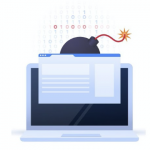 prove to play a pivotal role in case the computer crashes. For a system that is outdated, no more security updates will be released and each bug discovered since the last update will be the start of a huge new mountain of problems.
Hence each vulnerability can become part of a time bomb that can go out to unsettle anytime soon or even after a decade.
2. Axing Third-Party Apps
When software is announced to be unsupported by its developers, third-party apps on it take two approaches. The first one is limiting the number of new features being made available on the app, which won’t be enabled on these outdated software devices. The other approach is that the company stops supporting the system and those with old systems won’t be able to use the app.
3. Data Risks
4. Poor Performance
As it is well known, older operating systems lead to poor and unsatisfactory performances. For systems that aren’t supported, the performance is even worse. Such problems prove to be twice as troublesome, in54qwin it poses the question, allowing huge losses. The reliability of that device decreases over time.
Contributors : Labeeb Ajmal

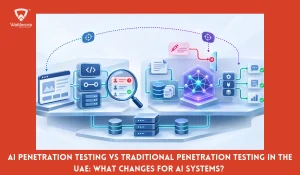 AI Penetration Testing vs Traditional Penetration Testing in the UAE: What Changes for AI Systems?
Key Takeaways: AI penetration testing adds model behaviour, data exposure, and tool misuse to security assessment scope. Traditional testing remains necessary for networks, applications, APIs, and cloud infrastructure. Training data and retrieved documents can introduce security risks. Reports should record configuration, repeated attempts, and business impact. Retest before launch and after changes affecting security boundaries. […]
 Cybersecurity Risk Assessment vs VAPT in Qatar: What’s the Difference?
Key Takeaways: Risk assessments evaluate business exposure across people, processes, and technology. VAPT identifies weaknesses and validates exploitable attack paths within an agreed scope. A risk register supports ownership, treatment decisions, and management oversight. Qatar compliance requirements depend on the applicable standards, sector, and contractual obligations. Test results should update risk ratings and remediation priorities. […]
 Threat Hunting vs SOC Monitoring in India: What’s the Difference?
Key Takeaways: Monitoring is alert-driven. It reacts, around the clock, to what your rules and tools flag. Hunting is hypothesis-driven. An analyst assumes an attacker already got past those rules and searches for the evidence. Both run on largely the same data and tools. What changes is the question asked of that data. The Indian […]
 Security Architecture Review vs VAPT in Saudi Arabia: Which Security Assessment Does Your Business Need?
Key Takeaways: A security architecture review assesses security design; VAPT evaluates, validates, and prioritises weaknesses in implemented systems. Both support risk decisions, but neither replaces the other. Review new designs early and test implementations before launch. Match assessment scope to business exposure and applicable Saudi requirements. Request actionable findings, remediation ownership, and appropriate verification. One […]
 Top 10 Benefits of Penetration Testing for SaaS & Enterprises in India
Key Takeaways: Finds flaws scanners miss: manual testing catches what automated tools don’t recognise. Proves real impact: shows what an attacker could actually reach, not just a list of possible issues. Exposes misconfigurations: finds exposed interfaces and version leaks across networks and cloud. Secures APIs and integrations: tests the connections that carry your customers’ data. […]
 Compromise Assessment vs Incident Response in the UAE: What’s the Difference and When Do You Need Each?
Key Takeaways: A compromise assessment is a proactive check for signs that an attacker is already in your environment. Incident response is the reactive work of handling a known or suspected incident. The trigger is the clearest dividing line: no known incident means an assessment, an active incident means response. The two feed each other. […]