SAMA Cloud Computing Services in Saudi Arabia
We help businesses in KSA understand the SAMA Cybersecurity Framework, identify gaps, implement required controls, and maintain long-term compliance.
What is the SAMA Regulatory Framework?
The SAMA Regulatory Framework is a structured set of cybersecurity, governance, and operational rules prepared by the Saudi Central Bank. The compliance structure is prepared, focusing on banks, insurance companies, financing companies, fintechs, and other regulated entities. SAMA compliance rules define how your finance-based business
must manage risks, protect customer data, prevent fraud, and maintain the stability of the Kingdom’s financial sector.
To stay secure from the emerging threat factors, your business must abide by this framework, which follows essential controls such as risk management, cybersecurity readiness, and anti-money laundering measures. The rules also include threat monitoring and corporate governance.
Based on the growing security concerns, every institution in the KSA region must abide by SAMA’s supervision to operate securely, responsibly, and in a way that protects customers and the country’s financial ecosystem.


Is SAMA Compliance Mandatory in KSA?
Yes. SAMA compliance is a mandatory requirement for all organizations supervised by the Saudi Arabian Monetary Authority. Businesses that are related monetarily, including banks, insurance firms, lending companies, financing institutions, digital payment service providers, and fintech businesses of Saudi Arabia, are obliged to follow the SAMA Compliance. This means every business in the KSA region involved in monetary dealings should strictly abide by this SAMA Cloud Computing Framework.
Saudi Arabia’s Monetary Authority requires your business to follow the complete SAMA cloud compliance checklist for various business needs, like licensing, for smooth ongoing operations, and to stay prepared for regulatory audits. Moreover, those failing to comply can end up facing huge penalties, operational restrictions, reputational damage, and loss of customer trust.
Key Areas of SAMA Compliance
Defined AML & CFT Safeguards
The SAMA framework requires all financial institutions in Saudi Arabia to establish strong Anti-Money Laundering (AML) and enable controls to combat the Financing of Terrorism. These measures are implemented in businesses to ensure that none of their business activities involving money are used for illicit purposes.
Risk Identification and Management
There is a huge possibility of risks in the finance-based sector, and a comprehensive risk management structure is essential. SAMA regulatory framework expects institutions to identify all potential threats, from financial and operational risks to cybersecurity and market-related challenges. Once such risks are assessed, organizations must follow preventive steps to reduce exposure.
Organized Governance Standards
SAMA primarily emphasizes governance practices, promoting businesses to follow ethical and transparent business processes. When strong governance is actively followed, it helps reduce internal conflicts and enables smooth business operations without any disruption. A governance-adherent organization also improves trust among customers, investors, and regulators.
Strong Cybersecurity Controls
Based on the SAMA Cybersecurity Framework regulation, all finance-based institutions are subject to SAMA compliance. All these organization must protect their digital infrastructures with strong protective measures. This includes protecting sensitive customer data, monitoring vulnerable areas in the systems, deploying threat detection mechanisms, and following an incident response plan.
Continuous Monitoring and Recording
SAMA expects KSA’s fintech organizations to regularly monitor to check if each business is compliant. Here, the complete compliance evaluation covers processes, like regular audits, reporting to regulators on correct timelines, and proper documentation of all processes and controls. Monitoring consistently helps find risks early before they become challenging. By following a periodic screening approach, businesses can check their security strength and take steps to build a regulatory-aligned environment.
Common Threats Targeting Fintech Businesses in Saudi Arabia
-
Duplication and Fraudulent Activities
Cybercriminals often build replicated websites or apps of trusted financial institutions. These are some of the tricks potential threat actors use to acquire valuable credentials and financial data of customers. As a result, the business loses trust from the customer and also suffers financial loss. -
Intellectual Property Misuse
There is a growing threat due to unauthorized use of brand logos, digital assets, or proprietary documentation. Here, these attackers misuse these materials to run scams, create misleading advertisements, or deceive customers. -
Advanced Cyberattacks Targeting Financial Institutions
Saudi financial organizations are high-value targets for ransomware, phishing, malware, credential theft, and insider threats. These attacks are targeted to disrupt operations, extract financial data, or freeze systems for a huge ransom.
Benefits of Complying with SAMA Regulations
Effective Risk Mitigation
SAMA’s regulatory framework helps organizations stay alert about threats, identify them early and take essential measures before they become serious threats. By implementing structured controls, businesses can prevent disruption in their services. This way, businesses can prevent financial losses and give smooth service to the customers.
Protects Reputation
Saudi financial institutions that follow SAMA’s guidelines are trusted as a secure environment, and this eventually builds customer trust. By building a strong compliance posture, businesses can strengthen their credibility among customers, partners, and investors.
Deep Customer Trust
KSA’s monetary-based businesses must strictly follow SAMA compliance, as it is a mandatory requirement to keep business secure with protected customer data. Customers show trust in institutions that prioritize data security and strictly follow regulatory compliance. When a business is compliance-aligned, it is proof that all the data involved in its business operations is safe.
Avoiding Penalties and Legal Risks
Any financially based businesses operating in Saudi Arabia that are non-compliant are at high-risk, ending up with huge penalties, investigations, license restrictions, or severe legal action. When a business is fully compliant, it means all business operations are secure and aligned with the regulatory standards while avoiding costly consequences.
Operational Turn Efficient
The SAMA framework encourages institutions to adopt regulatory rules by structuring the internal processes in an ethical and monitored way while keeping security strong. This leads to smoother operations without any instances of breaches and allows for optimized resource management across departments.
Duplication and Fraudulent Activities
Cybercriminals often build replicated websites or apps of trusted financial institutions. These are some of the tricks potential threat actors use to acquire valuable credentials and financial data of customers. As a result, the business loses trust from the customer and also suffers financial loss.
How We Help You Become a SAMA-Compliant Business in Saudi Arabia
Gap Assessments
We evaluate your current security posture, governance practices, and operational processes involved in your business and verify them against the SAMA cloud compliance checklist. Our experts screen for risks, report what’s identified, document those, and focus on the areas that require immediate improvement.
Watchful of Continuous Updates
SAMA regularly updates its standards to stand defensive against the rising cybersecurity activities. Our experts stay alert to the regulatory changes and build your organization aligned with the latest regulatory updates.
Staff Training
Employees must be aware of the compliance and cybersecurity concerns. So, we take efforts in training your team to help them understand SAMA controls. Our professionals also provide guidance on how to identify risks, take the right measures, and respond correctly during incidents.
Customized Compliance
Every institution operates on a different set of models and systems and is likely to face unique risks. Understanding this concern, we prepare personalized compliance strategies that are apt and help with uninterrupted daily operations.
Brand Protection Measures
Most fintech-associated businesses are vulnerable to illegal copy websites, impersonation attempts, counterfeit content, and digital threats. We understand the weight of such acts and take essential measures to adhere to SAMA requirements and keep your brand protected against cybercriminals.
Listen to People
We help companies to protect their online assets.
Checkout our Services
F.A.Q
Tip • Book a consultation to get personalised recommendations.
All businesses that are operating in Saudi Arabia related to banks, insurance companies, financing firms, payment service providers, and fintechs must strictly follow the SAMA Cloud requirements. It also means that the associated third-party vendors and cloud service providers must also be SAMA-compliant.
A SAMA cloud compliance audit depends mainly on the size of your organization, the complexity of its cloud environment, and the current security posture. Talk with our experts and understand the security strength of your business and the steps needed to secure your business.
Get SAMA Cloud Compliance Consulting Today !
All you need to do is fill the form below.
Recommended Services
Officially recommended by Hackers.
PDPL Compliance
We help all Saudi Arabia’s data-intensive businesses to build a data protection regulation-aligned business with our PDPL compliance services. Through our strategic process, we assess how personal data is collected, processed, and stored, and guide them into becoming a PDPL-compliant organization. By implementing the right privacy controls, policies, and risk mitigation steps, we support organizations in handling data lawfully, reducing privacy risks, and building trust.
VAPT Services
Our VAPT services in Saudi Arabia are primarily done based on real-world security threat scenarios. We identify vulnerabilities across applications, networks, and systems through structured vulnerability assessments and run penetration testing following it. We perform simulated authorized attacks to measure the security gaps, then we prioritize risks accordingly and take necessary steps earlier. Through this practical approach, we help strengthen the security posture and reduce the chances of cyberattacks.
OT Security Services
Our VAPT services in Saudi Arabia are primarily done based on real-world security threat scenarios. We identify vulnerabilities across applications, networks, and systems through structured vulnerability assessments and run penetration testing following it. We perform simulated authorized attacks to measure the security gaps, then we prioritize risks accordingly and take necessary steps earlier. Through this practical approach, we help strengthen the security posture and reduce the chances of cyberattacks.
Recent Articles
stay up to date with recent news.
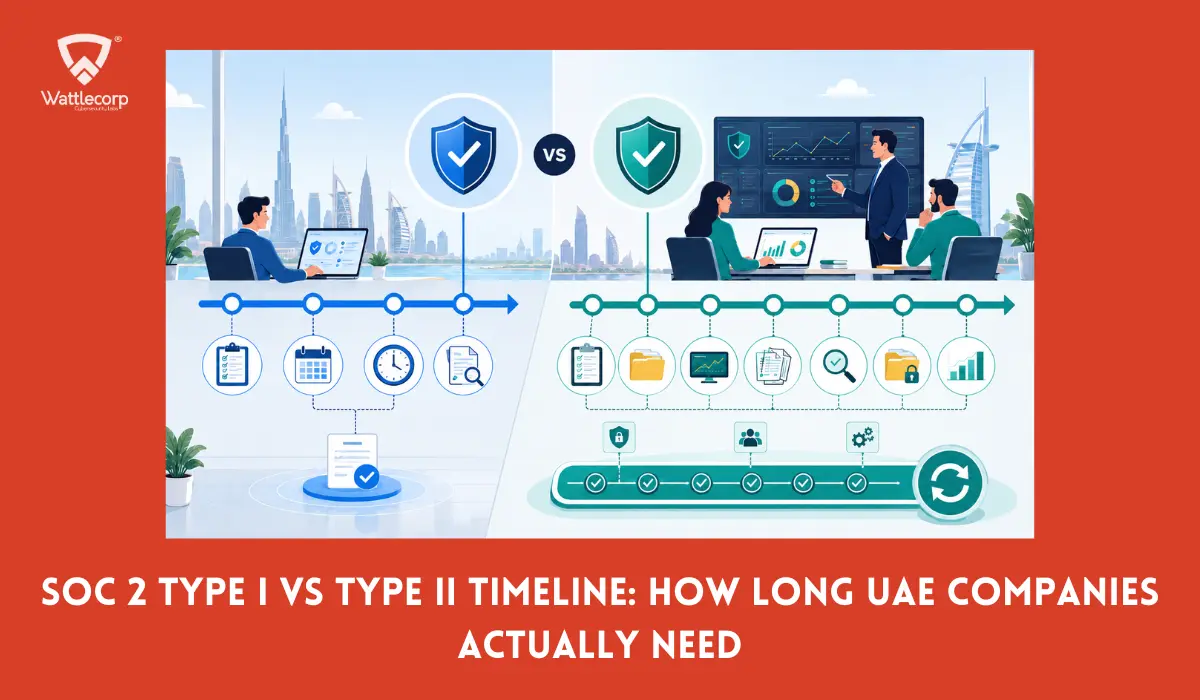
SOC 2 Type I vs Type II Timeline: How Long UAE Companies Actually Need
AI Security Testing for US SaaS Platforms: NIST AI RMF and What 2026 Standards Require