


How Aramco CCC Shapes Supplier Compliance and Cybersecurity in Saudi Arabia
Key Takeaways:
- The Aramco CCC is the mandatory regulatory gateway for all manufacturing suppliers, which focuses on access to the Aramco e-marketplace in Saudi Arabia.
- Success depends on mapping your IT and OT security controls to the specific requirements like SACS-002 implementation of the Saudi Aramco Third Party Cybersecurity Standard.
- A physical on-site assessment or audit verification by an Authorized Audit Firm is required to transform your technical evidence into a valid Aramco CCC.
- For technical validation, a penetration testing service in Saudi provides the critical remediation proof and it retest artifacts needed to satisfy high-level audit scrutiny.
- Maintaining your Aramco CCC requires a proactive renewal plan every two years to prevent commercial disruptions within Saudi Arabia.
Understanding Aramco CCC in Saudi Arabia: How Supplier Onboarding Decisions Are Made
Getting a massive Aramco contract is a major achievement, but your business cannot finalize the deal without the correct digital credentials.
In the high-stakes Saudi Arabia business ecosystem, Saudi Aramco functions as the primary driver of the national industrial sector.
To secure its critical data and industrial operational technology (OT) against global cyber threats, Aramco mandates the Cybersecurity Compliance Certificate (CCC) for every partner.
Far from being a mere formality, this Aramco CCC is a stringent validation. It ensures that every supplier from local workshops to global factories, maintains a hardened line of defense.
For manufacturing leaders in Saudi Arabia, the path to approval runs directly through the SACS-002 standard.
This journey center-stages a meticulous evidence-gathering phase. This is followed by an exhaustive on-site verification from an Authorized Audit Firm.
There are no shortcuts here. Failing to demonstrate total compliance can lead to indefinite onboarding delays.
Ultimately, the Aramco CCC serves as the vital commercial bridge. It supports the conversion of your manufacturing excellence into a trusted and long-term partnership with Aramco certification.
What Is Aramco CCC and Why Suppliers Must Care
Aramco mandates that all partners in Saudi Arabia align with the SACS-002 framework to secure the global energy supply chain.
By obtaining the Aramco CCC, suppliers demonstrate that they have implemented the technical controls and governance necessary to mitigate risks to critical infrastructure and industrial systems.
The Aramco CCC is an essential for all suppliers and it covers baseline cybersecurity controls vital for onboarding.
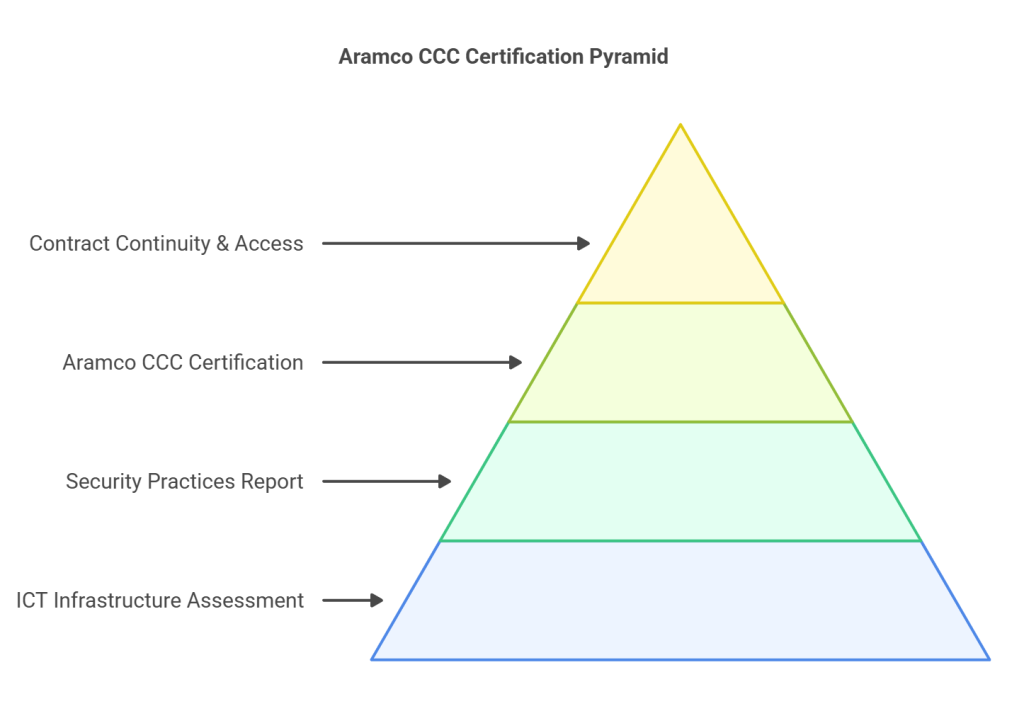
In Saudi Arabia, no certificate means no business with Aramco. The SACS-002 (Third Party Cybersecurity Standard) ensures all supply chain partners comply with specific requirements.
Vendors must assess their ICT infrastructure and fix glaring security gaps. You must furnish a report confirming you maintain adequate security practices. Only when the Aramco organization is satisfied with the evidence will they issue the Aramco CCC. This is critical for contract continuity and system access enablement.
How the Aramco CCC Process Works: Roles and Workflow
The official workflow in Saudi Arabia follows five distinct steps.
- Prepare your technical controls and gather implementation evidence.
- Select an Authorized Audit Firm via the official CCC portal.
- Complete the mandatory on-site compliance verification and assessment.
- Receive the issued certificate, which remains valid for two years.
- Submit your documentation through the Aramco e-marketplace for approval.

The supplier owns the implementation, while the auditor verifies the results.
This structured approach ensures a high level of security across Saudi Arabia’s energy sector.
Every step needs to be documented to satisfy the final audit requirements. The clear roles between the supplier and the audit firm are really vital for a smooth certification journey.y the final audit requirements. The clear roles between the supplier and the audit firm are really vital for a smooth certification journey.
Understanding SACS-002 Requirements for Manufacturers
SACS-002 defines the cybersecurity baseline for Saudi Arabia manufacturing.
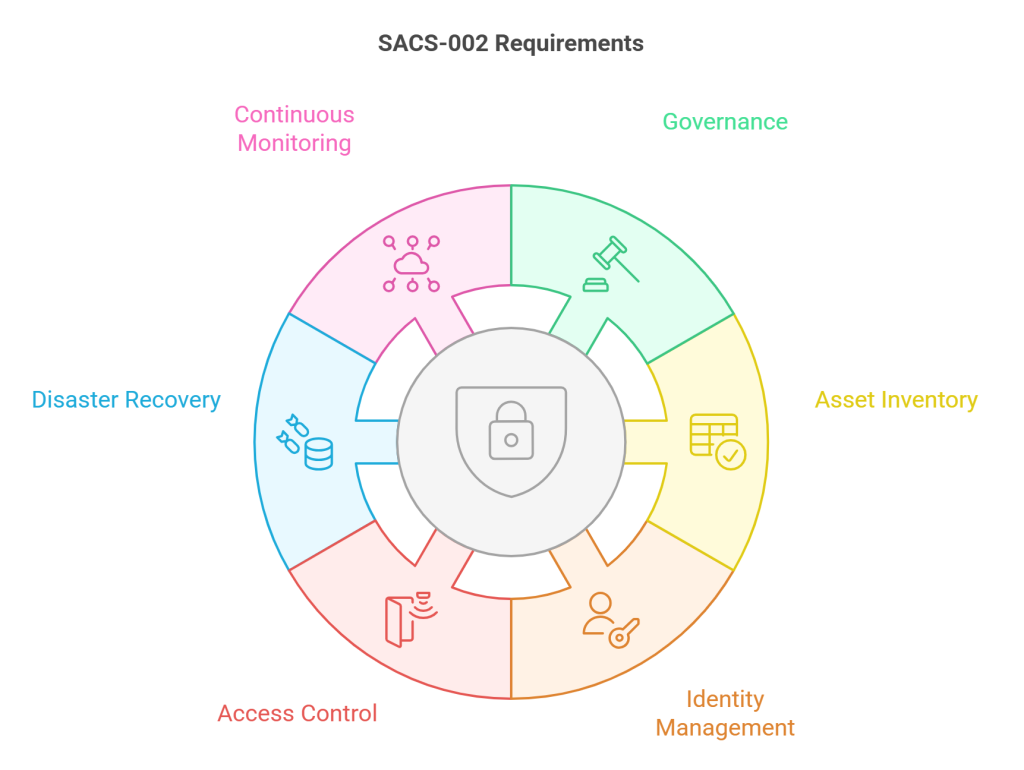
The key controls include governance, IT/OT asset inventory, and identity management. For many in Saudi Arabia, complexity arises from blending IT and OT environments.
Modern manufacturing often relies on interconnected systems, which increase the attack surface.
Auditors validate efficient technical implementation and documentation.
The standard includes 24 common and 87 specific requirements. Protection involves controlling access via passwords or badges.
You must also have disaster recovery plans in place. Detecting anomalies through continuous monitoring is also a vital part of the Aramco CCC requirements.
Penetration Testing Service in Saudi: How to Use Pentesting to Strengthen CCC Audit Readiness
A professional penetration testing service in Saudi is a strategic asset for audit readiness. The SACS-002 requires risk evaluation through active testing.
By utilizing the benefits of a penetration testing service in Saudi, you can validate your network segmentation and external exposure before the auditor arrives.
This proactive testing helps to identify vulnerabilities that an auditor would otherwise flag.
Also Read : The Top 7 Penetration Testing Companies in Riyadh, Saudi Arabia
The outputs from a penetration testing service in Saudi, which include findings reports and retest proof form the core of your evidence pack.
This strengthens your audit defensibility significantly. Implementing a penetration testing service in Saudi 30–60 days before the audit ensures all critical vulnerabilities are closed.
This proactive step is a hallmark of successful Aramco CCC journeys in Saudi Arabia.
Common Aramco CCC Audit Failures and How to Avoid Them
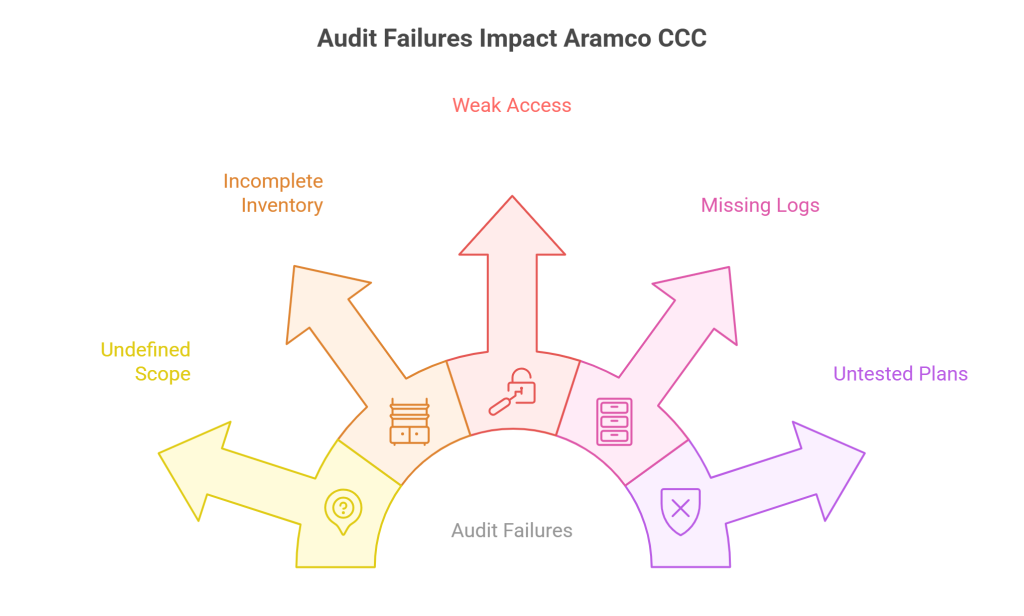
Many suppliers in Saudi Arabia fail due to undefined IT/OT scope or incomplete asset inventories.
Weak privileged access controls are another common pitfall.
Missing log retention proof or untested incident response plans often lead to audit non-compliance.
To avoid these, build your evidence during implementation rather than as an afterthought.
Early readiness scoring helps you identify weak spots before the official Aramco CCC audit begins.
Implementing an expert for pre-scoping ensures your boundaries are correctly defined. Addressing critical CVEs before the auditor arrives is essential for passing. Comprehensive preparation turns a potential audit failure into a certification success story.
CCC Approval, Validity, and Renewal Explained
The Aramco CCC is valid for two years, once it is issued in Saudi Arabia. You must plan for renewal at least six months before expiration.
It includes refreshing your evidence and remediating any new security gaps. Continuous monitoring reduces the friction of renewal.
Staying audit-ready is more efficient than rushing a renewal. Regular internal audits keep your security posture aligned with Aramco standards.
Also Read : Cybersecurity Threat Intelligence: Why It’s Essential for Business
Proactive renewal planning protects your commercial standing and prevents contract interruptions.
A valid certificate confirms your ongoing commitment to cybersecurity in the region. Maintaining this status is key to long-term supply chain partnership.
How Wattlecorp Helps Suppliers Achieve Aramco CCC
Wattlecorp provides expert support for manufacturing suppliers in Saudi Arabia. Our team specialize in the Aramco CCC process, providing support from initial gap assessment to Authorized Audit Firm coordination.
Also we ensure that your IT/OT complexity is handled with expert care. We build the implementation evidence pack required for a successful audit.
For a detailed roadmap, visit our Saudi Aramco CCC Certification Assistance page. We help you build a strong evidence pack while aligning with the NCA Essential Cybersecurity Controls (ECC) in Saudi Arabia.
Our focus is to reduce compliance cycle time significantly and ensure to bridge the gap between technical controls and audit success.
Start Your Aramco CCC Readiness with Wattlecorp.
Book a free CCC Readiness Workshop today. Get a customized gap analysis and a clear path to your Aramco CCC.

Aramco CCC FAQs
1. What is the Cybersecurity Compliance Certificate (CCC) of Saudi Aramco and to whom is it required?
Aramco CCC is a mandatory cybersecurity certification, and all third-parties conducting business with Saudi Aramco are to have it. In Saudi Arabia, it is used to enforce compliance of suppliers with the SACS-002 security standards to secure the Aramco supply chain.
2. Which are the specific procedures to follow to get CCC and what are the required documents?
The SACS-002 controls required of the suppliers in Saudi Arabia include the selection of an Authorized Audit Firm, passing on-site audit, and filing the certificate through the e-marketplace. They consist of the required documents, security policies, asset inventories, and evidence of technical controls such as encryption and logging.
3. How much time does a fast-track CCC readiness programme mean to suppliers?
To the majority of the companies in Saudi Arabia, a fast-track program takes between 60 and 90 days. This time period is based on your current level of maturity and how fast you can seal in the gaps so as to conform to the requirements of aramco CCC.
4. How do the Authorized Audit Firm on-site assessment process proceed and how to prevent the pitfalls?
Your technical configurations and documents are checked by the auditor personally. In order to pass in Saudi Arabia, make sure your asset inventory is complete and all the vital vulnerabilities discovered during your penetration testing service in Saudi are properly repaired.
5. Does penetration testing contribute to CCC readiness, and is it included into the evidence plan of SACS-002?
Yes, a penetration testing service in Saudi Arabia is essential in justifying your defenses. It can be categorized as part of the SACS-002 Identification and Protection phases and presents evidence that your risks have been identified and addressed throughout your operations in Saudi Arabia.

 Cybersecurity Risk Assessment for Saudi Supply Chain Vendors Under Aramco and NCA Expectations
Key Takeaways: Cybersecurity risk assessment becomes a practical requirement for proving security maturity, with protecting vendor relationships, and moving forward in procurement processes with Aramco and critical infrastructure clients. Vendors will need to provide evidence of access review documentation, patch deployment, monitoring artifacts, technical assessment results and more that demonstrates the controls in place are […]
 Qatar Personal Data Privacy Compliance: Security Controls for Data Protection Readiness
Key Takeaways: Qatar’s Personal Data Privacy Protection Law applies to organizations that process personal data within its scope, including many businesses handling personal data of individuals in Qatar. Non-compliance isn’t just risky; it can result in hefty fines, operational chaos, and serious damage to your company’s reputation. Personal data privacy compliance Qatar isn’t just about […]
 Azure Server Hardening for UAE Businesses: Securing Microsoft Cloud Against Misconfigurations
Key Takeaways: Azure server hardening UAE addresses the fundamental shared responsibility gap many organizations struggle with where Microsoft secures the cloud platform itself, but your organization must secure everything running on it, from configurations to identities to access controls. When Azure misconfigurations go unnoticed, they don’t quietly sit there. They actively create exploitable pathways, which […]
 Security Architecture Review for Saudi FinTech Platforms: Identity, API and Cloud Controls
Key Takeaways: Security architecture review determines that whether security enables or blocks your FinTech growth in Saudi Arabia. It focuses on the differences between confidently saying yes to new partners versus constantly hitting the security roadblocks. Your security tools only work if they’re connected. Identity systems, API gateways, and cloud controls need to feed into […]
 SOC 2 vs ISO 27001 in India: Which Compliance Framework Does Your SaaS Company Need in 2026
Key Takeaways: Choosing between SOC 2 and ISO 27001 isn’t just about getting a badge. It directly impacts your sales pitch, how customers trust you, and whether you can crack enterprise markets globally. SOC 2 is your quick win if you’re selling to US customers. Most enterprise buyers won’t even look at you without it. […]
 AWS Server Hardening for UAE Enterprises: CIS Benchmark and UAE IA Compliance Guide
Key Takeaways: If you’re running a bank, fintech, healthcare provider, government contractor, or handling sensitive data in the UAE, AWS server hardening is critical for both security and compliance readiness. You’re responsible for your own security. AWS protects their infrastructure, but you must secure everything running on it: your EC2 instances, user permissions, network access, […]