

Why Your SaaS Business Needs an Annual Security Program
What would happen if your SaaS platform went down tomorrow because of a security breach?
It’s not a question we like to think about, but it’s one every SaaS founder needs to consider. Today, cybersecurity isn’t just a checkbox—it’s a business necessity. If you’re running a SaaS company, the threats are real, and the stakes are high. Cyber attacks aren’t just targeting the big players anymore. Small and mid-sized SaaS companies are in the crosshairs too. Hackers are getting smarter, and if your security measures aren’t keeping up, you’re leaving your business exposed.
We’re talking about potential data breaches, compliance failures, and the kind of downtime that can destroy customer trust overnight. If you think a one-time security check is enough to protect your business, it’s time to rethink that strategy.
This breaks down why an Annual Security Program (ASP) is not just a good idea, but a must-have for your SaaS business.
We’ll dive into how ASP covers all the bases—vulnerability assessments, secure coding, server hardening, compliance, and more—so you can focus on what really matters: growing your business.
Read on to find out how ASP can safeguard your SaaS platform and keep your customer’s trust intact.
What is Annual Security Program (ASP)?
So, what exactly is an Annual Security Program (ASP)?
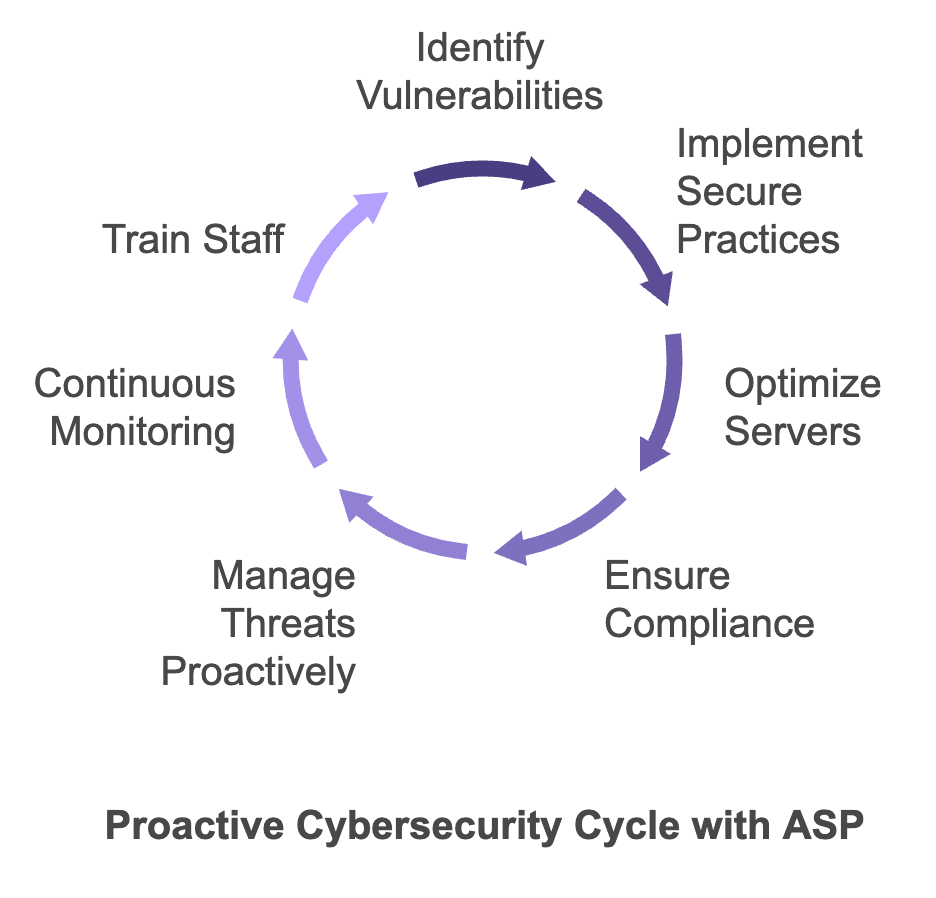
Think of it as your all-in-one cybersecurity shield. Powered by Wattlecorp, one of the fastest-growing cybersecurity companies in the world, ASP is a comprehensive, ongoing plan that covers everything from vulnerability assessments and secure coding practices to server hardening and compliance. In short, it takes care of everything cybersecurity, with the help of vetted cybersecurity experts.
ASP follows a proactive approach to safeguarding your SaaS platform. With ASP, you’re not just reacting to threats—you’re staying ahead of them.
The risks of SaaS without ASP
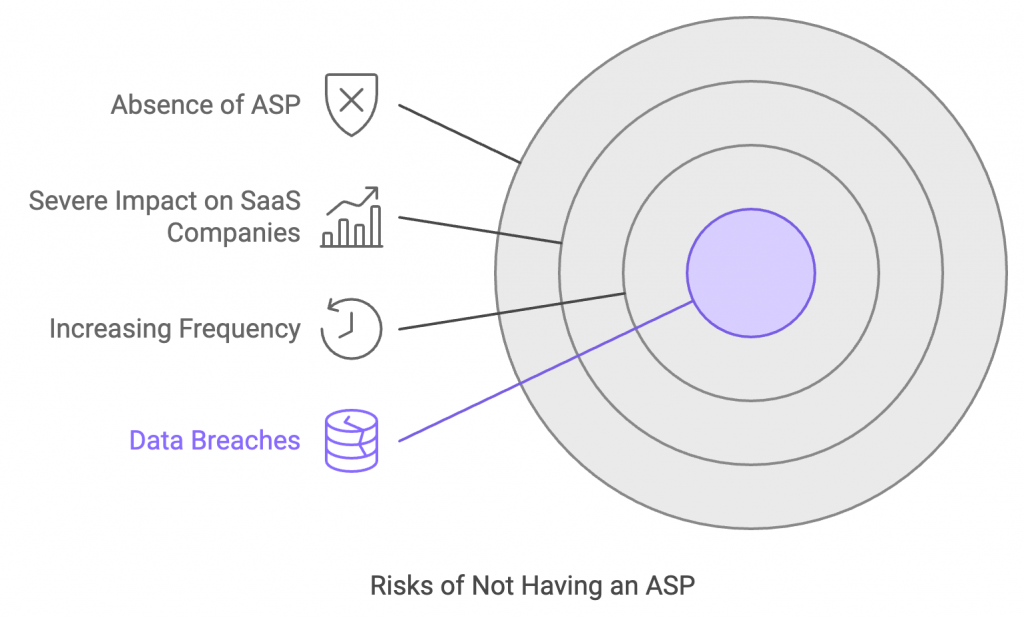
Now, let’s talk about what happens when you don’t have an ASP in place. The risks are real, and they’re big. Data breaches are becoming more common, and they’re hitting SaaS companies hard.
Take the example of Canva, a popular design app that suffered a massive data breach in 2019. Hackers accessed over 139 million user accounts, compromising emails, usernames, and even encrypted passwords. The result? A massive hit to Canva’s reputation, not to mention the cost of damage control.
Another example is Dropbox, which was breached in 2012, exposing 68 million user passwords. The breach wasn’t discovered until four years later, and by then, the damage was done. Users lost trust, and Dropbox had to scramble to recover, all because of a lapse in ongoing security practices.
These aren’t just isolated incidents. Without an ASP, your SaaS business could be next. Imagine the loss of customer trust, the potential fines for non-compliance, and the revenue hit from downtime. It’s not just the big players that are targeted—smaller SaaS companies are often seen as easier targets because they may not have the resources for robust security measures.
But here’s the thing: ASP doesn’t break the bank. It’s a cost-effective way to ensure that your platform is secure, compliant, and ready to face the ever-evolving landscape of cyber threats.
By investing in ASP, you’re not just protecting your data, you’re protecting your business, your customers, and your growth.
The cost of a data breach far outweighs the investment in the Annual Security Program. The choice is clear: protect your SaaS business with ASP and avoid becoming another statistic in the growing list of cyberattack victims.
Core Components of Our Annual Security Program
As a SaaS founder, you know that the foundation of any successful product isn’t just innovation—it’s security. Our Annual Security Program (ASP) is designed to cover all the critical aspects of cybersecurity, ensuring your platform is not only protected but also compliant with industry standards.
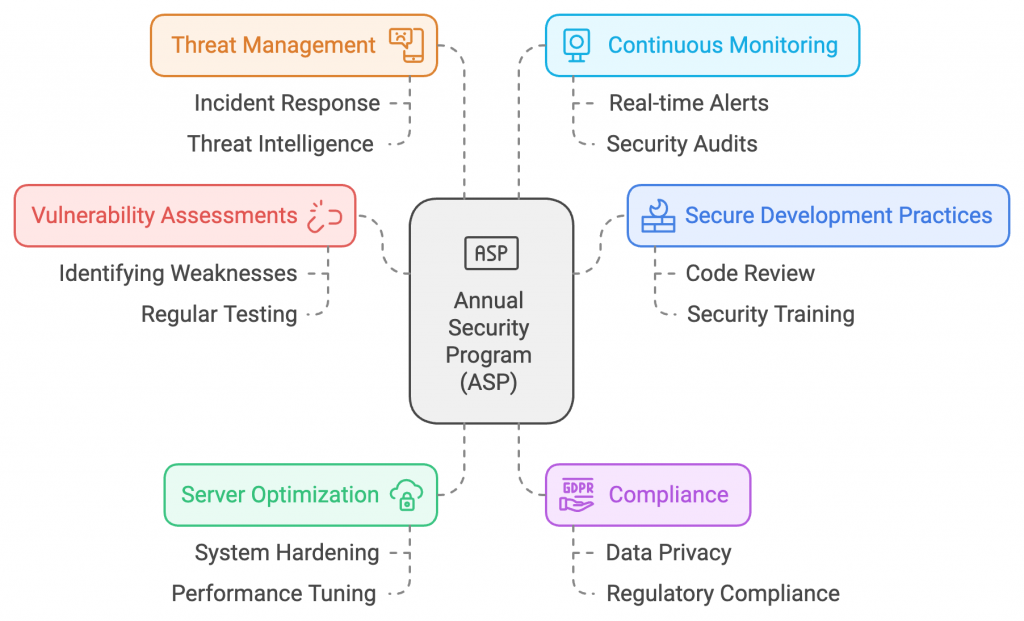
Let’s break down the core components of an ASP, and how each one plays a vital role in keeping your SaaS business secure and running smoothly.
Comprehensive Vulnerability Assessments
One-time security checks aren’t enough to protect your SaaS. Because vulnerabilities can pop up with every new feature or update.
That’s where regular, comprehensive vulnerability assessments come in. These assessments include both automated scans and manual checks by cybersecurity experts who dig deep into your system to find potential weak spots.
The goal? To catch and fix vulnerabilities before they turn into costly breaches. For SaaS founders, this means peace of mind knowing that your platform is constantly monitored and secured.
Secure Development Practices
Your code is the backbone of your SaaS product, and it needs to be solid. ASP includes regular source code reviews to ensure your codebase is free from vulnerabilities that could be exploited by attackers. But it doesn’t stop there.
We also focus on secure configuration practices, aligning your system settings with the latest security standards. This dual approach not only prevents breaches but also optimizes your platform for better performance and resilience against attacks.
Server Optimization and Hardening
Your servers are where the magic happens—they handle everything from data processing to user authentication. But they’re also prime targets for cybercriminals.
ASP includes server hardening and benchmarking, which means we assess your server’s performance and fortify its defenses against potential attacks. This ensures your servers are not just efficient but also robustly secure, keeping your SaaS platform up and running without a hitch.
Compliance and Data privacy
Meeting compliance standards like SOC2, GDPR, and HIPAA isn’t just about ticking boxes—it’s about protecting your customers and building trust.
ASP ensures that your SaaS platform meets all necessary compliance requirements, reducing the risk of hefty fines and legal issues.
But more importantly, it helps you maintain data privacy, which is crucial for customer confidence and retention. In a world where data breaches can destroy trust in an instant, staying compliant is non-negotiable.
Proactive threat management
The cyber threat landscape is constantly evolving, and staying one step ahead is critical. ASP includes proactive threat management, which means ongoing threat hunting, real-time log monitoring, and rapid incident response.
This isn’t just about reacting to attacks; it’s about anticipating them and neutralizing threats before they cause harm.
For SaaS founders, this translates to uninterrupted service, happier customers, and a stronger market position.
Continuous monitoring and training
Security isn’t a one-time effort—it’s an ongoing commitment. ASP offers 24/7 monitoring of your system, ensuring any suspicious activity is detected and addressed immediately.
Additionally, we provide training for your team, keeping them updated on the latest security practices.
This empowers your employees to contribute to your platform’s security, creating a culture of vigilance that benefits your entire business.
Why do you need ASP?
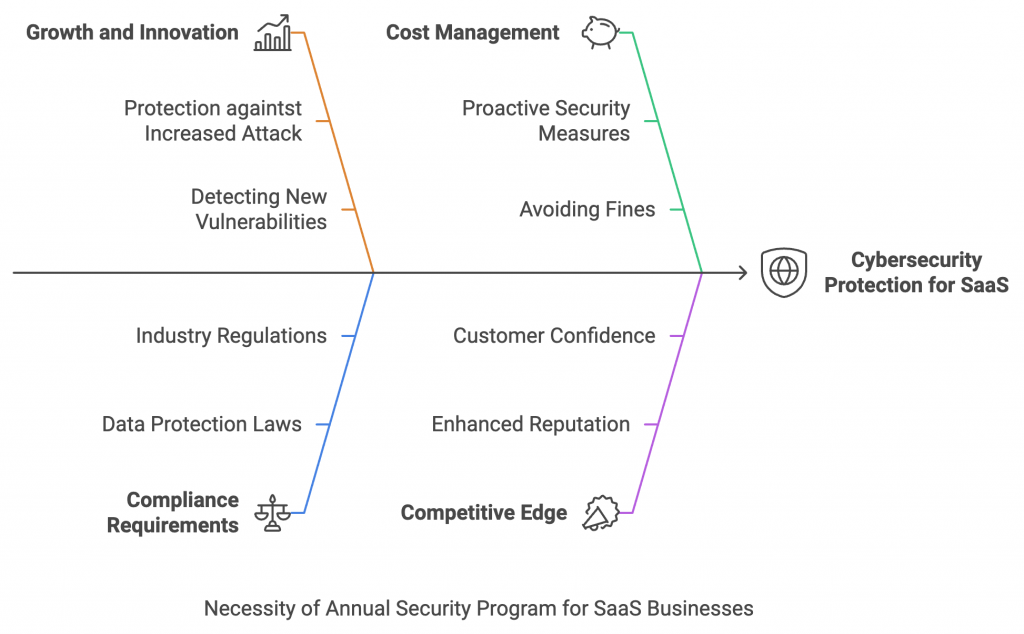
As a SaaS founder, you’re focused on growth, innovation, and delivering value to your customers. But with great growth comes great responsibility—especially when it comes to cybersecurity. Here’s why an Annual Security Program (ASP) is essential for your SaaS business:
Protect your reputation
Your reputation is built on trust. A single data breach can erode that trust overnight, leading to customer churn and damaging your brand. ASP helps prevent breaches by continuously monitoring and securing your platform, so your customers feel safe using your service
High-profile breaches make headlines, and not in a good way. By proactively securing your platform, ASP helps you avoid the kind of negative publicity that can hurt your business.
Stay compliant and avoid fines
Compliance with standards like SOC2, GDPR, and HIPAA isn’t optional—it’s mandatory. Failure to comply might result in substantial fines and judicial proceedings. ASP ensures that your platform meets all necessary compliance requirements, reducing your risk of penalties.
Regular audits can be a headache, but with ASP, your platform is always audit-ready. This means less stress for you and more confidence that your business is on the right track.
Reduce costs with proactive security
The cost of a data breach far outweighs the investment in an Annual Security Program. ASP helps you avoid these costly incidents by identifying and fixing vulnerabilities before they can be exploited.
Instead of paying for emergency fixes or dealing with the fallout from a breach, ASP offers a cost-effective way to maintain ongoing security. It’s about smart spending that saves you money in the long run.
Ensure continuous business operations
Downtime due to a cyber attack can disrupt your service and frustrate your customers. ASP includes proactive threat management and rapid incident response, helping you keep your platform running smoothly.
With ASP handling your security, you can focus on what you do best—growing your business. Let us worry about the threats so you can concentrate on innovation and expansion.
Gain a competitive edge
Customers are increasingly aware of cybersecurity risks, and they prefer platforms that take security seriously. By adopting ASP, you signal to your customers that their data is safe with you, giving you an edge over competitors who may not be as secure.
Also, you can attract bigger clients as large enterprises often require their vendors to have solid security measures in place. With ASP, you can confidently approach bigger clients, knowing you meet their security expectations.
Secure your SaaS with ASP
In short, our Annual Security Program provides you with the tools, expertise, and peace of mind you need to protect your business, satisfy your customers, and stay ahead of the competition.
Don’t wait for a breach to happen; take control of your security today with ASP.
To know more about how ASP can help your SaaS, book a free consultation with our cybersecurity experts now.

 Mobile Application Penetration Testing for Qatar Government Digital Services: NCSA- Aligned Security Assurance
Key Takeaways: Mobile Application Penetration Testing Qatar must cover the app, device storage, APIs, authentication and third-party components. Qatar’s NCSA assurance environment combines the National Information Assurance (NIA) Standard, the National Information Security Compliance Framework (NISCF) and accredited security assessment services. OWASP MASVS defines mobile security controls, while MASTG supplies practical test methods for Android […]
 Qatar Data Protection Law: Implementing PDPPL Data Subject Rights Processes for Businesses
Key Takeaways: The Qatar Data Protection Law (Law No. 13 of 2016) for Personal Data Privacy Protection, grants individuals specific rights such as right to access, correct, erase, object, withdraw consent, and right to be notified of processing or inaccurate disclosure. Beyond having a privacy policy, businesses or controllers, under Article 11 of Personal Data […]
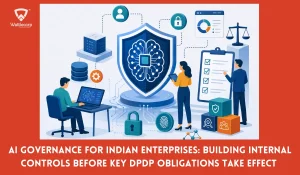 AI Governance for Indian Enterprises: Building Internal Controls Before Key DPDP Obligations Take Effect
Key Takeaways: The DPDP Act does not contain AI-specific provisions. Its requirements, however, apply in situations when an AI system processes digital personal data within its territorial and material scope. India is working on building a broader governance framework around safety, accountability, transparency and trust via programs like the IndiaAI Mission. Indian organizations should inventory […]
 Cloud Security Audit for UAE Government Cloud Migration: NCAP and Security Requirements
Key Takeaways: A cloud security audit UAE helps government entities identify security, governance, configuration, access, data-protection and resilience gaps, before and after shifting critical workloads to the cloud. UAE National Cloud Security Policy has defined cloud governance, data security, data sovereignty, IAM, incident management, resilience, portability and cloud operations requirements. The National Cyber Accreditation Program […]
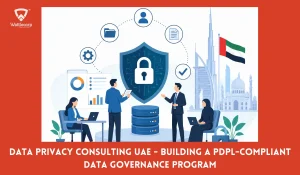 Data Privacy Consulting UAE – Building a PDPL-Compliant Data Governance Program
Key Takeaways: PDPL compliance requires ongoing operational governance that goes beyond policies to demonstrate how personal data is collected, used, protected, transferred, retained, and deleted. Data mapping helps businesses move from reactive compliance to proactive risk management by establishing a comprehensive inventory of the data ecosystem, helping build a mature data privacy and governance program. […]
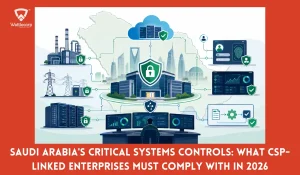 Saudi Arabia’s Critical Systems Controls: What CSP-Linked Enterprises Must Comply With in 2026
Key Takeaways: The Critical Systems Cybersecurity Controls (CSCC) are more applicable to critical systems than to all IT assets owned or operated by an organization. To be in full compliance or to remain in full compliance with CSCC, organizations must maintain continuous adherence to NCA ECC. CSCC has 32 core controls and 73 sub-controls across […]