

Penetration Testers Vs Vulnerability Scanners : Choosing the Right Approach

Penetration testers were prominent and were one of the best ways to find out the various vulnerabilities present in a system along with reports of the severity of risks posed by each of them. Then came along automated vulnerability scanners which found the same vulnerabilities at a cheaper price. In a world leaning towards automation and cheap labor, there came the million-dollar question – Do we need penetration testers when we have vulnerability scanners?
Before we step out to answer this question, we would need to understand the differences between penetration testers and vulnerability scanners, the pros, and cons, and some other things. A clear picture of both sides is required to give a whole verdict. Let us go to find the answer.
Vulnerability Scanners
As mentioned earlier, a vulnerability scanner is an automated tool. It scans the system for vulnerabilities and reports them once the scan is done. There are two types of vulnerability scanners – internal and external.
Internal vulnerabil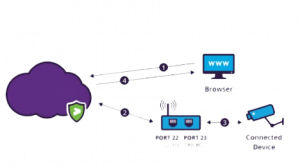 ity scanners, as the name suggests, look for vulnerabilities inside the system. This is done to know about vulnerabilities that can be exploited if a cybercriminal penetrates the perimeter getting inside or insider threats. Such scans are done within the system.
External vulnerability scanners are done outside the network. This is done to know about vulnerabilities in the firewall. This type of scan is done from an external point to check for any weak points in the firewall that would be a vantage point for cybercriminals to enter the system.
The Pros and Cons of Vulnerability Scanners
Pros –
- It is quite affordable at around 100$ per year, depending on the scanning vendor
- It is automatic and can be scheduled for daily, weekly, or monthly scans
- It is completed quickly
Cons –
- Companies need to manually check the risk factor associated with each vulnerability
- Doesn’t mention the exploitability of each vulnerability
So while vulnerability scanners find out the vulnerabilities present in the system, there is no way to find out the risks they pose. Those vulnerabilities could be random bugs that just show extra whitespaces or severe holes in the code that act as backdoors for cybercriminals to enter and leave at their whims. The only way to analyze the severities would be to employ additional tools or testers.
Penetration Testers
Now that we’ve analyzed vulnerability scanners, let us learn about penetration testers and the crux of this question we need to answer. One major difference between vulnerability scanners and penetration testers is the medium through which is done. Penetration testers are highly skilled ethical hackers while vulnerability scanners are automated tools. 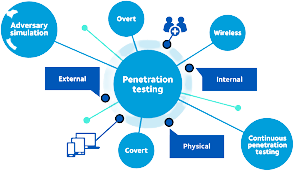
Penetration testers, like vulnerability scanners, scan the network for vulnerabilities but take the extra mile. Penetration testers then check the exploitability of each vulnerability like cybercriminals to know the severity of the vulnerability, making it an even more efficient process. Penetration Testers are recommended annually or bi-annually for every company.
Pros and Cons of Penetration Testers
Pros
- Since the test is manual and done in real-time, the results are more accurate
- Most plans include retesting once the remediation is done
- Annual tests are needed and after major changes to the code
Cons
- Since each vulnerability is manually tested, it takes longer from around a day to 3 weeks.
- The cost is much higher than vulnerability scanners and is around 150 times higher, costing $1500 – $1600 per scan
The inspection of each vulnerability does give penetration testers an extra edge over vulnerability scanners. While they are not needed regularly, such tests are required to check for any compromising issues that can be unknowingly done while bringing about a major change to any part of the application.
The Verdict
Vulnerability scanners are an interesting tool as they conduct quick scans with instantaneous results. While knowing about vulnerabilities is a good thing, proper actions can be taken only after knowing the severity of each of them. Since penetration testers need to step in to play at this junction, penetration testers remain relevant as long as the exploitation of vulnerabilities, penetration testing is still needed to understand the flaws in a system.

Contributors : Derin Shyju

 Qatar Cybersecurity Boardroom Accountability: Why QCB and NCSA Now Expect Executive Ownership
Key Takeaways: Cybersecurity in Qatar is increasingly becoming an executive governance responsibility, with national cybersecurity initiatives and sector-specific requirements encouraging organizations to establish stronger leadership oversight. QCB and NCSA play important roles in strengthening cybersecurity governance in Qatar, with QCB focusing on financial sector requirements and NCSA supporting national-level cybersecurity coordination and guidance. Executives can’t […]
 Data Privacy Consulting for Saudi Enterprises: How to Operationalize PDPL Data Subject Rights in 2026
Key Takeaways: The Saudi data protection law may apply to organizations outside the Kingdom when they process personal data related to individuals in Saudi Arabia, meaning geographic location alone does not automatically exclude an organization from PDPL obligations. PDPL data subject rights span access, correction, deletion, and consent withdrawal, and enterprises are on the hook […]
 Third-Party Vendor Security Risk Assessment Under DPDP: A Guide for Indian Enterprises
Key Takeaways: Third-party vendor risk assessment with DPDP practices helps Indian enterprises to verify that external partners handle personal data with adequate safeguards. The Digital Personal Data Protection Act holds data fiduciaries accountable for vendor conduct, which makes due diligence a legal and operational necessity. A structured vendor security questionnaire, covering encryption, access control, and […]
 Virtual CISO Services for UAE Free Zone Startups: Affordable Security Leadership for Growing Companies
Key Takeaways: Most startups already hold sensitive data such as customer info, source code, financials, long before they feel big enough to take security seriously, and that’s exactly when the risk starts. A virtual CISO gets you someone who’s done this before, setting up strategy and guiding compliance, without the cost of putting a full-time […]
 SOC as a Service for Indian BFSI and FinTech Companies: 24/7 Monitoring for CERT-In Readiness
Key Takeaways: SOC as a Service for BFSI and FinTech India gives banks, NBFCs, insurers and digital lenders continuous security visibility without the cost and hiring effort of building an in-house operations centre. CERT-In directions require regulated entities to report qualifying cyber incidents within six hours of detection, and implementing SOC for BFSI and FinTech […]
 SOC as a Service in India: How It Works, Pricing, and Why Businesses Need It
Key Takeaways: SOC as a Service helps Indian businesses to get 24×7 security monitoring without huge cost and complexity of building a full in-house security operations center. A managed SOC check and analyse beyond basic log monitoring, which combining SIEM, threat intelligence, analyst-led alert triage, incident escalation, reporting, and security response support. SOC as a […]