


AI Red Teaming Services in the UAE
Assess chatbots, copilots, and autonomous agents in the UAE to identify sensitive information exposure and weaknesses in safeguards, supporting compliance readiness and reliable operations. disrupt your business operations.
Why AI Red Teaming Is Critical for UAE Enterprises
With AI adoption gaining pace across the UAE in accordance with the National Artificial Intelligence Strategy 2031, enterprises are highly expected to assess additional attack paths that involves model behavior, sensitive data, and connected tools. A manipulated instruction may expose restricted information, redirect an agent, or trigger an unauthorized action. Since conventional vulnerability scanning is not enough to assess these behavioral risks adequately, considering security testing from a real-world perspective that includes permissions, and workflows would be more appropriate. AI red teaming challenges your AI systems with realistic adversarial scenarios to uncover security weaknesses and unsafe behavior.

Our AI Red Teaming Services

AI Risk and Exposure Assessment
This facet of our AI Red Teaming service involves mapping models, retrieval sources, connected applications, trust boundaries, and agent permissions, as well as identifying sensitive information, potential adversaries, and business consequences to build an assessment around your deployment.

Adversarial Scenario Testing
Challenge systems with direct and indirect prompt injection, jailbreak attempts, conversation manipulation, and malicious retrieved content. We go on to explore whether attackers can override intended instructions, expose protected data, or influence connected workflows.

Agent and Safeguard Validation
We review tool permissions, approval checkpoints, retrieval access controls, and output handling. We also test whether agents exceed their authority and whether monitoring captures suspicious activity across relevant attack paths.

Reporting and Remediation Guidance
Our team offers reproducible evidence of your affected workflows and business impact, with prioritized recommendations. Alongside these technical findings, we provide actionable guidance for the engineering, security, and leadership teams, with revalidation available within the agreed scope.
What Our AI Red Teaming Process Includes

Scope
Agree on systems, environments, authorized scenarios, sensitive data boundaries, and success criteria, along with setting up execution limits, escalation contacts, and stop conditions before testing begins.

Assess
Evaluating the architecture, access roles, data flows, and existing safeguards, then proceeding to develop threat scenarios that reflect your industry, intended users, and the authority granted to each AI component.

Test
We come to a stage where we blend expert investigation with repeatable adversarial tests, adapting scenarios to observed behavior and evaluating attack chains across prompts, retrieval, tools, and integrations within approved boundaries.

Report
Findings, reproduction steps, and impact pertaining to AI Red Teaming are documented in a detailed AI Red Teaming report to help stakeholders and technical teams prioritize remediation of identified vulnerabilities and safeguard weaknesses.

Support and Revalidate
Helping teams interpret recommendations and verifying agreed fixes by repeating relevant scenarios after remediation and documenting remaining exposure and changes in system behavior.

Industries We Support
- Banking and fintech: to examine customer assistants and AI-enabled workflows for prompt injection, sensitive data exposure, and unauthorized actions that could enable fraud, including weaknesses in tool permissions and approval controls.
- Government: Evaluate citizen service assistants and internal knowledge tools for identifying sensitive data exposure, unauthorized actions, and misuse impacting public service and trust
- Healthcare: Examine administrative and support AI applications for sensitive information exposure and unsafe outputs to inform remediation and relevant governance activities
- SaaS and technology: Security assessments that go beyond basic prompt verification to test complex customer integrations and system behaviors
- Manufacturing: Conducting structured threat-led simulations of AI and copilot integrations within agreed environments, execution limits, and stop conditions to minimize operational risk

Minimize exposure
by identifying exploitable behavior, also recommending controls that limit sensitive workflows abuse

Support compliance readiness
through documenting findings and remediation for applicable governance and assurance activities
Support continuity
by evaluating controls around agent actions and identifying weaknesses that can cause business process disruption

Strengthen trust
by improving safeguards and protecting customer information along with enhancing AI interaction reliability.
Recommended Services
Officially recommended by Hackers.

Configuration Review Services
Identify insecure settings, excessive permissions, and configuration gaps that may expose your organization to security risks.
Security Architecture Review
Examine trust boundaries, segmentation, access controls, and security design to find gaps and prioritize improvements.
F.A.Q
We have something for everyone, including pricing and answers.
Tip • Book a consultation to get personalised recommendations.
1. What is AI red teaming in the UAE?
AI red teaming for UAE enterprises involves structured adversarial testing of AI models and applications to identify security weaknesses, unsafe behavior, and sensitive information exposure before deployment and during operation. The assessment considers models, application controls, data sources, and integrations, with scenarios selected around the system’s purpose and potential business impact.
2. What attack scenarios are covered during AI Red Teaming?
AI Red Teaming includes prompt injection, jailbreaks, sensitive information disclosure, retrieval manipulation, unauthorized tool use, and excessive agent permissions. Based on the scope, AI Red Teaming may also examine unsafe outputs, resource abuse, and attacks spanning multiple interactions. Coverage depends on architecture, access, and agreed testing boundaries.
3. How is AI Red Teaming different from AI Penetration Testing?
AI penetration testing is typically concerned with finding exploitable security vulnerabilities in AI applications and supporting infrastructure. AI red teaming, on the other hand, extends into broader adversarial behavior, safety failures, and misuse scenarios. With the two approaches (AI Red Teaming and AI Penetration Testing) overlapping considerably; agreed objectives and test coverage define the practical difference more accurately than service names alone.
— One more step —
Start Your AI Red Teaming Assessment Today
All you need to do is fill the form below.
Recent Articles
stay up to date with recent news.
-
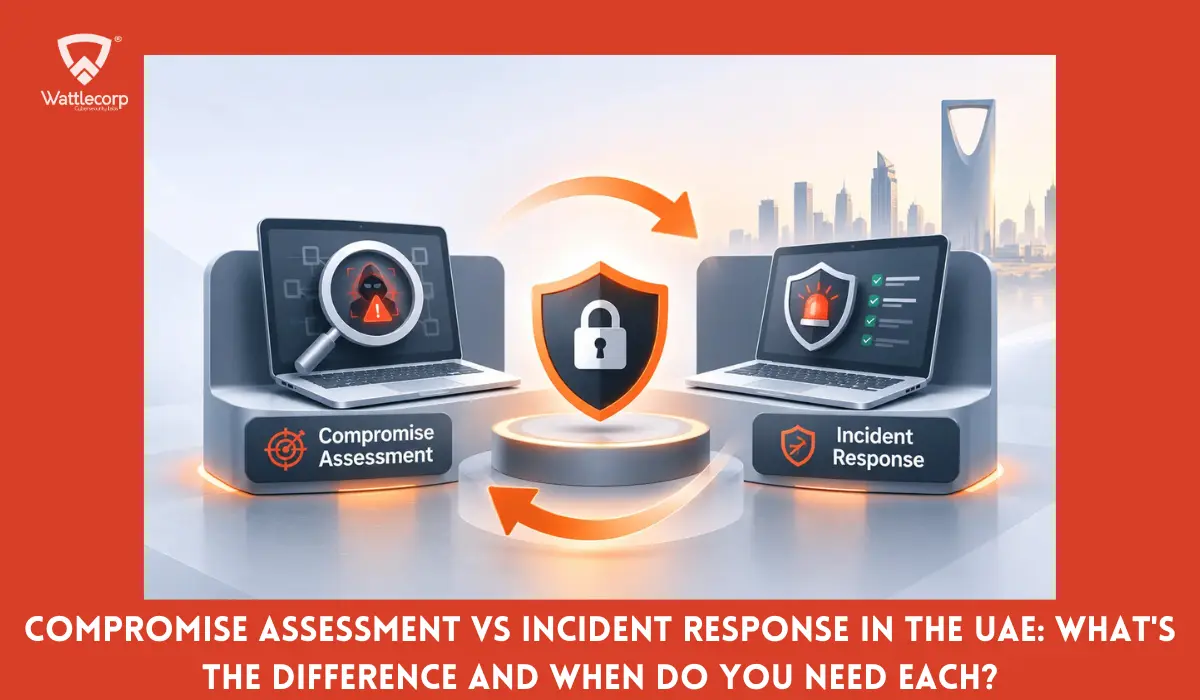
Compromise Assessment vs Incident Response in the UAE: What’s the Difference and When Do You Need Each?
Key Takeaways: A compromise assessment is a proactive check for signs that an attacker is already in your environment. Incident response is the reactive work of handling a known or suspected incident. The trigger is the clearest dividing line: no known incident means an assessment, an active incident means response. The two feed each other.…
-
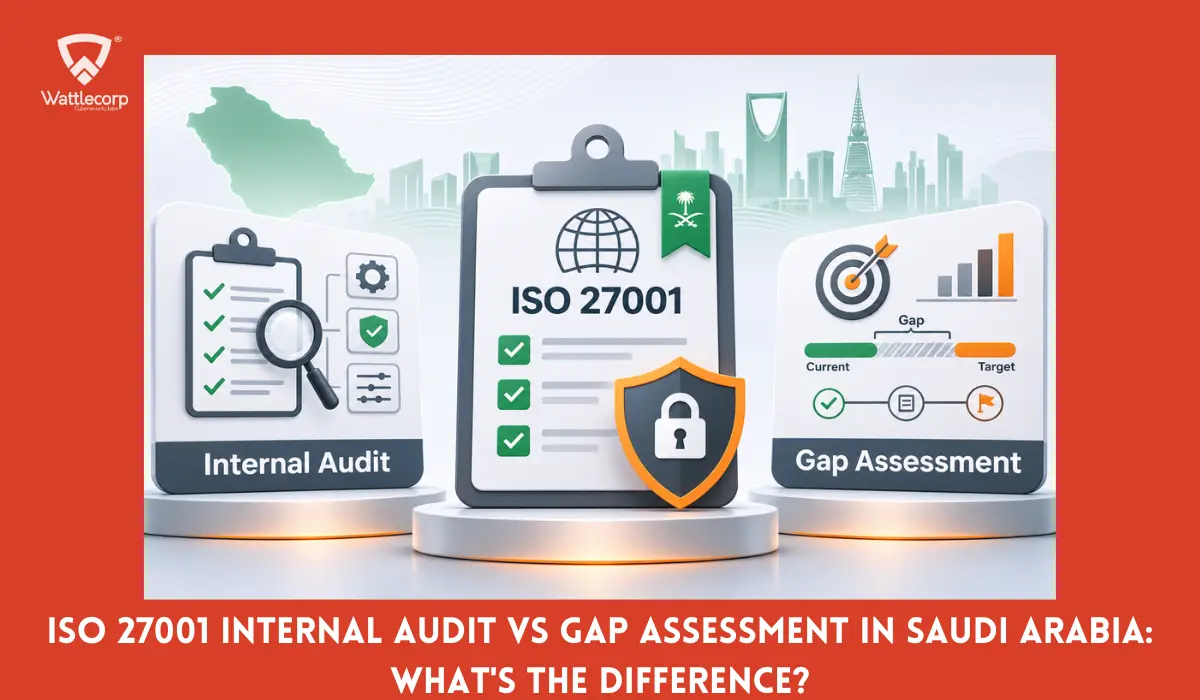
ISO 27001 Internal Audit vs Gap Assessment in Saudi Arabia: What’s the Difference?
Key Takeaways: A standalone gap assessment is optional; internal audits are required. Gap assessments can review new or existing systems. Internal audits require competent auditors and an objective, impartial process. Annex A controls should reflect your risks and obligations. Internal audits need to be scheduled early enough to address nonconformities and review corrective action effectiveness…
-

Best vCISO Services in the UAE for Large Enterprises
Key Takeaways: Wattlecorp: A governance-first vCISO with UAE regulatory alignment, listed first because this is our blog. CPX: On-demand executive cyber leadership with an Abu Dhabi address and board-ready direction. Crowe UAE: A vCISO service, pitched as an extension of your internal team. Intello: A vCISO covering strategy, risk governance, and board reporting, from Dubai.…
-

Managed Vulnerability Scanning for Indian SaaS Companies: Continuous Security for CERT-In Compliance
Key Takeaways: Recurring vulnerability scanning helps identify weaknesses that new deployments, infrastructure changes, and emerging vulnerabilities introduce. Risk-based prioritisation helps engineering teams focus on exposures with the greatest potential business impact. Remediation tracking and retesting provide evidence that identified vulnerabilities have been appropriately addressed. Recurring vulnerability scanning supports security readiness when combined with timely remediation,…
