


Virtual CISO + VAPT: A Winning Formula for Cyber Resilience

Why Businesses in the UAE Need an Integrated Cybersecurity Strategy
The digital evolution that the United Arab Emirates (UAE) has undergone has made it stand at the forefront of digital transformation in the Middle East. Here, businesses are rapidly adopting high-end technologies like cloud, IoT devices, and AI-driven solutions. With all these high-power technologies leveraged – suggesting a digital acceleration, they have only expanded the attack surface for cybercriminals to easily sneak in.
The Technology Express ransomware attacks in the UAE increased 32% year-over-year in 2024, with 34 incidents reported compared to 27 in 2023, making robust cybersecurity measures not just advisable, but critically essential for business survival.
Key Statistic: 21% of cybersecurity incidents in the UAE target banks and financial services, emphasizing the urgent need for comprehensive security measures.
Gone are the days when a traditional approach was sufficient to implement isolated security solutions. A more integrated strategy is what today’s threat landscape demands -where strategic oversight goes hand-in-hand with tactical vulnerability management. This is where Virtual CISO services and Vulnerability Assessment and Penetration Testing (VAPT) come into action. A powerful combination, a strategic game-changer through virtual CISO and VAPT is bound to render UAE enterprises cyber resilient.
How Does Virtual CISO Apply in the UAE Context?
Virtual CISO Definition
A Virtual CISO, Virtual Chief Information Security Officer, or vCISO as you can call it as, is an outsourced or seasoned cybersecurity executive, who provides strategic security leadership without the overhead of a full-time C-suite position.
Unlike traditional security consultants, who focus on specific technical implementations, a Virtual CISO operates at the executive level, developing comprehensive security strategies that align with business objectives.
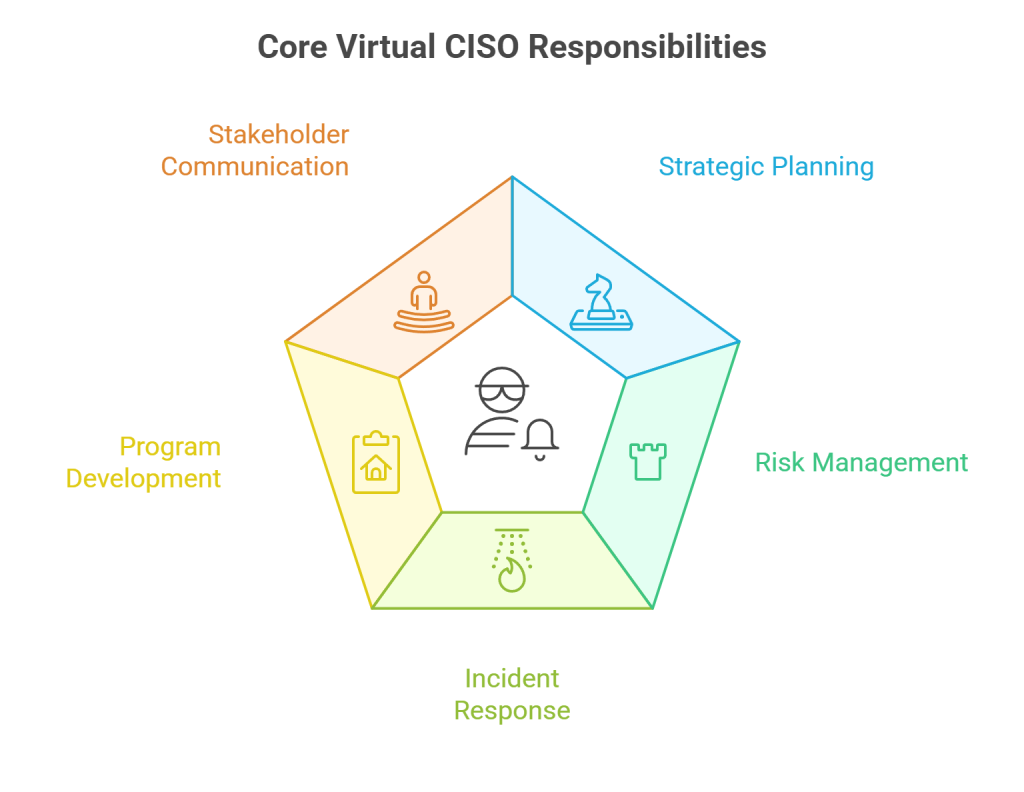
The role encompasses core Virtual CISO Responsibilities that involve:
- Strategic cybersecurity planning and governance
- Risk management and compliance oversight
- Incident response coordination and management
- Security program development and optimization
- Board-level reporting and stakeholder communication
Why Do UAE Companies Adopt Virtual CISO Models?
There are several compelling reasons for the UAE companies to increasingly adopt Virtual CISO models. The most pertinent among them is the cybersecurity skills shortage in the region, making finding qualified CISOs not only challenging, but also expensive. Additionally, many organizations lack the volume and consistency of security work. Scenarios like this tend to prove unjustifiable to hire a full-time executive position.
Apart from the stated, the need to adopt a virtual CISO model could well be explained through:
Market Growth Indicator: The Virtual CISO market is experiencing exponential growth. This is further anticipated to expand from USD 1.4 billion in 2024 to USD 3.8 billion by 2033, maintaining a CAGR of 12.2% – enough to indicate strong adoption across global markets including the UAE.
The Virtual CISO approach also provides considerable exposure for UAE businesses to international best practices and compliance frameworks. This is especially crucial for companies that are operating in the global markets or are willing to establish international partnerships.
Why Are VAPT Services Critical for UAE Organizations?
VAPT Definition: Vulnerability Assessment and Penetration Testing (VAPT) represents a comprehensive approach to identifying, validating, addressing security weaknesses in an organization’s digital infrastructure.
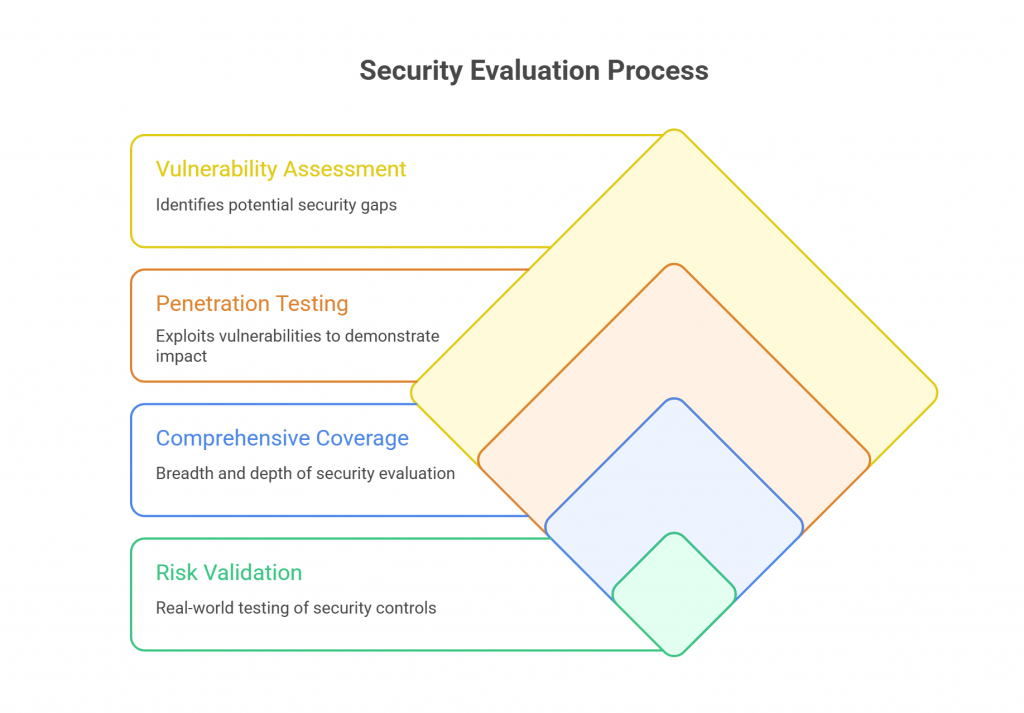
VAPT combines two critical security testing approaches:
- Vulnerability Assessment: Systematically scans and identifies potential security gaps.
- Penetration Testing: Actively exploits hidden vulnerabilities to demonstrate real-world impact.
In totality, vulnerability assessment (VA) and penetration testing (PT) offer:
- Comprehensive Coverage: Includes the breadth and depth of security evaluation.
- Risk Validation: Conducts real-world testing of security controls and defenses.
VAPT Compliance Requirements in the UAE
VAPT is particularly important for UAE organizations, given the country’s stringent regulatory environment. The UAE Cybersecurity Council emphasizes the need to undertake regular security assessments. Going parallel to these are the various sector-specific regulations that require organizations to demonstrate ongoing security validation.
Key UAE Regulatory Frameworks:
UAE is abundant with cybersecurity standards, which apply to:
- Data Protection Law
- Banking and financial services cybersecurity regulations
- Critical infrastructure protection requirements
- Sector-specific compliance mandates
Since the sector-specific cybersecurity requirements mandate regular security testing, organizations within these critical sectors are expected to maintain high security standards to align with the national cybersecurity objectives and emerging regulatory frameworks.
The Power of Combining Virtual CISO & VAPT in the UAE
The synergy between Virtual CISO strategy and rigorous VAPT creates a powerful framework for cyber resilience in the UAE context. While VAPT identifies technical vulnerabilities, the Virtual CISO provides the strategic context to prioritize remediation efforts based on business risk and regulatory requirements.
Strategic Integration Benefits Of Virtual CISO and VAPT
- Executive Perspective: With virtual CISO, you get technical findings translated into business risk language.
- Prioritization Framework: Risk-based approach to vulnerability remediation.
- Resource Optimization: Aligned security investments with business objectives.
- Continuous Improvement: Ongoing cycle of assessment and strategic refinement.
Industry Success Patterns
Organizations that implement integrated Virtual CISO and VAPT programs typically see significant improvements in their security posture. Industry research shows that 43% of MSPs and MSSPs identified improved customer security as a beneficial impact of adding vCISO services, with 38% enjoying increased client engagement.
Also Read : vCISO vs CISO: Which One Is Right for Your Business?
The ongoing relationship between Virtual CISO services and regular VAPT engagements, creates a continuous improvement cycle.
What Strategic Advantages Do Virtual CISO and VAPT Provide For UAE Organizations?
Combining Virtual CISO and VAPT offers a powerful strategic advantage for organizations in the UAE through:
Continuous Risk Assessment and Management
By enabling a proactive identification and mitigation of security vulnerabilities, continuous risk assessment and management, Virtual CISO’s provide ongoing strategic oversight that combines regular VAPT validation cycles.
Key Advantage Areas:
- Proactive Threat Detection: Early identification of emerging security risks
- Strategic Risk Alignment: Security priorities aligned with business objectives
- Regulatory Compliance: Ongoing compliance with UAE cybersecurity requirements
- Cost Optimization: Flexible engagement models that scale with organizational needs
Enhanced Compliance and Audit Readiness
Improved compliance and audit readiness represent another significant advantage. The Virtual CISO maintains awareness of evolving regulatory requirements while VAPT provides the documentation and evidence needed for compliance demonstrations.
With the UAE’s continued emphasis on cybersecurity governance and the National Cybersecurity Strategy 2019, organizations need expert guidance to navigate the complex regulatory landscape effectively.
Cost-Effectiveness for UAE Market
The cost-effectiveness of this combined approach is particularly appealing to UAE organizations. Rather than investing in full-time security executives and internal testing capabilities, organizations can access world-class expertise through flexible engagement models.
Implementation Guide for UAE Businesses
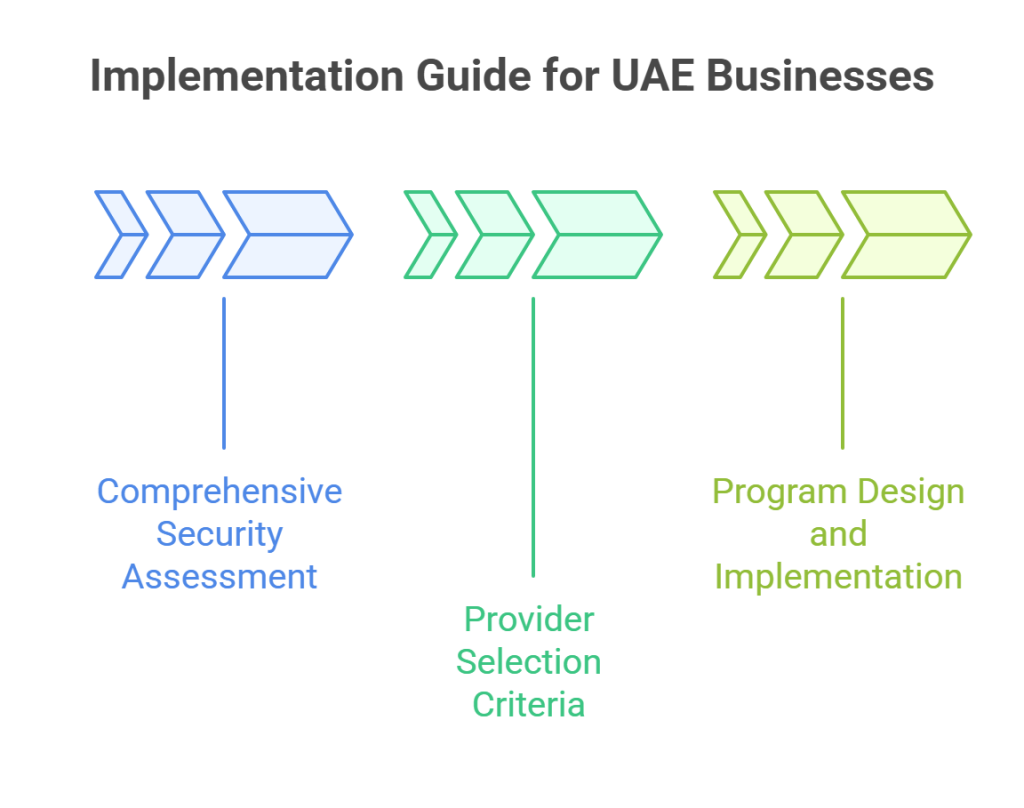
Step 1: Comprehensive Security Assessment
Implementing a successful Virtual CISO and VAPT program requires careful planning and execution. The first step involves conducting a comprehensive security posture assessment to understand current capabilities, gaps, and regulatory requirements.
Assessment Components
- Current security infrastructure evaluation
- Regulatory compliance gap analysis
- Risk tolerance and business priority assessment
- Resource and budget requirements analysis
Step 2: Provider Selection Criteria
The next step involves selecting qualified service providers who understand the UAE regulatory environment and can provide both Virtual CISO and VAPT services in a coordinated manner.
Provider Selection Criteria
- Relevant Certifications: CISSP, CISM, CEH, and OSCP certifications
- Local Market Experience: Understanding of UAE regulatory landscape
- Proven Track Record: Success stories with similar UAE organizations
- Integrated Service Delivery: Coordinated Virtual CISO and VAPT offerings
Step 3: Program Design and Implementation
Program design should establish clear objectives, success metrics, and engagement protocols. The Virtual CISO should be involved in defining VAPT scope and frequency to ensure that testing activities align with business priorities and risk tolerance.
Implementation Timeline:
- Month 1-2: Initial assessment and strategic planning
- Month 3-4: Virtual CISO onboarding and initial VAPT
- Month 5-6: Policy development and remediation planning
- Ongoing: Regular VAPT cycles and strategic oversight
Key UAE-Specific Considerations
Critical Considerations for UAE Businesses:
- Compliance with local data protection and cybersecurity regulations
- Provider security clearances for sensitive sectors
- Clear governance frameworks defining roles and responsibilities
- Cultural alignment and communication protocols
Building Cyber Resilience for UAE’s Digital Future
The combination of Virtual CISO expertise and VAPT services represents a strategic approach to cybersecurity that addresses both the technical and business aspects of cyber resilience.
Also read : What is VAPT?
For UAE organizations navigating an increasingly complex threat landscape while meeting stringent regulatory requirements, this integrated approach provides the strategic oversight and tactical validation needed for comprehensive security.
As cyber threats continue to evolve and regulatory requirements become more demanding, the organizations that will thrive are those that proactively invest in comprehensive security strategies. Experts predict significant growth in advanced security approaches across the Gulf region by 2025, with critical sectors like finance and oil and gas leading adoption.
Key Takeaways for UAE Organizations
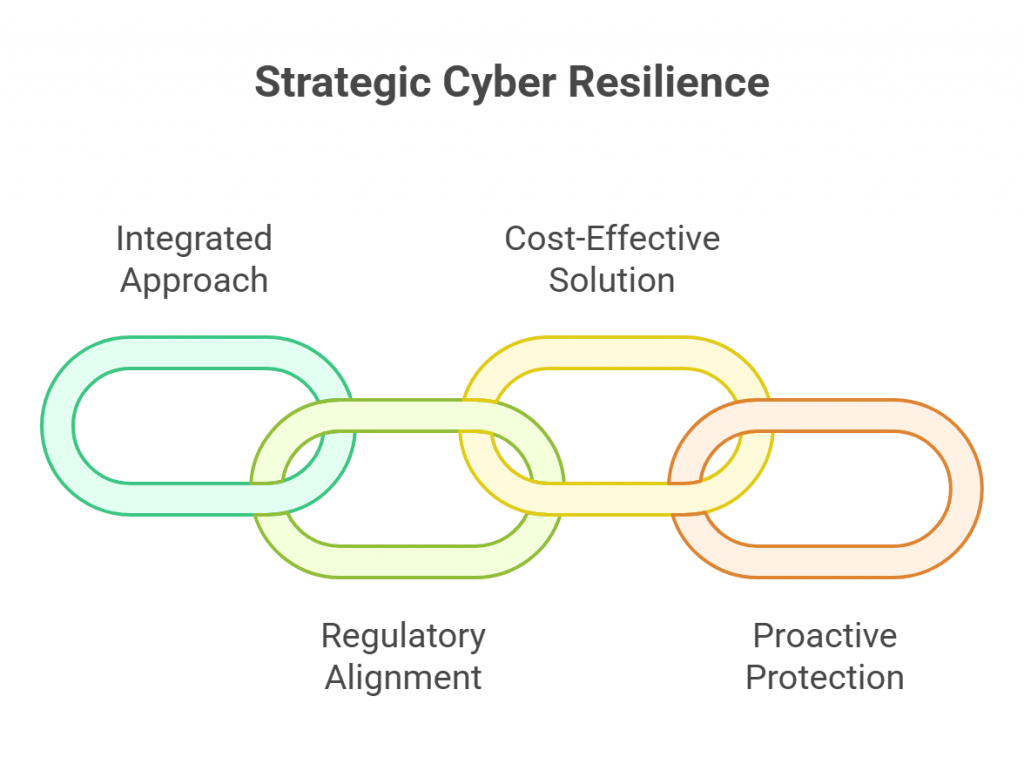
- Integrated Approach: Combined Virtual CISO and VAPT delivers comprehensive cyber resilience.
- Regulatory Alignment: Meets UAE cybersecurity strategy and compliance requirements.
- Cost-Effective Solution: Scalable expertise without full-time executive overhead.
- Proactive Protection: Continuous risk assessment and strategic security management.
The Virtual CISO and VAPT combination provides a cost-effective, scalable approach to achieving robust cybersecurity in the UAE’s dynamic business environment. With ransomware attacks increasing 32% year-over-year and cybersecurity incidents targeting critical sectors, organizations cannot afford to delay their cybersecurity investments.
Don’t wait for a security incident to highlight the gaps in your cybersecurity posture. Take proactive steps today to protect your organization’s digital assets and maintain stakeholder trust in an increasingly digital economy.
Ready to Enhance Your UAE Organization’s Cyber Resilience?
Explore Wattlecorp’s comprehensive Penetration Testing UAE services to identify and validate security vulnerabilities in your digital infrastructure with expert VAPT assessments tailored for UAE regulatory requirements.
Discover how our Virtual CISO Consulting UAE services can provide the strategic security leadership your organization needs to navigate today’s complex threat landscape in the UAE market.
Remember that vulnerability is not an option in a region rife with tight cybersecurity laws and stringent regulations. Connect with us and talk with our vCISO experts on how to achieve cyber resilience and stay compliant in the process.
VIRTUAL CISO VAPT SECURITY FAQs
1.How do Virtual CISO and VAPT services align with UAE cybersecurity regulations?
The UAE Cybersecurity Strategy emphasizes the importance of regular security assessments and strategic cybersecurity leadership. Virtual CISO services provide the strategic oversight required by regulatory frameworks, while VAPT delivers the technical validation and documentation needed for compliance demonstrations. With evolving cybersecurity policies and regulations, having expert guidance is crucial for UAE businesses.
2.What are the main challenges UAE organizations face when implementing these services?
Common challenges include finding providers with local market expertise, ensuring compliance with data sovereignty requirements, and managing cultural aspects of working with external security advisors. Industry research indicates that 40% of organizations cite limited security knowledge as a top challenge, while 33% are concerned with lack of skilled cybersecurity personnel. Solutions include thorough vendor evaluation, clear contractual frameworks, and structured change management processes.
3.How frequently should VAPT be conducted in conjunction with Virtual CISO services in the UAE?
The frequency depends on organizational risk tolerance, regulatory requirements, and business changes. Most UAE organizations benefit from quarterly vulnerability assessments with annual penetration testing supported by ongoing Virtual CISO strategic oversight. This aligns with the UAE’s emphasis on continuous security monitoring and improvement.

 Qatar Data Protection Law: Implementing PDPPL Data Subject Rights Processes for Businesses
Key Takeaways: The Qatar Data Protection Law (Law No. 13 of 2016) for Personal Data Privacy Protection, grants individuals specific rights such as right to access, correct, erase, object, withdraw consent, and right to be notified of processing or inaccurate disclosure. Beyond having a privacy policy, businesses or controllers, under Article 11 of Personal Data […]
 AI Governance for Indian Enterprises: Building Internal Controls Before Key DPDP Obligations Take Effect
Key Takeaways: The DPDP Act does not contain AI-specific provisions. Its requirements, however, apply in situations when an AI system processes digital personal data within its territorial and material scope. India is working on building a broader governance framework around safety, accountability, transparency and trust via programs like the IndiaAI Mission. Indian organizations should inventory […]
 Cloud Security Audit for UAE Government Cloud Migration: NCAP and Security Requirements
Key Takeaways: A cloud security audit UAE helps government entities identify security, governance, configuration, access, data-protection and resilience gaps, before and after shifting critical workloads to the cloud. UAE National Cloud Security Policy has defined cloud governance, data security, data sovereignty, IAM, incident management, resilience, portability and cloud operations requirements. The National Cyber Accreditation Program […]
 Data Privacy Consulting UAE – Building a PDPL-Compliant Data Governance Program
Key Takeaways: PDPL compliance requires ongoing operational governance that goes beyond policies to demonstrate how personal data is collected, used, protected, transferred, retained, and deleted. Data mapping helps businesses move from reactive compliance to proactive risk management by establishing a comprehensive inventory of the data ecosystem, helping build a mature data privacy and governance program. […]
 Saudi Arabia’s Critical Systems Controls: What CSP-Linked Enterprises Must Comply With in 2026
Key Takeaways: The Critical Systems Cybersecurity Controls (CSCC) are more applicable to critical systems than to all IT assets owned or operated by an organization. To be in full compliance or to remain in full compliance with CSCC, organizations must maintain continuous adherence to NCA ECC. CSCC has 32 core controls and 73 sub-controls across […]
 DevSecOps for Saudi Banking and FinTech Applications: Building a SAMA-Aligned Secure Development Lifecycle
Key Takeaways: DevSecOps Saudi Arabia for banks & FinTech enterprises doesn’t make security journey a last stop but embeds it into the software development life cycle. Mapping DevSecOps methods to the SAMA Cybersecurity Framework improves security governance and application resilience while boosting audit readiness. Continuous security testing such as SAST, DAST, SCA, IaC scanning, and […]