

Understanding the Unique Vulnerabilities of SaaS Products: Insights from ASP
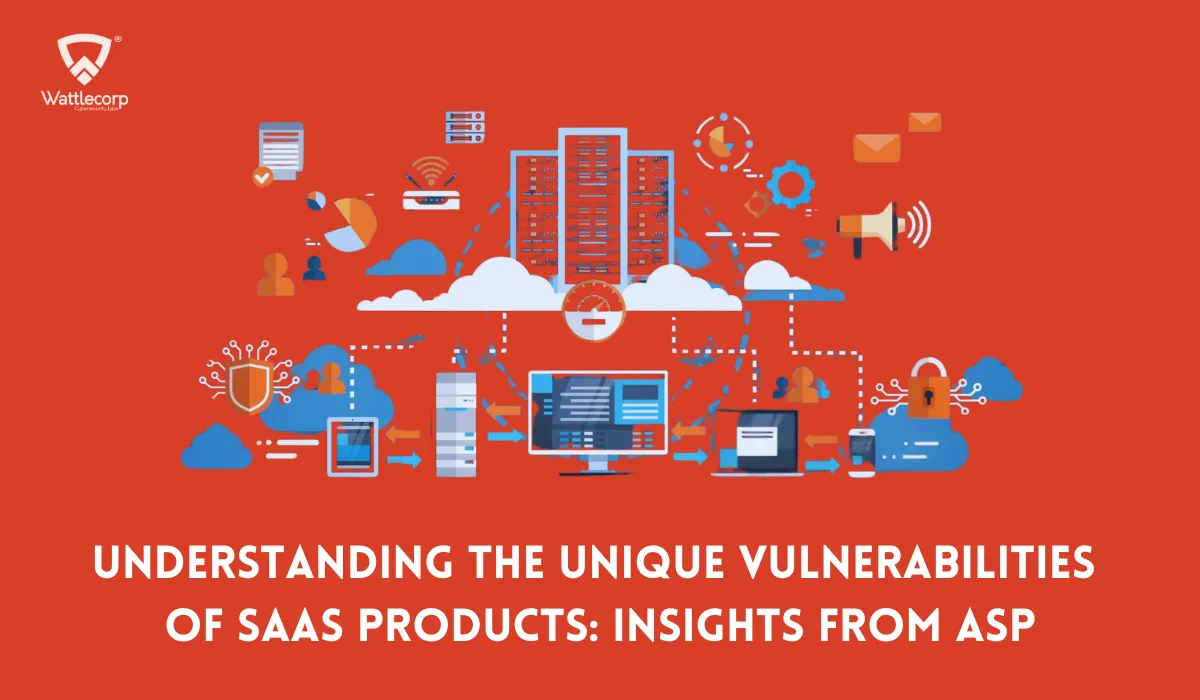
As a SaaS business owner, you need to understand the underlying vulnerabilities in your system to scale your product.
In this blog, you will learn how to understand the unique vulnerabilities of SaaS products. This is based on our team’s expertise after working with hundreds of SaaS products.
Let’s get started.
Using insights from Wattlecorp’s ASP (Annual Security Program), you can understand SaaS vulnerabilities. This blog discusses the SaaS vulnerabilities in detail.
Let’s get started with the core features of a SaaS product, including:
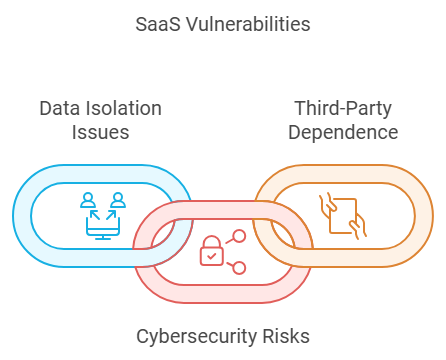
- Multi-Tenancy Architecture: SaaS applications allow multiple customers on a single platform, but this can lead to data isolation issues if not managed correctly.
- Accessibility: Being cloud-based, SaaS applications are accessible from anywhere, so there is a chance of cybercriminals.
- Dependence on Third-Party Providers: sometimes Organizations may use external vendors for infrastructure and security, which can introduce risks if these providers do not maintain robust security protocols.
How to understand vulnerability from Annual Security Program (ASP) Insights
Using insights from an Annual Security Program (ASP) to understand vulnerabilities in SaaS products involves several strategic steps.
Here’s how organizations can effectively leverage these insights.
1. Conduct a Comprehensive Security Assessment
- Annual Reviews: Implement annual security reviews as part of your ASP to evaluate your SaaS products. This should include identifying potential vulnerabilities specific to your SaaS environment.
- Risk Analysis: Use the insights from the ASP to perform a thorough risk analysis, focusing on how different vulnerabilities can impact your SaaS applications.
2. Implement a Security Framework
- Adopt Established Frameworks: Utilize security frameworks such as ISO 27001. These frameworks provide structured approaches for identifying and managing vulnerabilities in SaaS products.
- Compliance Checks: Ensure that your SaaS applications comply with relevant regulations and standards, as outlined in your ASP.
3. Leverage Metrics and Reporting
- Utilize Security Metrics: Use metrics gathered during your Annual Security Program to identify trends and vulnerabilities in your SaaS products.
- Benchmarking: Compare your SaaS security posture against industry standards or benchmarks provided in your ASP to identify areas needing improvement.
4. Engage in Continuous Monitoring
- Real-Time Monitoring: Implement continuous monitoring. This helps detect vulnerabilities in real-time, allowing for quick responses.
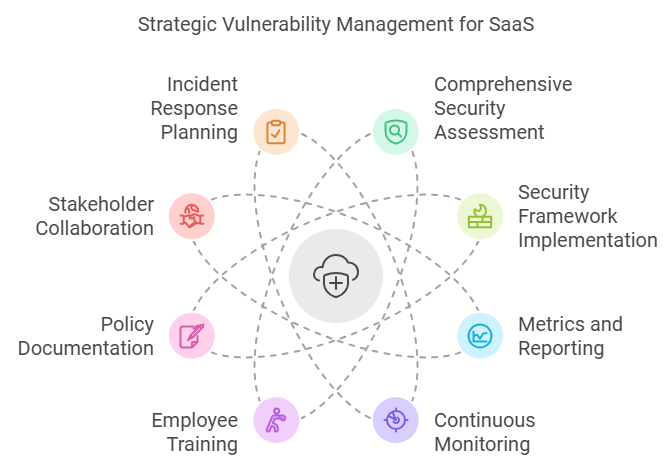
5. Conduct Employee Training
- Awareness Programs: Conduct training programs based on insights from your ASP. Educating employees on recognizing vulnerabilities and potential security threats is crucial for minimizing risks.
- Simulated Attacks: Conduct regular training sessions that include simulated attacks to help staff understand the vulnerabilities of SaaS applications and how to respond.
6. Document and Review Policies
- Policy Development: Use insights from your ASP to develop or refine security policies specifically related to SaaS products. Ensure these policies address identified vulnerabilities.
- Regular Policy Reviews: Schedule reviews of these policies to ensure they remain relevant and effective in addressing current vulnerabilities.
7. Collaborate with Stakeholders
- Organizations should collaborate with their vendors to understand the security measures in place, address vulnerabilities, and stay informed about updates and patches.
8. Plan for Incident Response
- Develop Response Plans: Use insights from the ASP to create or update your incident response plans, specifically focusing on vulnerabilities in your SaaS products.
- Tabletop Exercises: Conduct tabletop exercises to test your incident response plan and ensure your team knows how to handle vulnerabilities effectively.
When we analyze the insights from ASP, we can conclude the main vulnerabilities of SaaS products.
Also Read: What is SaaS security posture management?
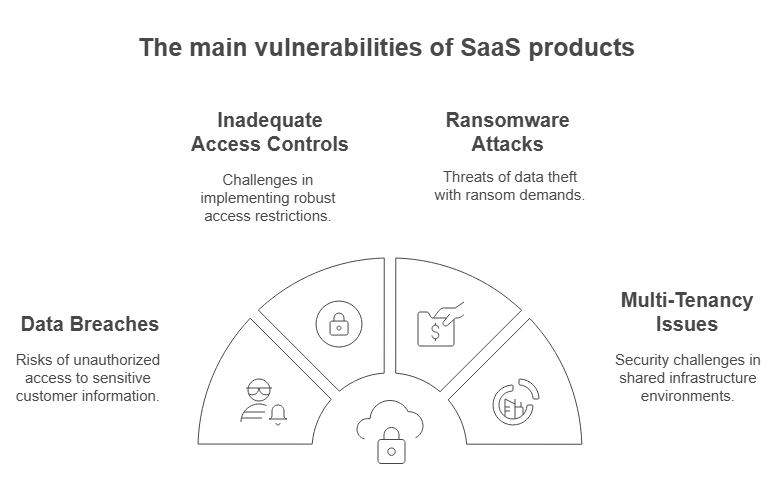
The main vulnerabilities of SaaS products include:
- Data Breaches: Data breaches are one of the most significant risks associated with SaaS applications. As a SaaS product, it is needed to collect different information from users. When sensitive customer information is compromised, it can lead to financial losses, reputational damage, and legal repercussions.
- Inadequate Access Controls: Sometimes it is difficult to implement appropriate access control. When the access control is weak, it can lead to unauthorized access to sensitive data, increasing the chances of hackers creeping into your system and employing a malware attack.
- Ransomware attacks: Ransomware attacks happen when cybercriminals steal your data and demand a ransom in exchange for your data. They maintain access to your data and demand payment before releasing it.
- Multi-Tenancy Issues: Multi-tenancy is a key characteristic of SaaS architectures, where multiple clients share the same infrastructure. While this model offers cost savings, it also introduces security challenges. For instance, if one tenant’s application is compromised, it could potentially expose data from other tenants.
Mitigation Strategies for SaaS Vulnerabilities
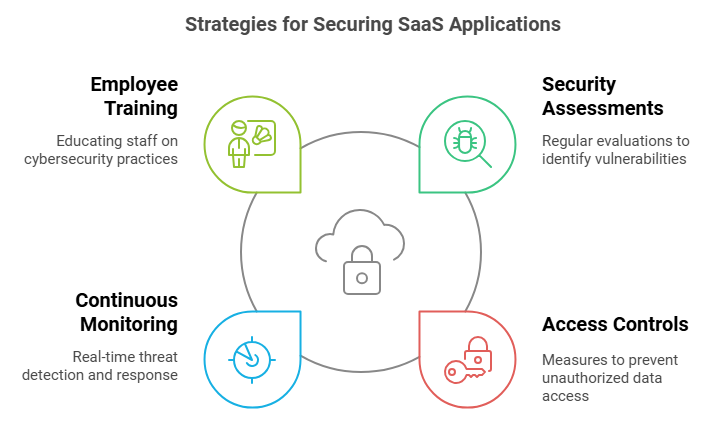
Regular Security Assessments
Conducting regular security assessments is vital for identifying vulnerabilities in SaaS applications. Organizations should adopt a proactive approach by scheduling penetration testing and vulnerability scans. These assessments help identify vulnerabilities that should be addressed proactively to prevent exploitation by attackers.
Implementing Strong Access Controls
Implementing strong access controls is essential to prevent unauthorized access to sensitive data. Organizations should consider adopting multi-factor authentication (MFA) and role-based access controls (RBAC) to ensure that only authorized personnel can access specific applications and data.
Continuous Monitoring
Real-time monitoring of SaaS applications can help organizations detect and respond to threats quickly. Utilizing security information and event management (SIEM) tools can enhance visibility into potential security incidents.
Employee Training
Employees play a critical role in defending against security threats, as they are typically the first to encounter potential risks. Providing comprehensive training on cybersecurity best practices can help minimize human error, which is a leading cause of data breaches. Training should cover topics such as recognizing phishing attempts and securely managing passwords.
Future Trends in SaaS Security
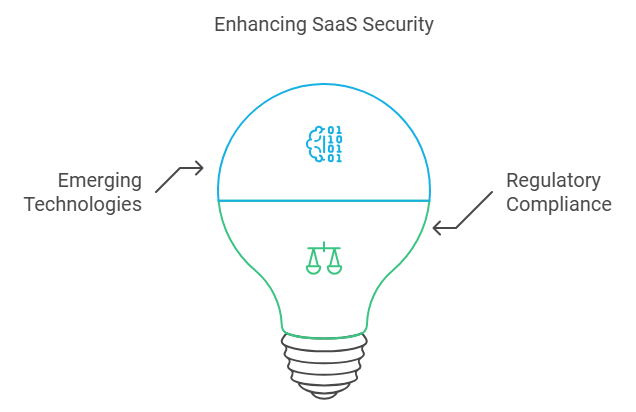
Emerging Technologies in SaaS Security:
Emerging technologies, such as artificial intelligence (AI) and machine learning (ML), are being integrated into SaaS security solutions to improve threat detection and response times. These technologies are capable of processing large volumes of data to detect irregularities and potential security threats with greater accuracy and speed.
Regulatory Compliance Impacts
The organizations must stay updated on relevant regulations such as GDPR, CCPA, and HIPAA. Compliance requirements can significantly impact how organizations manage SaaS security. Companies must ensure that their SaaS providers adhere to these regulations to avoid legal consequences and maintain customer trust.
Insights from the Annual Security Program (ASP) can help businesses understand the SaaS vulnerabilities, implement best practices, and develop effective strategies to mitigate risks.
By conducting regular security assessments, implementing strong access controls, and investing in employee training, organizations can significantly enhance their SaaS security posture.
SaaS Product FAQs
1. What future trends should organizations be aware of regarding SaaS security?
Organizations should pay attention to the integration of emerging technologies like artificial intelligence (AI) and machine learning (ML) in SaaS security solutions. These technologies enhance threat detection and response times by analyzing large data sets to identify anomalies and potential security threats. Additionally, staying informed about regulatory compliance requirements, such as GDPR and CCPA, is crucial, as these can significantly influence how organizations manage SaaS security.
2. Why is employee training important in the context of SaaS security?
Employee training is vital because staff members are often the first line of defense against security threats. Comprehensive training on cybersecurity best practices helps minimize human error, a leading cause of data breaches. Training should cover recognizing phishing attempts, managing passwords securely, and understanding the importance of access controls, empowering employees to contribute to the organization’s overall security posture
3. How can an Annual Security Program (ASP) help mitigate SaaS vulnerabilities?
An Annual Security Program (ASP) helps mitigate SaaS vulnerabilities by providing a structured approach to security assessments, risk analysis, and compliance checks. Organizations can leverage insights from the ASP to identify specific vulnerabilities, implement robust security frameworks, and engage in continuous monitoring. Additionally, the ASP encourages regular policy reviews and employee training, ensuring that organizations remain proactive in addressing potential security threats.

 Qatar Cybersecurity Boardroom Accountability: Why QCB and NCSA Now Expect Executive Ownership
Key Takeaways: Cybersecurity in Qatar is increasingly becoming an executive governance responsibility, with national cybersecurity initiatives and sector-specific requirements encouraging organizations to establish stronger leadership oversight. QCB and NCSA play important roles in strengthening cybersecurity governance in Qatar, with QCB focusing on financial sector requirements and NCSA supporting national-level cybersecurity coordination and guidance. Executives can’t […]
 Data Privacy Consulting for Saudi Enterprises: How to Operationalize PDPL Data Subject Rights in 2026
Key Takeaways: The Saudi data protection law may apply to organizations outside the Kingdom when they process personal data related to individuals in Saudi Arabia, meaning geographic location alone does not automatically exclude an organization from PDPL obligations. PDPL data subject rights span access, correction, deletion, and consent withdrawal, and enterprises are on the hook […]
 Third-Party Vendor Security Risk Assessment Under DPDP: A Guide for Indian Enterprises
Key Takeaways: Third-party vendor risk assessment with DPDP practices helps Indian enterprises to verify that external partners handle personal data with adequate safeguards. The Digital Personal Data Protection Act holds data fiduciaries accountable for vendor conduct, which makes due diligence a legal and operational necessity. A structured vendor security questionnaire, covering encryption, access control, and […]
 Virtual CISO Services for UAE Free Zone Startups: Affordable Security Leadership for Growing Companies
Key Takeaways: Most startups already hold sensitive data such as customer info, source code, financials, long before they feel big enough to take security seriously, and that’s exactly when the risk starts. A virtual CISO gets you someone who’s done this before, setting up strategy and guiding compliance, without the cost of putting a full-time […]
 SOC as a Service for Indian BFSI and FinTech Companies: 24/7 Monitoring for CERT-In Readiness
Key Takeaways: SOC as a Service for BFSI and FinTech India gives banks, NBFCs, insurers and digital lenders continuous security visibility without the cost and hiring effort of building an in-house operations centre. CERT-In directions require regulated entities to report qualifying cyber incidents within six hours of detection, and implementing SOC for BFSI and FinTech […]
 SOC as a Service in India: How It Works, Pricing, and Why Businesses Need It
Key Takeaways: SOC as a Service helps Indian businesses to get 24×7 security monitoring without huge cost and complexity of building a full in-house security operations center. A managed SOC check and analyse beyond basic log monitoring, which combining SIEM, threat intelligence, analyst-led alert triage, incident escalation, reporting, and security response support. SOC as a […]