

Top 3 Steganography Tools In 2024
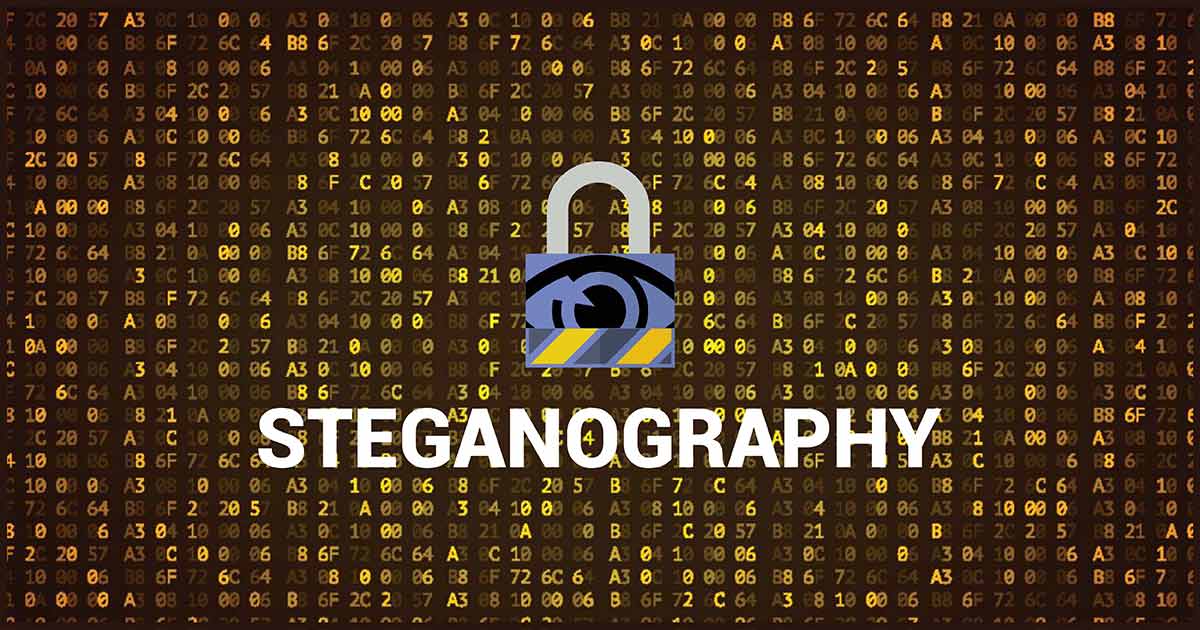
Steganography is the method used for hiding secret data inside another file. It is mainly used when a person wants to transfer any sort of data or secret messages to another person without revealing it to the third person. Steganography can be used to hide any type of digital data including images, text, audio, video, etc.

1. Steghide:
This steganographic tool helps to hide the data in various types of image and audio files. It is a command-line software where it is essential to learn the commands to use it effectively. The color or sample frequencies are not affected while using steghide, therefore the image or audio file won’t be detected. The default encryption is 128 AES (Advanced Encryption Standard) and also it gives an option to change it into another algorithm. Features of steghide include the compression and encryption of the embedded data and an automatic integrity-checking system using a checksum. Steghide only works with AU, VMP, JPEG, or WAV files.
Some useful commands include:
● Info, –info – To see the information about a steganographic file.
● encinfo, –encinfo – To see the available encryption algorithms and modes.
● license, –license – To view the license of steghide.
● version, –version – To see the version of steghide and some related information.
2. Exif tool:

Exif tool is a Kali Linux application that allows a user to view and manipulate the metadata of the image. An image can give tons of information like which device, ISO, date, time, lens type, flash settings, etc. This information can be extracted and modified using the Exif tool. Exiftool is also very commonly used for producing steganographic and open source intelligence challenges and is also used by students and professionals who play CTF challenges. ExifTool can also be used to embed command injection payloads into image files.
Some command features are as follows,
● exiftool | grep GPS – Extract GPS coordinates. The photographs we capture using our smartphones or camera have GPS coordinates embedded as metadata in the image files.
● exiftool -ThumbnailImage > – To extract the thumbnail image
● exiftool -v – Verbose mode. This generates extended information i.e. when we add [-v] to the exiftool command it will print out the comprehensive data about the process that it is performing.
3. Binwalk :
 Binwalk is an open-source steganographic tool for analyzing, reverse engineering and extracting firmware images. This tool automatically detects and extracts hidden files. It is designed for scanning a firmware image and searching for file signatures to identify and extract file system images, compressed archives, executable code, bootloader, and kernel images like JPEGs and PDFs.
Binwalk can collect file system images to extract documents out of it like hashes and password files (passwd, shadow, etc). It can be used to extract files from the image and search for backdoor passwords or digital certificates. Binwalk is a very useful tool used by developers, hackers, penetration testers, cyber security enthusiasts, etc.. Binwalk is embedded in several penetration testing tools such as the well known Kali Linux.
Read More about Creating a Strong Password Policy
Some of the common features include,
● binwalk -h – To display the help menu.
● binwalk –signature – To analyse the signature of the specified file.
● binwalk -A – This instructs binwalk to search the specified file for executable instruction codes common to a variety of CPU builds.
As mentioned above Steganography is the tool to conceal any kind of data or file and can send it to another person secretly. Steganography aims to hide messages in such a way that no one apart from the intended recipient knows that a message has been sent. In a way, this method can be used to store data, from any other source of attacks.

 AI Penetration Testing vs Traditional Penetration Testing in the UAE: What Changes for AI Systems?
Key Takeaways: AI penetration testing adds model behaviour, data exposure, and tool misuse to security assessment scope. Traditional testing remains necessary for networks, applications, APIs, and cloud infrastructure. Training data and retrieved documents can introduce security risks. Reports should record configuration, repeated attempts, and business impact. Retest before launch and after changes affecting security boundaries. […]
 Cybersecurity Risk Assessment vs VAPT in Qatar: What’s the Difference?
Key Takeaways: Risk assessments evaluate business exposure across people, processes, and technology. VAPT identifies weaknesses and validates exploitable attack paths within an agreed scope. A risk register supports ownership, treatment decisions, and management oversight. Qatar compliance requirements depend on the applicable standards, sector, and contractual obligations. Test results should update risk ratings and remediation priorities. […]
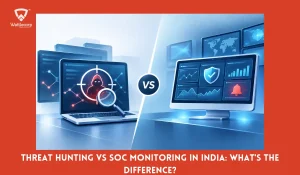 Threat Hunting vs SOC Monitoring in India: What’s the Difference?
Key Takeaways: Monitoring is alert-driven. It reacts, around the clock, to what your rules and tools flag. Hunting is hypothesis-driven. An analyst assumes an attacker already got past those rules and searches for the evidence. Both run on largely the same data and tools. What changes is the question asked of that data. The Indian […]
 Security Architecture Review vs VAPT in Saudi Arabia: Which Security Assessment Does Your Business Need?
Key Takeaways: A security architecture review assesses security design; VAPT evaluates, validates, and prioritises weaknesses in implemented systems. Both support risk decisions, but neither replaces the other. Review new designs early and test implementations before launch. Match assessment scope to business exposure and applicable Saudi requirements. Request actionable findings, remediation ownership, and appropriate verification. One […]
 Top 10 Benefits of Penetration Testing for SaaS & Enterprises in India
Key Takeaways: Finds flaws scanners miss: manual testing catches what automated tools don’t recognise. Proves real impact: shows what an attacker could actually reach, not just a list of possible issues. Exposes misconfigurations: finds exposed interfaces and version leaks across networks and cloud. Secures APIs and integrations: tests the connections that carry your customers’ data. […]
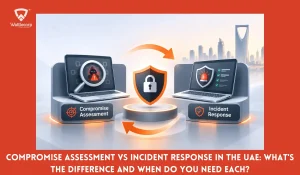 Compromise Assessment vs Incident Response in the UAE: What’s the Difference and When Do You Need Each?
Key Takeaways: A compromise assessment is a proactive check for signs that an attacker is already in your environment. Incident response is the reactive work of handling a known or suspected incident. The trigger is the clearest dividing line: no known incident means an assessment, an active incident means response. The two feed each other. […]