The SAMA Information Security Framework Assessment
Become SAMA Information Security Compliant with Confidence
What is SAMA Information Security Framework Assessment?
The Saudi Arabian Monetary Authority (SAMA), now Saudi Central Bank, introduced the SAMA Information Security Framework (SAMA ISF) Assessment way back in 2017 to assess the cybersecurity posture of its financial institutions (banks, insurers, fintechs).
The SAMA ISF is now part of the SAMA Cybersecurity Framework (SAMA CSF) in Saudi Arabia that sets mandatory regulatory standards for these organizations to manage cyber risks by evaluating their security posture. This is done by assigning maturity levels (1-5) that align with global cybersecurity best practices in the likes of NIST and ISO.


Why SAMA ISF Assessment Matters for the Saudi’s Financial Sector?
Non-compliance to critical cybersecurity laws (SAMA, PDPL, NCA) and regulatory standards is a serious issue in Saudi Arabia, with penalties going up to as high as SAR 500,000. In addition to these, there are massive fines amounting to SAR 2.6 million for serious or repeat offences. Not to be left out in this list are the significant regulatory restrictions and cancellation of licences. Implementing robust security measures has become a critical necessity,
The SAMA Information Security Framework Assessment (SAMA CSF) aims to secure sensitive financial data for organizations operating within the BFSI sector in Saudi Arabia. Acting as a mandatory cybersecurity baseline under the SAMA CSF, SAMA ISF Assessment defines:
Governance
Establishing board-level responsibility, assigning clear roles, seeking individual oversight, and linking (aligning) security to business objectives to establish leadership, maintain accountability, and develop clear strategy in cybersecurity.
Risk Management
Maintain risk registers, implement a risk-treatment plan, and obtain coverage for both internal operations and third party-related risks. All these efforts involve a proactive identification, assessment, and management of cyber risks,
Technology Controls
Implementing technical and procedural security measures through access controls, data encryption (at rest and during transit), and vulnerability management (patching) to ensure endpoint security and operational resilience. Security measures to consider here include maintaining a secure configuration baseline, data classification and handling, cryptographic key management, privileged access management (PAM), cyber threat intelligence integration, and securing Software Development Lifecycle (SDLC).
Third-party Security Requirements
Third-party vendors, including cloud providers need to adhere to rigorous vendor risk assessments. This also considers maintaining contractual security clauses and at the same time, monitoring security posture continuously to prevent data breaches, ensuring third-party compliance in the event. Effective third-party risk management mandates outsourcing risk governance for proactive vendor security due diligence before onboarding. Include data residency considerations for choosing a specific physical location to store critical data to meet local, regulatory, security, and performance requirements.
Our SAMA ISF Framework Assessment Checklist
Our SAMA ISF Framework Assessment includes a comprehensive checklist that comprises a varied set of controls. Together, these make it particular for every financial institution to manage and mitigate cyber risks in all appropriateness and effectiveness.
-
Gap Analysis & Roadmap
A foundational-cum-mandatory process for every financial institution in Saudi Arabia, undertaking a gap analysis is a preliminary phase to achieve compliance with the SAMA ISF. This framework is a target point to measure their efforts in complying with the same. -
Governance & Cybersecurity Strategy Review
Every governing body (board or committee) should responsibly maintain a water-tight cybersecurity program. This includes people, processes, and technology to build a resilient and holistic cybersecurity strategy. -
Risk Management Maturity Assessment
Primarily focuses on identifying, analyzing, mitigating, and monitoring risks that may hamper the information assets of an organization. A process like this strives to level up the firm’s risk management maturity through continuous assessment. -
Technology & Operations Controls Review
Offers security coverage for both technical and operational measures on a daily basis. Help undertake business operations in a more effective and trustworthy manner, typically involving assets identification and data security (during storage and transmission).
-
Access Control & IAM review
Strictly ensures robust management of user access across systems and data to prevent unauthorized access and resultant breaches. Also helps confirm that the formal access control policy is defined, approved, and implemented. Places equal importance on securing networks and endpoints. -
Third-party Risk Management
Ensure that every third-party vendor, specifically cloud service providers having access to the financial institution’s data, complies with the security mandates of SAMA CSF. Doing so should consider undertaking risk evaluation during procurement to conduct regular vendor audits. -
Logging and Monitoring
Ensuring log generation for every critical system with periodic reviews to trace suspicious activities. Involves automated monitoring by utilizing tools like the SIEM systems for real-time monitoring of logs to check for any anomalies. -
Cyber Incident Response Readiness
Aligning with international cybersecurity standards like NIST and ISO 27001, Our SAMA CSF assessment enables financial institutions in Saudi Arabia to develop and maintain a robust, tested incident response plan and achieve cyber resilience in the process.
Benefits You Can Expect

-
Regulatory readiness
Financial institutions operating within the SAMA’s legal boundaries while staying adrift of penalties, fines, and operational restrictions. -
Reduced audit risk
SAMA ISF implementation followed by documentation with regular internal audits help reduce risks associated with non-compliance findings -
Improved security maturity
Helps financial institutions achieve enhanced cybersecurity maturity, a vital objective to implementing SAMA ISF (CSF). -
Faster approvals
SAMA ISF Compliance audits, when carried out regularly, help build trust and credibility, paving the way to deriving new business opportunities.
Our Services Module Breakdown For You to Become SAMA ISF Compliant
-
ISF Gap Assessment
Inspects your current security posture as defined by SAMA’s control domains -
Risk-Based Maturity Scoring
Evaluates and fixes gaps to align with the SAMA Cybersecurity Maturity Model. -
Technical Controls Assessment
Examines your networks, cloud, endpoints, IAM, logging, and monitoring. -
Documentation & Policy Review
Validates an organization's internal documents and policies' alignment with SAMA's governance, risks, and compliance requirements. -
Third-Party Risk Review
Ensuring external vendors meet SAMA requirements. -
Audit Readiness Support
Preparing evidence, artifacts, and regulatory submissions. -
Remediation Roadmap
Prioritizing areas requiring urgent fixes.
Wattlecorp as a Trust Factor to Achieving SAMA ISF Compliance
At Wattlecorp, we understand the pressures that you, as financial institutions and insurance service providers, undergo to maintain compliance with critical cybersecurity laws and regulations in Saudi Arabia. At the same time, we know the pains you take to secure your customers’ data and aligning these processes with the stated regulatory demands.
Our cybersecurity experts well equipped with the knowledge and experience of handling varied Saudi-based compliance requirements take this burden off of you.
SAMA Experience
Involves a comprehensive consultation that besides assessing your existing compliance practices, also extends to offer implementation services to meet SAMA CSF (ISF) requirements in the long run.
Saudi-Local Expertise
We offer end-to-end risk and compliance consulting services to help lessen the challenges associated with stringent Saudi-specific local and national compliance requirements like PDPL (data protection), SAMA, and Labor Laws, i.e., Qiwa, Nitaqat, etc.
BFSI Focus
At Wattlecorp, we channelize our compliance services to help Saudi’s financial sector adhere to SAMA CSF and NCA ECC
Manual and Automated Assessments
Our compliance services combine both manual and automated security assessments for you to guide you through a hassle-free compliance process
Strong Reporting
Our post-assessment services including detailed reporting-cum-documentation assure you both compliance and security on a continuous note. This makes you more resilient and strengthens your cybersecurity posture.
Saudi Compliance Context
Compliance in Saudi Arabia has taken on a fully uncompromising stride. With mandatory cybersecurity regulations demanding maintaining strong data privacy through employing robust security measures, these simultaneously seek achieving resilience that can withstand costly cyberattacks.
It all requires you to effectively adhere to high-profile laws like SAMA Information Security Framework Assessments, NCA Essential Cybersecurity Controls, and the Anti-Cyber Crime Law to stay ahead of emerging cyber threats. Real-time threat monitoring can prove beneficial in these endeavors, helping you become more cyber-resilient in the event. This is not all, for in the process of becoming secure and compliant, you get to prove your audit-readiness to the regulators.
Curious to know where your audit-readiness score stands?
Listen to People
We help companies to protect their online assets.
Checkout our Services
F.A.Q
Tip • Book a consultation to get personalised recommendations.
The SAMA Information Security Framework (ISF) assessment exists as a part of the SAMA cybersecurity framework (SAMA CSF). The former involves performing audits (assessments) to comply with the larger SAMA CSF Framework.
As per expert knowledge, the SAMA ISF assessment introduced in 2012 has now been merged into the SAMA Cybersecurity Framework.
As per the SAMA CSF mandates, every organization operating within the BFSI sector, i.e.,banks, fintech, financial institutions, and insurance operators regulated by the Saudi Central Bank should strictly adhere to the SAMA Cybersecurity Framework. Do note that SAMA ISF has now been absorbed into the SAMA CSF and no longer exists as a separate regulatory entity.
The SAMA ISF Assessment chiefly concerns evaluating an organization’s security controls within the broader SAMA CSF . It includes key aspects like:
- Governance
- Risk Management
- Implementation of Technology Controls
- Third-party security requirements
Achieving compliance through our SAMA CSF Compliance Service in Saudi Arabia depends on the level of security maturity of an organization. However, to derive full compliance with the SAMA CSF, it may take up to a period of 9 months, 3 months being the minimum timeline for the BFSI sector in Saudi Arabia.
At Wattlecorp, we adopt a structured process to help financial organizations achieve and ensure SAMA ISF compliance. Our service module breakdown comprises a comprehensive assessment that starts from conducting a gap assessment to designing a remediation roadmap. This is preceded by preparing a checklist that aims to improve our clients’ cyber incident response readiness and help them become more resilient against evolving cyberattacks.
Get SAMA Security Framework Assessment Today !
All you need to do is fill the form below.
Recommended Services
Officially recommended by Hackers.
SAMA Cybersecurity Framework Compliance Consulting Services
Fulfilling your SAMA compliance requirements to develop a secure digital experience and build trust and confidence in your customers/clients.
NCA Compliance Consulting Services
Sustaining business continuity for you by ensuring total protection for your critical infrastructure.
SAMA PDPL Compliance Consulting Services
Assisting organizations in meeting regulatory obligations by strictly ensuring that only authorized personnel can only assess sensitive information.
Recent Articles
stay up to date with recent news.
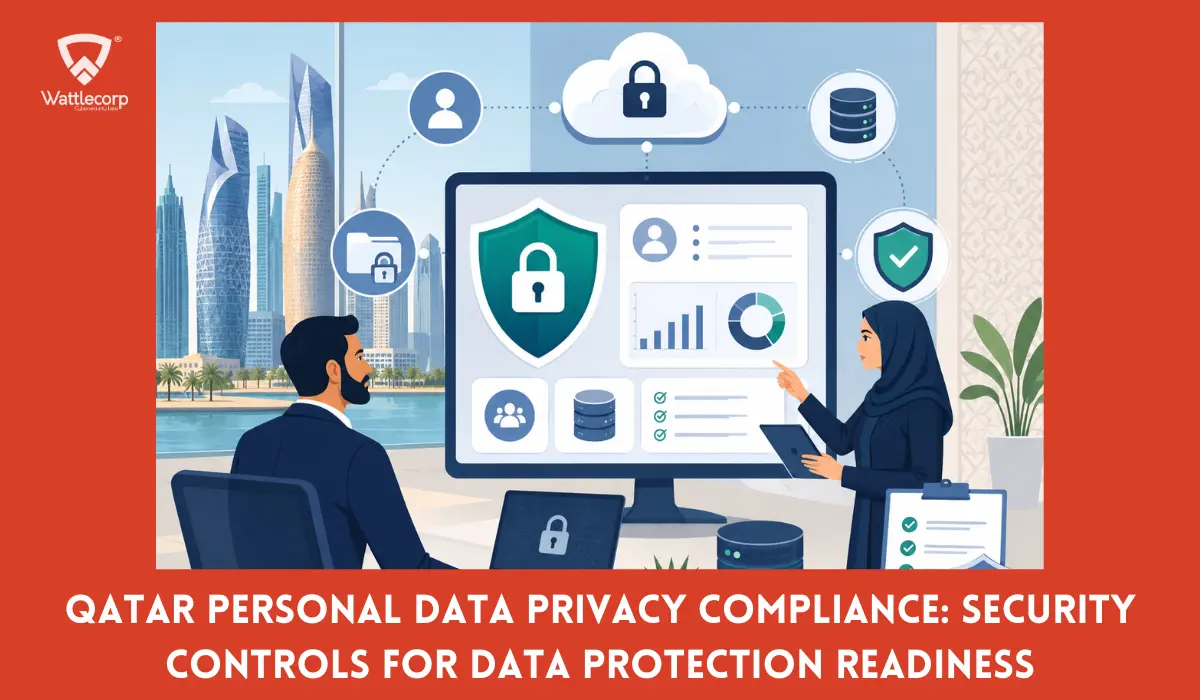
Qatar Personal Data Privacy Compliance: Security Controls for Data Protection Readiness
Azure Server Hardening for UAE Businesses: Securing Microsoft Cloud Against Misconfigurations