


PDPL in Saudi Arabia: Guide to DPIA Implementation and Regulatory Compliance
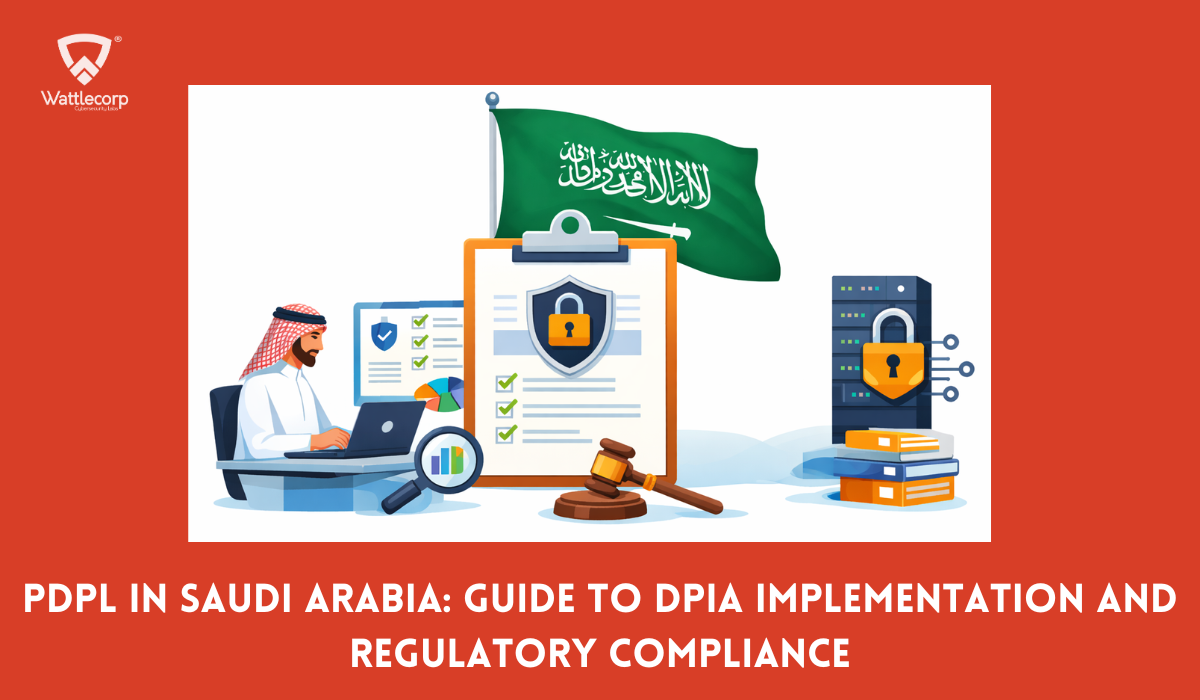
Key Takeaways:
- Data Protection Impact Assessments (DPIAs) are a mandatory requirement under PDPL Saudi Arabia for any activity that poses high risks to individuals’ privacy. Conducting DPIAs helps organizations stay compliant, protect personal data, and maintain customer trust.
- A structured DPIA process including planning, risk identification, impact analysis, mitigation measures, documentation, and periodic reviews ensures smooth and consistent PDPL compliance.
- Key steps for the DPIA process make compliance easy and use organized processes with regular reviews to stay on track without issues.It also includes documenting the findings and regularly reviewing the assessment to ensure ongoing compliance.
- When to Conduct a DPIA, DPIA are required when processing sensitive personal data like biometric or children’s data or engaging in automated decision-making that may impact individuals’ rights.
- Spot common mistakes to skip problems. Knowing the common errors like rushed work or bad records helps to identify and fix them for keeping safer data handling. It’s important to implement DPIAs into the broader data protection strategy to manage risks and ensure ongoing compliance with PDPL Saudi Arabia.
What is a DPIA and Why It’s Essential for PDPL Compliance in Saudi
Data privacy is getting global priority by each day and every nation should adopt laws to protect every citizen’s information.
DPIA or Data Protection Impact Assessments is an assessment tool, which focuses on protecting the rights and freedom of individuals over the processing of personal data and information.
Do you know why this assessment is important?
Data protection impact assessment is assisted to identify and mitigate against any data protection related vulnerabilities.
DPIAs is a mandatory requirement and it helps organizations stay compliant, protect personal data, and maintain customer trust.
It allows us to make informed decisions about being aware of the data protection risks and proper communication regarding this.
The Saudi Data and Artificial Intelligence Authority (SDAIA) enforces the Personal Data Protection Law in Saudi Arabia to protect sensitive data and personal information.
PDPL Saudi Arabia is not just applicable for businesses and entities operating within Saudi Arabia but also it is important for international companies, which process the personal data of individuals residing in the Kingdom.
When Do KSA Organizations Need to Conduct a DPIA?
In KSA, protecting personal information is the primary responsibility to ensure customer trust and the reputation of an organization.
Here comes the importance of DPIA.
Data privacy impact assessment ensures:
- To keep the sensitive information only accessible to authorized parties.
- It is protected from criminals who use data maliciously.
SDAIA issued guidelines for data transfer risk assessments under PDPL Saudi Arabia to support DPIA requirements.
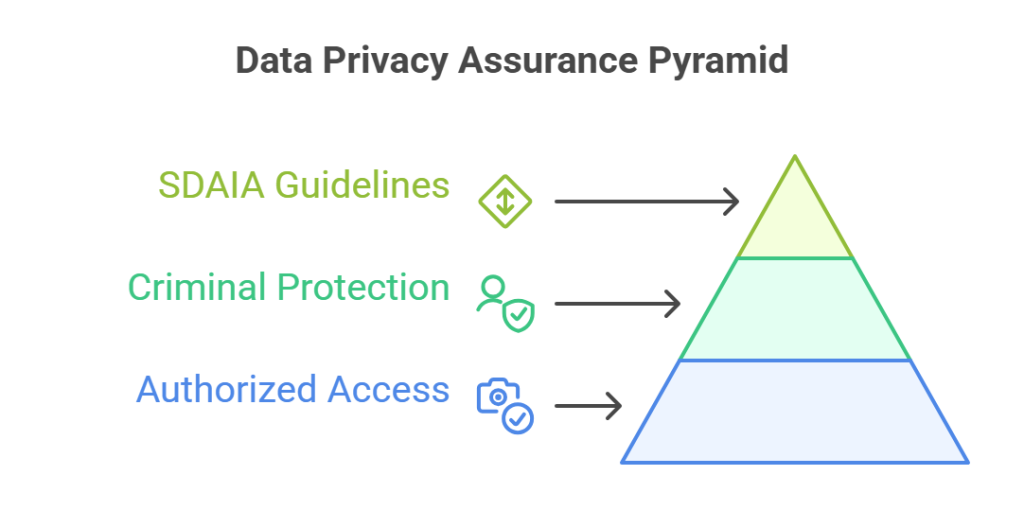
Failure to comply with these DPIA requirements can lead to fines and penalties, which prioritize the importance of privacy risk assessments in safeguarding data.
Organizations should implement a structured DPIA process that covers data collection, use, sharing and storage with special attention to data transfers outside KSA under the PDPL framework.
The Key Steps for DPIA process
DPIA is essential for your project that handles sensitive or personal data, it is good to follow the key steps in a PDPL in DPIA process.
If you are planning to integrate PDPL Saudi Arabia, consider the following steps for the DPIA process.
- Data Security: Follow the globally accepted rules accepted by National Cybersecurity Authority control and take active steps to implementing encryption, monitoring and data loss prevention measures.
- Breach notification: Identified personal data breach is reported to SDAIA within 72 hours.
- Data Protection Impact Assessments (DPIAs): Helps to secure your sensitive details and information such as personal data, health based information through DPIA. Also, such data’s access must be restricted to essential staff only.
- Direct Marketing: It needs to be consent based marketing with providing clear output options.
- Official ID Documents: Photographing official IDs and other documents are not allowed, unless it is legally requested by government authorities.
- Data Protection Officer: Use the benefit of DPO to monitor the regular activities to follow the data protection activities.
- Document Activities: Maintain all documents of activities that business processes and acquired.
- Cross-Border Data Transfers: Organizations must follow adequate levels of protection while cross border data transfer activities.
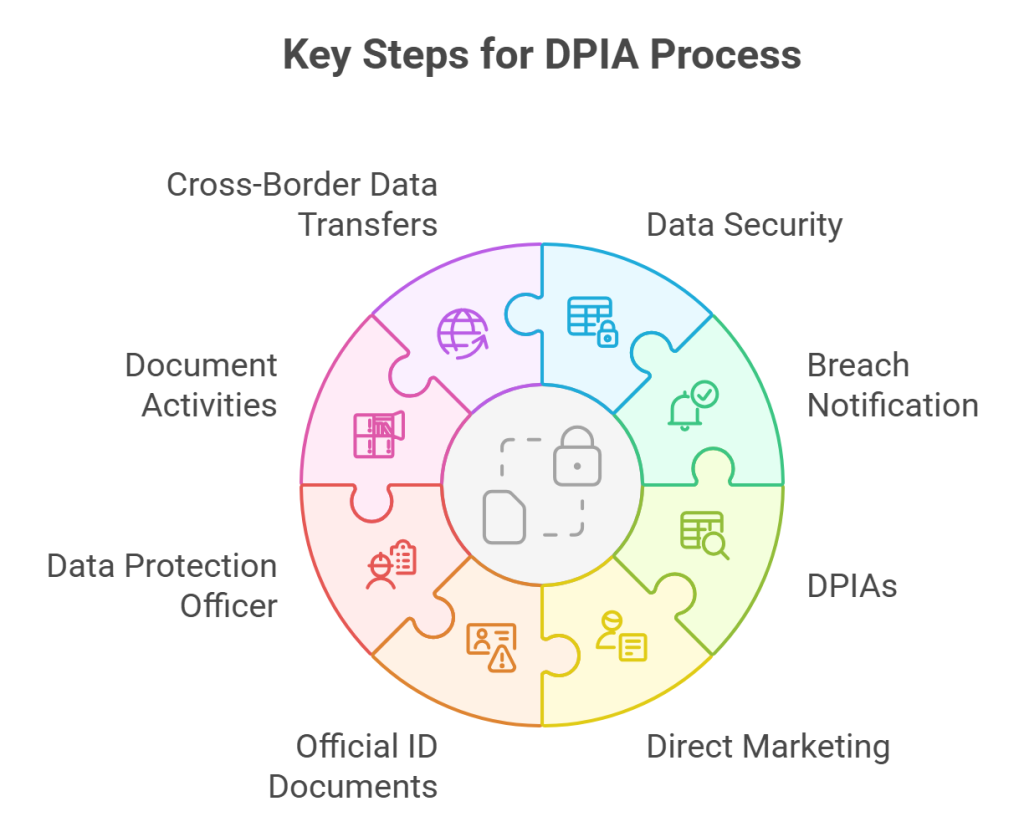
Following the Personal Data Protection Law In Saudi Arabia helps to safeguard the data privacy and protection.
Minimum content and documentation requirements under the PDPL
Minimum content and documentation requirements are essential for Data Protection Impact Assessments to ensure a detailed compliant evaluation of personal data processing risks. It is followed by the PDPL Saudi Arabia and these requirements include:
- It describe processing activities and its purpose
- List and map the personal data flows
- Assess risks to individual rights.
- Document mitigation measures
- Record stakeholder consultations
- Assign responsibilities and approval workflow
- Keep DPIA updated with scheduled reviews
- Include third-party and cross-border data details
- Maintain evidence of lawful basis for processing
Also Read : Understanding Saudi Arabia’s Personal Data Protection Law (PDPL)
Common pitfalls and how to avoid them
The common pitfalls during Implementing Data Protection Impact Assessments are
- Ignoring the importance of meeting Data Protection Impact Assessments
- DPIAs done only for perceived high-risk activities
- While having pressure to meet deadlines leads to incomplete the DPIAs
- Risks accepted without having sufficient evidence due to time or resource constraints
- Weak internal policies allow systems or contracts before DPIA completion
- Lack of confidence and fear to making compliant decisions
- Need for expert guidance often underestimated
- Poor stakeholder engagement and insufficient cross-functional collaboration
- DPIAs treated as one-off, not updated or integrated into processes
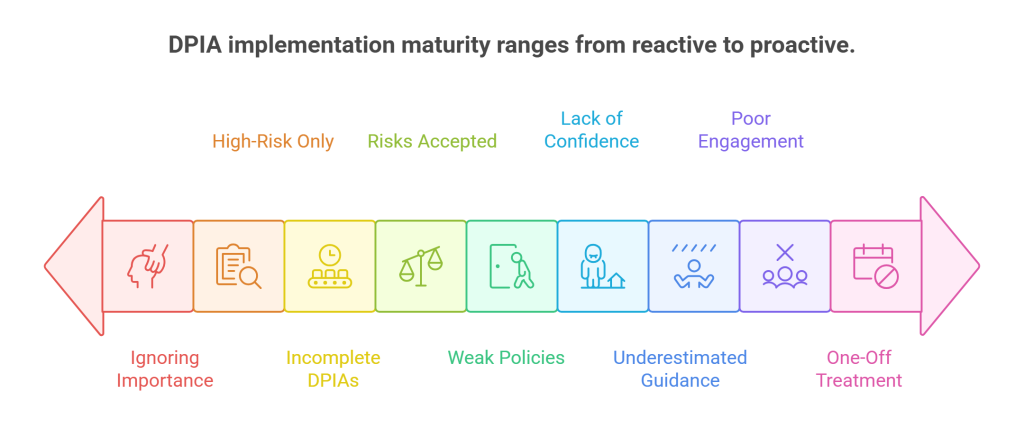
Being aware of these common mistakes and avoiding them helps to stay away from the data security vulnerabilities and leads to a smooth process.
Integrating DPIAs into your broader data protection-compliance programme
Integrating DPIAs into your broader data protection compliance significantly reduces secured data vulnerabilities.
Is your data protection impact assessments truly supporting driving compliance and risk reduction?
DPIAs is not a single process.
Do you know why it is considered as a one-off checklist to your compliance framework?
Also Read : Achieving PDPL Compliance in Saudi Arabia: Expert Tips for 2026
Data protection impact assessments under the PDPL Saudi Arabia act as essential bridges between privacy risk assessments and technical security measures.
Aware of how your DPIA output feeds into other essential compliance areas?
Implementing the DPIA findings actively informs and strengthens risk management frameworks.
Are you still assessing the third-party risks with your DPIAs?
Data transfer and breach response programs are done through DPIAs support to shape your policies for handling breaches and cross-border transfers?
Provide employee training and awareness to your staff to fully train based on privacy risks uncovered in DPIAs.
Benefits of Wattlecorp’s Personal Data Protection Services in Saudi Arabia
Leveraging our personal data protection services assists your business in Saudi Arabia with safeguarding all sensitive information handled, which includes that of customers, shareholders, and workers.
- Define the assets your business handles and where it is stored before we can safeguard them.
- Test and maintain the procedures regularly to ensure the efficacy of your application and business security architecture.
- Breach and attack simulation assist firms in staying one step ahead of cyber threats.
- Assessment reports specialized to different stakeholders, including as CEOs, SOC teams, and auditors.
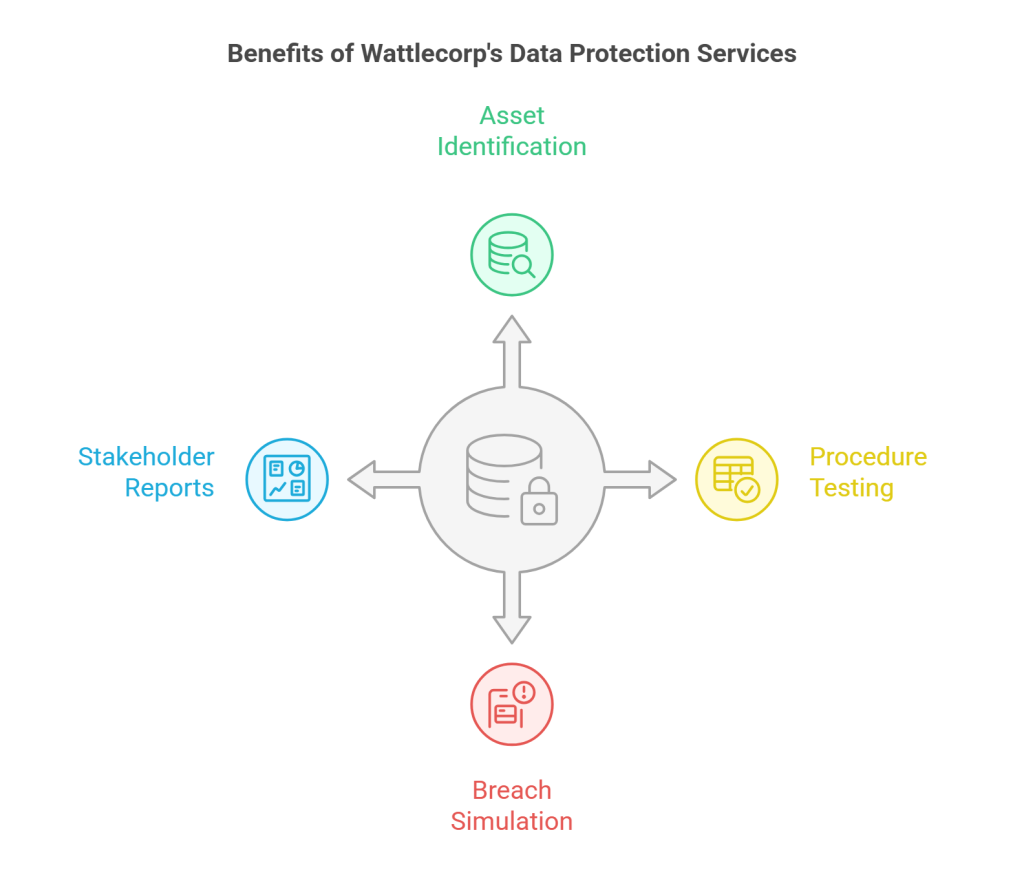
Wattlecorp provides data protection solutions in Saudi Arabia, enables businesses to safeguard sensitive information, meet PDPL compliance and strengthen their cybersecurity defenses by proactively identifying the vulnerabilities.
Checklist for Implementing a DPIA roadmap for Saudi organisations
Implementing a DPIA starts with Identifying the Need for a DPIA.
During the process of Identifying the Need for a DPIA, understand the execution early in the project lifecycle, before data handling practices are fully designed.
After that, establish a steering committee to Identify Data Protection Risks with mapping personal data. Provide Risk Mitigation Solutions for identified high-risk flows. Select controls and schedule penetration tests after that and document DPIA.
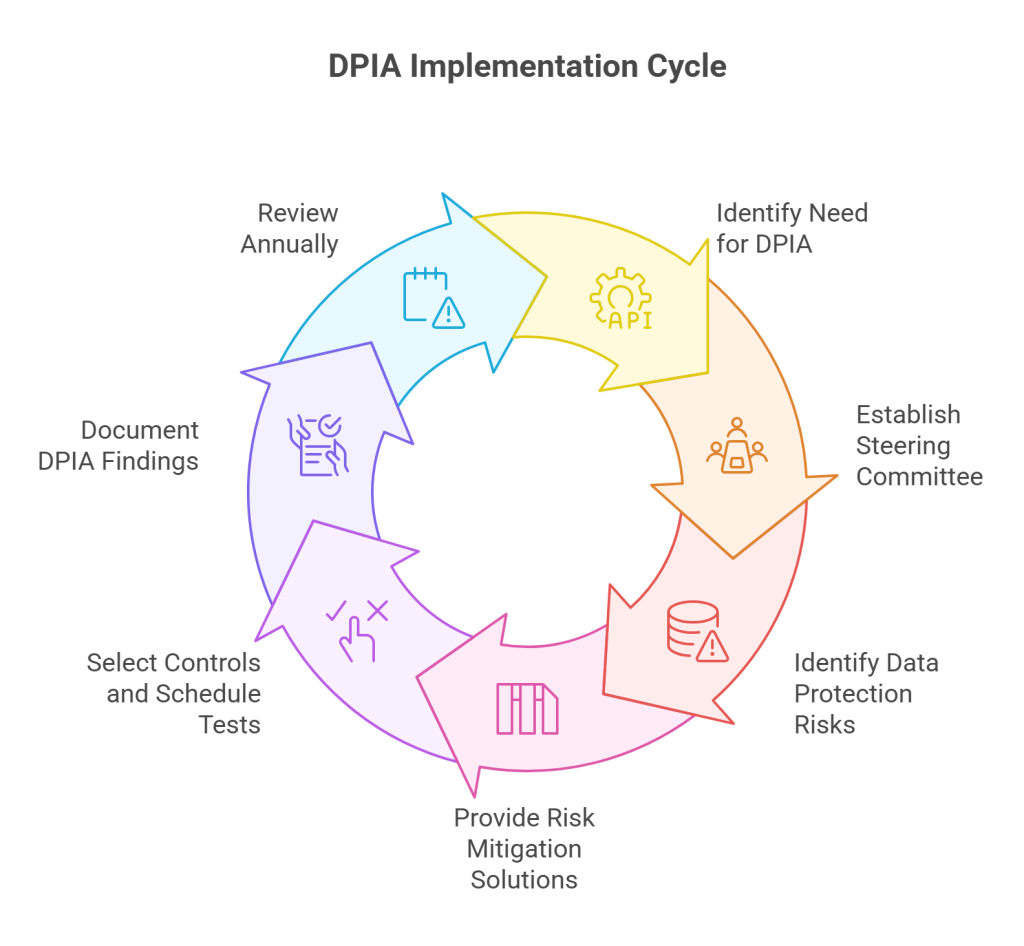
Documenting the finding gives assurance for stakeholders that privacy is strictly followed. Having a complete record of the practices followed will help in tracking accountability.
Moreover, ensure to review annually. This regular monitoring is essential, as there can be changes in project scope or new risks arising.
Strengthen your Data Protection with DPIA Practices
Data Protection Impact Assessments (DPIAs) are key to keeping personal data safe under the PDPL Saudi Arabia.
If you are concerned about your organization to meet legal requirements with identifying privacy risks early, Wattlecorp helps connect data protection and cybersecurity efforts through comprehensive DPIA implementation.
Choosing the right service for implementing DPIA under PDPL builds a strong foundation for solid privacy practices. And assist to regularly review and update DPIAs to stay secure with evolving threats and regulatory changes.
At Wattlecorp,we guide you through every step from planning to execution to ongoing management. Our experts provide support for your business in building strong data governance and staying on top of compliance.
Get your DPIAs for your data protection routine should start now
PDPL Saudi Arabia FAQs
1.What triggers the need for a DPIA under Saudi Arabia’s PDPL?
Under Saudi Arabia’s PDPL, a DPIA process is triggered when the data processing activities are at high risk to the rights and privacy of individuals.
During the processing of sensitive personal data, biometric information, children’s data, or activities involving automated decision-making that could significantly impact individuals.
A DPIA is required when organizations introducing new technologies, dealing large-scale data processing, or systems that may lead to profiling or behavioural monitoring.
2.How does a DPIA under the PDPL of KSA work? What are the minimum requirements?
A DPIA in PDPL Saudi Arabia is a structured procedure and it assesses the data collection, usage, storage and security of personal data. It contains a detailed record of activities performed on data processing, risk identification, impact analysis and well-defined mitigation strategies aimed at handling identified risks.
The DPIA assessment must also show adherence to the principles of PDPL which include data minimization, purpose limitation and legality of the processing. Also, it must examine evidence of accountability and governance practices in support of data protection controls.
3.What is a DPIA, as compared to a general risk assessment under Saudi PDPL?
A DPIA is dedicated to risks concerning personal data privacy and protecting the rights of individuals in the framework of the PDPL. It considers the influence of data processing on confidentiality, consent, transparency, and legal use of personal data.
General risk assessment deals with broader operational, technical or organizational risks like system failures, cyber risks or business continuity. Both of them seek to mitigate risk but DPIAs are privacy-focused and legally compliant with regulatory requirements.

 Mobile Application Penetration Testing for Qatar Government Digital Services: NCSA- Aligned Security Assurance
Key Takeaways: Mobile Application Penetration Testing Qatar must cover the app, device storage, APIs, authentication and third-party components. Qatar’s NCSA assurance environment combines the National Information Assurance (NIA) Standard, the National Information Security Compliance Framework (NISCF) and accredited security assessment services. OWASP MASVS defines mobile security controls, while MASTG supplies practical test methods for Android […]
 Qatar Data Protection Law: Implementing PDPPL Data Subject Rights Processes for Businesses
Key Takeaways: The Qatar Data Protection Law (Law No. 13 of 2016) for Personal Data Privacy Protection, grants individuals specific rights such as right to access, correct, erase, object, withdraw consent, and right to be notified of processing or inaccurate disclosure. Beyond having a privacy policy, businesses or controllers, under Article 11 of Personal Data […]
 AI Governance for Indian Enterprises: Building Internal Controls Before Key DPDP Obligations Take Effect
Key Takeaways: The DPDP Act does not contain AI-specific provisions. Its requirements, however, apply in situations when an AI system processes digital personal data within its territorial and material scope. India is working on building a broader governance framework around safety, accountability, transparency and trust via programs like the IndiaAI Mission. Indian organizations should inventory […]
 Cloud Security Audit for UAE Government Cloud Migration: NCAP and Security Requirements
Key Takeaways: A cloud security audit UAE helps government entities identify security, governance, configuration, access, data-protection and resilience gaps, before and after shifting critical workloads to the cloud. UAE National Cloud Security Policy has defined cloud governance, data security, data sovereignty, IAM, incident management, resilience, portability and cloud operations requirements. The National Cyber Accreditation Program […]
 Data Privacy Consulting UAE – Building a PDPL-Compliant Data Governance Program
Key Takeaways: PDPL compliance requires ongoing operational governance that goes beyond policies to demonstrate how personal data is collected, used, protected, transferred, retained, and deleted. Data mapping helps businesses move from reactive compliance to proactive risk management by establishing a comprehensive inventory of the data ecosystem, helping build a mature data privacy and governance program. […]
 Saudi Arabia’s Critical Systems Controls: What CSP-Linked Enterprises Must Comply With in 2026
Key Takeaways: The Critical Systems Cybersecurity Controls (CSCC) are more applicable to critical systems than to all IT assets owned or operated by an organization. To be in full compliance or to remain in full compliance with CSCC, organizations must maintain continuous adherence to NCA ECC. CSCC has 32 core controls and 73 sub-controls across […]