


Building a Robust Data Privacy Program: Best Practices for Compliance and Risk Mitigation in the UAE
Data Privacy Laws Every UAE Business Must Obey
Understand the Scope of the Law
The UAE’s Data Protection Law, specifically Federal Decree-Law No. 45 of 2021, applies equally to public and private sector entities that gather and process personal data. You can be any entity, like a government body, private business, or non-profit organization. Whatever it is, you are liable to follow this law if you collect or use personal information.
You must have a clear idea of the personal data collected. This data can be anything like names, contact info, identification numbers, financial data, and digital identifiers like IP addresses. Other sensitive data also comes under this, like health records, religious beliefs, and biometric information, which is prioritized with more protection.
Obtain Clear Consent for Data Collection
Before collecting or using someone’s data, your business must obtain clear and informed consent from individuals. This means
- Explaining why the data is being collected
- How will it be used?
- Will the data be shared with anyone? If so, the purpose.
- And giving options for individuals like “accept” or “decline”
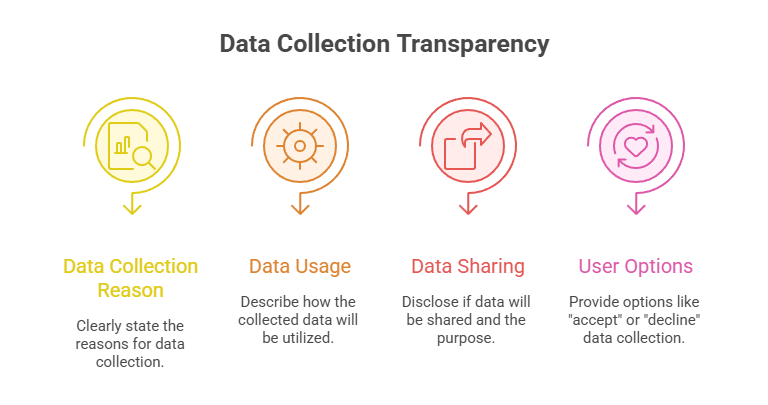
Consent must be enabled in a voluntary and specific manner so that it’s easy for them to withdraw anytime. When you are giving consent options, it also means that your business respects customers’ privacy.
Process Data Only for a Legitimate Purpose
While handling a business, you must know that personal data processing should be done only for a valid and lawful reason. The purpose for collecting the data should be clear and must not be changed unannounced. This is called the purpose limitation principle.
Think of your business collecting customer information to deliver a product. In that case, data should not be reused for unrelated marketing purposes unless you have proper consent.
Give Individuals Access to Their Data
The law gives individuals several rights related to their personal data. These include:
- The right to access the data they gave access to
- The right to make changes to the inaccurate data recordings they made
- Having rights to remove data when they want to
- The right to restrict or object to how their data is used
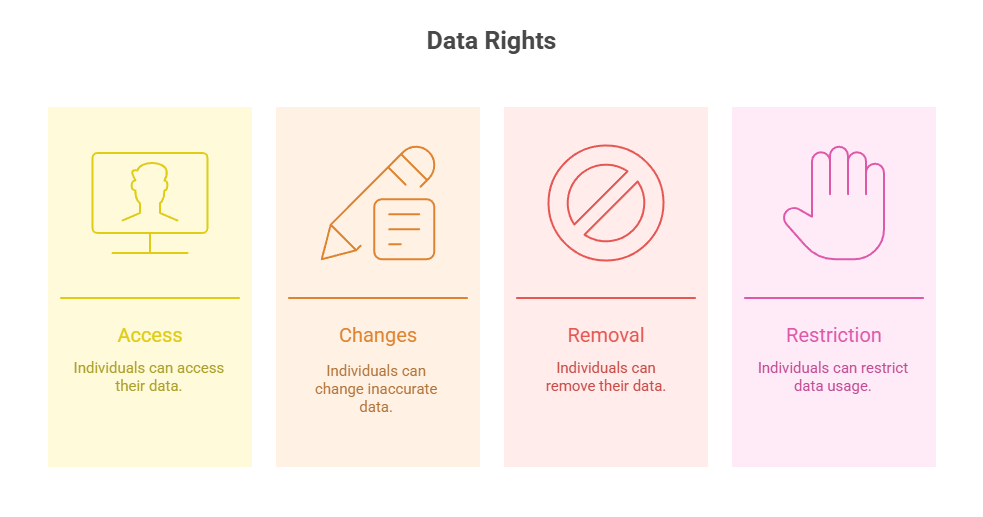
Your businesses must set up systems to handle such requests and respond on time.
Implement Strong Data Security Measures
When you are focusing on a long-term business and your customer matters, then taking efforts to protect your business data should never be ignored. You must use technical and organisational safeguards. This would secure your business from unauthorized access, data leaks, and alteration or destruction of personal data.
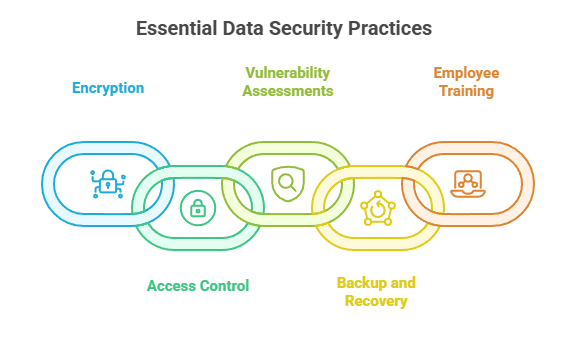
To avoid such instances, here are some recommended security practices you can adapt:
- Encryption of stored and transmitted data
- Password protection and role-based access
- Regular vulnerability assessments
- Data backup and disaster recovery plans
- Conduct periodic employee training on handling data securely
Perform Data Protection Impact Assessments
When you are starting any project or service that involves collecting or processing large amounts of personal data, you must perform a data protection impact assessment. Examining this way helps in identifying and reducing privacy risks.
You strictly need this when handling sensitive personal data, using new technologies, or transferring data internationally.
Appoint a Data Protection Officer (DPO)
When you handle a large amount of personal/sensitive data you must have a Data Protection Officer (DPO). This person will handle responsibilities like overseeing data protection efforts and paralleling internal policies with the law.
These professionals also serve as a contact point between the business and the government’s supervisory authority. Moreover, they are responsible for managing compliance and training.
Also Read : Data Privacy in 2025: Emerging Trends and What They Mean for Your Business in the UAE
Keep Records of Data Processing Activities
Keeping records is essential when you are in business. To demonstrate compliance, you must maintain a record of all the data processing activities. You must keep track of the data that is being processed, the reason for processing, where it is stored, and who has access to it.
These records help during audits and when responding to requests from regulators or customers.
Safe Cross-Border Data Transfers
If your business needs to transfer personal data outside the UAE, you must verify if the destination country has strong data protection measures. More than verification, you must deal with this in terms of agreements.
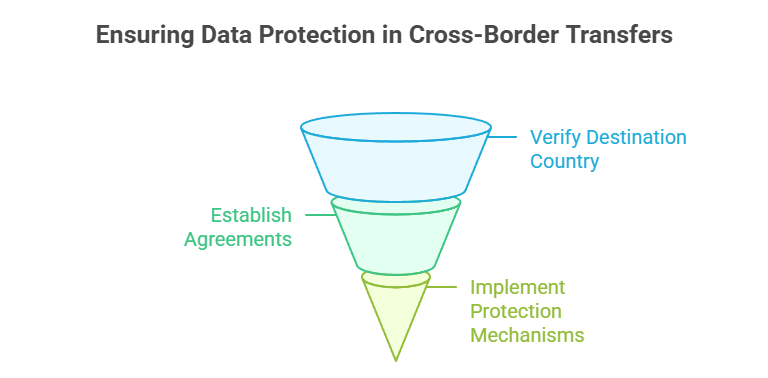
You can use specific mechanisms to protect the data, if you choose otherwise. These measures help businesses using cloud services or working with international partners.
Consequences of ignoring data privacy regulations
Your business is liable to face hefty penalties like fines and legal actions if you are non-compliant with the UAE Data Protection Law. The charges you face would vary based on the severity of the infringement and may range from thousands to millions of dirhams.
And, when you are violating the data protection safety code, it is also a breach of trust and can result in reduced trust in your venture.
How is UAE’s PDPL Close to EU’s GDPR?
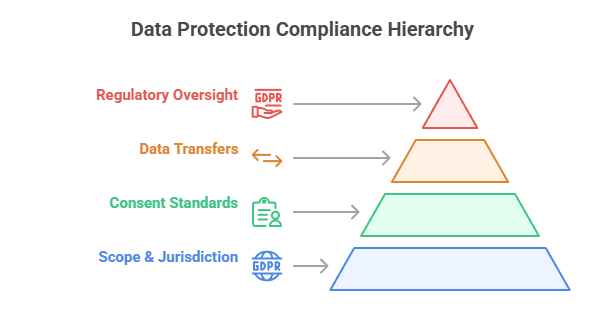
The UAE’s PDPL is so close to the EU’s General Data Protection Regulation (GDPR) in many areas. Each regulation is shaped in accordance with its regional context. Here is a simple brief comparing their similarities and subtle differences:
Scope and Jurisdiction
- PDPL: Applies to UAE-based businesses and international ones collecting and processing UAE residents’ data.
- GDPR: Has a global reach — applies to any entity processing EU residents’ data.
Consent for Data Processing
- PDPL: This requires consent, though standards may be more flexible than GDPR.
- GDPR: Demands clear, informed, and explicit consent through affirmative action like “I agree” or “Deny”.
Also Read : Ensuring Data Privacy Compliance: Essential Steps For UAE Businesses
Cross-Border Data Transfers
- PDPL: Transfers are allowed with UAE Data Office approval in terms of the agreement with the cross-border entity.
- GDPR: Needs approval or safety measures (like SCCs) when sending data outside the EU.
Regulatory Screening
- PDPL: Supervised by the UAE Data Office.
- GDPR: Each EU country has its own data protection authority and they check if the rules are followed.
Switching to digital adaptation is unavoidable in the current era. Most businesses deal with some kind of data to process their business operations. With such benefits, there are also threats on the other side, and it’s a necessity for businesses to enable data privacy. As a remedial measure, the UAE government has implemented a law to handle data responsibly.
By following these top privacy practices with a data privacy expert’s assistance, your business can compete in the threat-prone digital environment. Furthermore, with Wattlecorp you are protecting your customer line while avoiding legal threats.
Data Privacy FAQs
1. What are the key components of a data privacy program?
Data mapping, consent management, clear privacy policies, secure data handling practices, and employee training are the essentials to know while planning to enable this regulation. Likewise, it helps set up data subject rights and respond to breaches effectively.
2. What are the best practices for businesses on data privacy compliance in the UAE?
Your business must get clear consent, and limit data use to specific purposes mentioned. With this you must also implement strong security measures. To avoid disruptions, take efforts to follow regular audits, educate the staff, and keep records of data processing.

 Mobile Application Penetration Testing for Qatar Government Digital Services: NCSA- Aligned Security Assurance
Key Takeaways: Mobile Application Penetration Testing Qatar must cover the app, device storage, APIs, authentication and third-party components. Qatar’s NCSA assurance environment combines the National Information Assurance (NIA) Standard, the National Information Security Compliance Framework (NISCF) and accredited security assessment services. OWASP MASVS defines mobile security controls, while MASTG supplies practical test methods for Android […]
 Qatar Data Protection Law: Implementing PDPPL Data Subject Rights Processes for Businesses
Key Takeaways: The Qatar Data Protection Law (Law No. 13 of 2016) for Personal Data Privacy Protection, grants individuals specific rights such as right to access, correct, erase, object, withdraw consent, and right to be notified of processing or inaccurate disclosure. Beyond having a privacy policy, businesses or controllers, under Article 11 of Personal Data […]
 AI Governance for Indian Enterprises: Building Internal Controls Before Key DPDP Obligations Take Effect
Key Takeaways: The DPDP Act does not contain AI-specific provisions. Its requirements, however, apply in situations when an AI system processes digital personal data within its territorial and material scope. India is working on building a broader governance framework around safety, accountability, transparency and trust via programs like the IndiaAI Mission. Indian organizations should inventory […]
 Cloud Security Audit for UAE Government Cloud Migration: NCAP and Security Requirements
Key Takeaways: A cloud security audit UAE helps government entities identify security, governance, configuration, access, data-protection and resilience gaps, before and after shifting critical workloads to the cloud. UAE National Cloud Security Policy has defined cloud governance, data security, data sovereignty, IAM, incident management, resilience, portability and cloud operations requirements. The National Cyber Accreditation Program […]
 Data Privacy Consulting UAE – Building a PDPL-Compliant Data Governance Program
Key Takeaways: PDPL compliance requires ongoing operational governance that goes beyond policies to demonstrate how personal data is collected, used, protected, transferred, retained, and deleted. Data mapping helps businesses move from reactive compliance to proactive risk management by establishing a comprehensive inventory of the data ecosystem, helping build a mature data privacy and governance program. […]
 Saudi Arabia’s Critical Systems Controls: What CSP-Linked Enterprises Must Comply With in 2026
Key Takeaways: The Critical Systems Cybersecurity Controls (CSCC) are more applicable to critical systems than to all IT assets owned or operated by an organization. To be in full compliance or to remain in full compliance with CSCC, organizations must maintain continuous adherence to NCA ECC. CSCC has 32 core controls and 73 sub-controls across […]