

Key Takeaways:
- PDPL in Saudi Arabia has international applicability; banks and foreign healthcare providers which process sensitive data of KSA residents have to adhere to its extraterritorial demands.
- To prevent excessive fines and legal disputes companies are required to report data breaches and register sensitive processing activities with SDAIA on time.
- Regulatory audits should be possible by ensuring the entire record is documented. Before handling the data of individuals, consent should be clear and documented and should be obtained as an informed permission.
- Personal data should be correct and processed only for legitimate and lawful business purposes.
- Data transfers across international borders should be secured and the recipient states should provide the same security or implement Standard Contractual Clause.
- SAAS and cloud vendors are required to undergo Risk testing which is specified by SDAIA; otherwise, it may entirely block the data flow.
Why Does PDPL Matter for Your Organisation in Saudi Arabia?
The Personal Data Protection Law in Saudi Arabia is enforced by SDAIA to protect personal data privacy for KSA residents.
It includes sensitive data such as IDs, health cards, financial information, biometric data, and other personal details, which reveal an individual’s identity. This ensures that organizations handle such data lawfully, securely and with transparency.
PDPL in Saudi Arabia acts as a shield for individuals from misuse while requiring SaaS and BFSI firms to manage consent, cross-border transfers and regulatory uncertainty.
Organisations can benefit from PDPL with reduced breach risks and improved customer trust, and fines can be avoided, which is key for compliant growth in Saudi Arabia.
Organizations in Saudi Arabia must understand the significance of PDPL and learn practical tips for achieving compliance with the Personal Data Protection Law.
Overview of the PDPL: Scope, applicability and timeline
The Saudi Arabia’ PDPL secures the personal information of residents of the country, even when it is handled abroad. This implies that any organization that processes the data of Saudi citizens, whether local or foreign, including SaaS providers, banks, or hospitals, is required to comply with the law.

Before collecting or using the personal data, companies must obtain clear consent. They need to verify the possible privacy threats, inform about the cases of data breaches in time and keep data safe.
Failure to do so may lead to huge fines and reputational damage and legal losses to SDAIA.
Follow rules of PDPL in Saudi Arabia to avoid penalties and create customer trust in KSA’s digital economy.
Key obligations under the PDPL for Controllers and Processors
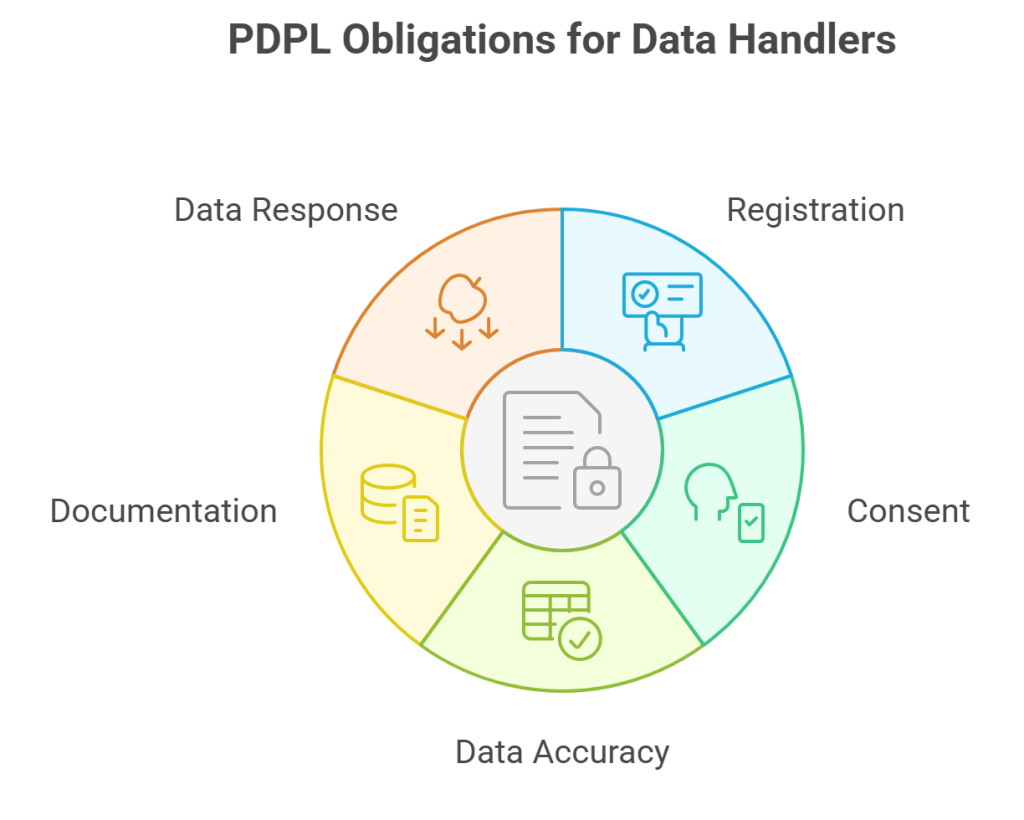
Key obligations of data controllers and data processors under the PDPL in Saudi Arabia include:
- In accordance with SDAIA requirements, organizations must register relevant personal data processing activities on the National Data Platform to support PDPL compliance and regulatory oversight.
- To ensure prior knowledge, explicit and informed consent of the data subjects is obtained prior to the collection or processing of data.
- Assuring valid reasons for collecting data and securing the accuracy of the data.
- Maintain documentation of processing operations and breach notifications, as the SDAIA requires that a data breach be reported within 72 hours.
- Rapid data response to data subject requests and the protection of personal data against unauthorized disclosure or access.
Such requirements mandate organizations to audit and enhance their data protection measures on a routine basis which is where Wattlecorp provides professional audit and compliance services.
Data Subject Rights and How to Implement them
What types of personal data are protected under the PDPL?
The PDPL protects various types of personal data, ensuring that individuals have the right to secure their information. These rights include access, correction, deletion, restriction of processing and the ability to object to the use of their personal data, the right to withdraw consent, and the right to be informed about how their personal data is processed.
Also Read : Navigating Saudi Arabia’s Personal Data Protection Law (PDPL ): Key Compliance Requirements for Businesses
Organisations must focus on managing these rights through:
- Following clear privacy policies and data subject rights portals.
- Provide defined processes for handling requests within the mandated timelines.
- Ensure opt-out mechanisms, especially for marketing communications.
- Implement procedures to securely delete or anonymise data upon request.
This focus on customer empowerment requires organisations to fix these mechanisms for both technical and organisational purposes.
Cloud Implications of Cross-Border Data Transfers Rules
Saudi Arabia’s PDPL strictly regulates cross-border transfers of personal data. Organizations should make sure that personal data being transferred outside the country should be safeguarded. Implementing the necessary measures ensure that the country receiving the data, provides an equivalent level of protection.
This includes:
- Clear consent from data subjects.
- Compliance assessments to ensure recipient countries have equivalent protection standards.
- Use of approved safeguards such as Standard Contractual Clauses or Binding Corporate Rules.
- Conduct mandatory risk assessments that follow SDAIA’s February 2025 guidelines for data transfer risk.
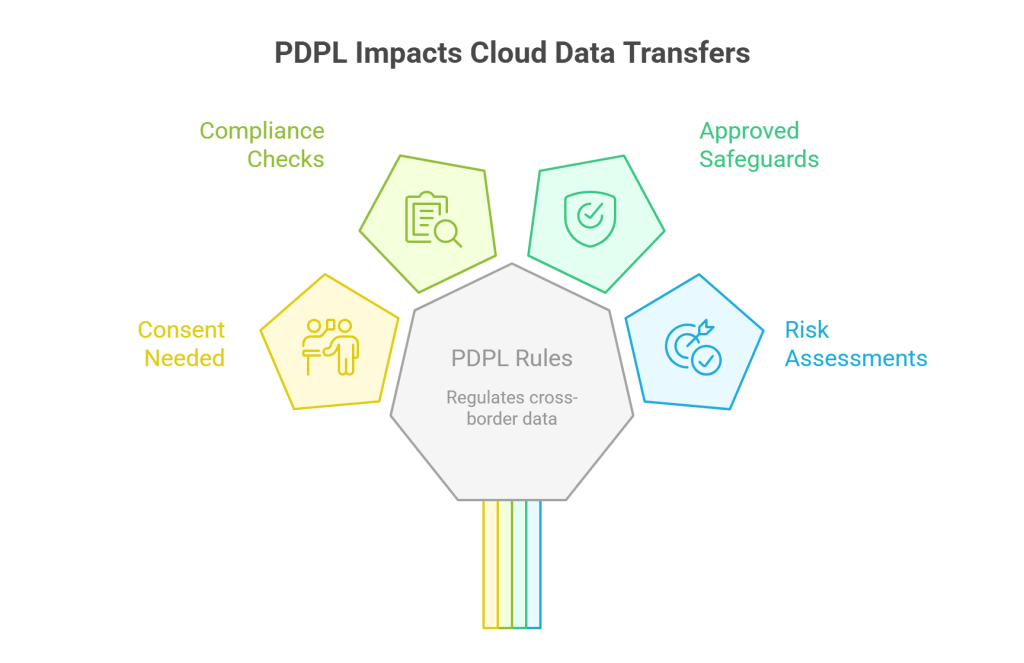
This impacts SaaS providers and enterprises using cloud services, necessitating strict compliance checks for international data flows.
Technical and organisational safeguards: from registration to breach-notification
Organisations must focus on implementing both technical and organisational controls such as Data registration with SDAIA for relevant activities, strategic application of cybersecurity measures to protect data integrity.
And rapid breach detection and notification mechanisms for fast solution. Moreover, practicing periodic audits and training programs helps to keep uptodate in this fast changing digital economy.
Also Read : Recent Amendments to Saudi Arabia’s PDPL: What Businesses Need to Know
Wattlecorp’s cybersecurity solutions prioritize following these measures to safeguards and ensuring organisations meet PDPL’s evolving requirements.
How a penetration testing service in Saudi supports your PDPL compliance
Implementing penetration testing service in Saudi is essential for PDPL compliance as it helps to identify vulnerabilities in systems processing personal data.
Penetration testing is primarily focused on evaluating the effectiveness of technical safeguards with identifying weaknesses and testing third-party service security through simulated cyberattacks.
The combination of pentest with PDPL’s technical safeguard mandates and prepares organisations for regulatory audits.
At Wattlecorp, we offer futuristic penetration testing services in Saudi, which are designed to PDPL compliance requirements with providing risk assessments and actionable remediation plans to protect sensitive data and maintain trust.
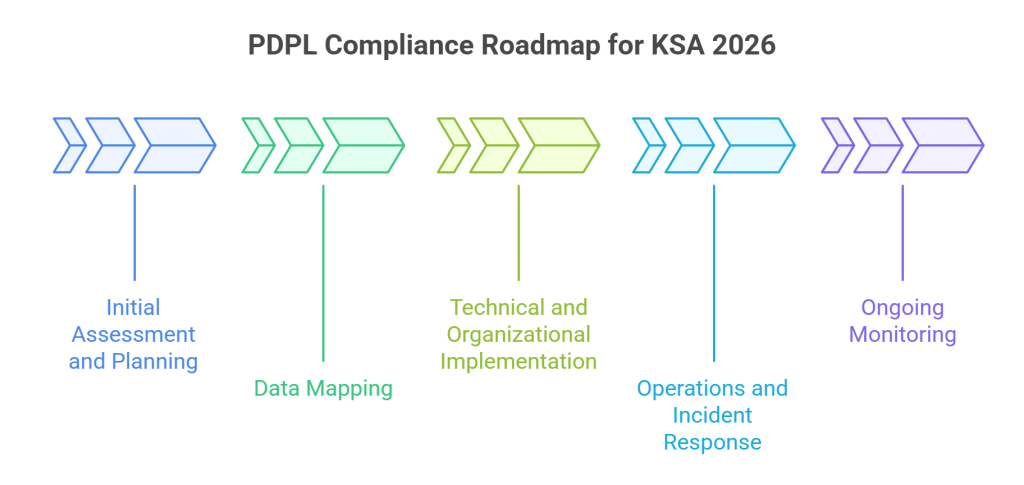
Practical Checklist and Roadmap for KSA PDPL 2026
Conducting data mapping, impact assessments and updation of policy or contract are the things to do while PDPL compliance.
Therefore, organizations should establish continuous monitoring processes and provide employee training to ensure sustained compliance and readiness for any regulatory changes under the PDPL framework in KSA.
- Initial assessment and planning : Appoint DPO for large-scale or sensitive data processing and run gap analysis against PDPL requirements. Perform PIAs, DPIAs, and TIAs and map all personal data, storage, and purposes.
- Data mapping: Focused to analyze the data flows, update privacy policies and classify sensitive data.
- Technical and organizational implementation: Ensure to set data retention policies with automation and update vendor contracts with PDPL clauses.
- Operations and incident response: Regular check operation process and create a breach response plan with on time alert.
- Operations and incident response: Create a breach response with on time alert notification. Provide training to staff on data handling and make a data subject request framework.
- Ongoing monitoring: Track SDAIA regulatory updates and guidance and conduct regular audits with review third parties and contracts.
Common pitfalls and how to avoid them
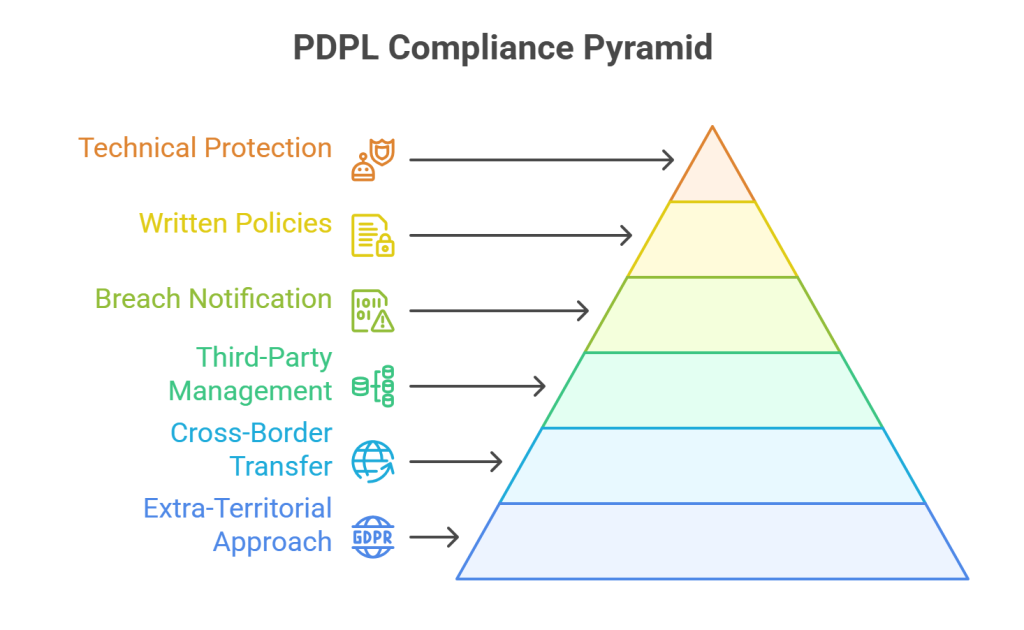
The pitfalls in PDPL compliance are:
- Not considering the extra-territorial approach and implementing protection only in the Saudi borders.
- Ignorance of high cross-border transfer regulations and documentation.
- Lack of proper management of third-party suppliers and processors.
- Delay in the notification of breach which attracts extreme punishment.
- Absence of written policies in data protection and controls.
- Lack of technical protection like out of date cybersecurity.
To prevent them, there must be efficient governance and professional advisory service, which Wattlecorp offers to achieve a good level of compliance and risk management.
Neglecting the PDPL requirements leads to heavy fines, business interruptions and trust damage for violations. Therefore regulating the PDPL is essential for securing the organization’s compliance journey. It safeguards all sensitive information handled by your corporation, including that of customers, shareholders, and workers.
Data mapping, DPIAs, consent systems, breach plans and penetration testing compliance tips to cut risks while earning customer confidence.
Wattlecorp handles detailed study for gap analysis, implementing DPO support , regular technical audits with effective penetration testing services in Saudi, vendor reviews, staff training, and ongoing checks to keep operations audit-ready.
Contact Wattlecorp today for PDPL readiness assessment.
Get compliant before SDAIA checks arrive.
PDPL in Saudi arabia FAQs
1.What is the scope of the Saudi Arabia PDPL and who must comply?
The PDPL applies to all organisations inside and outside Saudi Arabia that process personal data of individuals located in the Kingdom. This includes companies which offer goods or services or monitor the behavior of Saudi residents.
2.What are the key obligations of data controllers under the PDPL?
The essential requirements of data controllers in the PDPL in Saudi Arabia are mandatory registration. This regulation includes consent, data accuracy and breach notification requirements. It further ensures data subjects’ rights and provides protection through technical and organisational safeguards.
3.How does the PDPL regulate cross-border data transfers?
Transfers of data should be with clear agreement. Check recipient countries carefully and use safeguards like Standard Contractual Clauses. Risk checks and evaluations are required by SDAIA rules.
4.What are the penalties for non-compliance with the PDPL?
The consequences of non compliance with PDPL are fines, up to two years of imprisonment in cases of sensitive data breach, administrative penalty, a business license suspension and a destroyed reputation.
5.How can organisations (especially SaaS/BSFI) prepare for PDPL compliance in 2025?
The PDPL compliance preparation includes by conducting gap analyses, appointing a DPO, mapping the data flows, classification of data, deploying safeguards, scheduling penetration tests, preparing breach response plans and providing regular training to employees.