

What is Deepfake? How Deepfake Works ?
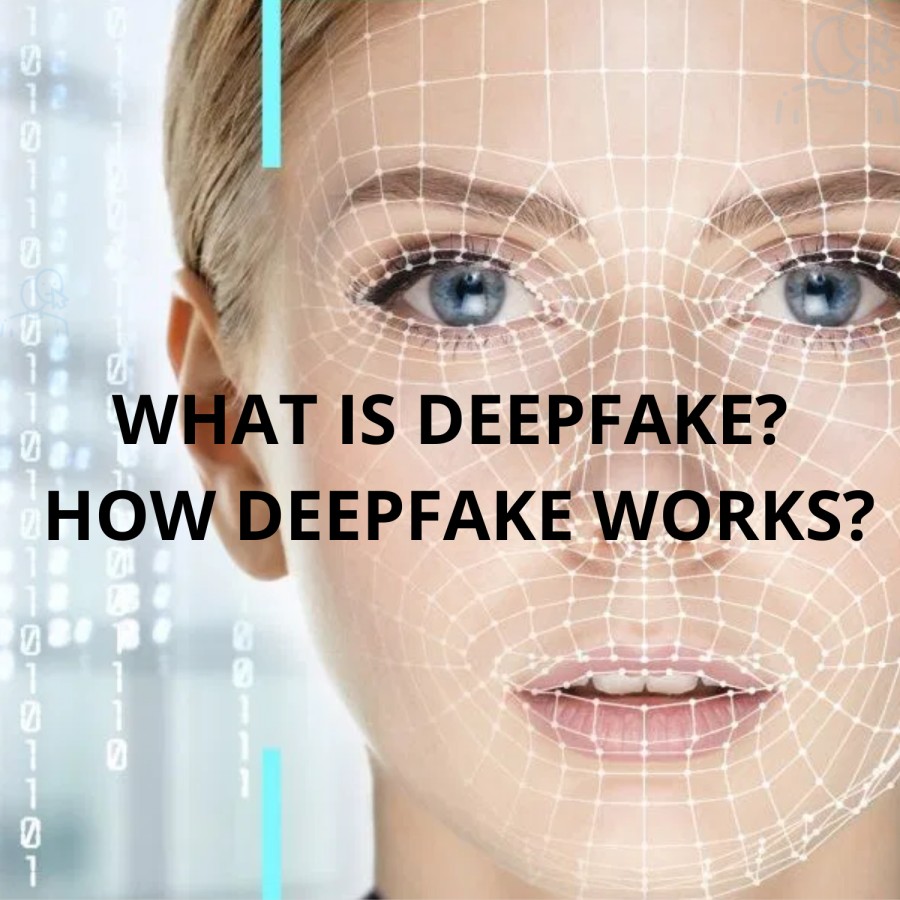
Technology has come a long way since its inception. Especially the way it deals with the generation and manipulation of new and existing content. From setting filters and tweaking the nature of a photograph to make it more aesthetic to playing around with a video to feature the presence of someone else who isn’t in the video by exchanging it for someone who is, it is actually quite impressive. The technology that I mentioned is called deepfake. Let us look at what deepfake is.
What Is Deepfake?
Deepfake is a technology that is used to impersonate people with a high level of accuracy. Used mainly in video content, it is difficult to distinguish from real ones. The authenticity of deepfakes has gotten better over time.
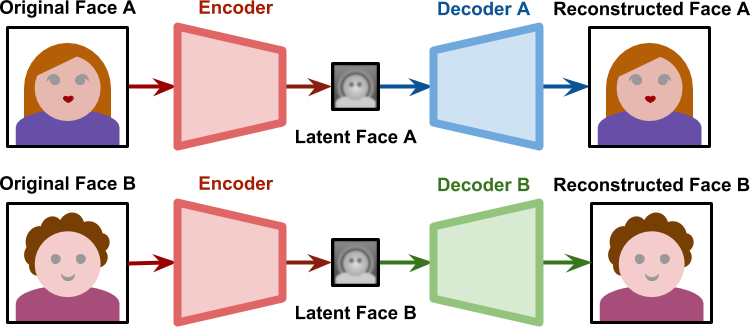 Researchers predict that there will be a time when it’ll be almost impossible to differentiate between deepfake videos and actual ones. Deepfakes basically is the cloning of people onto a body double in a manner that synchronizes the subject’s face with the actions and dialogue done by the double. It involves a lot of data points to cultivate to pull a proper deepfake.
Read More: Understanding Blueleaks
How does Deepfake Work?
 Deepfakes use Artificial Intelligence to obtain the various data points found in the pictures used to get the cloned face. Since the videos need the cloned face to have perfect synchronization with the body double, a lot of images are needed. Images or videos that have the subject’s face in different lighting, angles, and emotions are used for the creation of deepfakes. Deepfakes are made using an open-source application called DeepFaceLab. DeepFaceLab uses Artificial Intelligence to cultivate the data as mentioned earlier. These data points are then compiled to create a face that can be synchronized with the body double in the next video.
Read More: WhatsApp Pink Scam: How Clicking On A Link Gets Your Phone Hacked
Malicious Use of Deepfakes
Reports on deepfakes state that around 96% of deepfakes on the internet are nonconsensual pornographic content. This might seem like deepfakes affect the only  omen, but deepfakes can enable all kinds of bullying and extortion. It can evolve into schools and workspaces where deepfakes put the alleged victim into ridiculous, dangerous, or even compromising kind of scenarios. Deepfakes have the chance to eat into a corporation by scamming through unrecognized deepfakes. There’ve also been reports of deepfake audios used for cyber extortion. Another misuse of deepfakes is the creation of fake identity cards and sources of other kinds of cybercrime. But apart from all these, the biggest way that one can use deepfake is for extortion. The problem that arises with such an ambiguous aura surrounding deepfakes is the biggest danger for deepfakes. With such videos that seem authentic to the everyday user, it is close to impossible to deny any allegation that could be created using deepfake. On the other hand, it is also a getaway for actual criminals because they can claim that the evidence was made up of deepfakes. This causes an ethically viable cyber confusion that allows criminals to walk free despite whatever they do.
Interested to learn more about other kinds of cybercrime? Follow our blog to keep yourself updated with the latest trends in cybersecurity.
Contributors: Adithya Amarnath

 Qatar Cybersecurity Boardroom Accountability: Why QCB and NCSA Now Expect Executive Ownership
Key Takeaways: Cybersecurity in Qatar is increasingly becoming an executive governance responsibility, with national cybersecurity initiatives and sector-specific requirements encouraging organizations to establish stronger leadership oversight. QCB and NCSA play important roles in strengthening cybersecurity governance in Qatar, with QCB focusing on financial sector requirements and NCSA supporting national-level cybersecurity coordination and guidance. Executives can’t […]
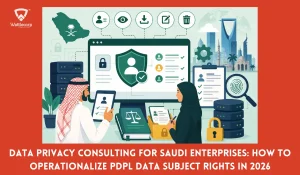 Data Privacy Consulting for Saudi Enterprises: How to Operationalize PDPL Data Subject Rights in 2026
Key Takeaways: The Saudi data protection law may apply to organizations outside the Kingdom when they process personal data related to individuals in Saudi Arabia, meaning geographic location alone does not automatically exclude an organization from PDPL obligations. PDPL data subject rights span access, correction, deletion, and consent withdrawal, and enterprises are on the hook […]
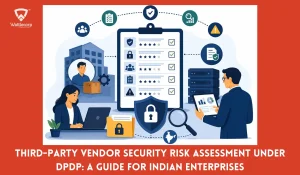 Third-Party Vendor Security Risk Assessment Under DPDP: A Guide for Indian Enterprises
Key Takeaways: Third-party vendor risk assessment with DPDP practices helps Indian enterprises to verify that external partners handle personal data with adequate safeguards. The Digital Personal Data Protection Act holds data fiduciaries accountable for vendor conduct, which makes due diligence a legal and operational necessity. A structured vendor security questionnaire, covering encryption, access control, and […]
 Virtual CISO Services for UAE Free Zone Startups: Affordable Security Leadership for Growing Companies
Key Takeaways: Most startups already hold sensitive data such as customer info, source code, financials, long before they feel big enough to take security seriously, and that’s exactly when the risk starts. A virtual CISO gets you someone who’s done this before, setting up strategy and guiding compliance, without the cost of putting a full-time […]
 SOC as a Service for Indian BFSI and FinTech Companies: 24/7 Monitoring for CERT-In Readiness
Key Takeaways: SOC as a Service for BFSI and FinTech India gives banks, NBFCs, insurers and digital lenders continuous security visibility without the cost and hiring effort of building an in-house operations centre. CERT-In directions require regulated entities to report qualifying cyber incidents within six hours of detection, and implementing SOC for BFSI and FinTech […]
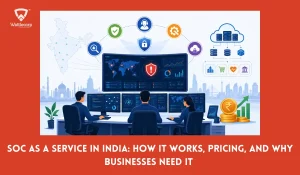 SOC as a Service in India: How It Works, Pricing, and Why Businesses Need It
Key Takeaways: SOC as a Service helps Indian businesses to get 24×7 security monitoring without huge cost and complexity of building a full in-house security operations center. A managed SOC check and analyse beyond basic log monitoring, which combining SIEM, threat intelligence, analyst-led alert triage, incident escalation, reporting, and security response support. SOC as a […]