

Key Takeaways:
- Achieving PCI DSS Level 1 is not all about meeting a standard, it is about securing your e-commerce platform, and building trust with clients.
- The 60-day action plan to the PCI DSS compliance provides a quick and systematic way through which companies can ensure their payment systems are secure and avoid expensive fines.
- Non-compliance with the PCI DSS Level 1 may result in serious fines, discontinued payment processing, and loss of consumer confidence.
- The PCI DSS compliance process requires penetration testing, which can identify the weak points and allow you to focus on making sure that your platform is not exposed to cyber attacks.
- Maintaining PCI DSS compliance remains feasible, monitoring and proactive risk management must be structured in order to keep pace with new and emerging security challenges.
Securing Digital Trade: The Strategic Role of PCI DSS Level 1 Compliance in High-Volume Retail
Achieving a high level of security is an essential foundation of any successful digital trade operation.
The Payment Card Industry Data Security Standard, or PCI DSS is a security standard, which is designed to protect the cardholder data and ensure secure payment transactions.
For a growing Dubai e-commerce platform, following the PCI DSS level 1 compliance is the peak of this security hierarchy. And it is specifically required for entities that process over 6 million transactions annually.
What is PCI DSS level 1 compliance?
Achieving PCI DSS Level 1 certification is not just for meeting industry standards; it’s a powerful statement of your business needs and commitment to data security and consumer trust.
And this tier requires an annual on-site audit by a Qualified Security Assessor (QSA) rather than a simple self-questionnaire.

PCI DSS certification acts as a shield for your business from expensive non-compliance penalties. Also, it opens doors to favourable negotiations with financial institutions.
Moreover, PCI DSS compliance level 1 ensures that cardholder data is protected using strong cryptography, secure network controls, and strict access restrictions as required under PCI DSS.
Large scale platforms may overlook these critical details as they scale their operations.
By meeting these rigorous requirements, a business demonstrates that it can handle massive data loads without compromising the safety of its users.
Ultimately, Level 1 status serves as strong proof that the organization is ready to operate at scale with strong security controls in place.
Importance of PCI DSS Compliance for E-commerce Platforms in Dubai
The rapid growth of the digital economy in Dubai has brought about a significant increase in regulatory oversight regarding how consumer data is stored and handled.
The local businesses must navigate a complex web of PCI DSS compliance UAE mandates alongside the Personal Data Protection Law (PDPL) to remain operational.
Protecting cardholder data and preventing fraud are the primary drivers behind these strict security needs.
The consequences of non-compliance extend far beyond fines following a breach, including loss of processor privileges and total erosion of customer trust.
Also Read : PCI DSS Compliance Cost in 2025: A Comprehensive Guide
Many ecommerce payment processing companies will simply refuse to work with a merchant that cannot prove their PCI DSS Compliance Dubai E-commerce status.
This risk to the payment processor can lead to frozen funds and a total halt in cash flow, which is often fatal for retail businesses.
Maintaining a secure ecommerce website is therefore a matter of survival in the competitive Dubai market.
As more consumers shift toward digital-first shopping, the demand for best e-commerce payment systems that guarantee safety continues to rise.
Successfully managing these risks ensures that your platform remains a trusted destination for shoppers across the region.
Key Steps to Achieving PCI DSS Level 1 Compliance in 60 Days
When an organization requires PCI DSS Level 1 compliance within 60 days, the companies will have to quickly transition between the chaos and complete audit preparedness.
To succeed in navigating through PCI DSS level 1 compliance, it is essential to understand your network configuration and data flows comprehensively and address the greatest risks first to complete the limited timeframe.
Moreover, organizations should ensure to concentrate more on remediation activities that deal with the most critical vulnerabilities first.

The 60-Day Action Plan Starts with:
- Initial Gap Assessment: The process begins with an intensive security posture evaluation to identify “Scope.” By limiting the number of systems that actually handle card data, you reduce the time needed for the audit.
- Implementation: This phase involves addressing vulnerabilities and making the necessary infrastructure changes, such as network segmentation and server hardening.
- Documentation: No audit is successful without documentation, teams must prepare audit-ready documentation for every security control in place.
Each of these steps forms a critical link in the chain of PCI DSS level 1 compliance protection. By methodically checking off these requirements, a PCI DSS level 1 service provider can move through the audit process without significant delays.
This structured approach is the only way to transform a vulnerable platform into a certified secure environment within a two-month window.
Common Challenges in the PCI DSS Compliance Process
There are some common challenges while integrating the PCI DSS compliance process.
Even with a clear roadmap, the path to level 1 pci compliance requirements is filled with some obstacles that can disrupt project continuity.
Technical teams often find that the deeper they dive into the requirements, the more complex the remediation becomes.

Understanding these common challenges early is the key to preventing a failed audit and the associated costs of re-testing.
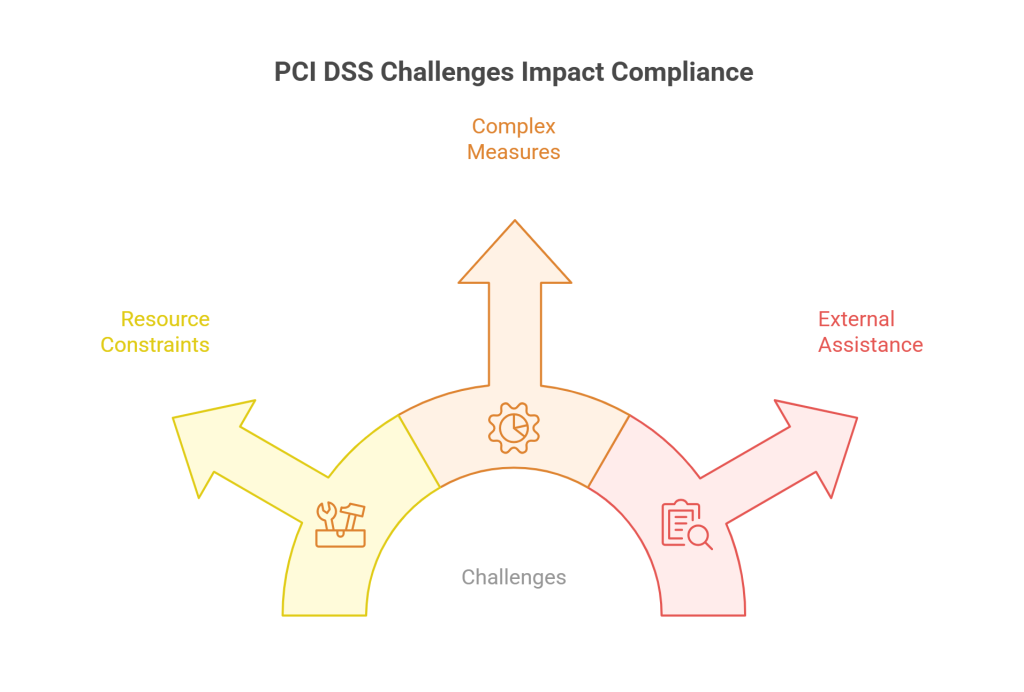
- Internal Resource Constraints: A major lack of expertise and manpower often prevents companies from meeting the 12 requirements on their own.
- Complex Security Measures: Comprehending and adopting the complex compliance rules such as multi-factor authentication in all systems may be a technical nightmare.
- External Assistance: Many companies learn too late that experts and penetration testing is a crucial part of the final QSA inspection.
60 Days to PCI DSS Level 1: A Dubai Fintech’s Security Transformation
A fintech company faced difficulties securing their sensitive information and the data of their growing user base.
Problem: Their payment processor threatened to cut off their ecommerce payment processing solutions because their security was outdated.
Result: By bringing in a specialized team, they overhauled their network and achieved pci dss level 1 status in 58 days.
Conclusion: Through rapid remediation and strict adherence to pci compliance levels for service providers, they saved their revenue stream and improved their overall security posture.
Solving these challenges requires a mix of technical skill and strategic planning. Once these internal and external obstacles are cleared, the platform is much better positioned to maintain its status as a level 1 PCI compliant service provider.
Role of Penetration Testing in Achieving PCI DSS Level 1 Compliance
Penetration testing is more than just a security best practice; it is a mandatory technical requirement under the PCI framework.
A PCI DSS level 1 service provider must undergo regular testing to identify and fix exploitable holes in their defenses.
This process mimics a real-world attack, giving the tech team a chance to see their network through the eyes of a hacker.
VAPT (Vulnerability Assessment and Penetration Testing) is mandatory to achieve PCI DSS certification because it provides the “proof of security” that a QSA looks for.
Also Read : The Role of VAPT in Achieving Compliance in UAE
By integrating these tests into the compliance workflow, a business can align its security testing with the pci dss level 1 framework.
To get a better idea of the investment required, it is helpful to look at what are the different types of PCI DSS compliance costs.
Ultimately, a penetration testing service in UAE acts as the final quality check before the official audit begins.
By uncovering vulnerabilities early, you can remediate them and ensure that your e-commerce payment processor remains secure under the heaviest traffic loads.
Ensuring Data Integrity and Customer Trust Through PCI DSS Level 1 Compliance
Securing PCI DSS level 1 compliance is a rigorous journey that requires a total commitment to data integrity and network security.
For a Dubai e-commerce platform, this certification is the key to protecting customer trust and ensuring that payment processing for ecommerce remains uninterrupted.
By following a structured 60-day plan and meeting the 12 core requirements, businesses can move from a state of high risk to a state of total security.
Ongoing compliance is an initial certification and it requires continuous monitoring and an advanced approach to identify and solve new threats.
Wattlecorp provides the expertise needed to navigate through our PCI DSS Compliance Services and our Cyber Security Risk and Compliance Consulting.
By utilizing a professional penetration testing service in UAE, you can ensure that your platform remains a safe and secured environment for every transaction.
Take the first step toward securing your merchant account and protecting your brand by reaching out for a comprehensive security audit today.
PCI DSS Level 1 Compliance FAQs
1. What is PCI DSS Level 1 compliance?
PCI DSS level 1 compliance is the highest level of payment security that is required for businesses processing over 6 million card transactions a year, involving an annual on-site audit by a QSA. It can include hybrid / remote validation depending on scope and assessor agreement. You can’t just fill out a form at this level; a certified auditor (QSA) actually has to visit your office and verify your security in person.
2. How long does it take to achieve PCI DSS Level 1 compliance in the UAE?
While it can take months, a focused 60-day is possible with the right remediation and consulting team. This requires your tech team to drop everything else to fix network gaps and document every single security change immediately.
3. Why is PCI DSS compliance crucial for e-commerce platforms?
PCI DSS compliance prevents cardholder information theft, avoids enormous fines and financial penalties, and enables access to secure, reliable e-commerce payment processing services. Any data breach in the crowded Dubai market can ruin your brand in a single night, and as such this certification is an essential safeguard to your income.
4. What are the penalties for not achieving PCI DSS Level 1 compliance in Dubai?
Penalties include massive monthly fines, increased transaction costs, and the possible termination of your payment processing account. Even worse, if you’re blacklisted by a bank, you might find it impossible to open a new merchant account anywhere else in the region.
5. How does penetration testing help in achieving PCI DSS compliance?
Penetration testing can also assist in attaining compliance with the PCI DSS by detecting and resolving security weaknesses in your systems so that payment information is secured and controls are adequate. It assists in controlling the risks ahead and gives the required documentation towards compliance audits.