The Aarogya Setu Dilemma

The Indian Government has developed an app to provide efficient COVID-19 contact tracing – Aarogya Setu. The government has made it mandatory as a way to stay safe, but is the app a technological wonder to lower the number of cases or a privacy nightmare lurking in the shadows?
Before we answer the question, we will need to answer a few questions and understand the technology used by the app, the privacy concerns raised, and much more.
Aarogya Setu – The App

Developed under the guidance of India’s National Informatics Center, Aarogya Setu is an app available on both iOS and Android. It was popularised through advertisements on television channels and newspapers. Instructions were given to have it pre-installed on new phones and banks and telecom companies were instructed to broadcast information about the app to all customers via telephone calls, emails, and text messages. The Prime Minister has also taken to Twitter among other platforms to encourage downloads of the app.
Moving away from the marketing of the app, the app was released to trace the origin of people who are diagnosed as contact cases.
Read More About Cybercrime in the time of Pandemic
The Technology
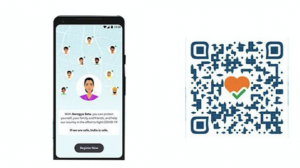
The app uses Bluetooth and GPS to find out a user’s location. The functioning of the application relies on all citizens of India to update their health status when they test positive for the case. Based on the location of people who tested positive, the app notifies users if there are users in a 500 m, 1 m, or 5m range.
Apart from the notifications about cases in the vicinity, Aarogya Setu also acts as a route map to allow the origin’s detection when it comes to contact cases. A three-way handshake is done using Bluetooth when 2 or more people coincide in a particular place.
If someone using the application tested COVID-19 positive, all their contacts who met them would be contacted by the government using the details on their Aadhar card and mobile number used during registration.
While the technology behind the app seems to be good, let us now understand the security provided by the app.
Read More About Is Whatsapp Spying you?
Arogya Setu’s Security

The security of Arogya Setu has been put into question since the initial launch. Aarogya Setu’s privacy policy claims that “user information will be used only by the government in anonymized aggregated data sets”, implying that all data collected by the app will be used only by the government and this data will be sent only after making the users anonymous.
If you have a closer nation, you can find that there is no committee overlooking the data handed over to the government. This proves to be a big breach of privacy that is concerning for Aarogya Setu users. The app asks for almost all permissions from the device and it works only when all of them are granted. In the midst of a pandemic that is strife with political tension, this seems like they’re not concerned with the privacy of their users.
Apart from the handover of data, there are other vulnerabilities related to data being stored, it can also cause concerns raising questions about the usage of the app when there are multiple security concerns. The app claims that all data stored in the app is encrypted, but since Aarogya Setu was never released as an open-source code, it is not possible for ethical hackers to check for vulnerabilities and the validity of these claims.
The worst blow for Aarogya Setu’s already downhill battle against the rising privacy concerns was setback even further by the presence of an ethical hacker who goes by the name Elliot Anderson who is known for previously finding a vulnerability within the Aadhar system. Elliot tweeted that there was a serious security vulnerability present in Aarogya Setu. With his previous issue findings, the makers of the app claim to have had discussions with the ethical hacker, but none of it is made public.
The Verdict

While Aarogya Setu has made quite a few advancements in biotechnology, the biggest concern still remains the same – is it an unavoidable privacy nightmare or worth taking risks for?
Aarogya Setu appears to be a good application if you ignore the security concerns. But in a time where security is an essential tool it is better to bid farewell to App which is not going to be there on the app stores anymore.

 Cybersecurity Risk Assessment vs VAPT in Qatar: What’s the Difference?
Key Takeaways: Risk assessments evaluate business exposure across people, processes, and technology. VAPT identifies weaknesses and validates exploitable attack paths within an agreed scope. A risk register supports ownership, treatment decisions, and management oversight. Qatar compliance requirements depend on the applicable standards, sector, and contractual obligations. Test results should update risk ratings and remediation priorities. […]
 Threat Hunting vs SOC Monitoring in India: What’s the Difference?
Key Takeaways: Monitoring is alert-driven. It reacts, around the clock, to what your rules and tools flag. Hunting is hypothesis-driven. An analyst assumes an attacker already got past those rules and searches for the evidence. Both run on largely the same data and tools. What changes is the question asked of that data. The Indian […]
 Security Architecture Review vs VAPT in Saudi Arabia: Which Security Assessment Does Your Business Need?
Key Takeaways: A security architecture review assesses security design; VAPT evaluates, validates, and prioritises weaknesses in implemented systems. Both support risk decisions, but neither replaces the other. Review new designs early and test implementations before launch. Match assessment scope to business exposure and applicable Saudi requirements. Request actionable findings, remediation ownership, and appropriate verification. One […]
 Top 10 Benefits of Penetration Testing for SaaS & Enterprises in India
Key Takeaways: Finds flaws scanners miss: manual testing catches what automated tools don’t recognise. Proves real impact: shows what an attacker could actually reach, not just a list of possible issues. Exposes misconfigurations: finds exposed interfaces and version leaks across networks and cloud. Secures APIs and integrations: tests the connections that carry your customers’ data. […]
 Compromise Assessment vs Incident Response in the UAE: What’s the Difference and When Do You Need Each?
Key Takeaways: A compromise assessment is a proactive check for signs that an attacker is already in your environment. Incident response is the reactive work of handling a known or suspected incident. The trigger is the clearest dividing line: no known incident means an assessment, an active incident means response. The two feed each other. […]
 ISO 27001 Internal Audit vs Gap Assessment in Saudi Arabia: What’s the Difference?
Key Takeaways: A standalone gap assessment is optional; internal audits are required. Gap assessments can review new or existing systems. Internal audits require competent auditors and an objective, impartial process. Annex A controls should reflect your risks and obligations. Internal audits need to be scheduled early enough to address nonconformities and review corrective action effectiveness […]