

Is Spying Possible in WhatsApp?

A popular messaging app with over 2 billion global users as of February 2020, WhatsApp has gained the loyalty and trust of users worldwide. A user-friendly messaging application that worked over different operating systems, totally for free. What wasn’t there to like?
WhatsApp claims to offer end-to-end encryption for all its chats in the name of privacy. While not all of our work with secure data requires such encryption, data privacy is a concern to us all. But is WhatsApp as secure and private as they claim to be?
The Security of WhatsApp
 Before breaking down whatever loopholes WhatsApp has, one needs to understand how WhatsApp’s security system works. WhatsApp offers end-to-end encryption with 256 bits. What does it actually mean for the messages one person sends another?
An encryption’s strength is dependent on the number of bits used by its key. A key with 256 bits means that the encryption is pretty strong. So what does the term end-to-end mean? It implies that the messages are encrypted and only the receiver has the key to decrypt the messages. Apart from the receiver having the key, this also means that it’ll work only if the encryption key with the sender and the decryption key with the receiver match.
Having a 256-bit end-to-end encrypted message means that it is impossible to crack. Apart from having 256 bits as the key length, there are two keys equally long that need to be matched. Such a fortress would take four months for even a supercomputer to break.
Read More about Creating a Strong Password Policy
WhatsApp’s security makes it impossible for cybercriminals to use any data obtained in transit between devices due to the heavy encryption used. Once this avenue is impossible to exploit, the only other way is by exploiting vulnerabilities on devices that use WhatsApp.
Setting WhatsApp Web
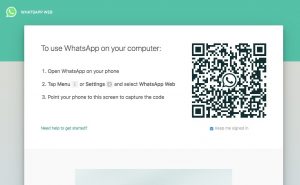 The easiest way to spy on your WhatsApp is by gaining physical access to your phone. If someone gets the phone where you use WhatsApp, it is easy to set up a WhatsApp web account on their device. This gives them instant access to all your chats. This method can be caught as easily as it is done.
Read more about Top 7 VPN Services
Access via Payloads
Another way to gain access to your data is via a payload. Payloads are files that can be downloaded onto your device. They come in seemingly innocent files such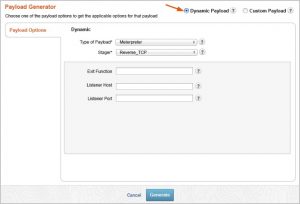 as videos, links, apps, or even an image.
Once such payloads enter your device, they begin their malicious work in various ways. Also known as Remote Access Trojans, they transmit different kinds of data which may include files in the device, the camera, live feeds of activity in your device, and certain cases, keyloggers. While they don’t give hackers direct access to your chats, they can see what is happening on your screen and what you’re typing. Hackers have the advantage of not being noticed when using this kind of spyware.
An example of a payload was the Israeli spyware Pegasus. It was used to spy on Indian politicians, journalists, and other people working in these circles.
Law Enforcement Agencies
You read it right. Law enforcement agencies have a workaround to get some of your WhatsApp data. They can request WhatsApp metadata of certain individuals for surveillance or investigation purposes. WhatsApp gives them metadata only for these requested individuals.
While the metadata might not contain any chats, it can be used to create an informative map of one person’s life. The metadata includes information like frequently contacted people, duration of WhatsApp calls, IP addresses, and whether these chats contain any media attachments among others.
Third-Party Apps
 The Play Store and App Store are filled with a lot of apps that claim to give you a lot of features while in reality, they are malicious apps that can do a lot of damage to your device. One kind of those apps is those that offer to spy on WhatsApp chats.
Such apps contain malicious code that releases different kinds of malware not on just your phone, but your intended target’s phone as well. One should stay away from such apps with too good features to be true.
While government agencies might have their own reasons to spy on a person’s chats, individuals don’t really need to. Whatever is the reason, it can be talked out and one doesn’t need to resort to spying or such methods.
Verdict – Spyable or Not?
In the end, while WhatsApp is safe from any cybercriminals attempting to hack its servers and gain access to its messages due to its heavily encrypted usage, that doesn’t leave you safe from all kinds of snoopers. Since you’ve nothing to worry about in terms of WhatsApp’s security system faltering, you just need to make sure your device(s) where you WhatsApp stays equally safe to prevent anyone from snooping or spying around your chats.
A popular messaging app with over 2 billion global users as of February 2020, WhatsApp has gained the loyalty and trust of users worldwide. A user-friendly messaging application that worked over different operating systems, totally for free. What wasn’t there to like?
WhatsApp claims to offer end-to-end encryption for all its chats in the name of privacy. While not all of our work with secure data requires such encryption, data privacy is a concern to us all. But is WhatsApp as secure and private as they claim to be?
The Security of WhatsApp
Before breaking down whatever loopholes WhatsApp has, one needs to understand how WhatsApp’s security system works. WhatsApp offers end-to-end encryption with 256 bits. What does it actually mean for the messages one person sends another?
An encryption’s strength is dependent on the number of bits used by its key. A key with 256 bits means that the encryption is pretty strong. So what does the term end-to-end mean? It implies that the messages are encrypted and only the receiver has the key to decrypt the messages. Apart from the receiver having the key, this also means that it’ll work only if the encryption key with the sender and the decryption key with the receiver match.
Having a 256-bit end-to-end encrypted message means that it is impossible to crack. Apart from having 256 bits as the key length, there are two keys equally long that need to be matched. Such a fortress would take four months for even a supercomputer to break.
Read More about Creating a Strong Password Policy
WhatsApp’s security makes it impossible for cybercriminals to use any data obtained in transit between devices due to the heavy encryption used. Once this avenue is impossible to exploit, the only other way is by exploiting vulnerabilities on devices that use WhatsApp.
Setting WhatsApp Web
The easiest way to spy on your WhatsApp is by gaining physical access to your phone. If someone gets the phone where you use WhatsApp, it is easy to set up a WhatsApp web account on their device. This gives them instant access to all your chats. This method can be caught as easily as it is done.
Read more about Top 7 VPN Services
Access via Payloads
Another way to gain access to your data is via a payload. Payloads are files that can be downloaded onto your device. They come in seemingly innocent files such as videos, links, apps, or even an image.
Once such payloads enter your device, they begin their malicious work in various ways. Also known as Remote Access Trojans, they transmit different kinds of data which may include files in the device, the camera, live feeds of activity in your device, and certain cases, keyloggers. While they don’t give hackers direct access to your chats, they can see what is happening on your screen and what you’re typing. Hackers have the advantage of not being noticed when using this kind of spyware.
An example of a payload was the Israeli spyware Pegasus. It was used to spy on Indian politicians, journalists, and other people working in these circles.
Law Enforcement Agencies
You read it right. Law enforcement agencies have a workaround to get some of your WhatsApp data. They can request WhatsApp metadata of certain individuals for surveillance or investigation purposes. WhatsApp gives them metadata only for these requested individuals.
While the metadata might not contain any chats, it can be used to create an informative map of one person’s life. The metadata includes information like frequently contacted people, duration of WhatsApp calls, IP addresses, and whether these chats contain any media attachments among others.
Third-Party Apps
The Play Store and App Store are filled with a lot of apps that claim to give you a lot of features while in reality, they are malicious apps that can do a lot of damage to your device. One kind of those apps is those that offer to spy on WhatsApp chats.
Such apps contain malicious code that releases different kinds of malware not on just your phone, but your intended target’s phone as well. One should stay away from such apps with too good features to be true.
While government agencies might have their own reasons to spy on a person’s chats, individuals don’t really need to. Whatever is the reason, it can be talked out and one doesn’t need to resort to spying or such methods.
Verdict – Spyable or Not?
In the end, while WhatsApp is safe from any cybercriminals attempting to hack its servers and gain access to its messages due to its heavily encrypted usage, that doesn’t leave you safe from all kinds of snoopers. Since you’ve nothing to worry about in terms of WhatsApp’s security system faltering, you just need to make sure your device(s) where you WhatsApp stays equally safe to prevent anyone from snooping or spying around your chats.

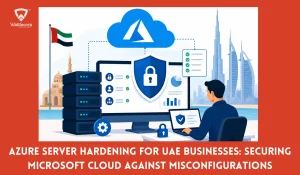 Azure Server Hardening for UAE Businesses: Securing Microsoft Cloud Against Misconfigurations
Key Takeaways: Azure server hardening UAE addresses the fundamental shared responsibility gap many organizations struggle with where Microsoft secures the cloud platform itself, but your organization must secure everything running on it, from configurations to identities to access controls. When Azure misconfigurations go unnoticed, they don’t quietly sit there. They actively create exploitable pathways, which […]
 Security Architecture Review for Saudi FinTech Platforms: Identity, API and Cloud Controls
Key Takeaways: Security architecture review determines that whether security enables or blocks your FinTech growth in Saudi Arabia. It focuses on the differences between confidently saying yes to new partners versus constantly hitting the security roadblocks. Your security tools only work if they’re connected. Identity systems, API gateways, and cloud controls need to feed into […]
 SOC 2 vs ISO 27001 in India: Which Compliance Framework Does Your SaaS Company Need in 2026
Key Takeaways: Choosing between SOC 2 and ISO 27001 isn’t just about getting a badge. It directly impacts your sales pitch, how customers trust you, and whether you can crack enterprise markets globally. SOC 2 is your quick win if you’re selling to US customers. Most enterprise buyers won’t even look at you without it. […]
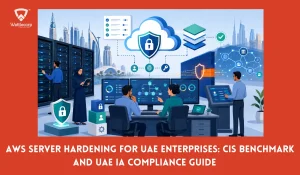 AWS Server Hardening for UAE Enterprises: CIS Benchmark and UAE IA Compliance Guide
Key Takeaways: If you’re running a bank, fintech, healthcare provider, government contractor, or handling sensitive data in the UAE, AWS server hardening is critical for both security and compliance readiness. You’re responsible for your own security. AWS protects their infrastructure, but you must secure everything running on it: your EC2 instances, user permissions, network access, […]
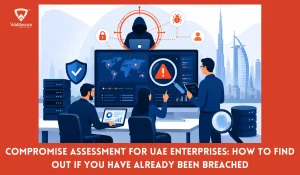 Compromise Assessment for UAE Enterprises: How to Find Out If You Have Already Been Breached
Key Takeaways: Compromise Assessment for UAE enterprises is an evidence-based investigation that determines whether attackers have already accessed your systems, replacing assumptions with documented proof of what happened in your infrastructure. Hidden compromise costs more to remediate the longer it remains undetected, making early investigation critical for minimizing financial impact, regulatory exposure, and customer trust […]
 Why Indian SaaS Companies Are Losing US Enterprise Deals Without SOC 2 Type II
Key Takeaways: Type I is a starting point. Type II is the deal-maker. US enterprise procurement teams do not settle for a point-in-time audit when vendor risk is on the line. Operational evidence is non-negotiable. Continuous controls, not just documented policies, are what Fortune 500 legal and compliance teams demand before signing contracts. SOC 2 […]