

6 Effective Team-Building Activities to Strengthen Your SOC and Incident Response Teams
In cybersecurity, having a well-coordinated Security Operations Center (SOC) and Incident Response (IR) team is crucial. These teams are the first line of defense against cyber threats, and their effectiveness largely depends on how well they work together. To foster a strong team, organizations must invest in effective SOC/IR team-building activities that enhance collaboration, communication, and problem-solving skills.
In this blog, we’ll explore six creative and effective team-building activities for SOC and IR teams.
Understanding the Importance of SOC/IR Team Building
Before discussing the specific activities, let’s understand why team building for SOC/IR teams is important:
- Enhanced Collaboration: Cybersecurity incidents require swift and coordinated responses. Effective team collaboration exercises for SOC can lead to faster resolution times.
- Improved Morale: Team-building activities foster a sense of camaraderie and trust, boosting team morale and reducing burnout in high-pressure environments.
- Skill Development: Activities that simulate real-world scenarios can help refine skills critical to incident response, ensuring teams are always prepared.

Team-Building Activities For SOC/IR
1. Tabletop Exercises: Simulating Real-World Scenarios
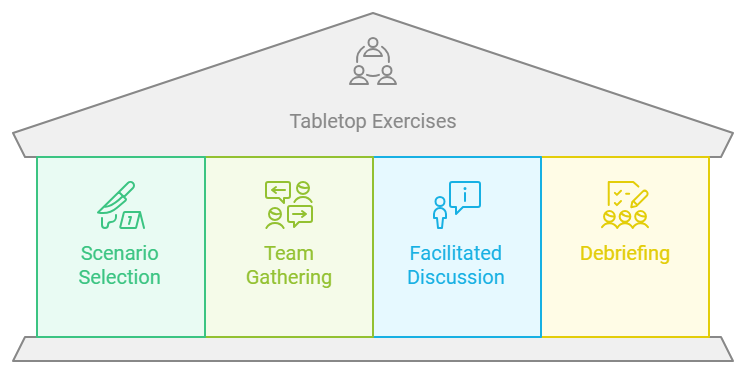
Tabletop exercises are structured, discussion-based sessions where team members collaboratively walk through a simulated incident.
These exercises allow teams to strategize and problem-solve in a controlled environment, honing their skills and communication abilities.
Implementation Steps
- Select a Scenario: Choose a realistic incident that your team might face, such as a data breach or ransomware attack.
- Gather the Team: Assemble all relevant SOC and IR team members, ensuring diverse roles are represented.
- Facilitate the Discussion: A facilitator guides the team through the scenario, encouraging open dialogue about roles, responsibilities, and response strategies.
- Debrief: After the exercise, hold a debriefing session to discuss what went well, what could be improved, and lessons learned.
Tabletop exercises not only foster collaboration but also allow teams to practice decision-making under pressure.
By simulating real-world scenarios, team members enhance their problem-solving skills and gain a deeper understanding of each other’s roles, which is crucial in a high-stakes environment.
2. Capture the Flag (CTF) Competitions
Capture the Flag competitions are engaging, gamified challenges where teams solve security-related puzzles to capture virtual flags. This activity fosters teamwork while sharpening technical skills in a competitive setting.
Implementation Steps
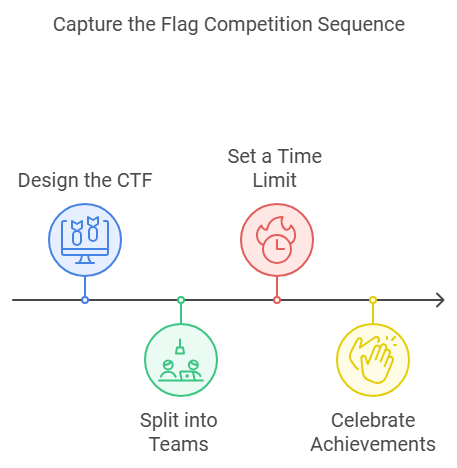
- Design the CTF: Create a series of challenges that cover various cybersecurity domains, such as network security, cryptography, and web vulnerabilities.
- Split into Teams: Divide participants into small, diverse teams to encourage collaboration and interaction.
- Set a Time Limit: Establish a time frame for completing the challenges to add urgency and excitement.
- Celebrate Achievements: After the competition, review solutions, acknowledge outstanding performance, and discuss what was learned.
CTF competitions stimulate problem-solving and critical thinking while promoting team cohesion. They provide a platform for team members to showcase their skills and learn from one another, ultimately improving the overall capability of the SOC and IR teams.
3. Hackathons: Innovating Together
Hackathons are intensive, time-bound events where teams brainstorm and develop solutions to specific cybersecurity challenges.
These collaborative sessions encourage creativity and innovation while strengthening bonds among team members.
Implementation Steps
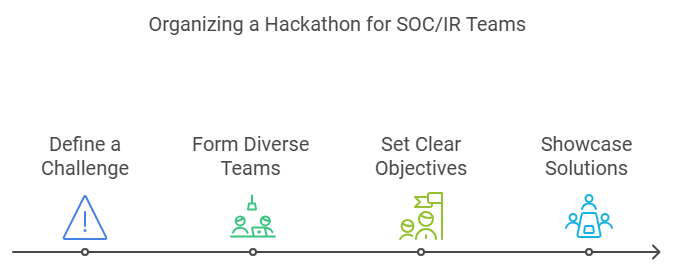
- Define a Challenge: Choose a relevant issue or project that your SOC or IR team is currently facing, such as enhancing detection capabilities or streamlining incident response processes.
- Form Diverse Teams: Ensure teams include members with different expertise to promote varied perspectives.
- Set Clear Objectives: Clearly outline what you want the teams to achieve by the end of the hackathon.
- Showcase Solutions: Conclude with presentations where each team shares their solutions, followed by feedback and discussion.
Hackathons not only enhance problem-solving skills but also cultivate a culture of innovation within the team.
By working collaboratively on real challenges, team members build trust and learn to appreciate each other’s strengths, which is crucial for effective incident response.
4. Role-Switching Workshops
Role-switching workshops involve team members temporarily assuming different roles within the SOC or IR team.
This activity promotes empathy and understanding of the challenges faced by others, fostering a collaborative environment.
Implementation Steps
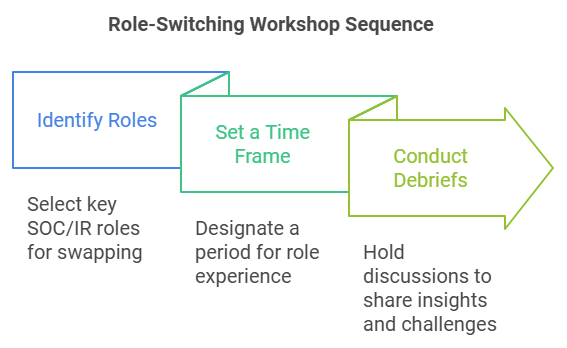
- Identify Roles: Choose key roles within the SOC/IR team that can be swapped, such as analyst, incident responder, or threat hunter.
- Set a Time Frame: Allow team members to experience these roles for a designated period, such as a few hours or a day.
- Conduct Debriefs: After the role-switching, hold a discussion where team members share their experiences and insights about the challenges and responsibilities of different positions.
Understanding different roles within the SOC/IR team enhances collaboration and communication. When team members appreciate the intricacies of each other’s roles, they are better equipped to support one another during incidents, leading to improved performance and outcomes.
5. Feedback and Reflection Sessions
Regular feedback and reflection sessions create an open culture where team members can discuss successes, challenges, and areas for improvement. These sessions foster continuous learning and adaptation within the SOC and IR teams.
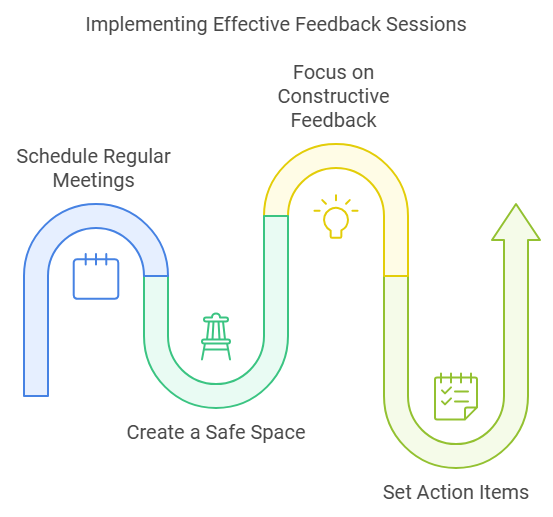
- Schedule Regular Meetings: Establish a routine for feedback sessions, such as bi-weekly or monthly meetings.
- Create a Safe Space: Ensure that team members feel comfortable sharing honest feedback without fear of judgment.
- Focus on Constructive Feedback: Encourage a culture of constructive criticism, highlighting both strengths and areas needing improvement.
- Set Action Items: After discussions, identify actionable steps that can be taken to address concerns or enhance team performance.
Feedback sessions cultivate a culture of transparency and continuous improvement. By encouraging open communication, teams can address issues proactively and reinforce positive behaviors, ultimately enhancing collaboration and performance.
Also Read : Proactive Threat Management For SaaS Business
6. Outdoor Team-Building Retreats
Taking the team outdoors for a retreat can strengthen relationships and improve morale. Outdoor activities, such as obstacle courses or team sports, offer a break from the digital environment while promoting teamwork.
Implementation Steps
- Choose a Location: Select a suitable outdoor venue that provides various activities and space for group interactions.
- Plan Engaging Activities: Incorporate activities that require teamwork, such as trust falls, scavenger hunts, or team-building exercises.
- Encourage Participation: Foster an inclusive environment where all team members feel encouraged to participate and engage with one another.
- Reflect on Experiences: After the retreat, gather feedback on what team members enjoyed and what they learned about collaboration and teamwork.
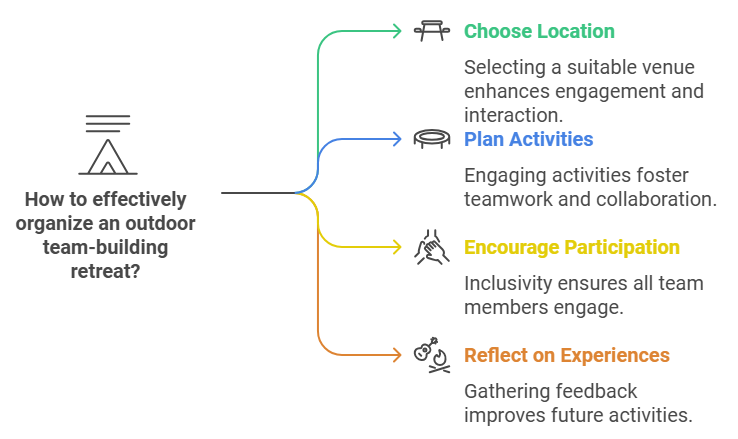
Outdoor retreats help build camaraderie and trust among team members. Stepping away from the pressures of work allows for more relaxed interactions, fostering personal connections that translate into improved collaboration in the workplace.
Also Read : What is SaaS security posture management?
Team Building Activities to Improve SOC Performance
Effective team-building activities for SOC/IR teams can lead to measurable improvements in performance.
Here’s how to ensure these activities translate into enhanced performance:
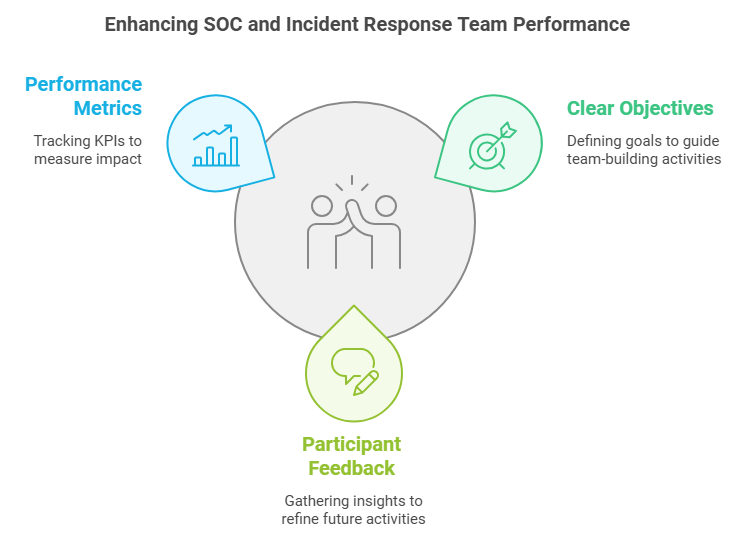
- Set Clear Objectives: Before engaging in any activity, define what you hope to achieve, whether it’s improving communication, enhancing technical skills, or building trust.
- Solicit Feedback: After each activity, gather feedback from participants to assess its effectiveness and make necessary adjustments for future events.
- Monitor Performance Metrics: Track key performance indicators (KPIs) related to incident response times, resolution rates, and team morale to measure the impact of your team-building efforts.
Creative Team Building Ideas for SOC and Incident Response Teams
In addition to the activities discussed, consider integrating these creative ideas into your team-building strategy:
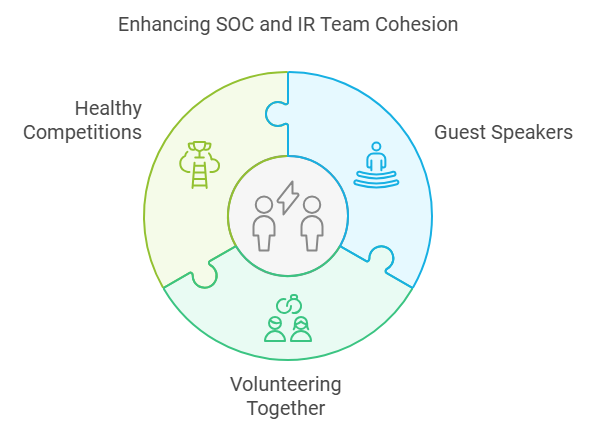
- Guest Speakers: Invite industry experts to share insights and experiences that can inspire and educate your team.
- Volunteering Together: Engage in community service projects as a team, fostering bonds while giving back to the community.
- Healthy Competitions: Organize friendly competitions focused on skills such as threat detection or incident response, rewarding top performers to motivate participation.
By implementing these effective team-building activities for SOC and IR teams, you can create a more cohesive unit capable of tackling the complexities of cybersecurity challenges. As you explore ways to enhance collaboration, remember that the goal is not only to improve skills but also to strengthen the bonds that allow your team to operate seamlessly in high-pressure situations.
As cybersecurity threats grow in complexity, a well-coordinated SOC/IR team will be the strongest asset. By regularly incorporating team-building activities into your organizational culture, you not only prepare your SOC and IR teams for the challenges ahead but also foster a sense of belonging and morale that can help mitigate burnout.tabletop exercises to outdoor retreats—provide invaluable opportunities for team members to enhance their collaboration, communication, and problem-solving skills. By investing in these creative and engaging team-building initiatives, organizations can cultivate an environment of trust and mutual respect, which translates directly into improved incident response capabilities.
SOC FAQs
1. Why is team building important for SOC and incident response teams?
Team building is crucial for SOC and IR teams because it enhances collaboration, improves morale, and develops essential skills. A cohesive team can respond more effectively to cyber incidents, minimizing resolution times and fostering a positive work environment.
2. How often should SOC and IR teams engage in team-building activities?
While there’s no set frequency, regular engagement—such as quarterly or biannual activities—can help maintain team cohesion. Additionally, it’s beneficial to incorporate team-building elements into regular training sessions and meetings.
3. What challenges might SOC teams encounter during team-building activities?
Challenges can include time constraints, varying levels of engagement, discomfort with role-switching, and misunderstandings about the purpose of activities. Addressing these requires careful planning and fostering an inclusive atmosphere.
4. What are some effective team-building activities for SOC and IR teams?
Effective activities include tabletop exercises, Capture the Flag (CTF) competitions, hackathons, role-switching workshops, feedback sessions, and outdoor retreats. These activities promote communication, problem-solving, and camaraderie among team members.

 AI-Powered Cyberattacks in India 2026: What CISOs Need to Know Now
Key Takeaways: Generative AI has sharply accelerated the attacker’s advantage by making phishing, reconnaissance, and exploit preparation faster and easier to scale. Being a CISO in 2026 means making real-time threat decisions at board level, that’s a different job from what most security leaders are trained for, and the skill gap is already showing. CERT-In’s […]
 ISO 27001 Internal Audit for Saudi Companies: Preparing Evidence Before Certification
Key Takeaways: An ISO 27001 internal audit helps Saudi companies validate whether their Information Security Management System is implemented, not just documented. Certification auditors do not only review policies. They check risk registers, control ownership, access reviews, incident records, supplier reviews, audit trails, management review minutes, and corrective action evidence. For Saudi companies, ISO 27001 […]
 Proactive Threat Hunting for UAE Enterprises: Finding Attackers Before They Strike
Key Takeaways: Proactive threat hunting is not the same as traditional monitoring. Monitoring waits for the alerts, while threat hunting actively searches for signs of attacker behaviour that may not trigger automated detection. For UAE enterprises, threat hunting is becoming more important because attacks are shifting from simple malware to credential abuse, ransomware preparation, cloud […]
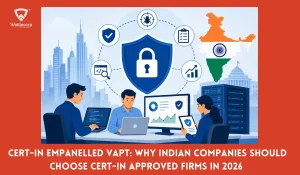 CERT-IN Empanelled VAPT: Why Indian Companies Should Choose CERT-IN Approved Firms in 2026
Key Takeaways: Running a VAPT with a CERT-In empanelled firm means your security testing is backed by a standard that regulators and enterprise clients in India actually recognize, not just a vendor promise. When sensitive data and critical systems are involved, a CERT-In empanelled VAPT provider gives Indian companies compliance readiness they can demonstrate, not […]
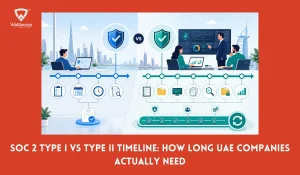 SOC 2 Type I vs Type II Timeline: How Long UAE Companies Actually Need
Key Takeaways: SOC 2 Type I vs Type II timelines differ and it is mostly based on audit depth. Type I checks if controls are well-designed at a given point in time. Type II goes a step further and it proves those controls worked consistently over a defined period. For UAE SaaS companies, Type I […]
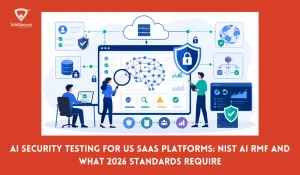 AI Security Testing for US SaaS Platforms: NIST AI RMF and What 2026 Standards Require
Key Takeaways: AI security testing for SaaS platforms isn’t just a technical upgrade from traditional app security. It’s a completely different job. You’re not running a scan on code, you’re stress-testing a model to see how it breaks when someone is actively trying to make it fail. NIST AI RMF isn’t law yet, but your […]