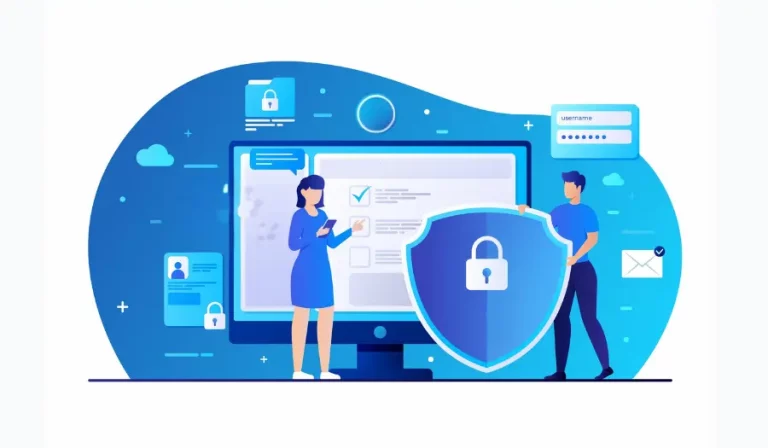


Why BlueLeaks Shatters Internal Security?

A government’s biggest challenge is to protect its internal affairs and matters without being leaked. It may include their overall governmental procedures for citizens’ internal security. As technology is advancing, the government gathers different information and stores it discreetly. But, internal security has become a question among the people from the incident that happened in the US.
As the world is facing the Covid-19 pandemic, the United States had to undergo a security breach, where a massive amount of data was hacked from various law enforcement agencies. Approximately 269 Gigabytes of internal law enforcement data which contain thousands of police records and private information were hacked and published on 19 June 2020. It was tagged as BlueLeaks and the source that issued this data was a transparency activist group called Distributed Denial of Secrets or (DDoSecrets).
 How the data were hacked?
According to the report by KrebsOnSecurity, the data were leaked from Netsential a web services company used by several fusion centres and law enforcement agencies. Fusion centres are state-owned information gathering and analysis centres that often share threat-related information and coordinate them between different regional, local, and federal law enforcement divisions. The files that were leaked contained highly sensitive information from the period of 1996 till 2020.
Read More About Top three Enumeration tools
What all information was leaked?
Information such as International bank account numbers, personally identifiable information, several financial data, and more than one million documents were leaked from law enforcement fusion centers. Some of the documents contain materials related to the COVID-19 pandemic. Police investigation cases, reports, and other information about several citizens were also revealed through these sources. It is examined that the main reason behind this breach was following the death and protests against the murder of George Floyd.
Read More About Cyber Crimes in the time of the Pandemic
Is this a threat to internal security?
As a large number of sensible information was leaked the security of the citizens, as well as the country, was at stake. The source DDoSecrets that published the data claimed that it was one of the hacktivist groups that was responsible for the leakage of this sensitive information.
Read More About 5 Best Security Practices for Kubernetes
After-effects of the BlueLeaks.
 Due to the security breach that happened, Twitter banned the account of the publisher DDoSecrets and a federal investigation is still in process. This incident shows that the overall internal information of the country should be tightened and should provide multi-factor authentication so that it can be accessed only by authorized users.

 Mobile Application Penetration Testing for Qatar Government Digital Services: NCSA- Aligned Security Assurance
Key Takeaways: Mobile Application Penetration Testing Qatar must cover the app, device storage, APIs, authentication and third-party components. Qatar’s NCSA assurance environment combines the National Information Assurance (NIA) Standard, the National Information Security Compliance Framework (NISCF) and accredited security assessment services. OWASP MASVS defines mobile security controls, while MASTG supplies practical test methods for Android […]
 Qatar Data Protection Law: Implementing PDPPL Data Subject Rights Processes for Businesses
Key Takeaways: The Qatar Data Protection Law (Law No. 13 of 2016) for Personal Data Privacy Protection, grants individuals specific rights such as right to access, correct, erase, object, withdraw consent, and right to be notified of processing or inaccurate disclosure. Beyond having a privacy policy, businesses or controllers, under Article 11 of Personal Data […]
 AI Governance for Indian Enterprises: Building Internal Controls Before Key DPDP Obligations Take Effect
Key Takeaways: The DPDP Act does not contain AI-specific provisions. Its requirements, however, apply in situations when an AI system processes digital personal data within its territorial and material scope. India is working on building a broader governance framework around safety, accountability, transparency and trust via programs like the IndiaAI Mission. Indian organizations should inventory […]
 Cloud Security Audit for UAE Government Cloud Migration: NCAP and Security Requirements
Key Takeaways: A cloud security audit UAE helps government entities identify security, governance, configuration, access, data-protection and resilience gaps, before and after shifting critical workloads to the cloud. UAE National Cloud Security Policy has defined cloud governance, data security, data sovereignty, IAM, incident management, resilience, portability and cloud operations requirements. The National Cyber Accreditation Program […]
 Data Privacy Consulting UAE – Building a PDPL-Compliant Data Governance Program
Key Takeaways: PDPL compliance requires ongoing operational governance that goes beyond policies to demonstrate how personal data is collected, used, protected, transferred, retained, and deleted. Data mapping helps businesses move from reactive compliance to proactive risk management by establishing a comprehensive inventory of the data ecosystem, helping build a mature data privacy and governance program. […]
 Saudi Arabia’s Critical Systems Controls: What CSP-Linked Enterprises Must Comply With in 2026
Key Takeaways: The Critical Systems Cybersecurity Controls (CSCC) are more applicable to critical systems than to all IT assets owned or operated by an organization. To be in full compliance or to remain in full compliance with CSCC, organizations must maintain continuous adherence to NCA ECC. CSCC has 32 core controls and 73 sub-controls across […]