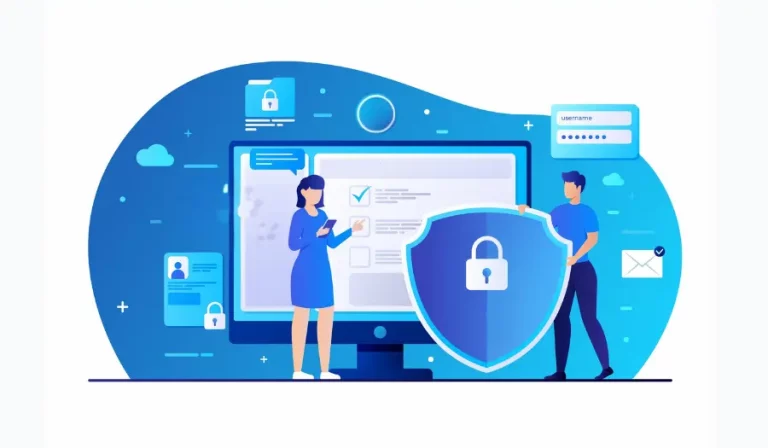


Vercel Security Breach 2026: What Happened, Risks, and What Businesses Must Do Now

Key Takeaways:
- Unauthorized Access Confirmed by Vercel publicly, acknowledging a security incident in April 2026. Services remain operational while the investigation continues.
- Entry via Compromised Third‑Party AI Tool with the attacker gaining access after a third‑party AI platform’s Google Workspace OAuth application (Context.ai) was compromised, leading to takeover of a Vercel employee’s Google account.
- Limited Subset of Customers Affected where Vercel stated that only a limited subset of customers had credentials accessed with notifications being sent to those impacted.
- Environment Variables at Risk with non‑sensitive environment variables being read. However, sensitive‑flagged variables (encrypted) appear unaffected so far.
- Claims of Larger Data Theft (Unverified) – A threat actor posted on hacking forums claiming they have access keys, source code, and tokens from Vercel, and offered them for sale (alleged $2M ransom). The authenticity of these claims has not been confirmed by Vercel.
- Rotating secrets immediately is considered as the best practice for all customers (especially those notified), allowing them to rotate all non‑sensitive environment variables, including API keys, tokens, and credentials.
With the modern web now running on speed, scalability, and developer convenience, platforms like Vercel have become central to this ecosystem. But when such a critical platform confirms a security breach to a massive extent from attackers, the impact does extend far beyond a single organization, affecting the global supply chain as a matter of fact.
The Vercel security breach that occurred most recently has raised serious concerns among SaaS companies, developers, and enterprises relying on cloud-native infrastructure. Prominent facts related to this incident mention that it’s not just a platform-level issue, but a supply chain security event with potential downstream consequences.
This blog breaks down what actually happened, the risks involved, and what actions should businesses take to secure their systems on a more prompt and urgent basis.
What Is Vercel and Why Vercel Breach Matters
Functioning as a comprehensive Frontend Cloud and AI Cloud platform, Vercel is designed to facilitate frontend deployment, serverless functions, and seamless CI/CD workflows. For its tight integration into Git repositories, environment variables, and automated deployments, Vercel has gained wider utility among SaaS startups, enterprise development teams, DevOps engineers, and product companies to build scalable web applications.
Despite being a powerful source for automated deployment, Vercel has nonetheless become a high-value target for new-age hackers, who devise newer strategies to invade and attack into this Cloud AI platform to trigger a Vercel breach incident.
Why Vercel Security Breach matters?
Vercel acts as a deployment layer, meaning compromised access can affect live applications. It manages environment variables, often containing sensitive credentials. It connects with multiple third-party services, increasing attack surface.
In short, a breach here is not isolated, but one that can cascade across multiple applications and businesses.
What Happened in the Vercel Security Breach?
While full technical disclosures are still surfacing, the Vercel breach has, nevertheless, spiked a security issue affecting parts of its infrastructure, albeit with a greater potential to impact the global supply chain.
Key Highlights of the Vercel Breach Incident:
- Unauthorized access detected within the platform
- Possibility of internal systems or user-level data getting exposed
- Initiation of containment and investigation procedures
- Users were advised to take precautionary security actions
Even without full disclosure, the nature of the platform suggests potential exposure in critical areas like deployments, secrets, and integrations.
What are the Potential Security Risks from the Vercel Breach Incident?
Understanding the risk surface is essential. Based on how Vercel operates as an AI Cloud platform, the below-mentioned risks have been deemed to be highly critical:
- Unauthorized access into deployment Pipelines
Attackers gaining access to the CI/CD workflows can:
- Inject malicious code into production
- Modify legitimate deployments
- Introduce backdoors without detection
Maneuvers like the above can turn the deployment system into an attack vector
Also Read : How vCISO-Led VAPT Improves Cybersecurity for Mid-Sized Businesses
Environment Variables Exposure
- Exposure of environment variables which often store API keys, database credentials, OAuth tokens, and third-party service secrets, can potentially enable attackers to
- Directly access backend systems
- Abuse APIs
- Exfiltrate sensitive data
This is one of the most dangerous aspects of any cloud breach.
Supply Chain Attack Possibility
Because Vercel sits between code and production:
- Compromised builds can affect thousands of users
- End-users may be impacted without knowing
- Trust in deployed applications can be broken
This elevates the breach from a platform issue to a supply chain security threat.
Who Is Affected by This Incident
- The impact depends on how Vercel is used within an organization
- High-Risk Groups
- SaaS platforms handling user data
- FinTech and healthcare applications
- Enterprises with complex integrations
- Applications using environment variables extensively
- Moderate-Risk Groups
- Static websites without backend integrations
- Projects with limited API usage
- Low-Risk Groups
- Isolated development environments with no sensitive data
However, even low-risk environments should not ignore precautionary measures.
Immediate Actions Businesses Should Take
Speed is critical in responding to such incidents:
- Rotate All Secrets and API Keys
- Regenerate API keys
- Reset database credentials
- Invalidate old tokens
- Do not allow assumptions that any secret remains safe
- Review Deployment Logs and Access Activity
- Check for unauthorized deployments
- Identify unusual login patterns
- Monitor unexpected changes in builds
- Early detection reduces impact
- Audit Third-Party Integrations
- Review connected services
- Remove unnecessary integrations
- Revalidate permissions
- Third-party connections are often overlooked attack vectors
- Implement Zero-Trust Access Controls
- Enforce least privilege access
- Require multi-factor authentication (MFA)
- Restrict access based on roles
- Zero-trust significantly reduces lateral movement risks
Lessons Learned from the Vercel Breach
This incident reinforces several key security principles:
- Cloud Platforms Are Not Inherently Secure
- Security is a shared responsibility. Even trusted platforms require active monitoring and controls
Also Read : How to Secure Cloud Applications with VAPT Services?
Secrets Management Is Critical
- Hardcoded or poorly managed secrets increase exposure risk. Organizations must:
- Use vault-based secret management
- Avoid storing sensitive data in plain environment variables
Continuous Monitoring Is Essential
- Reactive security is no longer enough. Real-time monitoring helps detect anomalies before damage escalates
Vendor Risk Management Must Be Strengthened
Organizations must:
- Assess third-party security practices
- Continuously monitor vendor risks
- Include vendors in threat modeling
How to Prevent Similar Breaches in Your Organization
To build resilience against similar incidents:
Secure CI/CD Pipelines
- Validate every deployment
- Use signed commits
- Monitor pipeline activity
Enforce Strong IAM and RBAC
- Define strict access roles
- Limit admin privileges
- Regularly review permissions
Continuous Security Testing (VAPT)
- Regular penetration testing helps identify:
- Misconfigurations
- Access control flaws
- API vulnerabilities
Implement Advanced Secrets Management
- Use encrypted secret storage
- Rotate credentials regularly
- Monitor secret usage
Real-World Scenario: How a Breach Can Escalate
Let’s imagine a SaaS application that is hosted on Vercel, where possible scenarios involve:
- Environment variables storing API keys
- Attackers gaining access to those variables, using keys to access backend APIs
- Sensitive customer data extracted
Business faces:
- Regulatory penalties
- Customer trust loss
- Operational downtime
This is how quickly a platform-level breach can become a business crisis. Wattlecorp’s intervention can help execute remedial actions on a more rapid note to effectively secure DevSecOps. These include:
- Integrating VAPT early into the CI/CD pipeline
- Employ the zero-trust principle
- Ensure multi-factor authentication
- Mandate ongoing monitoring
Vercel Security Breach FAQs
1.What data was exposed in the Vercel breach?
The exact scope depends on affected systems, but typically includes environment variables, tokens, and deployment-level access.
2.Should companies stop using Vercel after the breach?
No. However, organizations must strengthen their security posture and implement additional safeguards.
3.How can developers secure their Vercel deployments?
Developers can secure deployments via Vercel by employing least-privilege access, rotating credentials on a regular basis, enabling monitoring and alerts, and avoiding practices that lead to insecure storing of sensitive secrets.
4.Can this breach impact end-users of SaaS applications?
Yes. If application secrets or APIs are compromised, end-users may be indirectly affected.
5.How often should security audits be conducted?
The frequency of security audits depends on the risk level of your systems. High-risk applications should be audited at least once every quarter, while moderate-risk systems require a thorough review at least once a year. For critical infrastructure, continuous monitoring is essential; threats don’t follow a schedule, and neither should your defenses.

 SOC as a Service for Indian BFSI and FinTech Companies: 24/7 Monitoring for CERT-In Readiness
Key Takeaways: SOC as a Service for BFSI and FinTech India gives banks, NBFCs, insurers and digital lenders continuous security visibility without the cost and hiring effort of building an in-house operations centre. CERT-In directions require regulated entities to report qualifying cyber incidents within six hours of detection, and implementing SOC for BFSI and FinTech […]
 SOC as a Service in India: How It Works, Pricing, and Why Businesses Need It
Key Takeaways: SOC as a Service helps Indian businesses to get 24×7 security monitoring without huge cost and complexity of building a full in-house security operations center. A managed SOC check and analyse beyond basic log monitoring, which combining SIEM, threat intelligence, analyst-led alert triage, incident escalation, reporting, and security response support. SOC as a […]
 Mobile App Security Testing for Indian Digital Lending Apps RBI, DPDP and API Risk Checklist
Key Takeaways: Mobile app security testing forms an important part of meeting RBI cybersecurity expectations, secure application development practices, and periodic security assessment requirements for digital lending platforms. APIs in lending apps are constantly under attack. Broken object-level authorization, data leaking where it shouldn’t, weak token validation, and missing rate limiting, these aren’t edge cases, […]
 Cybersecurity Risk Assessment for Saudi Supply Chain Vendors Under Aramco and NCA Expectations
Key Takeaways: Cybersecurity risk assessment becomes a practical requirement for proving security maturity, with protecting vendor relationships, and moving forward in procurement processes with Aramco and critical infrastructure clients. Vendors will need to provide evidence of access review documentation, patch deployment, monitoring artifacts, technical assessment results and more that demonstrates the controls in place are […]
 Qatar Personal Data Privacy Compliance: Security Controls for Data Protection Readiness
Key Takeaways: Qatar’s Personal Data Privacy Protection Law applies to organizations that process personal data within its scope, including many businesses handling personal data of individuals in Qatar. Non-compliance isn’t just risky; it can result in hefty fines, operational chaos, and serious damage to your company’s reputation. Personal data privacy compliance Qatar isn’t just about […]
 Azure Server Hardening for UAE Businesses: Securing Microsoft Cloud Against Misconfigurations
Key Takeaways: Azure server hardening UAE addresses the fundamental shared responsibility gap many organizations struggle with where Microsoft secures the cloud platform itself, but your organization must secure everything running on it, from configurations to identities to access controls. When Azure misconfigurations go unnoticed, they don’t quietly sit there. They actively create exploitable pathways, which […]