

Top 7 Skills Required To Become A Penetration Tester :Mastering The Art of Cybersecurity

Careers in ethical hacking have quite a lot of common skill sets required. Similarly, each one of them has its own individual requirements as well. Each option has its bunch of extra skills and so does a penetration tester. Nurturing the hacker mindset, here are the skills that a penetration tester keeps on polishing.
1. Strong Communication
A penetration tester’s command over written and spoken communication is an important skill to master.

While finding vulnerabilities in a system is what everyone sees as important, it is equally critical to be able to communicate them to the system owners and/or administrator. It is useless if you find a lot of vulnerabilities but can’t communicate them properly.
2. Technical Acumen
A penetration tester works with a lot of tools while searching for vulnerabilities. For a cybersecurity consultant who works on protecting digital assets, tools are required to start scans and interpret results. That is just the starting point for penetration testers.

Penetration testers use tools to speed up their testing process. They require the advanced features of most tools and with all these requirements, they should also know what is happening behind the scenes. Only then can a penetration tester do his job without being entirely dependent on his tools. A penetration tester who isn’t strong with their technical knowledge is only as good as their toolkit. One who deeply knows the technical knowledge isn’t limited by the absence of a tool.
3. Critical Thinking
A penetration tester needs to ask unasked questions. Only then will the vulnerabilities be found. Thinking out of the box and from different angles allows a penetration tester to see things previously left unseen. Such critical thinking involves going and thinking beyond the beaten track. Such thinking is what lets you go deeper and develop a connection with the system.

The vulnerabilities present themselves without much effort once you get your thoughts and question in sync with the system. This requires you to look at outliers and assess if you need to take things further or is this it. Penetration testers should be able to combine the skills of a researcher and an investigator to obtain the required results. Preventing a cybercriminal requires you to think like one.
4. Elegant Presentation
While your communication skills help you in conveying your findings, they should be presented in a systematic manner with adequate explanations.

You must be able to explain the limitations that are present and which helped in the attack, how to defend them, and so on. That is where your presentation skills come into play. Apart from practising your written and spoken communication skills, you also need to brush up on presenting in a systematic way.
5. Strong Grip on the Command-Line
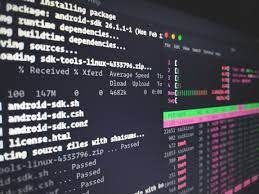
Most of the penetration testing tools are based on the command line. While not exactly a fancy way, that is the best way to get things done. Becoming a decent penetration tester will require you to be proficient in at least the DOS or PowerShell prompts/terminals.
Since most tools require you to have enough experience of the command line, the best way to learn is by practising on the DOS and/or PowerShell scripts. Since there are many command-line tools that simplify the work of a penetration tester, start with the easiest and basic ones of them all. Being able to proficiently use the command line tools is how you’ll be able to conduct efficient penetration tests on any environment you face.
6. Adaptable and Quick Learners
No two systems are the same. Every environment brings its own set of challenges and a penetration tester must be able to adapt to each environment quickly to get started on their testing.

Efficient and effective penetration testers are able to adapt to new environments smoothly in small amounts of time and they immediately begin modifying their tools for the current system. Once they’re finished with it, they move on to the next system and continue their swift mode of execution. A good penetration tester is able to learn and develop solutions independently to whatever problems they face in a new environment.
7. Change Oriented Mindset
Penetration testers must be able to go beyond the boundaries set by the system. If they’re explicitly told not to go beyond a certain limit while testing, a good penetration tester does that to ensure no vulnerability goes unnoticed. Penetration testers learn best by doing things beyond the ones prescribed to them.

Interested and want to know more about the skills required in the different career options in cybersecurity? Follow our blog to keep yourself updated with the latest trends in cybersecurity.

 Mobile Application Penetration Testing for Qatar Government Digital Services: NCSA- Aligned Security Assurance
Key Takeaways: Mobile Application Penetration Testing Qatar must cover the app, device storage, APIs, authentication and third-party components. Qatar’s NCSA assurance environment combines the National Information Assurance (NIA) Standard, the National Information Security Compliance Framework (NISCF) and accredited security assessment services. OWASP MASVS defines mobile security controls, while MASTG supplies practical test methods for Android […]
 Qatar Data Protection Law: Implementing PDPPL Data Subject Rights Processes for Businesses
Key Takeaways: The Qatar Data Protection Law (Law No. 13 of 2016) for Personal Data Privacy Protection, grants individuals specific rights such as right to access, correct, erase, object, withdraw consent, and right to be notified of processing or inaccurate disclosure. Beyond having a privacy policy, businesses or controllers, under Article 11 of Personal Data […]
 AI Governance for Indian Enterprises: Building Internal Controls Before Key DPDP Obligations Take Effect
Key Takeaways: The DPDP Act does not contain AI-specific provisions. Its requirements, however, apply in situations when an AI system processes digital personal data within its territorial and material scope. India is working on building a broader governance framework around safety, accountability, transparency and trust via programs like the IndiaAI Mission. Indian organizations should inventory […]
 Cloud Security Audit for UAE Government Cloud Migration: NCAP and Security Requirements
Key Takeaways: A cloud security audit UAE helps government entities identify security, governance, configuration, access, data-protection and resilience gaps, before and after shifting critical workloads to the cloud. UAE National Cloud Security Policy has defined cloud governance, data security, data sovereignty, IAM, incident management, resilience, portability and cloud operations requirements. The National Cyber Accreditation Program […]
 Data Privacy Consulting UAE – Building a PDPL-Compliant Data Governance Program
Key Takeaways: PDPL compliance requires ongoing operational governance that goes beyond policies to demonstrate how personal data is collected, used, protected, transferred, retained, and deleted. Data mapping helps businesses move from reactive compliance to proactive risk management by establishing a comprehensive inventory of the data ecosystem, helping build a mature data privacy and governance program. […]
 Saudi Arabia’s Critical Systems Controls: What CSP-Linked Enterprises Must Comply With in 2026
Key Takeaways: The Critical Systems Cybersecurity Controls (CSCC) are more applicable to critical systems than to all IT assets owned or operated by an organization. To be in full compliance or to remain in full compliance with CSCC, organizations must maintain continuous adherence to NCA ECC. CSCC has 32 core controls and 73 sub-controls across […]