

What SaaS Providers Need to Know About India’s Digital Personal Data Protection Act 2023
For SaaS providers in India, the nation’s Digital Personal Data Protection (DPDP) Law has emerged as an ultimatum for compliance in 2023. What’s next? Comply or face legal and reputational consequences?
With the country’s digital economy moving steadily on the growth trajectory ($1 trillion of economic value in 2025-26), this significantly raises concerns for cybercrimes to thrive.
Enforcing robust data protection frameworks through the Digital Personal Data Protection (DPDP) Rules 2023 can reduce cyber risks to a significant extent. More importantly, it will help build trust by ensuring a secure digital future for India. Equal consideration is placed on adopting innovative approaches (Data Security Posture Management, AI threat detection and response, etc.) to protect critical data.
Let’s explore how Indian SaaS companies can ensure compliance with the DPDP Act 2023.
The Digital Personal Data Protection (DPDP) Act 2023 for SaaS Compliance in India
What is the DPDP Act 2023?
The Digital Personal Data Protection (DPDP) Act 2023 in India is actually the drafted digital personal data protection rule under DPDP Act 2023. While the latter offers principal data protection legislation and works to balance individual privacy rights with lawful data processing needs, the former chiefly strives to address the consent part. outlining the Data Protection Board’s role. It also considers data localization for Significant Data Fiduciaries by storing and processing personal and traffic data in specific categories within the geographical boundaries of India.
With the DPDP Act 2023 yet to be enforced as Draft Rules in a stage-wise manner, the aim is to provide considerable time for organizations to adopt the new data protection policy.
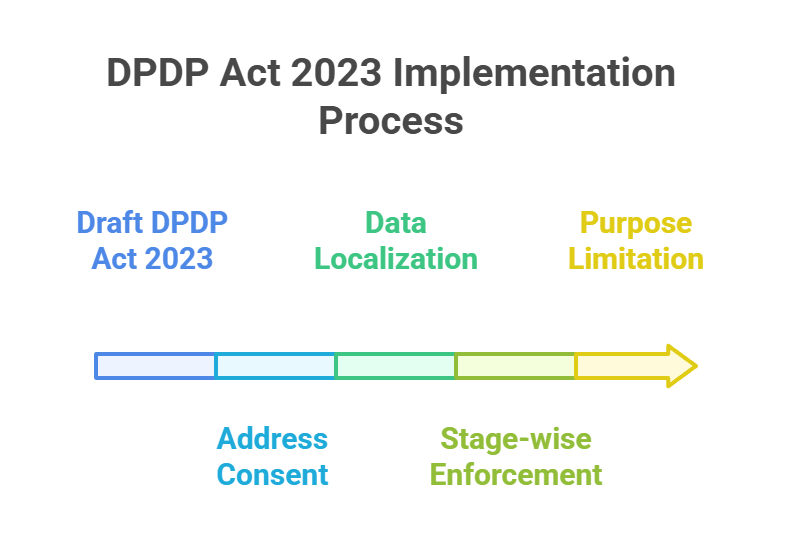
The Digital Personal Data Protection Act 2023 also enlists purpose limitation. For data fiduciaries, this means using personal data only for the specific purpose and consent obtained.
Why Indian SaaS Providers Must Pay Close Attention To DPDP Act 2023 ?
For SaaS providers in India, the DPDP Act 2023 goes far from being a mere compliance checkbox ticking. It’s, what can be called, a ‘complete overhaul’ of how you should handle, process, and protect data in all diligence and confidentiality to prevent security incidents like data breaches.
It’s no doubt that when you start implementing a privacy framework in your service that you will achieve more than compliance. You gain trust from your clients and customers when you responsibly and sensibly handle their sensitive personal (user) data.
The DPDP Act 2023 is a tidal wave in the sea of cybersecurity that will fundamentally change the way user consent, cross-border transfers, storage, and data minimization should be managed.
So, if you’re SaaS provider based in India or those serving the Indian users, the DPDP Act 2023 is something that you can’t avoid or escape from!
SaaS platforms as Data Fiduciaries under the DPDP
SaaS Platforms can act as Data Fiduciaries! How? Relates to the effectiveness with which you handle personal data of your users.
This statement suggests that as SaaS companies serving Indian users, you aren’t just service providers, you are also data fiduciaries. With the DPDP Act 2023 having come into effect, you are accountable for the user data you collect, process, and store.
With you being handed legal obligation, you’re more than expected to ensure utmost transparency upon explicit consent from the users.
Remember that the DPDP Framework holds every data touchpoint under scrutiny regardless of analytics, customer onboarding, or third-party integrations.
Your responsibilities don’t end here. Embedding Privacy-by-Design principles into the core of their program architecture and constantly updating data governance models are what you should consider as SaaS providers.
Deploying clear consent mechanisms and ensuring appropriate user rights management (erasure, correction etc.) are the other equally important parameters you should comply with.
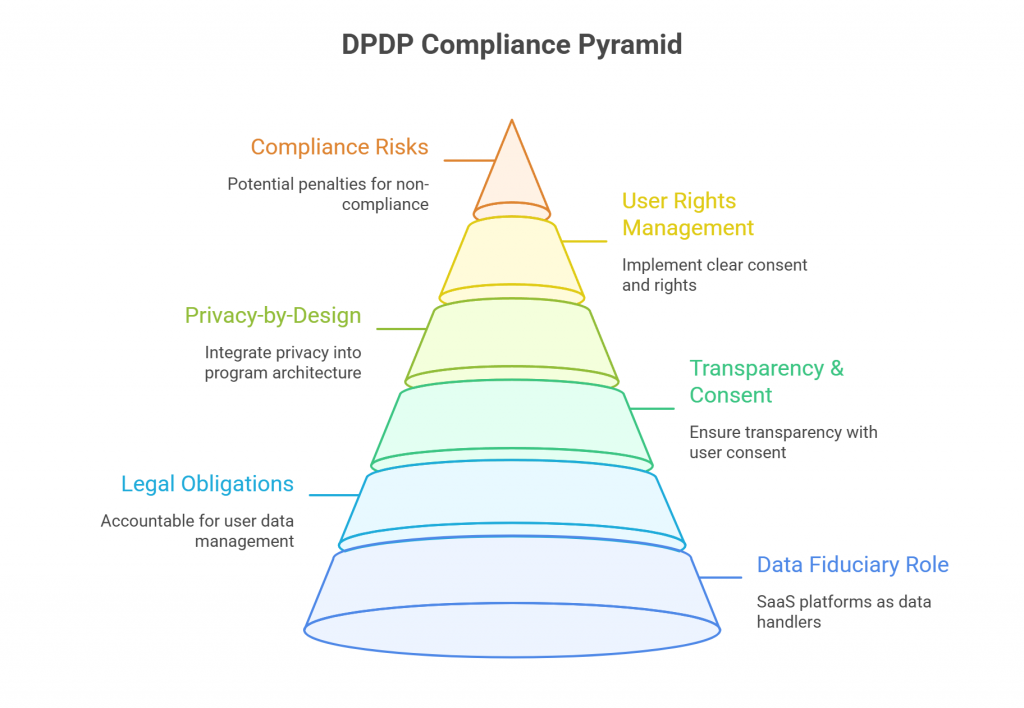
Note that failing to meet the above fiduciary responsibilities or requirements puts you at significant risk of penalty, user data restriction, and reputational damage.
Cross-border data flow concerns
SaaS providers based out of India, but handling Indian users’ data are equally governed by the DPDP Act 2023.
The act specifically applies to the US/EU-based SaaS companies that serve Indian users.
Hence, whether you are an Indian or non-Indian SaaS entity – or any other business processing data for your Indian clients, you are strictly held under the DPDP Act 2023!
Also Read : Top SaaS Security Testing Tools Every CTO Should Evaluate in 2025
Increased enforcement via the Data Protection Board
To all SaaS providers out there, the DPDP Act 2023 has subsequently established DPBI (Data Protection Board of India) to scrutinize data handling and catch acts of non-compliance.
This only means one thing at best – that the new rule is a stark reality – not a passive regulatory promise anymore.
Indian government’s focus on digital sovereignty and accountability from cloud services
Both Indian and non-Indian SaaS providers need to tighten their seatbelts harder when collecting, processing, and storing the personal data of their Indian users.
Data Sovereignty as you may call it, is a criterion that the Indian government is most concerned about and not willing to compromise.
This requirement specifically targets the cloud-based SaaS providers
What Are The Key Compliance Requirements Under DPDP Act 2023 For SaaS Providers In India?
As data fiduciaries, SaaS providers like you are highly expected to adhere to the DPDP Act 2023. This regulatory framework requires them to:
- Obtain Valid User Consent: Need to derive clear, valid and informed consent from your users by highlighting the purpose.
- Security Safeguards & Breach Notification Obligations: Implementing robust data protection measures like securing storage, data encryption, and restricting access to minimize unauthorized use.
- Data Minimization & Purpose Limitation: Collect and process only those personal data that are strictly necessary and appropriate to the purpose for which consent is obtained.
- Enabling User Rights and Permissions: Establish mechanisms that allow users to exercise their rights.
- Notifying Data Breaches: Inform any data breach occurrences to the Data Protection Board of India (DPBI) and the affected users in a timely manner.
- Cross-border Data Transfer Rules: Allows only specific countries or territories recognized by the Indian government as permissible for conducting cross-border data transfers.
- Children’s Data & Sensitive Personal Information: Should obtain consent from verifiable parent or guardian before processing their children’s personal data – specifically for those below 18 years.
- Appointing a Data Protection Officer: SaaS providers should appoint a Data Protection Officer for periodic DPIAs (Data Protection Impact Assessments).
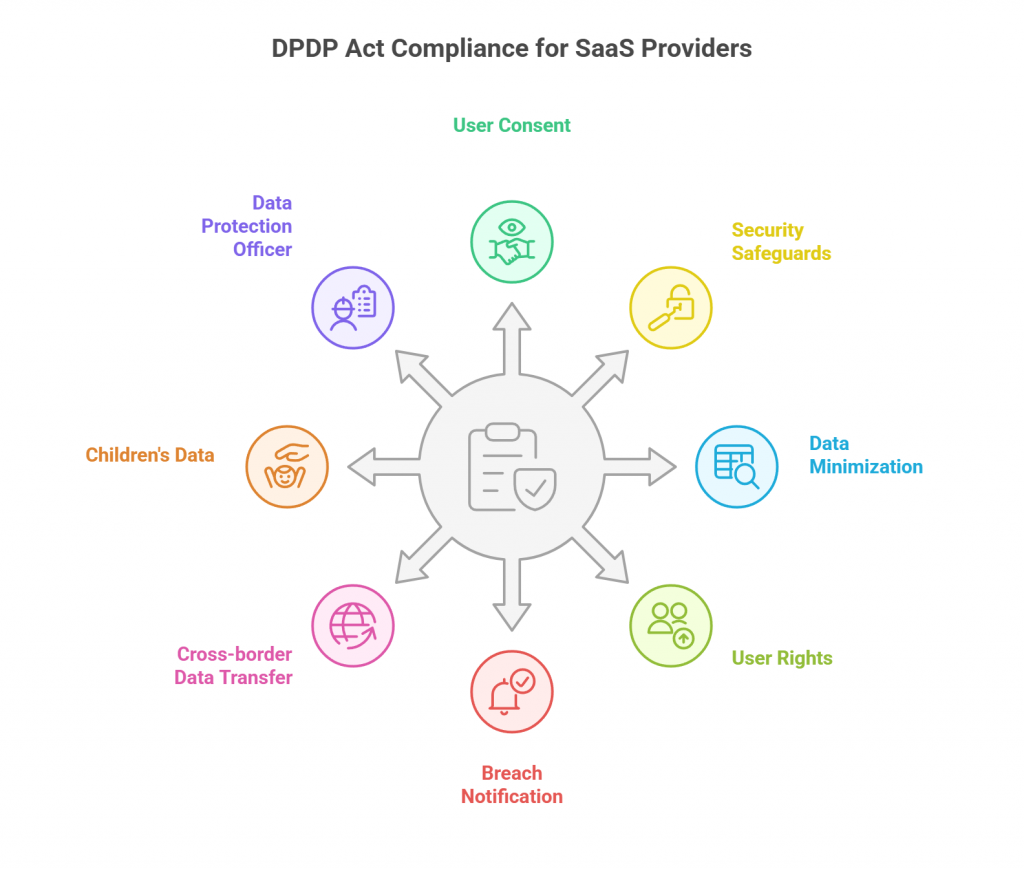
SaaS providers need to ensure data sovereignty, integrity, and transparency when securing user data.
How SaaS Companies can Achieve Compliance with the DPDP Act 2023?
Attaining strict compliance with India’s DPDP Act 2023 can be both demanding and exhausting for SaaS providers. This is where DPBI (Data Protection Board of India) comes into action. The law enforcement, direction, and guidance that DPBI offers can help ensure compliance with the DPDP Act 2023.
Also, the DPBI holds investigative and corrective powers that enable it to enforce ‘issue binding directions’ for providing remediation. These are enough for the Indian SaaS providers to automatically stay compliant with the DPDP (2023).
What are the Penalties For Non-compliance With The DPDP Act 2023 For SaaS providers?
In an era, where cyber threats loom, a small oversight is enough to impose grave penalties. This is especially true in the case of modern businesses that exclusively provide service and largely deal with customer data for that matter.
SaaS standing as a perfect example to this, is no exception. Let’s see what non-compliance with the DPDPA hold for SaaS providers in India:
With the DPDPA 2023 having introduced strict penalties for non-adherence to data protection regulatory requirements in India, SaaS companies are likely to face:
- Up to Rs 250 Crore if failed to implement security safeguards
- Suspension of data processing rights with heavy fines for unauthorized processing or user data misuse
- Both reputational damage and escalating penalties if failed to notify data breaches
- Operational restrictions to revoking license for continued noncompliance
While these are the visible penalties for SaaS businesses, consequences, such as lost customer trust with brand damage down the road can prove unfathomably harsh for them to thrive.
Also Read : Do SaaS Security Checklists Actually Work? Separating Fact from Fiction
Recent reports have revealed that Indian enterprises have incurred significant losses due to delay in SaaS implementation, thus leading to security vulnerabilities. These critically suggest the need for SaaS companies to devise robust security measures by prioritizing adherence to data privacy regulations therein.
Beware, DPDPA do not look for intentional or unintentional non-compliance!
Understanding The Rights of Data Principals Under DPDPA
To SaaS providers, every time you process data for an individual (user), you’re liable to abide by the legally enforceable rights the latter enjoys.
Data Principal (users) should be given due respect for their rights to control their personal data.
Knowing and understanding those will help you prevent data misuse and avoid non-compliance penalties from DPDPA.
- Information on Right to Access: Users should know what data is collected from them, why they are collected, and how these are processed.
- Right to Correct and Erase: Data principals can demand data correction or deletion if they find them inaccurate or outdated.
- Right to Withdraw Consent:.Should respect the data principals’ right to withdraw consent for data collection and processing without penalizing them.
- Right to Data Portability: Respond to user requests to process their data in a structured-cum-machine-readable format for data transfer purposes.
- Right to Breach Information: Promptly inform users of data breaches, also mentioning the remediation efforts-cum-steps taken.
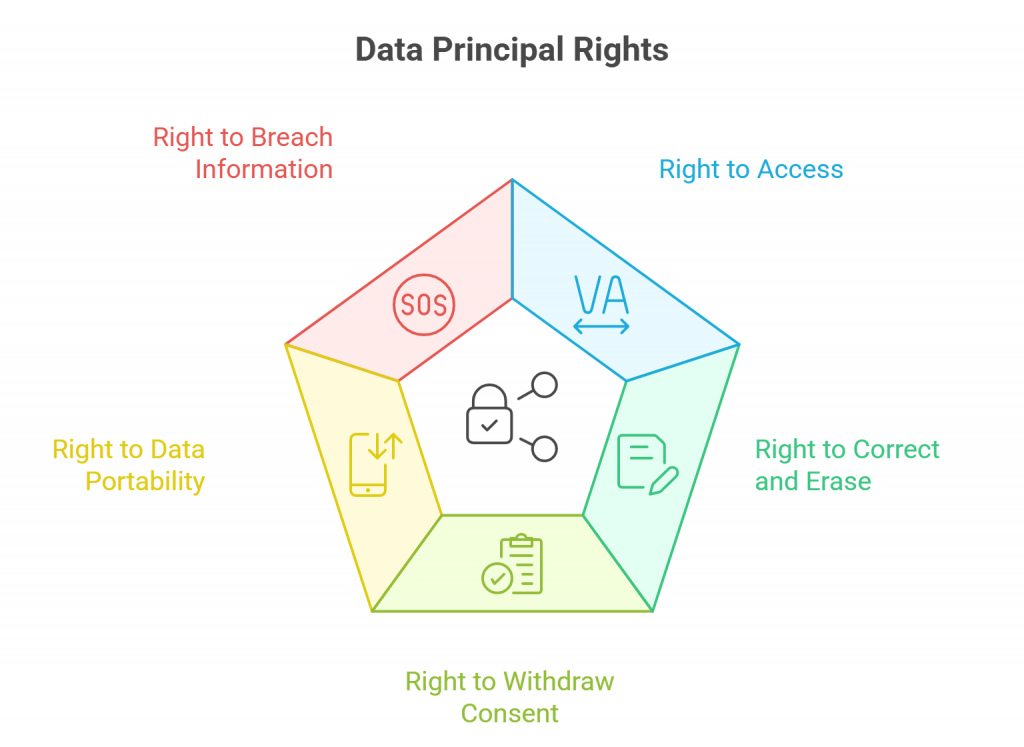
Compliance Roadmap for Indian SaaS Providers Under DPDPA
As a SaaS provider, you need to ensure compliance with DPDPA from the ground up. Doing so will not only help you avert penalties, but will also aid you in maintaining customer trust – earning you tremendous value.
Kickstart your compliance journey with the following steps:
- Conduct a Data Audit
Involves data mapping, i.e., what data is collected, where it’s stored, and who accesses it. Also includes identifying sensitive data and handling high-risk data activities.
- Update Privacy Policy and Terms of Service
Documenting updated compliance for audit readiness and utilizing automated tools to continuously monitor data processing activities.
- Build a Consent Management System
Designing and creating workflows for data access, correction, deletion, and consent withdrawal requests. Also, automating notifications for informing breaches.
- Implement Data Protection by Design into your SaaS architecture
Considering VAPT implementation in CI/CD pipelines and leveraging industry-standard encrypting techniques and adopting a Zero-Trust model.
- Train internal teams
Educating the developers, employees, and sales teams on DPDPA requirements – keeping them updated of the same.
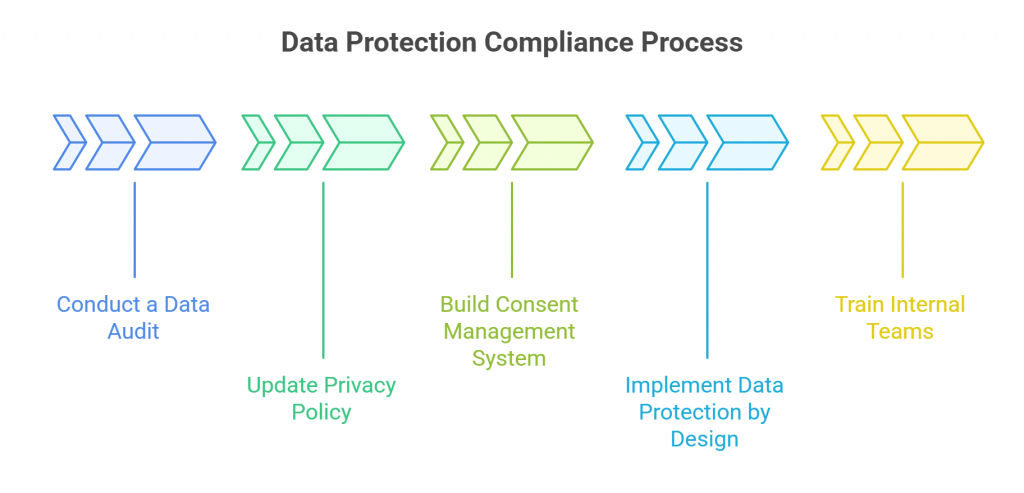
Compliance is not a one-time project, nor is it a choice, but a strategic necessity.
With DPDPA tightening grips on compliance requirements and enforcing tough penalties, it’s high time businesses – especially SaaS providers start embedding them as early as possible.
Privacy-first development is key to securing user data for SaaS providers like you. You get to act early (and promptly) and the outcome you derive through enhanced customer trust is worth such efforts!
At Wattlecorp, our data privacy consultancy service in India is bound to help SaaS companies like you stay adherent to the strict data regulatory policies subject to the DPDP Act 2023. Having acquired expert knowledge in the ever-evolving regulatory landscape of India, be rest assured that we’ve got you fully covered on compliance and cyber resilience.
DPDP ACT FAQs
1.How can SaaS providers achieve compliance with the DPDP Act 2023?
As a SaaS service provider in India or abroad, but processing data for Indian users, you can ensure compliance with the following steps:
Robust data protection framework implementation
Conducting regular audits.
Ensuring transparency in data processing
2.Are the key compliance requirements under the DPDP Act 2023 applicable to SaaS companies outside India?
Yes, you should abide by the DPDP Act 2023 if you’re handling and processing sensitive personal data for Indian users.
3.What are the penalties for non-compliance with the DPDP Act 2023 for Indian SaaS providers?
Violation or non-compliance with the DPDP Act 2023 invites severe consequences for SaaS providers in India. These are:
• Monetary penalties amounting to ₹250 crore for intentional or accidental non-compliance
• Reputational damage and lost customer trust
• Cancellation of data processing rights

 Qatar Data Protection Law: Implementing PDPPL Data Subject Rights Processes for Businesses
Key Takeaways: The Qatar Data Protection Law (Law No. 13 of 2016) for Personal Data Privacy Protection, grants individuals specific rights such as right to access, correct, erase, object, withdraw consent, and right to be notified of processing or inaccurate disclosure. Beyond having a privacy policy, businesses or controllers, under Article 11 of Personal Data […]
 AI Governance for Indian Enterprises: Building Internal Controls Before Key DPDP Obligations Take Effect
Key Takeaways: The DPDP Act does not contain AI-specific provisions. Its requirements, however, apply in situations when an AI system processes digital personal data within its territorial and material scope. India is working on building a broader governance framework around safety, accountability, transparency and trust via programs like the IndiaAI Mission. Indian organizations should inventory […]
 Cloud Security Audit for UAE Government Cloud Migration: NCAP and Security Requirements
Key Takeaways: A cloud security audit UAE helps government entities identify security, governance, configuration, access, data-protection and resilience gaps, before and after shifting critical workloads to the cloud. UAE National Cloud Security Policy has defined cloud governance, data security, data sovereignty, IAM, incident management, resilience, portability and cloud operations requirements. The National Cyber Accreditation Program […]
 Data Privacy Consulting UAE – Building a PDPL-Compliant Data Governance Program
Key Takeaways: PDPL compliance requires ongoing operational governance that goes beyond policies to demonstrate how personal data is collected, used, protected, transferred, retained, and deleted. Data mapping helps businesses move from reactive compliance to proactive risk management by establishing a comprehensive inventory of the data ecosystem, helping build a mature data privacy and governance program. […]
 Saudi Arabia’s Critical Systems Controls: What CSP-Linked Enterprises Must Comply With in 2026
Key Takeaways: The Critical Systems Cybersecurity Controls (CSCC) are more applicable to critical systems than to all IT assets owned or operated by an organization. To be in full compliance or to remain in full compliance with CSCC, organizations must maintain continuous adherence to NCA ECC. CSCC has 32 core controls and 73 sub-controls across […]
 DevSecOps for Saudi Banking and FinTech Applications: Building a SAMA-Aligned Secure Development Lifecycle
Key Takeaways: DevSecOps Saudi Arabia for banks & FinTech enterprises doesn’t make security journey a last stop but embeds it into the software development life cycle. Mapping DevSecOps methods to the SAMA Cybersecurity Framework improves security governance and application resilience while boosting audit readiness. Continuous security testing such as SAST, DAST, SCA, IaC scanning, and […]