
Key Takeaways:
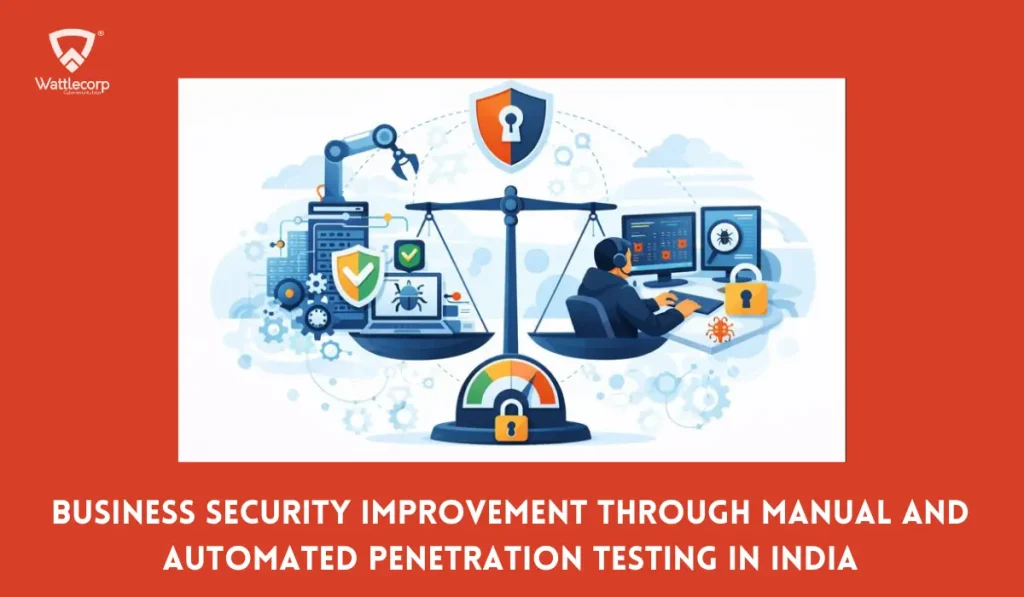
- Combining manual and automated penetration testing provides stronger security by blending automated speed with expert manual analysis to find both common and complex vulnerabilities. This balanced approach helps to minimize gaps in protection for dynamic digital environments.
- Indian businesses face increasing cyber threats, which make early detection of vulnerabilities essential for reducing breach risks and meeting compliance needs. Effective penetration testing helps prevent costly downtime and regulatory fines.
- Manual penetration testing is more effective at identifying logic flaws, workflow gaps, and chained exploits that automated tools often miss. Human experts are focused on simulating real attacks so they can check real business risks and how easy they are to exploit.
- Automated penetration testing supports continuous security through fast, recurring tests suitable for large cloud, web, and infrastructure environments. It enables frequent checks without significantly draining resources.
- The best security strategy is a blend of both methods, which ensures detailed coverage, reducing false positives and helping leadership make informed, risk-based decisions. Collaboration with skilled providers helps to maximize ROI on security investments.
The Impact of Penetration Testing on Business Security
Penetration testing has a direct impact on business security, particularly as cyber threats continue to increase in India. It assists in identifying vulnerabilities at an early stage, improves the overall security position and increases the preparedness to respond to incidents.
It also helps to meet the compliance requirements, minimizes the risk of breaches and develops customer trust. The results provide the leadership with a clear understanding of the risks so that they will be able to make informed decisions.
Early corrections of weaknesses also save companies a lot of money that would be incurred due to security attacks. Combining automated and manual penetration testing creates more suitable and trustworthy security results.
By combining both methods into a continuous security strategy, organisations can detect vulnerabilities early, reduce breach risks, and meet compliance requirements more confidently.
Pros and Cons of Manual Penetration Testing
Manual penetration testing relies on skilled security professionals who simulate realistic attack paths, identify vulnerabilities early, and provide actionable guidance to strengthen your defenses.
These experts manually test your app’s business rules through those simulated attacks in ways automated tools can’t handle.
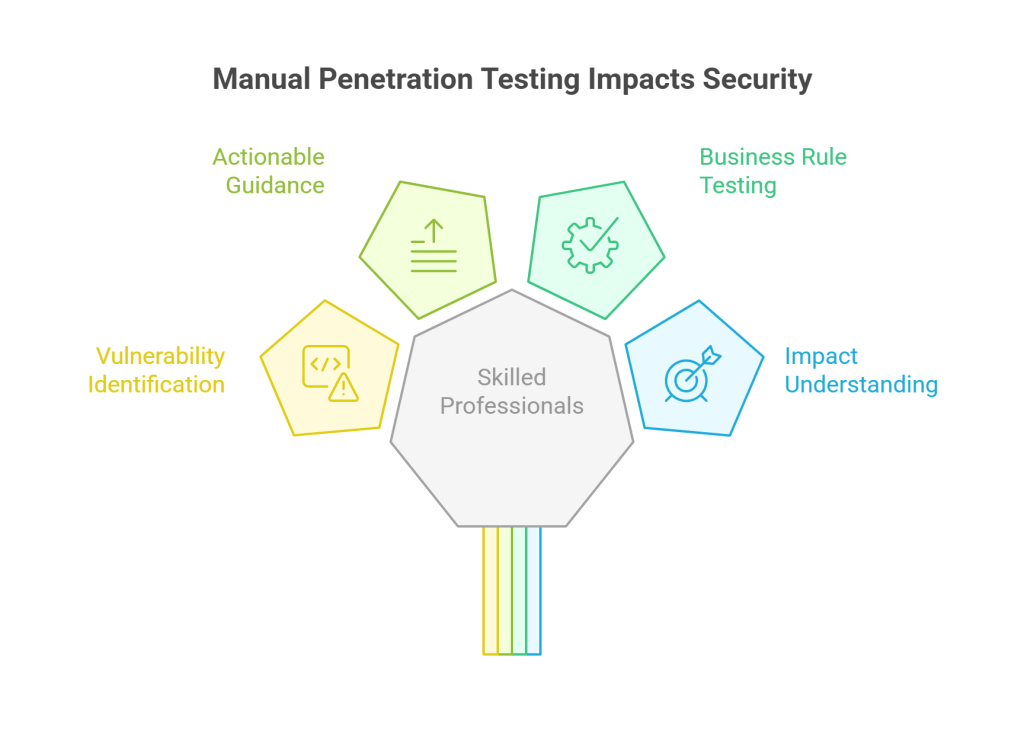
Manual penetration testing approach is effective for complex applications, custom workflows and high‑risk environments.
It is more focused on understanding the real impact and how easily attacks matter more than just finding surface‑level issues.
Automated tools quickly scan large areas for known issues and suit repetitive tasks faster and cheaper than manual, which is ideal for India’s expanding cloud and digital infrastructures.
But they miss logic flaws, chained exploits, generate false positives and lack deep risk analysis.
However, manual penetration testing is resource‑intensive, time‑consuming and typically performed less frequently, such as once or twice a year or around major releases.
Also Read : The Cost of Ignoring VAPT: What Happens When Businesses Skip Security Testing
For large or constantly changing environments, relying only on manual penetration testing can leave exposure gaps between tests, especially as new vulnerabilities and misconfigurations appear.
Understanding the Benefits and Limits of Automated Penetration Testing
Are your security tests fast enough to keep up with evolving cyber threats in large, complex digital environments?
One of the key advantages of automated penetration testing is that it saves time by quickly scanning systems for known security issues.
With the aid of such tools as vulnerability scanners, DAST and security platforms provide quick and recurring results, which are useful in detecting risks at an early stage.
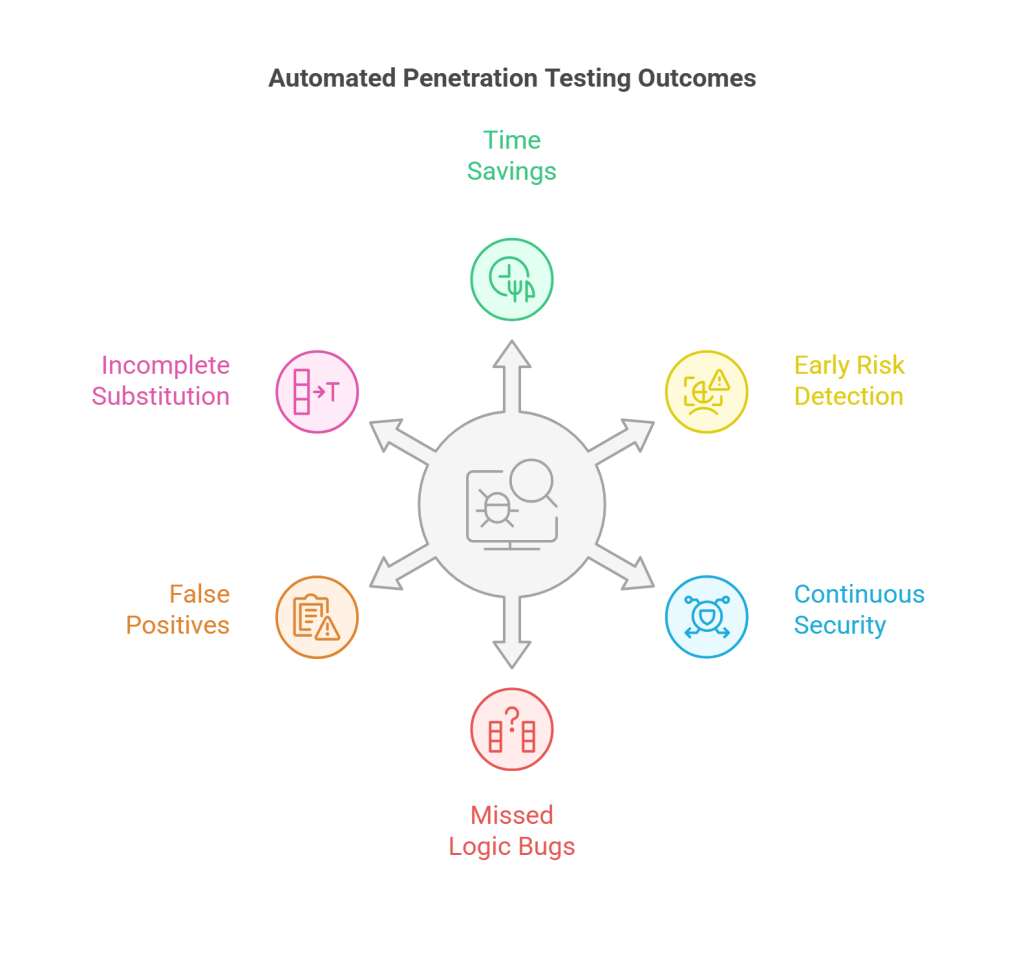
Automated testing is significant in continuous security and it is effective in large organisations that have enormous digital configurations in networks, cloud and web applications.
But it has some limitations:
- It could overlook complicated business logic bugs and a series of attacks.
- It can generate false positives, which require validation by security experts.
- It is not able to completely substitute manual testing.
Automated penetration testing is effective when it is done alongside manual tests to enhance security.
Manual vs Automated Testing: Making the Right Testing Choice
The right penetration testing approach depends on factors such as the size of your organisation.
Smaller businesses or startups might rely more on automated penetration testing tools initially due to their lower price and broader coverage. Then they incorporate specific manual testing of critical applications or prior to significant product releases.
Larger organizations, particularly those in highly regulated Indian industries like BFSI, healthcare, or telecom, find a formalized testing program especially useful.
Also Read : 5 Signs Your Business Needs VAPT Immediately
It incorporates a combination of scheduled manual penetration testing along with ongoing automated scanning of infrastructure and applications.
Testing costs should not be the sole factor in budget decisions. Expenses on more thorough manual testing of your most critical systems can get you out of expensive, high-severity breaches.
Consider this when choosing between manual and automated testing, it is based on your organization’s size, regulatory requirements, risk profile, technology stack and budget to reduce the chance of high‑severity incidents.
Combining Manual and Automated Testing for Stronger Security
Manual and automated penetration testing works better together to ensure stronger security. Automated penetration tests help to scan swiftly for identifying the everyday vulnerabilities and run often for continuous checks.
While manual penetration testing brings expert care to spot tricky and hidden flaws that tools may find difficult to identify.
And the combination of both manual and automated testing covers all bases without gaps. Indian businesses face growing cyber risks, so combining manual and automated testing is essential.
Organizations should look for penetration testing companies in India that offer both manual and automated testing capabilities.
At Wattlecorp, our team of experts deliver reliable, ongoing protection with clear risk insights and compliance support to keep your operations safe and secure.

Tips for Choosing the Right Penetration Testing Provider
A combination of manual and automated penetration testing is crucial to the continuous security, reduction of the risks of breach, and compliance in the changing cyber environment in India.
Automated testing is quick and has a wide coverage, and manual testing reveals the complicated vulnerabilities and evaluates the actual business impact.
To the Indian businesses that want to have a reliable penetration testing company, it is important to choose a provider such as Wattlecorp which incorporates both the approaches into one continuous security strategy.
The professional services provided by Wattlecorp assist organisations in focusing on fixing security rather than reacting to the potential threat and working towards security that is specific to the risk and regulatory requirements.
Choosing the right penetration service provider with the necessary protection and confidence in a dynamic threat landscape.
Manual and Automated Penetration Testing FAQs
1.What is the difference between manual and automated penetration testing?
Manual penetration testing is conducted by the security experts who simulate realistic attacks and apply effective techniques to identify the complex vulnerabilities. One of the major differences between manual and automated penetration testing is that automated testing relies on tools to scan for known weaknesses at scale.
2.When should automated penetration testing be used?
Automated penetration testing is ideal for frequent and repeatable checks such as scheduled scans, CI/CD pipeline integrations and broad coverage of large infrastructures where speed and scalability are the major priorities.
3.How does manual pen testing contribute to security?
Manual penetration testing provides a deep analysis, validates exploitability, helps to reduce false positives and reveals business‑logic and chained vulnerabilities that automated tools typically miss.
4.Why is continuous penetration testing important?
Continuous penetration testing and security testing help organisations to identify and remediate new vulnerabilities as they appear, that helps to reduce the timeframe in which attackers can exploit them and support ongoing compliance.
5.What are the best tools for automated penetration testing?
Common automated penetration testing solutions include vulnerability scanners, DAST tools, and security testing platforms that integrate with CI/CD to provide regular, automated assessments across applications and infrastructure.