

Debunking Common Cyber Security Myths: Unveiling the Reality
Popular culture has played an important role in opening up the world of hackers to the common person. Movies like Blackhat TV shows like Mr. Robot and even games like Watchdogs 2 completely focused on hacking, while a lot of crime shows and detective movies relied on tech support/ethical hackers. This portrayal has been steadily increasing, while at the same time, these portrayals have fed a huge number of myths to the unsuspecting public.
While the concept of what hackers do, on both sides, is well understood by the general public these days, there are a lot of misconceptions as well. If you look at it, the portrayal has had both good and bad things to come out of it. Let us bust a few of those myths now. If you’ve heard about it, there was a popular show called Mr. Robot which dealt with a hacktivist group. I’m not focusing on that, but I might use a few references from the show, which shouldn’t stop you from understanding the mention or getting the show spoiled.
1. All Hacking is Illegal
Hacking is a term that has a huge negative value associated with it. Well, at least in the minds of the general public. If you decide to listen, reality tells an entirely different story.
 The number of malicious hackers is lower when you stack them up against the number of hackers that work to fight them. The reason why these ethical hackers are unheard of is due to the media silence that happens when an issue is fixed, but at the same time, they create huge noise when a malicious hacker succeeds. This is why the number and importance of each successful patch go unnoticed unless it was to block out a malicious attack.
This huge number of ethical hackers are cybersecurity professionals hired by companies to legally hack their assets and get paid for them. The reason to do these legal hacks is to find out if there are any vulnerabilities in any of their digital assets. Being aware of such issues allows companies to fix them before a malicious hacker attacks their company.
Read More: How To Create Strong Passwords
2. Hacking Requires Superhuman Typing Speeds
Almost every scene that involves a hacker in popular media shows them typing their fingers off to show an Access Granted popup to some secure server halfway around the world. This could not be any further from the truth when it comes to how hackers actually perform.

Hacking is something that requires focus and determination in huge amounts. It has nothing to do with how fast a person types. The tools used by a hacker take their own sweet time to finish a task.
For those who have seen Mr. Robot, the preparation time that society takes for their hack is analogous to the focus and determination needed for a job.
Read More: What Is Deepfake? How Deepfake Works?
3. All Hackers are Expert Geniuses
The jargon thrown around by hackers when shown on media leads people to believe that they’re people who’ve been beside computers their entire life. While people at the level of such hackers who are part of a story are well-versed in computer knowledge and jargon, beginners need not be.
 In this digital era, it is possible for someone without any IT knowledge to become a hacker. With the number of resources available online, a person can easily start from nothing and reach an intermediate level within a year. There are numerous platforms where noise can train its way up the ladder.
Read More: Free Cybersecurity Courses And Certifications Of This Covid Times
4. All Hackers Work Alone
The reason for this myth is when you compare the protagonists in a show and get the ratio of hackers to other characters, it is generally pretty low. This leads to people believing that hackers are lone wolves who get tasks done. But when you think about it, it leads to another misconception as part of this one – that every hacker is an expert on all kinds of systems. It makes sense if every hacker is a lone wolf as portrayed in media.
 The truth is that hackers work in groups. Each hacker in the group is an expert in one particular area like social engineering, physical security, or network security. Sometimes hacktivist groups are hired by governments to carry out cyber attacks on other nations.
A perfect example of this is from you guessed it, Mr Robot. The group’s society comprises members who are all experts in different areas of hacking.
5. The Deep Web is Illegal and Dangerous
Infamously known as the dark web, the deep web is often thought of as the seedy underbelly of the internet where criminals reside and other shady behavior happens. Yes, the deep web has its fair share of criminals and other shady activities.
 For a service that grants anonymity, it is normal that shady behavior happens there. But just because accessing the deep web requires browsers with special configurations like Tor, that doesn’t make it entirely illegal and dangerous.
Interested to bust more myths in cybersecurity and learn the truth about them? Follow our blog to keep yourself updated with the latest trends in cybersecurity
Contributor : ACHUTH V P

 Qatar Data Protection Law: Implementing PDPPL Data Subject Rights Processes for Businesses
Key Takeaways: The Qatar Data Protection Law (Law No. 13 of 2016) for Personal Data Privacy Protection, grants individuals specific rights such as right to access, correct, erase, object, withdraw consent, and right to be notified of processing or inaccurate disclosure. Beyond having a privacy policy, businesses or controllers, under Article 11 of Personal Data […]
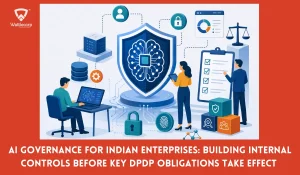 AI Governance for Indian Enterprises: Building Internal Controls Before Key DPDP Obligations Take Effect
Key Takeaways: The DPDP Act does not contain AI-specific provisions. Its requirements, however, apply in situations when an AI system processes digital personal data within its territorial and material scope. India is working on building a broader governance framework around safety, accountability, transparency and trust via programs like the IndiaAI Mission. Indian organizations should inventory […]
 Cloud Security Audit for UAE Government Cloud Migration: NCAP and Security Requirements
Key Takeaways: A cloud security audit UAE helps government entities identify security, governance, configuration, access, data-protection and resilience gaps, before and after shifting critical workloads to the cloud. UAE National Cloud Security Policy has defined cloud governance, data security, data sovereignty, IAM, incident management, resilience, portability and cloud operations requirements. The National Cyber Accreditation Program […]
 Data Privacy Consulting UAE – Building a PDPL-Compliant Data Governance Program
Key Takeaways: PDPL compliance requires ongoing operational governance that goes beyond policies to demonstrate how personal data is collected, used, protected, transferred, retained, and deleted. Data mapping helps businesses move from reactive compliance to proactive risk management by establishing a comprehensive inventory of the data ecosystem, helping build a mature data privacy and governance program. […]
 Saudi Arabia’s Critical Systems Controls: What CSP-Linked Enterprises Must Comply With in 2026
Key Takeaways: The Critical Systems Cybersecurity Controls (CSCC) are more applicable to critical systems than to all IT assets owned or operated by an organization. To be in full compliance or to remain in full compliance with CSCC, organizations must maintain continuous adherence to NCA ECC. CSCC has 32 core controls and 73 sub-controls across […]
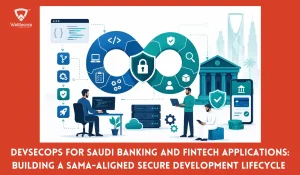 DevSecOps for Saudi Banking and FinTech Applications: Building a SAMA-Aligned Secure Development Lifecycle
Key Takeaways: DevSecOps Saudi Arabia for banks & FinTech enterprises doesn’t make security journey a last stop but embeds it into the software development life cycle. Mapping DevSecOps methods to the SAMA Cybersecurity Framework improves security governance and application resilience while boosting audit readiness. Continuous security testing such as SAST, DAST, SCA, IaC scanning, and […]