


CERT-IN Empanelled VAPT: Why Indian Companies Should Choose CERT-IN Approved Firms in 2026
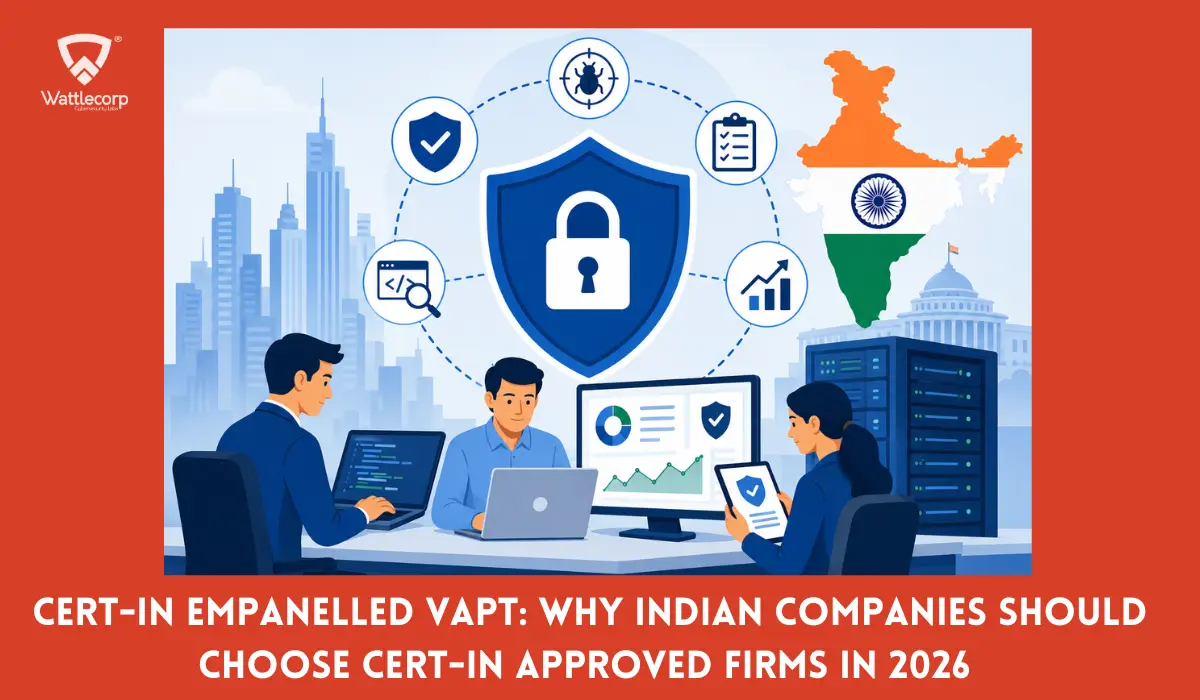
Key Takeaways:
- Running a VAPT with a CERT-In empanelled firm means your security testing is backed by a standard that regulators and enterprise clients in India actually recognize, not just a vendor promise.
- When sensitive data and critical systems are involved, a CERT-In empanelled VAPT provider gives Indian companies compliance readiness they can demonstrate, not just claim.
- From web applications and APIs to cloud workloads and network infrastructure, vulnerabilities get found and documented before an attacker finds them first.
- What comes back is not a raw scan dump. It is structured findings, clear remediation steps, and audit-grade evidence that survives real scrutiny.
- For Indian businesses, CERT-In empanelled VAPT is how security testing becomes something the whole organization can stand behind with regulators, customers, and leadership.
Why Choosing a CERT-In Empanelled VAPT Provider Is Critical for Indian Companies in 2026
Security leaders in India are under pressure from every direction, regulators tightening mandates, enterprise buyers demanding proof, boards asking harder questions.
A generic VAPT report may no longer satisfy regulators, enterprise buyers, insurers, or board stakeholders when they expect evidence from a recognized security auditing provider. In 2026, the firms that earn trust are the ones that choose CERT-In empanelled VAPT from the start, before the audit, before the deal, before the breach.
In 2026, the cybersecurity question Indian boards and regulators are asking has shifted. The question is no longer whether a company completed a security test. The question now is: can you prove your testing was credible?
That is the core reason. CERT-In empanelled VAPT has become a high-value security assurance investment for Indian companies that need credible audit evidence, enterprise trust, and regulatory readiness.
Organizations that rely on non-verified vendors for vulnerability assessment and penetration testing are taking a risk that goes well beyond technical exposure. It extends into regulatory accountability, enterprise deal readiness, and breach defensibility.
Why CERT-In Directions and Audit Expectations Are Reshaping Vendor Selection
India’s cybersecurity regulatory environment changed significantly following CERT-In’s 2022 directions.
These directions require covered entities to report specific cyber incidents within tight timelines through CERT-In’s official channels.
Organizations with poor security visibility, untested environments, and weak audit documentation are directly exposed, not just technically, but in their ability to respond and report on time.
CERT-In’s cybersecurity directions increase the need for tested, documented, and well-monitored environments, especially for covered entities that must detect, investigate, and report incidents within defined timelines.
Choosing a CERT-In empanelled provider strengthens that posture across four dimensions: regulatory defensibility, enterprise sales credibility, board-level reporting, and post-incident accountability.
For CISOs and CTOs building a defensible security program, the CERT-In empanelled VAPT process is the foundation.
It signals to every stakeholder, regulator, customer, auditor, insurer, that security testing was conducted to a recognized standard.
What Is CERT-In Empanelled VAPT and What Role Does CERT-In Play?
What is CERT-In cyber security authority in India? CERT-In is the Indian Computer Emergency Response Team, which operates under the Ministry of Electronics and Information Technology, MeitY.
It serves as India’s national nodal agency for cybersecurity incident prevention, response, and coordination.
The main role of CERT-In includes issuing cybersecurity advisories, publishing vulnerability notes, defining CERT-in guidelines for cyber security, and maintaining an officially curated list of empanelled information security auditing organizations.
Also Read : VAPT Remediation Verification: How to Ensure Vulnerabilities Are Properly Fixed
CERT-In empanelled VAPT refers specifically to vulnerability assessment and penetration testing delivered by firms that have been reviewed and approved for inclusion on that official list.
These are not self-certified vendors. They are information security auditing organizations empanelled by CERT-In for providing information security auditing services.
For Indian companies, choosing a CERT-In empanelled security auditing firm over an unverified vendor is not a matter of preference. It is a governance decision.
The Real Business Impact: What a Weak VAPT Costs You
A non-credentialed VAPT may appear cost-effective at the point of purchase. The real cost appears later:
- Delayed enterprise deals, when B2B buyers reject reports from non-CERT-in empanelled VAPT providers.
- Failed regulatory or customer audits due to documentation gaps that a security audit by a CERT-In empanelled organization could have addressed.
- Cyber insurance friction when insurers find no evidence of credible third-party testing.
- Board accountability exposure when a breach reveals that security testing was outsourced to an unrecognized vendor.
- M&A and investor scrutiny when due diligence teams find inadequate VAPT compliance audit evidence.
Indian SaaS, fintech, healthtech, and BFSI companies are losing enterprise deals and facing compliance blockers, not because vulnerabilities exist, but because their testing evidence cannot withstand scrutiny.
What Strong CERT-In Empanelled VAPT Must Cover
A credible CERT-In empanelled VAPT engagement is not a scan. It is a structured, manual, evidence-backed assessment that must cover:
- Web Application Testing: Authentication weaknesses, session management flaws, broken access control, injection vulnerabilities, and business logic abuse paths must all be verified manually, not just flagged by automated tools.
- Mobile Application Testing: With Indian consumers and enterprises relying heavily on mobile platforms, mobile app penetration testing India is a critical component. A complete CERT-In empanelled VAPT must test storage security, API calls from the app, authentication handling, and reverse-engineering exposure.
Also Read : Key Cybersecurity Threats Addressed By VAPT In 2025
- API Security Assessment: APIs power modern Indian digital platforms. CERT-In cyber security guidelines increasingly focus on API-layer risks, including authorization failures, rate-limiting gaps, and mass data exposure scenarios that automated scanners routinely miss.
- Cloud Infrastructure Review: Misconfigurations in AWS, Azure, and GCP environments remain a leading cause of data exposure. VAPT compliance in cybersecurity for cloud-first companies must include identity permissions review, exposed storage, network segmentation gaps, and logging deficiencies.
- Remediation Validation and Retesting: A mature CERT-In empanelled VAPT lifecycle should include remediation tracking, retesting, and closure evidence so auditors, enterprise customers, and leadership can verify that identified risks were properly addressed.
The Difference Between CERT-In and Non-CERT-In VAPT Providers
The difference between CERT-In empanelled and non-empanelled vendors is not technical, it is the difference between evidence that holds and evidence that does not.
| CERT-In Empanelled VAPT Providers | Non-Empanelled Vendors |
| Listed on official CERT-In directory | Self-declared, unverified |
| Reports carry regulatory credibility | May not satisfy audit requirements |
| Often preferred or recognized in Indian enterprise procurement reviews | Can delay or block enterprise onboarding |
| Supports security audit documentation, remediation evidence, and incident-readiness records | No formal compliance alignment |
| Accountable to CERT-In standards | No external quality benchmark |
The cost of CERT-In empanelled VAPT services in India varies by scope and complexity.
But that cost is measurably lower than the regulatory, reputational, and commercial cost of failing an audit or losing an enterprise deal because of a non-credentialed report.
How to Choose a CERT-In Empanelled VAPT Provider: A Practical Checklist
When evaluating CERT-In empanelled VAPT providers, Indian companies should follow a structured selection process:
- Verify empanelment status directly on the official CERT-In website before any engagement.
- Assess scoping depth and ensure that the firm tests web applications, API, mobile, cloud, and infrastructure.
- Review sample reports for exploitability ratings, evidence, business impact, and remediation guidance.
- Confirm retesting capability, because closure evidence is as important as the initial findings.
- Validate compliance alignment by checking whether the firm understands CERT-In cybersecurity audit guidelines India and sector-specific requirements.
- Check for advisory support such as can the firm translate findings into board-ready risk summaries and remediation roadmaps.
Verifying CERT-in empanelled status takes minutes on the official directory. Recovering from an audit failure caused by choosing the wrong vendor takes considerably longer.
CERT-In Empanelled VAPT Is a Trust Advantage, Not Just a Compliance Requirement
Indian companies that invest in CERT-In empanelled VAPT as a structured, recurring security assurance process, not a one-time checkbox will hold a measurable advantage in every direction that matters: regulatory readiness, enterprise sales cycles, board accountability, and breach defensibility.
Wattlecorp helps organizations implement this right engagement model. It is not just about receiving a report.
It is scope-led testing, evidence-backed findings, structured remediation, retesting validation, and executive-ready reporting that converts technical risk into business-level decision-making.
If your organization is ready to strengthen its security posture with a credible, CERT-IN empanelled VAPT process, choose Wattlecorp’s CERT-In Compliance Consulting services, built specifically to help Indian companies achieve and sustain regulatory, enterprise, and board-level security credibility.
CERT-In Empanelled VAPT FAQs
1.What is CERT-In empanelled VAPT?
2.Why is CERT-In empanelled VAPT important for Indian companies?
3.How does CERT-In certification benefit businesses?
4.What are the compliance requirements for CERT-In VAPT?
5.How to choose a CERT-In empanelled VAPT provider?

 CERT-IN Empanelled VAPT: Why Indian Companies Should Choose CERT-IN Approved Firms in 2026
Key Takeaways: Running a VAPT with a CERT-In empanelled firm means your security testing is backed by a standard that regulators and enterprise clients in India actually recognize, not just a vendor promise. When sensitive data and critical systems are involved, a CERT-In empanelled VAPT provider gives Indian companies compliance readiness they can demonstrate, not […]
 SOC 2 Type I vs Type II Timeline: How Long UAE Companies Actually Need
Key Takeaways: SOC 2 Type I vs Type II timelines differ and it is mostly based on audit depth. Type I checks if controls are well-designed at a given point in time. Type II goes a step further and it proves those controls worked consistently over a defined period. For UAE SaaS companies, Type I […]
 AI Security Testing for US SaaS Platforms: NIST AI RMF and What 2026 Standards Require
Key Takeaways: AI security testing for SaaS platforms isn’t just a technical upgrade from traditional app security. It’s a completely different job. You’re not running a scan on code, you’re stress-testing a model to see how it breaks when someone is actively trying to make it fail. NIST AI RMF isn’t law yet, but your […]
 SOC 2 Compliance for DIFC and ADGM-Registered Companies: What’s Different?
Key Takeaways: SOC 2 isn’t a regulatory requirement in DIFC or ADGM but if you’re dealing with enterprise clients, investors, or international partners, it is quickly becoming something the market expects anyway. DIFC and ADGM have their own data protection frameworks, but SOC 2 goes further, it asks whether your security, privacy, and operational controls […]
 How Indian SaaS Enterprises Can Defend Against Ransomware in 2026
Key Takeaways: Ransomware defense for Indian enterprises in 2026 is identity-driven, which is not just malware-driven, access control is your first and most critical line of defense. Effective ransomware defense requires detection and response speed, not prevention tools alone. How fast you contain an attack determines the level of damage. Backup validation is as critical […]
 AI Security Risks in Saudi Banking: What SAMA Expects from FinTech and Banks in 2026
Key Takeaways: AI Security Risks in Saudi Banking are expanding faster than most existing cybersecurity programs can handle, and the gap is widening with every new deployment. SAMA regulations do not currently include a standalone AI cybersecurity rulebook; banks and FinTechs should assess AI use cases against applicable SAMA Cyber Security Framework control areas to […]