

Why One-Time Security Audits in UAE Fail and Continuous Penetration Testing Powers True Defense
Key Takeaways:
- One-time security audits provide fast checks but fail to detect vulnerabilities in rapidly evolving threat environments, which leads organisations exposed to risks that develop between audit cycles.
- Continuous security monitoring and automation deliver real-time threat visibility that allows faster incident response and significantly reduces the window of opportunity for attackers.
- Continuous penetration testing strengthens monitoring efforts by testing like real-world attack scenarios and exposing hidden weaknesses that automated tools alone may overlook.
- Adopting a continuous security strategy enhances organisational resilience, reduces costly breaches and provides stronger long-term security posture.
The Need for Continuous Security Evaluations Over One-Time Security Audits in UAE
Are you still relying on one-time security audits to protect your businesses?
Then it is time to rethink. Because nowadays cyber attacks are getting faster than before and we need to be more vigilant and protected from vulnerabilities in the UAE market.
One-time security audits may become a reason to be exposed to major risks. Therefore we need to understand why one-time security audits often fail and how Continuous Penetration Testing helps to protect from these security threats.
Cybersecurity is not just ticking a checklist, it is more about continuous vigilance to ensure secured data.
Can your periodic audit catch fast-moving risks in real time? The truth is, it cannot.
Industries like BFSI, SaaS, FinTech, Healthcare, and cloud-native companies usually rely on annual or quarterly security audits and they continuously face unexpected attacks.
Wattlecorp’s service offerings such as Firewall Audits, Continuous Security Monitoring, Threat Hunting, and VAPT ensure data security and prevent from unexpected vulnerabilities.
Continuous Penetration Testing offers real-time risk detection with faster response, while periodic audits provide only occasional and performance reviews. Learn why one-time security audits fail and how this continuous monitoring helps to protect from unexpected cyber attacks.
The Hidden Risks of Periodic Audits
Security is not just a one-time fix and relying on periodic audits puts your business at risk.
Do you know what are the main reasons for one-time security audits failing to protect organizations long-term?
One-time security audits usually show how your security stands at a single moment. But it is not focused on everything happening between those times.
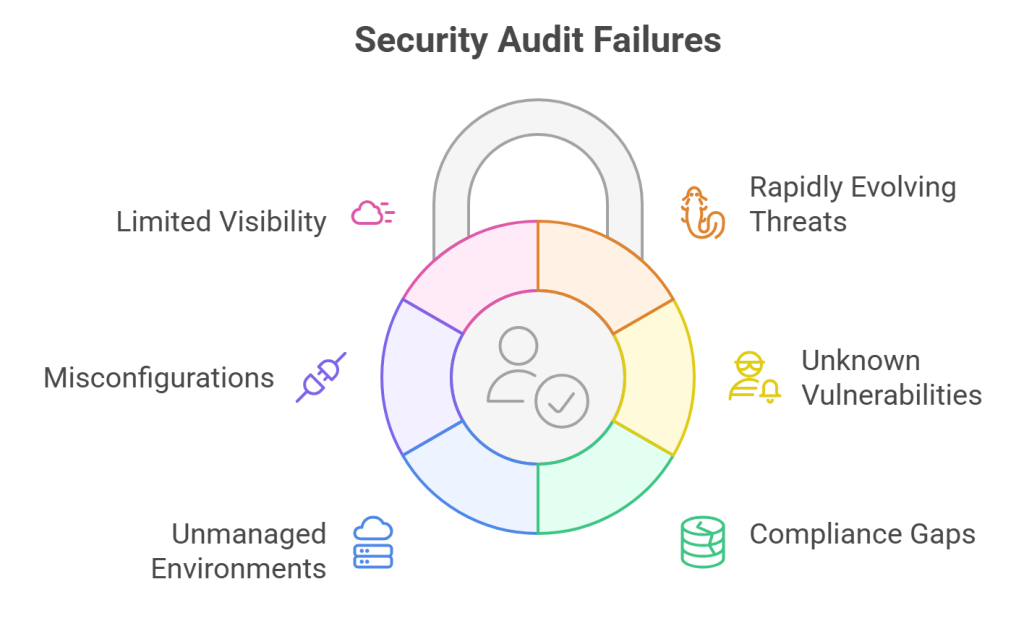
- Rapidly evolving threats outpace audits: Cybercriminals continuously develop new exploits and are difficult to find in one-time audits.
- Unknown vulnerabilities persist: Lack of monitoring may lead to new weaknesses that can remain as undetected.
- Compliance gaps appear: Compliance gaps happen when the regulatory frameworks miss to do continuous control monitoring.
- Cloud and remote environments remain unmanaged: Constantly changing digital environments may create security gaps and it remains unchanged.
- Increased breach likelihood due to misconfigurations: Misaligned firewall rules or exposed services are prime factors that audits capture only periodically.
- Limited attack surface visibility: Changes to infrastructure or software updates can significantly alter risk profiles between audits.
How Modern Threats Outpace Annual Security Checks?
Recent CISA research shows that attackers exploit exposed misconfigurations in just hours.
How effective are your one-time security audits in real-time defense?
I hope it is not effective in this fast paced digital world.
According to NIST studies, the Risk Management Framework called Continuous Penetration Testing is essential for staying aware and closing attack windows fast.
Also Read : Why Your SaaS Business Needs an Annual Security Program
ENISA highlights the critical role of continuous security monitoring and vulnerability management in strengthening an organization’s cybersecurity posture and reducing the likelihood of successful cyberattacks.
Gartner predicts that by 2026, organizations prioritizing continuous threat exposure management will suffer two‑thirds fewer data breaches. And organizations relying only on periodic security audits will suffer data breaches due to these audit gaps.
These facts prove that one-time security audits may have the chances to fail to keep secured with today’s fast-moving threat landscape.
Security audits give momentary insight. But attackers don’t wait and these one-time security audits miss risks that continuously evolve.
This is why Continuous Penetration Testing matters, it is essential for keeping protected from the constantly shifting threat landscape in UAE.
When cyber threats occur continuously, one-time audits struggle to provide a strong protection, which modern businesses truly need.
What Continuous Penetration Testing Really Means
What will happen when your security audit offers one time security?
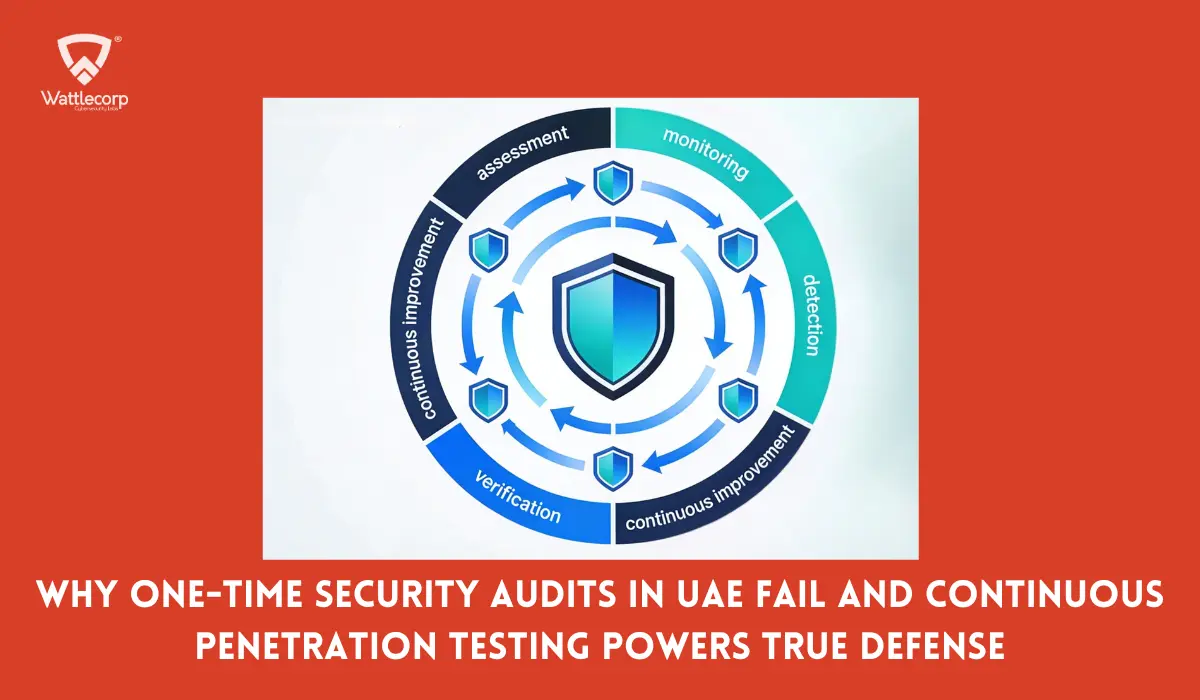
The Continuous Penetration Testing provides nonstop watch over your entire security setup, not just one-time security audits.
During Continuous Protection for security audit, the automated monitoring runs all the time and threat intelligence keeps you informed about new risks.
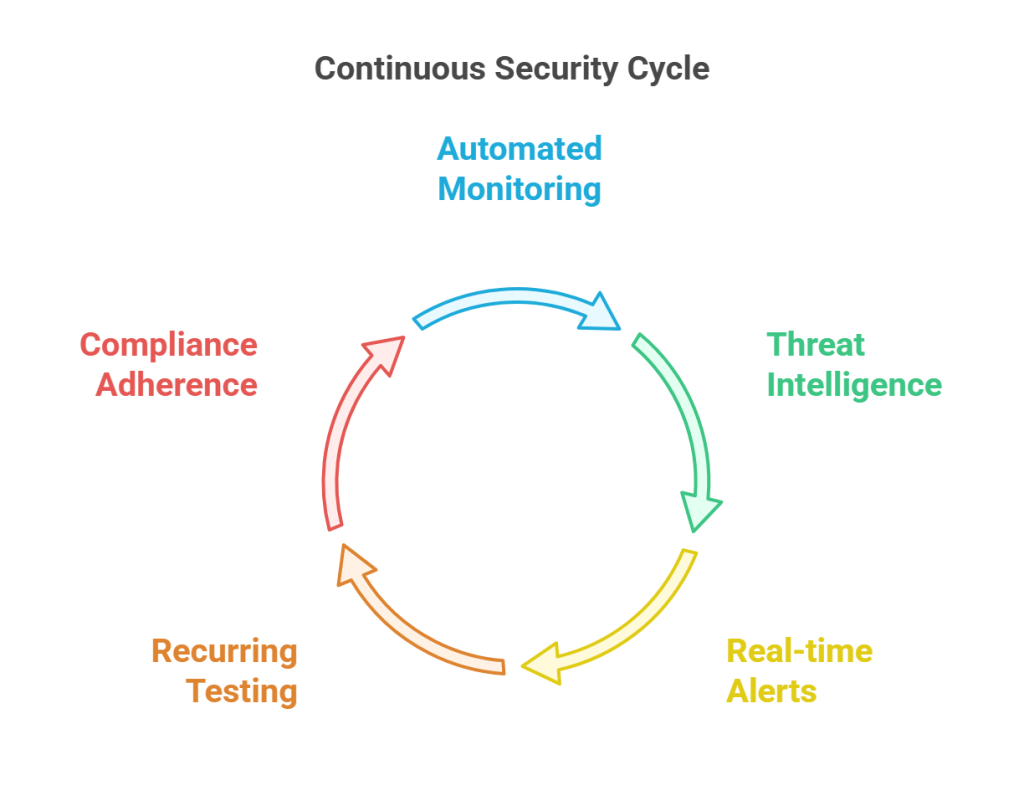
This real-time alerts warn you instantly when trouble appears and these recurring testing finds weaknesses before attackers do.
What is the distinction between one-time security auditing and continuous security auditing?
Continuous security auditing beats the limits of one-time security audits.
ISO 27001:2022 emphasizes continuous improvement through the PDCA (Plan-Do-Check-Act) cycle and requires organizations to implement monitoring and measurement processes that align with their risk profile, moving beyond just periodic assessments.
Continuous Penetration Testing is your best defense in today’s changing threat landscape of UAE. Don’t settle for security audit failure. Stay one step ahead with continuous monitoring and testing.
Benefits of Continuous Penetration Testing for Security Monitoring
The major benefits of continuous security monitoring is it provides real-time observation and analysis of diverse elements, including cyber security, network security, system downtime, compliance, and operational efficiency.
As it rapidly identifies and resolves your organisation’s security postures with guaranteeing the best user experience and better system performance.
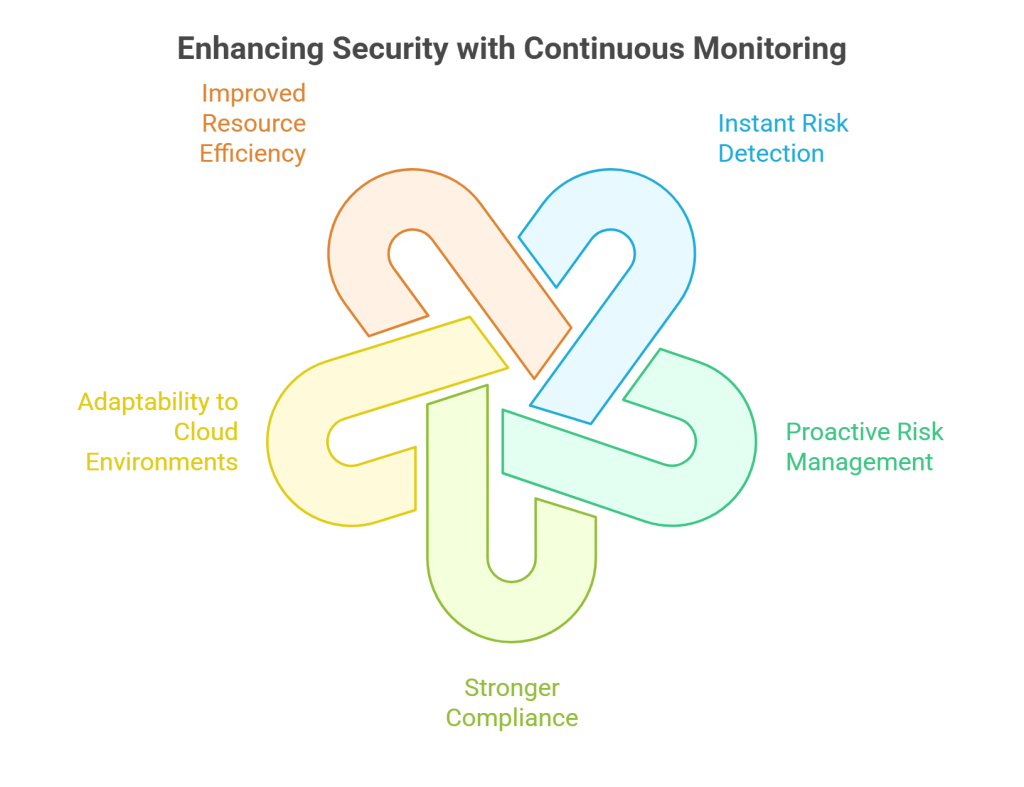
- Instant detection of risks: Continuous and real-time alerts for identified vulnerabilities, unauthorized access attempts and configuration changes ensure fast detection of threats.
- Proactive risk management: Provide more focus on preventing incidents through rapid response.
- Stronger compliance: Continuous monitoring supports audit readiness by demonstrating persistent control effectiveness.
- Adaptability to cloud and hybrid environments: Automated tools keep us protected with these dynamic computing resources.
- Improved resource efficiency: Automation helps to reduce manual overhead with freeing security teams for strategic work.
The Role of Automation and Threat Intelligence with Real-Time Alerts
How do technology changes impact security audit outcomes?
Automation is the answer for it. It helps to speed up detection and response by providing security more accurately and reliably for UAE enterprises.
False alarms are another time consuming thing, it can take your team’s valuable time and focus, but automation helps to provide faster detection and response with highlighting real threats.
The automation filters the false positives and provides real threats, which means assuring faster actions and fewer mistakes.
Need to handle more threats? Automation scales easily. As your organization grows, your defenses grow with it. Predictive analytics even spot vulnerabilities early. You stay proactive, not reactive.
Do you think manual work is enough? Think again. Automating repetitive tasks frees your team for higher-level strategies. It saves costs and boosts efficiency.
Want to reduce alert fatigue? Automated systems identify threats and we can focus on what matters most.
The automated workflows act instantly and contain attacks before damage spreads with improving incident response times.
The future of security is automation. It’s the best way to stay ahead. Faster detection. Smarter responses. Stronger defenses.
How a Penetration Testing Company helps to Enables Continuous Security
Being alert in this constantly changing security threats requires continuous penetration testing to ensure your defenses and remain strong and effective for UAE organizations.
A Penetration testing company offers ongoing vulnerability assessments and identifies new vulnerabilities before attackers do.
Recurring penetration testing identifies technical vulnerabilities on a regular basis, whereas periodic red team exercises simulate advanced persistent threats.
These red team engagements test an organization’s detection and response capabilities across people, processes, and technology, and are typically longer-term, goal-oriented assessments.
Working with a trusted penetration testing company like Wattlecorp ensures your security evolves continuously and keeps your data protected from unexpected vulnerabilities.

Working with a trusted penetration testing company like Wattlecorp ensures your security evolves continuously and keeps your data protected from unexpected vulnerabilities.
Building a Modern Continuous Security Program
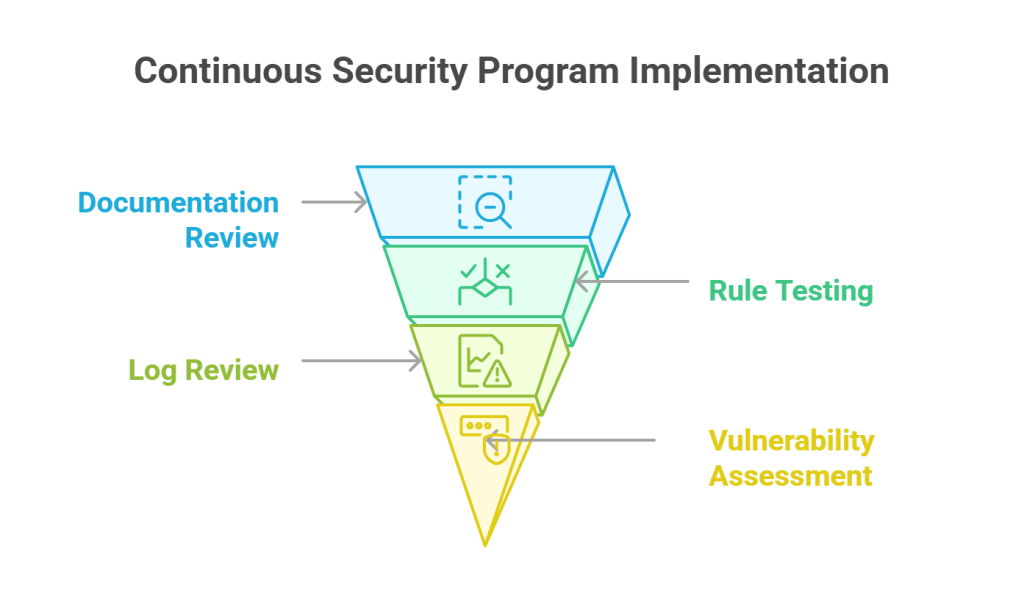
A clear monitoring policy is important and it keeps your IT system’s security under control. Regular checks assists to protect your data and prevent breaches. They also spot issues early.
- Review documentation: The firewall’s configuration documentation is reviewed to understand about security policies implemented.
- Test rules: check incoming and outgoing network rules for proper configuration and ensure unauthorized traffic is blocked by them.
- Review logs: Suspicious activities or potential security vulnerabilities are reviewed.
- Assess vulnerabilities: Vulnerability assessment is conducted on the firewall to identify any vulnerabilities which left unattended could be leveraged by the threat actors.
A strong policy with understanding roles, scope, alerts, plans, and reviews keeps your security effective. It keeps your data protected and defense against cyber threats.
One-time security audits provide an overview of the security posture of your organization but it cannot stay ahead of the rapidly changing threats.
Therefore, continuous security and monitoring is a necessity to safeguard sensitive assets and comply with modern standards.
By shifting from one-time auditing to continuous security audit approach, organizations gain better visibility, faster threat detection and stronger protection against emerging risks.
Connect with Wattlecorp, as a cybersecurity service provider offering comprehensive firewall security audits with continuous penetration testing.
Protect your organization from unexpected threats with continuous security auditing.
One-Time Security Audits FAQs
1.Why do one-time security audits often fail to prevent breaches?
One-time security audits offer quick results yet they fail to detect new threats and security vulnerabilities that occur between the reviews. This exposes the organizations to the recurrent risk that must be constantly monitored with fast reaction.
2.What are the limitations of one-time or quarterly audits?
In the UAE, one-time or quarterly audits only reflect security at that moment. They tend to check the current risks, not to have real-time alerts and do not completely respond to changing digital worlds, which leave gaps in security and compliance risks.
3.How does continuous protection improve security posture?
Continuous security audit improves security posture by providing real-time alerts, proactive detection and ensuring rapid response to threats, with maintaining ongoing compliance and reducing attack windows.
4.What types of businesses need continuous security monitoring?
Organizations with heavily regulated sectors, cloud-native companies, and businesses that handle sensitive data, particularly BFSI, SaaS, FinTech and healthcare benefit the most from continuous security monitoring. This also includes critical infrastructure operators, government contractors, and organizations with operational technology (OT) environments such as energy, utilities, e-commerce, and manufacturing.
5.How can a penetration testing company support continuous protection?
A penetration testing company supports continuous protection by conducting recurring VAPT by regularly identifying and fixing vulnerabilities as they arise. This assists to maintain strong security against the changing threats while also providing timely alert to improve overall security controls and response readiness.

 Data Privacy Consulting for Saudi Enterprises: How to Operationalize PDPL Data Subject Rights in 2026
Key Takeaways: The Saudi data protection law may apply to organizations outside the Kingdom when they process personal data related to individuals in Saudi Arabia, meaning geographic location alone does not automatically exclude an organization from PDPL obligations. PDPL data subject rights span access, correction, deletion, and consent withdrawal, and enterprises are on the hook […]
 Third-Party Vendor Security Risk Assessment Under DPDP: A Guide for Indian Enterprises
Key Takeaways: Third-party vendor risk assessment with DPDP practices helps Indian enterprises to verify that external partners handle personal data with adequate safeguards. The Digital Personal Data Protection Act holds data fiduciaries accountable for vendor conduct, which makes due diligence a legal and operational necessity. A structured vendor security questionnaire, covering encryption, access control, and […]
 Virtual CISO Services for UAE Free Zone Startups: Affordable Security Leadership for Growing Companies
Key Takeaways: Most startups already hold sensitive data such as customer info, source code, financials, long before they feel big enough to take security seriously, and that’s exactly when the risk starts. A virtual CISO gets you someone who’s done this before, setting up strategy and guiding compliance, without the cost of putting a full-time […]
 SOC as a Service for Indian BFSI and FinTech Companies: 24/7 Monitoring for CERT-In Readiness
Key Takeaways: SOC as a Service for BFSI and FinTech India gives banks, NBFCs, insurers and digital lenders continuous security visibility without the cost and hiring effort of building an in-house operations centre. CERT-In directions require regulated entities to report qualifying cyber incidents within six hours of detection, and implementing SOC for BFSI and FinTech […]
 SOC as a Service in India: How It Works, Pricing, and Why Businesses Need It
Key Takeaways: SOC as a Service helps Indian businesses to get 24×7 security monitoring without huge cost and complexity of building a full in-house security operations center. A managed SOC check and analyse beyond basic log monitoring, which combining SIEM, threat intelligence, analyst-led alert triage, incident escalation, reporting, and security response support. SOC as a […]
 Mobile App Security Testing for Indian Digital Lending Apps RBI, DPDP and API Risk Checklist
Key Takeaways: Mobile app security testing forms an important part of meeting RBI cybersecurity expectations, secure application development practices, and periodic security assessment requirements for digital lending platforms. APIs in lending apps are constantly under attack. Broken object-level authorization, data leaking where it shouldn’t, weak token validation, and missing rate limiting, these aren’t edge cases, […]