


Understanding the UAE Personal Data Protection Law (PDPL): Scope, Rights & Obligations
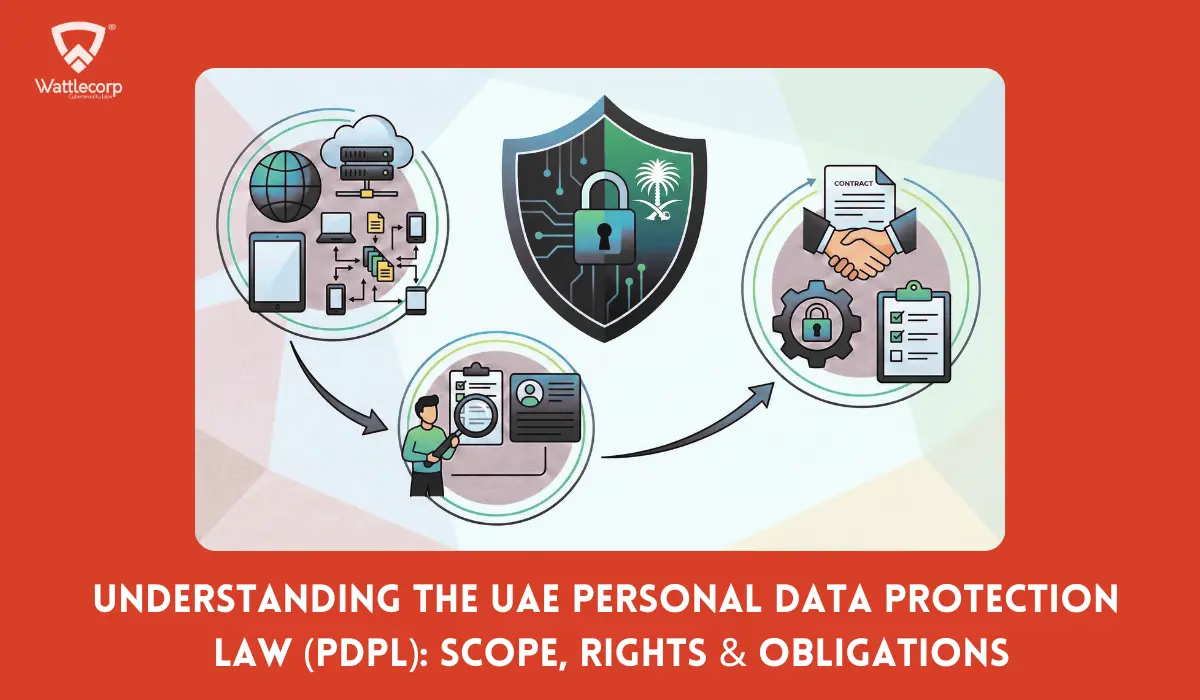
Key Takeaways:
- The UAE PDPL has now become a mandatory regulatory framework, requiring organizations processing customer data to ensure proper safeguards while upholding data subject rights lawfully and transparently.
- Under PDPL, UAE Data Office makes it particular for businesses to be well-aware of all key definitions and what they mean to achieve compliance therein.
- Establishing a clear legal basis is critical to data processing activities and organizations in this regard should strictly abide by this need.
- For protecting sensitive data, it’s wise to implement robust technical and organizational measures, such as encryption and regular security assessments (VAPT).
- Continuous compliance matters. Hence, it’s necessary to consider real-time monitoring to ensure vital systems, infrastructure and applications remain properly safeguarded.
Why PDPL Matters for UAE Businesses
Personal Data Protection Law (PDPL), UAE established in 2022 has set 2025 as the full and final date for organizations to achieve full compliance to this particularly sensitive regulatory framework.
Also referred to as Federal Decree-Law No. 45 of 2021, PDPL emphasizes compliance as a strategic necessity to safeguard UAE citizens’ personal data.
Abiding by regulatory standards like PDPL translates to trust and confidence among investors, shareholders, clients, and customers. So does violation of the same amount to invite risk of penalties and reputational damage.
The stringent and dynamic regulatory landscape in the UAE is enough to stress businesses out of their wits end, From adhering to the cybersecurity standards to ensuring personal data protection and maintaining data privacy, all these suggest enough regulatory burden.
Also, there exists the issue of navigating the multi-jurisdiction environment in the UAE, like the DIFC (Dubai International Financial Centre) and the ADGM (Abu Dhabi Global Market). While the DIFC operates under its DIFC Law No. 5 of 2020, ADGM functions according to the ADGM Data Protection Regulations, 2021.
With the true challenge being to maintain PDPL across the UAE, this is coupled by the emerging cyber threats and security incidents, signifying enough risks to data integrity and privacy.
Though it is crucial to hold accountability to your data processing tasks, so is it critical to thrive and survive in this increasingly dynamic and challenging regulatory environment, especially PDPL.
How can companies like you come out of these exhausting stressors imposed by regulations and emerging cyber threats?
If you’re an organization dedicated to maintaining personal data protection and privacy, but do not know how to effectively do this, this blog will walk you through the essentials in this regard.
And if it means incorporating robust technical and security measures, the efforts will be worth it to achieve and maintain continued compliance with PDPL, UAE.
Exploring the Background & Legal Basis of UAE PDPL
Understanding PDPL in the UAE Context
The Personal Data Protection Law, UAE came into force on 2nd January, 2022.The law emphasizes trust, transparency, and security in a data-driven digital economy like the UAE.
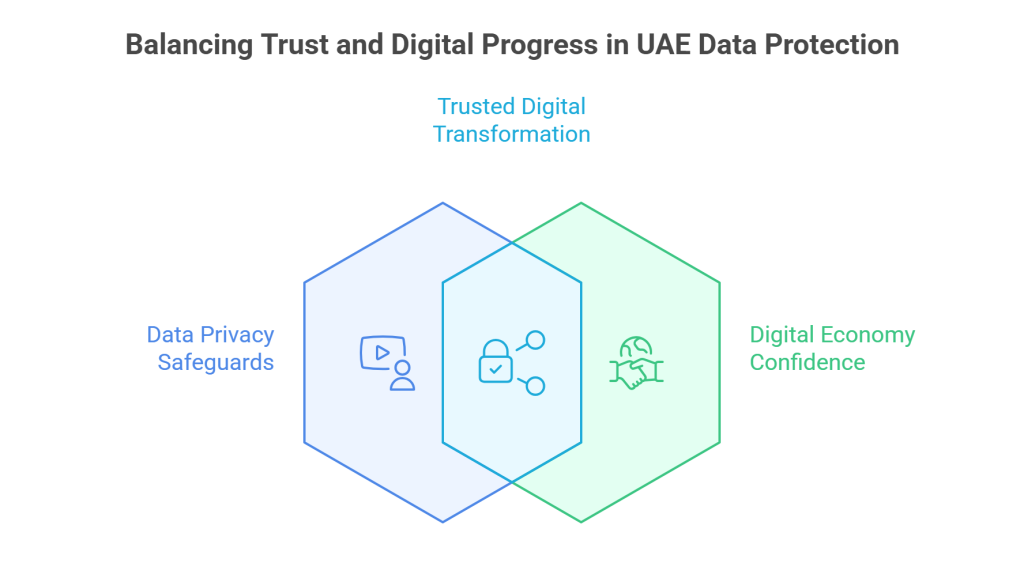
While safeguarding data privacy by aligning with the international data protection laws, especially EU’s GDPR, PDPL, UAE strives to build and strengthen confidence in digital services for the public.
The Legal Basis of PDPL, UAE
It’s the country’s digital transformation vision that prompts PDPL to maintain adequate data governance across all public and private sectors situated within the mainland UAE.
The actual purpose of the Personal Data Protection Law, UAE comprises:
- Granting clear rights to data subjects when processing their personal data to ascertain data protection.
- Assigning explicit obligations on data controllers and processors with reference to Data Protection Impact Assessments (DPIA) for high-risk data processing activities and maintaining records for the same.
The PDPL exempts regions based in the Financial Free Zones, i.e., DIFC and ADGM.
Also Read : Annual VAPT Checklist for Secure Business Operations in UAE
Outlining the Scope & Applicability of PDPL, UAE
The PDPL, UAE mandates all businesses and sectors located within the mainland UAE to adhere to its data protection frameworks.
The PDPL applies to every data controller and processor that collects, manages, and stores personal data of individuals residing in there.
If you’re a national or multinational organization processing personal data of the UAE citizens, you’re bound to adhere to the PDPL.compliance requirements as well.
Besides these, the Personal Data and Protection Law, UAE also applies to:
- All government bodies functioning within the Federal and Emirates and processing personal data of individuals (both citizens and residents) in the UAE.
- Foreign organizations handling data of UAE’ citizens. This considers scenarios where UAE-based personal data are processed outside the country.

The above-mentioned instances largely convey the extraterritorial reach of the Personal Data Protection Law, UAE. No matter where these get processed, its task to ensure those are optimally safeguarded is what holds PDPL similar to global data protection frameworks like the GDPR.
So while the law excludes the DIFC and ADGM-based enterprises, its scope remains extensive in the mainland UAE.
With this extending to foreign and multinational companies managing UAE residents’ data depicts the wide reach that the PDPL has achieved to date.
Key Terms and Definitions Under PDPL, UAE
For you to build a strong compliance foundation as a business, you need to understand the core terminologies that form part of the law. This rule well applies to the Personal Data Protection Law.
This being stated, the key terms under PDPL, UAE have been mentioned in the table below with corresponding descriptions.
| Key UAE PDPL Terms | Definition |
| Personal Data | Under Article 1 of the UAE’s Personal Data Protection Law, “personal data” refers to any data related to a natural person, i.e., Race, Political or Philosophical views, Ethnicity, etc. |
| Sensitive Personal Data | Refers to any sensitive piece of personal information of a natural persian that should be kept highly confidential and private. |
| Data Controller | A person or entity (natural or legal), who is assigned to determine the purpose and means to process personal data of individuals.. |
| Data Processor | One who assists the data controller and performs data processing tasks under the latter’s instructions. |
| Data Subject | Any natural person, whose personal data the data processor processes. This includes the latter’s name, image, device, and PIN IPersonal Identification Number). |
| Data Protection Officers | Data Protection Officers (DPOs), under PDPL, UAE, are appointed to monitor an organization’s compliance with data protection regulations. Businesses require DPOs for managing large volumes of data, especially those considered highly sensitive. Organizations also seek a DPO’s service when handling high-risk data processing activities that explicitly involve automated decision-making |
What are Data Subject Rights under PDPL, UAE?
Data subject rights are something that organizations or entities managing personal data shouldn’t disregard or dismiss.
The UAE Personal Data Protection Law grants data subject rights for individuals while imposing obligations on entities handling personal data. Refer to the table below.
| Data Subject Rights | Description |
| Right to Access | Under PDPL amendment 2022, data subjects have the right to data access. They should also be informed why, where, and how their data is processed, also requesting a copy of their personal data. |
| Right to Restriction | Under Federal Decree-Law No. 45 of 2021 (PDPL), data subjects have the right to restrict the processing of their personal data. |
| Right to Rectify | The PDPL grants users the right to request for data correction in case of inaccurate or incomplete information provided. |
| Right To Transfer | Individuals can transfer their personal data from one data controller to another. |
| Right to Erasure | Data subjects can also have their data deleted from the database. |
| Right To Withdraw Consent | Under specific circumstances deemed appropriate by the UAE’s PDPL, individuals can withdraw their consent for data processing. |
| Right To Not Subject To Automated Decision-Making: | Individuals have the right to not consent to decision-making driven by automated means. This includes ‘Profiling’ as well. |
Obligations of Controllers & Processors
The UAE PDPL imposes specific, yet mandatory obligations on both data processors and controllers for upholding data subject rights lawfully and transparently.
- Data Security: This requires implementing robust technical and organizational measures to protect data from unauthorized access, damage, or loss. Techniques include pseudonymization and encryption.
- Notifying breach incidents: Organizations should notify the UAE Data Office in case of breach incidents that may compromise personal data. Certain cases in this regard also mandate notifying the affected individuals.
- Consent Management: Data processors should seek clear and explicit opt-in consent from individuals before processing the latter’s data. There are exceptions in this regard, where the latter can withdraw their consent at any time.
- Appointing a Data Protection Officer: High-risk data processing activities and large-scale handling of sensitive data do significantly mandate appointing a data protection officer (DPO). The latter’s service is also sought for automated decision-making and profiling.
- Records of Processing Activities (RoPA): It is a must for organizations to maintain a detailed record of their data processing activities. RoPA should also include details about the data controller, security measures adopted, and categories of personal data processed.
- Data Protection Impact Assessment (DPIA): The UAE PDPL considers it mandatory to conduct DPIAs to evaluate privacy risks that can potentially hamper data integrity and security. Appropriate mitigation measures should be figured out in these circumstances.

Also Read : Aligning VAPT Practices with UAE’s Data Protection Regulations
Apart from these, there are other obligations that data controllers and processors should consider, such as:
- Accuracy
- Data minimization
- Purpose limitation
- Storage limitation/Data deletion
- Lawfulness and transparency
What are Cross-Border Transfer Regulations according to PDPL, UAE?
Outlining Key Principles
When engaging in cross-border data transfers, responsibility is prime,
The country to which data is transferred to should possess adequate levels of data protection measures.
Refer below to understand the essentials of undertaking cross-border data transfers:
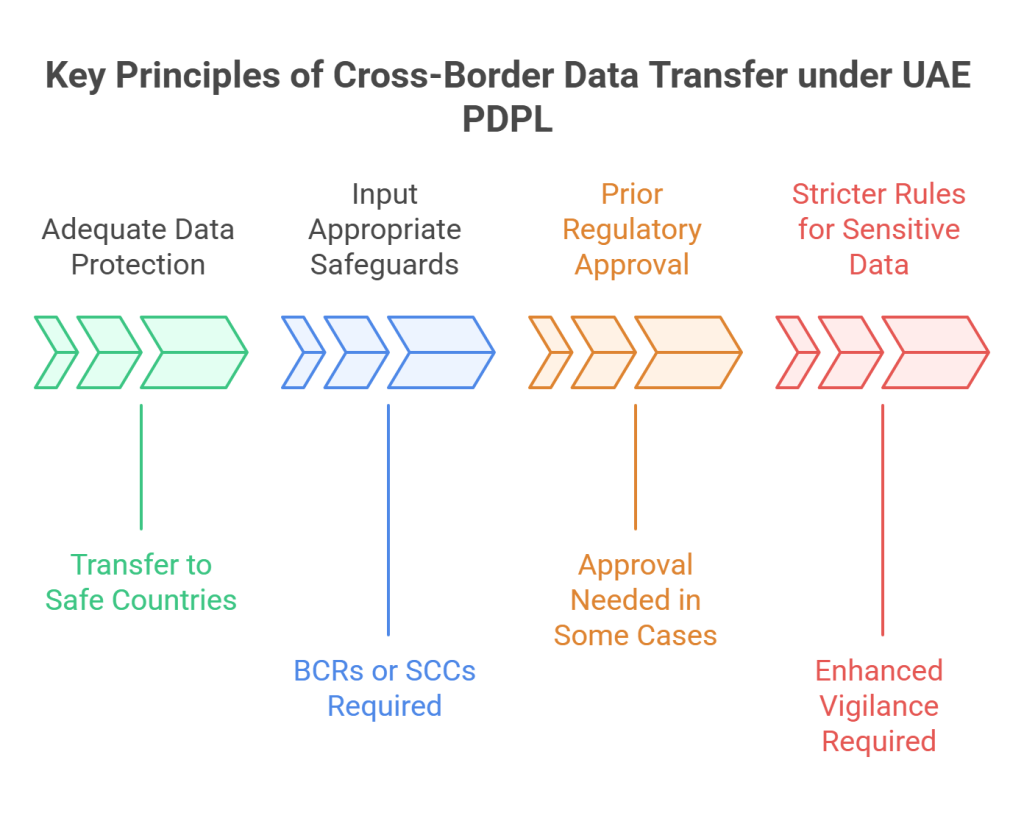
- Adequate Data Protection: Necessitates data transfer to the countries deemed to have appropriate or adequate level of data protection as per PDPL requirements. Proceedings are overseen by the UAE Data Office.
- Input Appropriate Safeguards: Requires implementing Binding Corporate Rules (BCRs) or Standard Contractual Clauses (SCC) as safeguards if the country, the data is transferred to, doesn’t have adequate data protection measures in place.
- Prior Regulatory Approval: Data transfers, in some cases, may require approval from regulatory bodies, specifically the UAE Data Office, or from DIFC and ADGM.
- Stricter Rules in Case of Sensitive Data Transfer: Install strict vigilance when transferring sensitive data, such as health and finances.
Data Processors and Data Controller’s Obligations
This is not all. There are specific cross-border data transfer policies for both data processors and data controllers.
Refer to the table below for more details in this regard.
| Cross-border data transfer rules for Data Processors and Data Controllers | |||
| Scenarios Applicable | Data Processors | Data Controllers | |
| Transfer requests made by the individuals. | Should communicate with the data controller before executing data transfers. | Need to confirm that the request is legitimate and exists within the bound of contract. | |
| For legitimate reasons to transfer data. | Obtain explicit consent from the data subject while maintaining appropriate security measures. | Should inform data subjects regarding the purpose of data transfer. | |
| Ensuring PDPL compliance. | Process data (for transfer) only when instructed by the data controller. | Confirm that the cross-border data transfer aptly complies with the relevant requirements of PDPL, such as data minimization and purpose limitation. | |
| Data subject’s request to transfer data to a different controller. Applicable clauses include subject’s consent, contract requirement in an automated manner. | Act per the data controller’s instructions when serving the data subject’s request for transfer. | Start by verifying the request, then proceed with data transfer if found legally permissible and technically feasible. | |
Exemptions to the rules regarding cross-border data transfer include:
- Explicit and unambiguous consent from the data subjects
- Legal obligation
- Contractual necessity
- Public Interest
Data Breach Notification & Enforcement Under PDPL, UAE
If your organization experiences a data breach, will you notify the concerned authorities or just wait for penalties to hit you financially?
Every hour counts. And it/s high time you tackle those breaches with appropriate, yet effective measures.
Achieving compliance is not a checkbox you keep ticking on an off-and-on basis. It’s continuous, especially in this digital era, where cyberattacks are rapidly and relentlessly thriving.
All these are enough to prompt you to stay alert and secure by preventing future incidents. Now the question that remains is how you can derive timely notification while preventing regulatory penalties. These measures should also align with PDPL, UAE.
A structured approach to identify, contain, and report data breaches is what is promptly required. Understanding this, the UAE PDPL has laid forth the following essentials. By executing them, businesses in the UAE can not only ensure continued compliance through breach preparedness, but can also strengthen their security posture.
- Establishing data breach response policy that supports immediate action for remediation, ensuring no wastage of time.
- Continuous risk and vulnerability assessments to identify, address, and resolve potential vulnerabilities based on their level of severity and impact.
- Real-time monitoring and incident detection by leveraging monitoring tools like SIEM platforms and automated alerts to flag suspicious activity instantly.
- Strengthening data classification and access controls by applying strong encryption, tokens, etc.
- Conducting cybersecurity awareness training to employees through regular training sessions on phishing, reducing human errors as one of the leading causes of data breaches.
- Documenting incidents and preserving evidence for proving compliance to regulators. These include timelines, affected data types, actions taken, and mitigation strategies adopted.
- Running periodic breach simulations and Tabletop Exercises to test the efficiency and accuracy of an organization’s response plans.
- Evaluating third-party vendor risks through diligently assessing vendor data management processes, and data processing agreements to minimize exposure to external threats.

Penalties & Sanctions Imposed by PDPL, UAE
Noncompliance to stringent regulatory requirements in the UAE, especially, PDPL is absolutely intolerable.
PDPL that emphasizes data protection serves to uphold the rights of data subjects. For this, the law enforces strict penalties to ensure organizations there stay responsibly adherent to it. Let’s go through these:
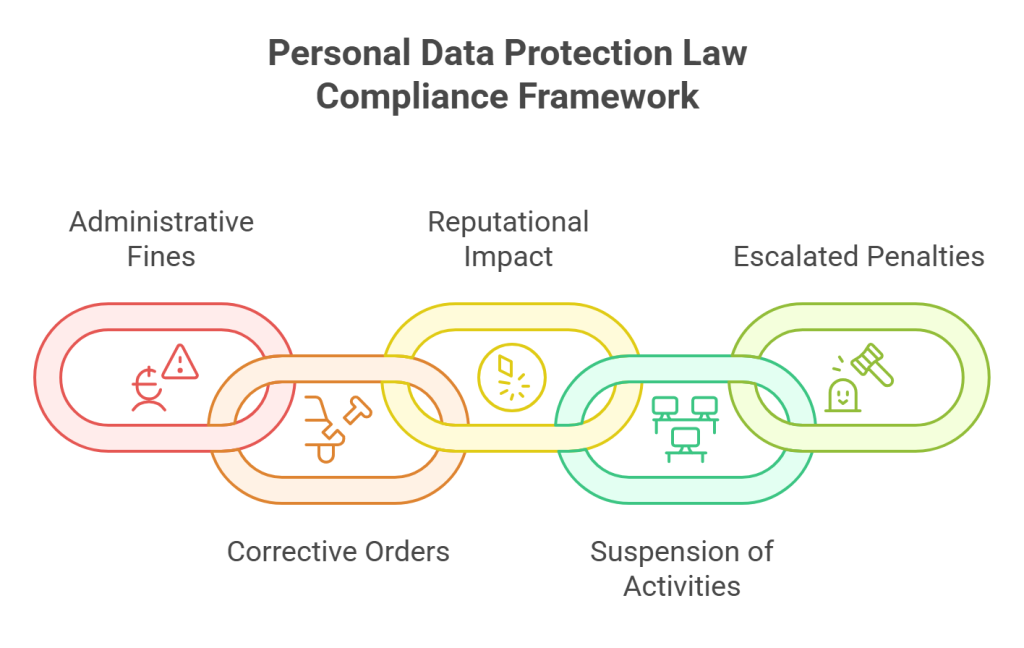
- Administrative Fines: Imposed on organizations failing to comply with the key PDPL requirements that include unlawful processing of personal data. Fines are also levied on those having insufficient security controls in place.
- Corrective Enforcement Orders: Apart from monetary penalties, organizations may also be compelled to modify their existing security practices.
- Reputational Impact: Loss of reputation can be a major setback for businesses that fail to comply with PDPL compliance requirements in the UAE.
- Suspension of Data Processing Activities: Involves authorities to temporarily suspend data processing activities that can pose significant risks to concerned individuals.
- Escalated Penalties for Repeated Violations: Authorities impose stricter penalties on businesses that repeatedly fail to adhere to PDPL compliance standards.
Role of Penetration Testing in PDPL Compliance in the UAE
When it concerns achieving and maintaining PDPL compliance in the UAE, penetration testing is second to no other modes of security testing. Why? Its proactive security testing approach that helps identify and mitigate vulnerabilities that can otherwise play havoc with personal data if left undetected (and unattended).
Let’s see what other features make penetration testing crucial to attain and maintain compliance for UAE businesses like yours.
- Proactive Identification of Vulnerabilities: By simulating real-world attacks, penetration testing prevents hackers from exploiting vulnerabilities to gain unauthorized access to sensitive data.
- Improves incidence response: Through a proactive threat identification, pentesting offers valuable insights for the SOC team to improve their threat detection and response capabilities. From a PDPL compliance perspective, this helps you meet key requirements therein, i.e., breach notification and management.
- Reduction in Breach Risk and Cost: Fixing vulnerabilities identified during penetration testing allows organizations to mitigate them at the earliest. This helps prevent costly data breaches, legal penalties, and reputational loss.
- Provides technical and organizational measures: By implementing security measures, such as encryption with access control policies, penetration helps validate essential technological and organizational measures that PDPL requirements specify for safeguarding sensitive data.
- Helps build trust and reputation: Regular penetration testing showcases strong commitment to implementing effective cybersecurity measures. This in turn builds trust and confidence among the customers and stakeholders (partners, investors).

Best Practices to Achieve and Maintain PDPL Compliance in the UAE
Compliance in this modern world is not something that can be achieved through checkbox ticking. This is given the complexities associated with the evolving regulatory landscape throughout the world.
In the UAE, the scene is no different. With the authorities tightening their grip on compliance requirements, and cyber crimes increasing in number, this has shifted`the focus to both achieving and retaining compliance.
To achieve this, you should follow a structured plan that includes:
Data Inventory and Mapping
What it involves: Being a foundational step to achieving PDPL compliance, data inventory and mapping requires you to systematically identify every kind of personal data that is collected, stored, and processed.
Best Practices: Include tracking the original source of personal data, enabling you to document its flow from collection to storage, and then to processing and deletion. This also includes cross-border transfers.
Also Read : The Role of VAPT in Achieving Compliance in UAE
Gap Assessment
What it involves: Analyses your current data handling practices against specific PDPL requirements.
Best Practices: Involve:
- Reviewing existing privacy policies with PDPL standards
- Ensuring every processing activity has a valid legal basis, i.e., explicit or informed consent)
- Determining whether current rights processes are sufficient for individuals to exercise their rights,
- Prioritizing areas which indicate risks to individuals’ privacy due to certain types of data processing activities. DPIA is mandatory in such cases
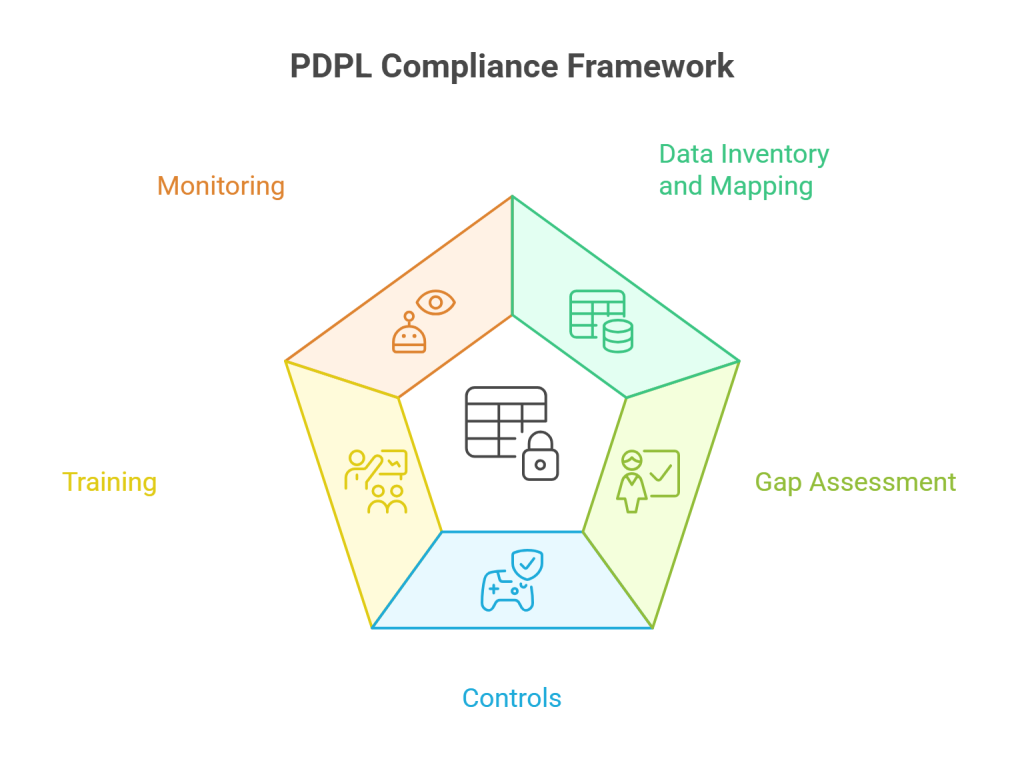
Controls
What these Involve: Refer to the technical and organizational controls as security measures to protect personal data from unauthorized access and breaches.
Best Practices: Include
- Implementing effective technical and organizational measures, such as encryption, multifactor authentication
- Developing and testing a comprehensive data breach response plan regularly with clear timelines to notify the UAE Data Office and individuals affected by the breach incident.
- Third-party data processors to explicitly oblige with PDPL standards following by verifying their security guarantees,
- Integrating data protection principles into newly-designed systems and processes.
Training
What it Involves: Providing training to employees on privacy awareness and maintaining consistency in ensuring compliance.
Best Practices:
- Offering training on a regular and mandatory basis.
- Educating them on internal policies, handling data subject requests, and what to do when data breach strikes.
- Maintaining records of every training session conducted for compliance demonstration.
Monitoring
What it Involves: Ensures continuous compliance.
Best Practices:
- Scheduling internal and external audits regularly to assess effectiveness of the controls
- Monitoring systems for identifying security incidents.
- Adjusting security practices in line with the guidance and updates from the UAE Data Office.
What are the Common Challenges & Pitfalls In Achieving UAE PDPL Compliance
Achieving compliance with stringent data regulation standards, especially PDPL is not as simple as it seems
With regulatory bodies demanding continuous compliance, things can become way too complicated, especially with regulatory policies getting updated every now and then.
Some of the most common pitfalls associated with PDPL compliance in the UAE include:
- Operational complexities
- Compliance frameworks lacking clear regulatory guidance
- Errors secondary to human-led misconceptions.
With these being the common concerns, there are others that are even more pressing than these and involve:
- Data minimization principles being overlooked upon
- Ambiguities surrounding cross-border data transfer rules
- Ignoring data subject rights

All these concerns directly hint towards the difficulty to bring compliance into practice. The need to put in the best efforts can be definitely taken as the hardest obstacle in this regard.
As part of a broader initiative to modernize the legal landscape of the UAE, the introduction of PDPL also serves as a reflection of the nation’s strategic vision.
To bring this into reality while upholding data subject rights is one of the prime objectives of PDPL.
Strengthening PDPL Compliance for UAE Businesses
Compliance is no longer a one-time check. Regulatory standards like the PDPL, UAE enforcing harsher penalties for violating data protection laws strongly convey the importance of maintaining ongoing compliance.
While the law also mandates implementing appropriate technological and organizational measures, this hints towards incorporating VAPT to drive and ensure security-embedded ongoing compliance.
The above statement clearly illustrates the need to choose the right VAPT service provider in the UAE.
However, searching for the one who aptly meets your security needs and which match with your business goals can be indeed hard to find. Complexities may rise when seeking a service that perfectly aligns with existing PDPL standards in the country, Here’s where Wattlecorp comes to your aid.
Driven by passion to serve their clients with advanced cybersecurity services like VAPT, Wattlecorp retains its stance as one of the most-preferred VAPT service providers in the UAE.
Our experience in offering matchless security solutions carry the double purpose of helping clients like you achieve compliance with relevant regulatory standards in the UAE. This specifically relates to your concerns surrounding achieving and maintaining adherence to the Personal Data Protection Law there.
So whether it’s compliance or security or both, we’ve the solution that rightly fits your needs. Regardless of whichever compliance requirements of yours,, we’ve our experts delegated to serve you.
If it’s specifically related to the PDPL, our experts have the solution right at the click of your finger. Knowing how critical it’s to meet and ensure PDPL in the long run, our expert-led VAPT service will have it done for you right at the moment you need it.
Ready to hit your compliance journey with VAPT? Visit our page, Personal Data Protection Audit Services in the UAE for more detailed information regarding our PDPL services. This will also answer your queries regarding maintaining long-term compliance embedded with our expert-led security services and solutions.
Connect with Wattlecorp for your PDPL-compliance needs. Book a Compliance Assessment today!
FAQs on Uae pdpl
1.What is the effective date of UAE PDPL?
Though the UAE PDPL came into effect on January 02, 2022, it was officially enacted on November 29, 2021. However, the law came into full enforcement on January 02, 2023, giving organizations a one-year grace period to become wholly compliant with the same.
2.Who must comply with UAE PDPL (inside vs outside UAE)?
Every public and private sector organization located within the mainland UAE should adhere to the nation’s Personal Data Protection Law.
The Federal Decree-Law. No. 45 of 2021 (PDPL) also applies to organizations (processors and controllers) that reside outside the UAE, but process data of UAE’s citizens belonging to the mainland UAE.
3.What rights does a data subject have under PDPL?
Under UAE PDPL, data subjects possess exclusive rights to:
● Access
● Modify (Correction)
● Delete (Right to Erasure)
● Portability (data transfer from one controller to another)
4.What are the obligations of controllers and processors under PDPL?
While data controllers within UAE PDPL should oblige to:
● Determine the purpose and means of processing data
● Ensure valid legal basis of data processing
● Uphold data subject rights
● Maintain records of data processing activities
● Implementing adequate security measures
● Appoint data processors and monitor their activities
Data processors should
● Process as per data controller’s instructions
● Ensure data privacy and confidentiality of data subjects
● Assist the controller in all validation purposes
● Ensure data security by reporting issues (if any identified)
● Manage data processors
5.How does PDPL handle cross-border transfers?
Cross-border data transfers under UAE PDPL involve:
● Transferring data to countries that have adequate data protection frameworks in place.
● In case the destination country doesn’t have one, PDPL, UAE should ensure additional data safeguards by adding standard contractual clauses.
● Data transfer requested by data subjects under specific circumstances, such as for contractual purposes, or to protect the public interest, should be allowed.
4. What are the obligations of controllers and processors under PDPL?
While data controllers within UAE PDPL should oblige to:
- Determine the purpose and means of processing data
- Ensure valid legal basis of data processing
- Uphold data subject rights
- Maintain records of data processing activities
- Implementing adequate security measures
- Appoint data processors and monitor their activities
Data processors should
- Process as per data controller’s instructions
- Ensure data privacy and confidentiality of data subjects.
- Assist the controller in all validation purposes
- Ensure data security by reporting issues (if any identified)
- Manage data processors
5. How does PDPL handle cross-border transfers?
Cross-border data transfers under UAE PDPL involve:
- Transferring data to countries that have adequate data protection frameworks in place.
- In case the destination country doesn’t have one, PDPL, UAE should ensure additional data safeguards by adding standard contractual clauses
- Data transfer requested by data subjects under specific circumstances, such as for contractual purposes, or to protect the public interest, should be allowed.

 Virtual CISO Services for UAE Free Zone Startups: Affordable Security Leadership for Growing Companies
Key Takeaways: Most startups already hold sensitive data such as customer info, source code, financials, long before they feel big enough to take security seriously, and that’s exactly when the risk starts. A virtual CISO gets you someone who’s done this before, setting up strategy and guiding compliance, without the cost of putting a full-time […]
 SOC as a Service for Indian BFSI and FinTech Companies: 24/7 Monitoring for CERT-In Readiness
Key Takeaways: SOC as a Service for BFSI and FinTech India gives banks, NBFCs, insurers and digital lenders continuous security visibility without the cost and hiring effort of building an in-house operations centre. CERT-In directions require regulated entities to report qualifying cyber incidents within six hours of detection, and implementing SOC for BFSI and FinTech […]
 SOC as a Service in India: How It Works, Pricing, and Why Businesses Need It
Key Takeaways: SOC as a Service helps Indian businesses to get 24×7 security monitoring without huge cost and complexity of building a full in-house security operations center. A managed SOC check and analyse beyond basic log monitoring, which combining SIEM, threat intelligence, analyst-led alert triage, incident escalation, reporting, and security response support. SOC as a […]
 Mobile App Security Testing for Indian Digital Lending Apps RBI, DPDP and API Risk Checklist
Key Takeaways: Mobile app security testing forms an important part of meeting RBI cybersecurity expectations, secure application development practices, and periodic security assessment requirements for digital lending platforms. APIs in lending apps are constantly under attack. Broken object-level authorization, data leaking where it shouldn’t, weak token validation, and missing rate limiting, these aren’t edge cases, […]
 Cybersecurity Risk Assessment for Saudi Supply Chain Vendors Under Aramco and NCA Expectations
Key Takeaways: Cybersecurity risk assessment becomes a practical requirement for proving security maturity, with protecting vendor relationships, and moving forward in procurement processes with Aramco and critical infrastructure clients. Vendors will need to provide evidence of access review documentation, patch deployment, monitoring artifacts, technical assessment results and more that demonstrates the controls in place are […]
 Qatar Personal Data Privacy Compliance: Security Controls for Data Protection Readiness
Key Takeaways: Qatar’s Personal Data Privacy Protection Law applies to organizations that process personal data within its scope, including many businesses handling personal data of individuals in Qatar. Non-compliance isn’t just risky; it can result in hefty fines, operational chaos, and serious damage to your company’s reputation. Personal data privacy compliance Qatar isn’t just about […]