

Key Takeaways:
- Understand when appointing a DPO becomes a legal obligation.
- Learn what a DPO does every day to keep your business’s critical data safe and compliant.
- Know when the crucial time is to appoint a DPO for your Saudi business.
- Find out the steps they take to keep your business’s PDPL compliant.
- Guidance on what to look for while appointing a protection officer, like skills and prior experience coordinating breach responses and practice reporting breach-related concerns to SDAIA.
Who Is a Data Protection Officer?
A data protection officer is a privacy expert responsible for guarding the data involved in a business. Organizations assign such trained officials to provide guidance on how to collect, use, and protect personal data lawfully in a transparent way. The DPO helps the business comply with data protection laws, like Saudi Arabia’s PDPL, or other national regulations.
According to the recent update on Saudi Arabia’s New Draft Data Protection Amendments, Middle East Briefing says that a PDPO’s responsibility is more defined now and is stated in Article 32. Their role is to responsibly monitor internal compliance, acting as a point of contact with the authority, handling data breach incidents, and overseeing data protection impact assessments.
This DPO is a responsible authority that acts as the bridge between the company, data subjects, and the Saudi supervisory authority. These officers work closely with the senior management with access to all necessary resources to perform their role effectively. Most businesses now handle important and sensitive data, so it is essential to have a data protection officer to reduce breach incidents or other data theft.
Why DPOs Matter Under Saudi Arabia’s PDPL?
Saudi Arabia is hugely adapting digital means, and so the threat landscape is evolving rapidly. Owing to such critical instances, PDPL now sets strict standards for how organizations collect, store, and process personal data.
According to the Al Arabiya English report on the Cybersecurity Awareness Survey 2024 conducted by Ken Research targeting Saudi Arabia, it is identified that 42 percent of organizations lack formal response plans, and it projects the need of a DPO.
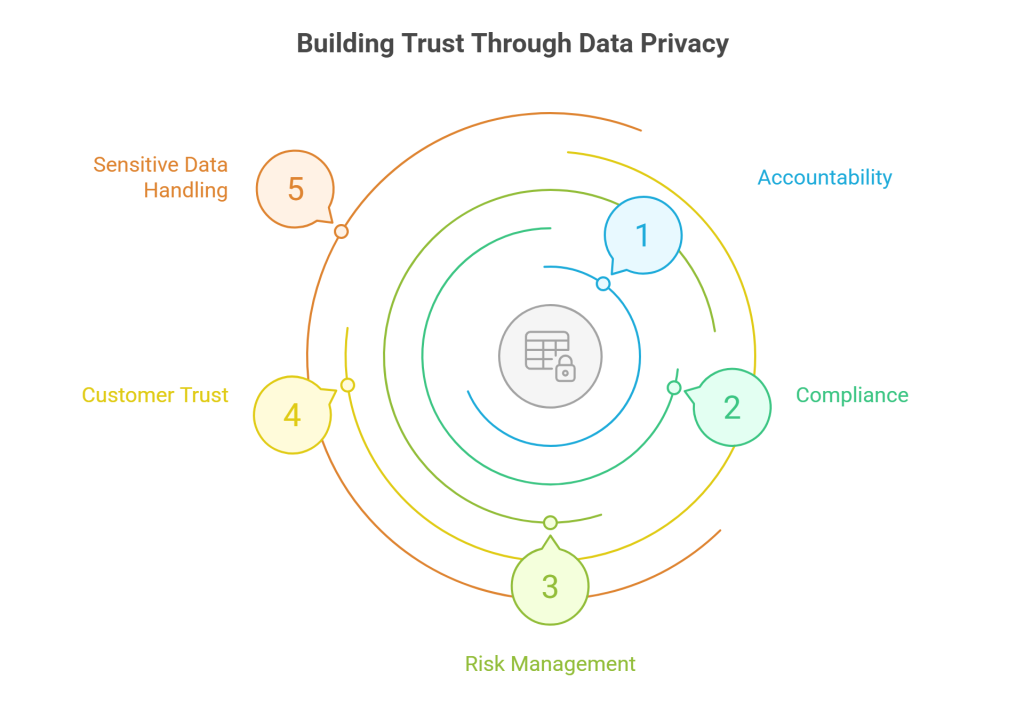
Saudi mainly focuses on accountability, and assigning a DPO fulfils the purpose. These experts help businesses follow compliance at every step. They mainly work on screening internal data practices, advising management, and following privacy practices in all projects aligned with the PDPL.
Also Read : The Role of Data Protection Officers (DPOs) Under the UAE PDPL
So, when a business acts responsibly, working with a DPO, it naturally builds customer trust, especially in sectors handling sensitive data like finance, healthcare, and telecom.
Main Responsibilities of a DPO Under Saudi PDPL
Guiding Organisations
The DPO advises the company on how to comply with the Saudi data protection law. This official also helps you develop policies specifically for your business aligned with PDPL. They continuously provide guidance to each team on the practices to follow, ensuring all decisions and actions performed involving personal data remain compliant and ethical.
Training Across Departments
When a business is responsible for a huge amount of data, every cross-functional department must be aware of the data security practices. Here, the most important responsibility of a DPO is building a culture of privacy.
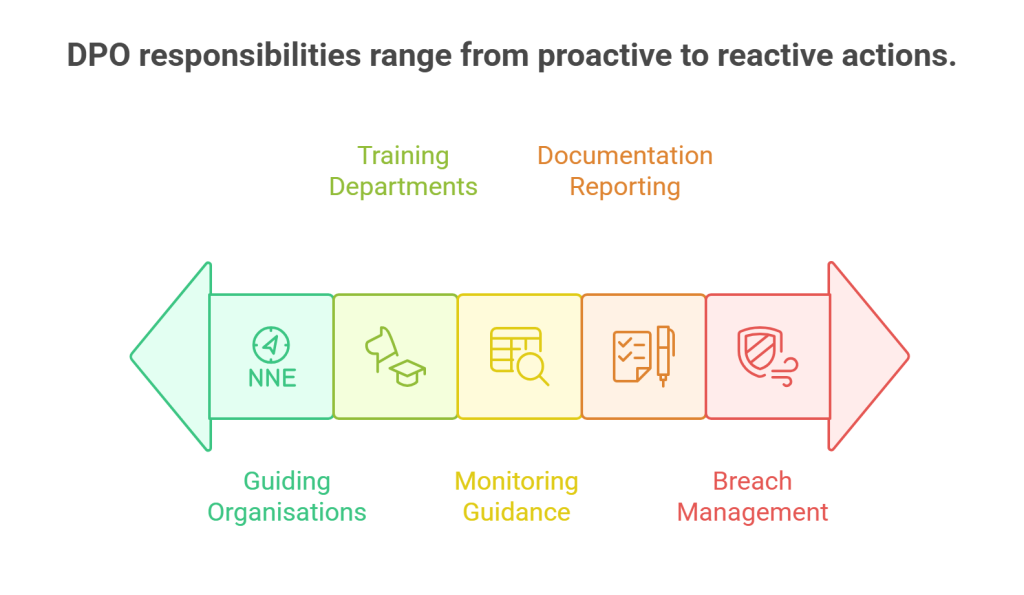
The DPO should educate the employees and help them understand their obligations. It also involves training teams on how to handle data securely and ways to prevent risks that could lead to penalties.
Breach Management
Organizations that handle highly sensitive information are prone to risks, and when there are instances of breaches, the DPO is the lead who helps respond quickly. These experts guide teams on reporting the timelines and communication with affected users and provide recommendations to prevent future incidents. Their oversight reduces legal risks and maintains organizational credibility.
Monitoring and Assessment Guidance
Once implemented, data privacy practice is not a one-time solution, as it requires constant monitoring. The DPO is the one who regularly monitors and runs compliance checks to detect if there are any shortcomings or any updates to be made. They also identify the weaker areas and perform DPIAs to detect the environment’s security.
Also Read : The Role of Data Protection Officers in SaaS Companies: A Mandate Under the DPDPA
Documentation and Reporting
PDPL requires businesses to maintain proper records of processing activities and make them available when needed. It is a crucial requirement to keep track of the findings and the resolutions enabled; the DPO prepares a document on everything. He also reports the update with the data controllers and data processors to initiate action with respect to the findings.
Checklist to Consider While Appointing a DPO for Your Saudi Business
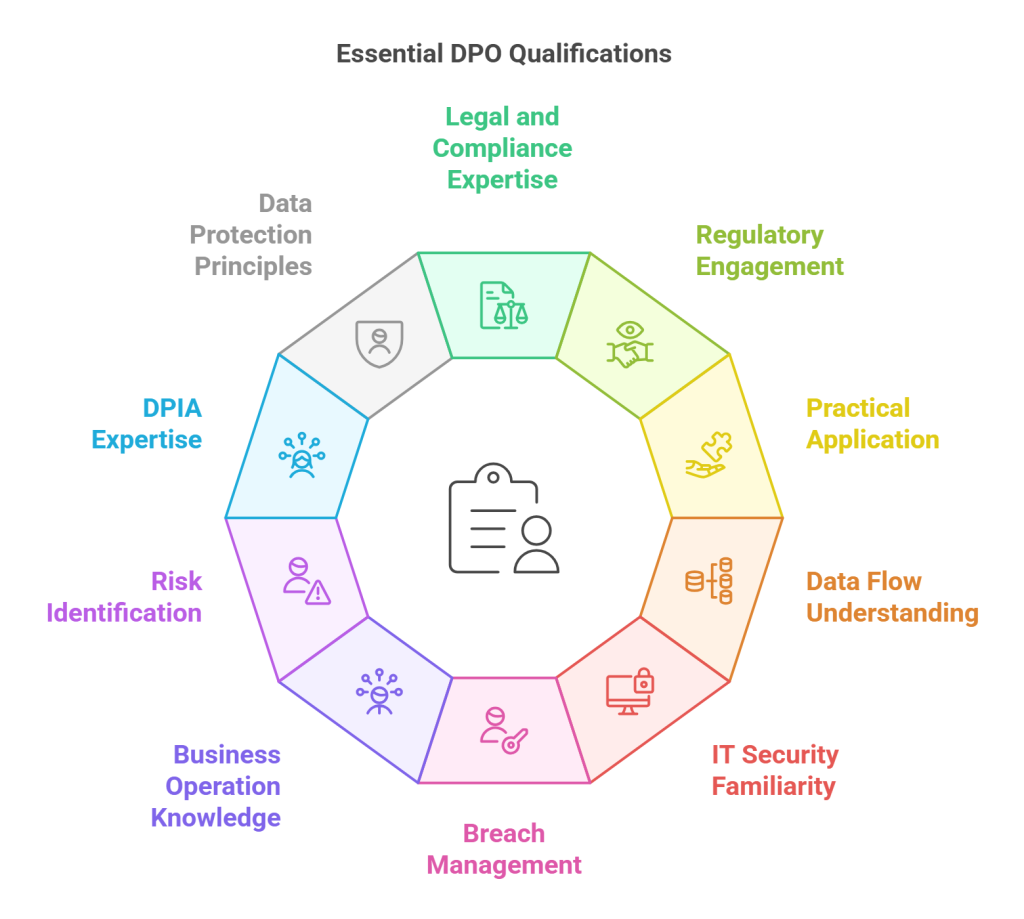
When planning to assign a Data Protection Officer (DPO) for your Saudi organization, you must always check if they have the right exposure and practical experience. Here are some primary points consider when assigning a DPO:
- Solid experience in legal, data compliance, audit, or IT security roles.
- Thorough understanding of privacy laws like Saudi Arabia’s PDPL.
- Having experience monitoring compliance with data protection requirements.
- Quality experience engaging with regulatory bodies and can respond to official inquiries.
- Efficient in translating legal requirements and applying them practically in business.
- Understanding how data flows within your business and where risks might appear.
- Familiarity with basic computer security systems.
- Have essential skills to coordinate with IT teams to manage, reduce, and prevent security risks.
- Experience handling data breaches from detection to reporting to the respective authorities.
- Ability to guide teams during investigation and remediation.
- Have some knowledge about your business operation, mainly about data collection, storage, and processing practices.
- Ability to identify data-related risks relevant to your industry.
- Having expertise in performing Data Protection Impact Assessments in complex circumstances.
- Knowledge of primary data protection principles, rights, and compliance obligations.
When Do Saudi Companies Need to Appoint a DPO?
Business Complexity
Some businesses handle critical data and involve third-party processing. In such cases, there is a need for a DPO to screen the data flow and verify if the data is handled in an ethical manner compliant with the data protection law.
Processing Large-Scale Data
Under the Saudi Arabia data protection law, a DPO becomes mandatory when an organization processes a large amount of personal data. It can include businesses with high daily transaction volumes or companies serving a wide customer base across the Kingdom.
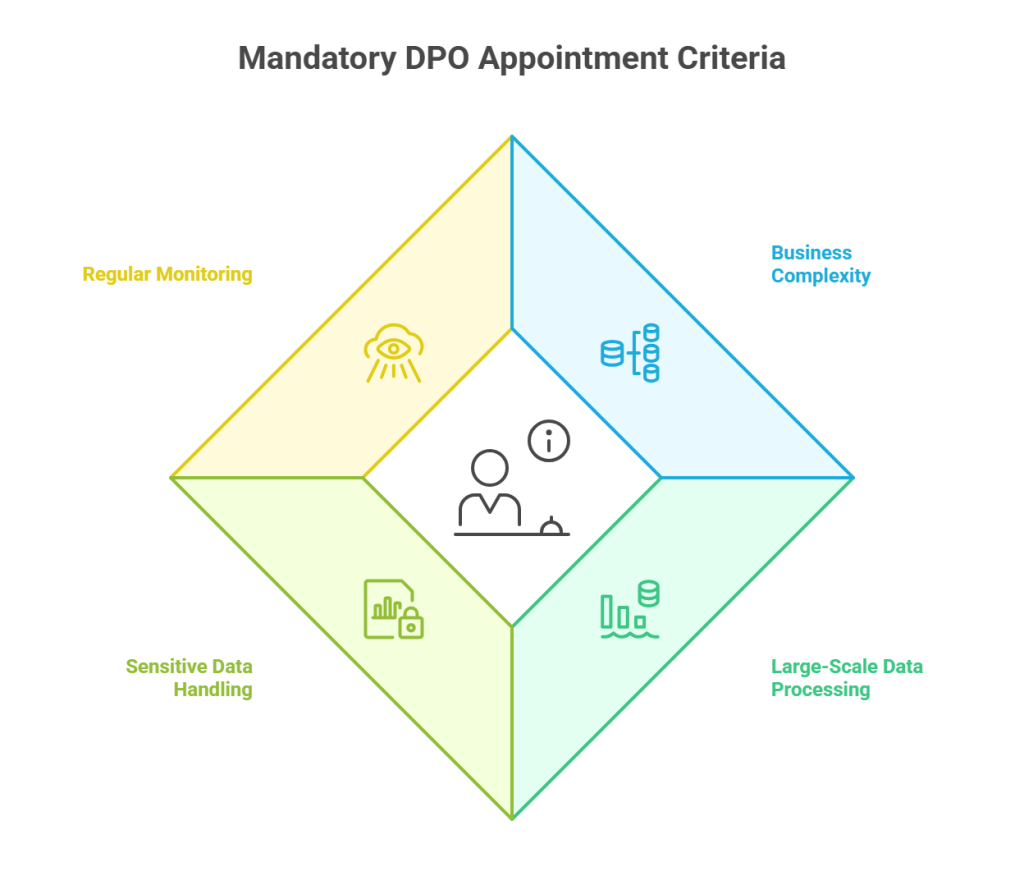
Handling Sensitive Personal Data
If a company’s main activities involve processing sensitive information such as health records, financial data, biometrics, or minors’ data, then there must be a DPO to handle it. When an experienced professional is assigned, they ensure that heightened risks are managed carefully and in compliance with PDPL regulations.
Regular Monitoring
Businesses that use cookies, tracking technologies, behavioural monitoring, or profiling activities also should assign a DPO, as these fall under PDPL’s criteria for regular monitoring. In such cases, a DPO must oversee these operations to ensure that the monitoring respects users’ rights and privacy obligations.
Steps to Follow After Assigning a DPO
| Step | What Organizations Should Do |
| Introduce the DPO to the organization | Walk them through your data processing activities and workflows. At this point, they can understand risks and identify priority areas. |
| Provide access to key resources | Share policies, procedures, previous audits, and risk assessments done. This helps them with the current processes involved and makes the right moves. |
| Give authority and independence | Allow direct reporting to senior management and decision-making power. So, DPOs can act directly and take effective actions. |
| Support stakeholder relationships | Help them connect with employees, customers, partners, and regulators. Such team interactions help build trust and smooth out the processes. |
| Provide ongoing training | Provide regular learning on laws, best practices, and updates. |
In Saudi Arabia, the PDPL requires businesses to take data protection seriously. As companies collect more customer information, they need clear processes to keep that data safe. To keep such data secure, there is a need for a responsible official like a Data Protection Officer (DPO). A DPO helps the organization keep up with the government-issued data protection rules, manage risks, and maintain trust.
Some businesses assign internal officers to handle the data privacy protection processes. It is also possible to outsource an official. Here, Wattlecorp helps you do protect your data with our trained data privacy protection expert with years of experience and in-depth understanding of PDPL. We help your businesses set up the right policies, identify gaps, and provide solutions for your smooth business operation in Saudi Arabia.
Data Protection Officers FAQs
1.What are the main duties of a DPO under the PDPL in Saudi Arabia?
The major duty of a data protection officer is to observe how an organization collects, uses, and protects personal data. They will monitor privacy practices followed, guide teams on privacy practices, assess risks, and remain as the main contact person for the Saudi Data & AI Authority (SDAIA).
2.How does appointing a DPO help companies avoid penalties in Saudi Arabia?
A DPO helps companies stay compliant with the region-specific PDPL. This appointed official works on identifying risks early, helping teams with correct data-handling practices to prevent violations. When the right practices are followed, there are fewer chances of fines or regulatory action from SDAIA.