

Understanding the Compliance Complexities Within the Saudi Financial Sector
As Saudi Arabia accelerates its pace towards achieving its Vision 2030 goals, it further tightens its grip on meeting mandatory cybersecurity regulatory frameworks. SAMA Cybersecurity Framework (SAMA CSF) and National Cybersecurity Authority’s Essential Cybersecurity Controls (NCA ECC) being those, no doubt, complicate the compliance landscape further.
Complexities like these significantly impact financial organizations. The fact that every financial institution (banks, fintechs, insurance, or payment service providers) should navigate a dense regulatory ecosystem puts them at increased risk of facing noncompliance-induced penalties.
The pain doesn’t end there. The rapidly evolving and rather fragmented regulatory ecosystem puts an extra burden on these stated institutions, no wonder compliance burden.
What makes it more challenging is the need to maintain operational agility and customer trust amid strict regulatory requirements like SAMA (now Saudi Central Bank) and NCA (National Cybersecurity Authority). Doing so means balancing those rigid high-security compliance with high-speed digital innovation to enhance user experience.
With evolving compliance requirements, the risks and consequences associated with noncompliance loom high within the Saudi financial sector. It’s not just technical oversight for this kind of regulatory compliance gap, but one that translates directly into tangible losses, operational disruption, and reputational erosion.
To this end, we’ll go on to discuss the specific compliance concerns that the Saudi-based financial institutions face. We’ll also explore why organizations consider Wattlecorp as a trusted partner to both achieving and sustaining regulatory compliance in Saudi Arabia.
Why Saudi Arabia’s Leading Financial Institutions Choose the Right Regulatory Compliance Provider
The rather rigid regulatory governance landscape of Saudi Arabia places its financial sector under constant regulatory scrutiny. These are shaped by authorities like the SAMA (Saudi Central Bank) and NCA (National Cybersecurity Authority), and other relevant regulatory mandates, i.e., the PDPL (Personal Data Protection Law). Compliance expectations for the financial enterprises are significantly high when it concerns maintaining governance, risk management, operational continuity, and technological excellence.

Increased scrutiny on application security and cloud & data privacy, continuous monitoring, and audit readiness additionally coax Saudi’s financial entities to heavily rely on compliance partners.
Set against this context are the factors guiding the financial institutions in the Kingdom as they look for the right regulatory compliance partner.
1.Security-Led Compliance Execution: Moving Beyond Documentation
The Myth:Compliance has long been treated as a documentation-driven exercise, one that can be completed by simply ticking checkboxes with prime focus on policies and audit-readiness.
The Reality: Saudi Arabia’s ever-changing financial-cum-cybersecurity landscape prompts regulators to expect increased compliance from the former. The prime emphasis is to demonstrate real-world security posture, where compliance is not confined to documented records.
Also Read : The Future of NCA Compliance: Anticipating Changes and Preparing for 2025
Wattlecorp’s Approach: Our in-depth knowledge of the regulatory environment in Saudi Arabia enables us to operationalize compliance by rigorously validating technical and security controls, helping financial institutions minimize real-world cybersecurity risks.
Success Metrics: Our compliance experts at Wattlecorp measure compliance success by assessing how effectively the essential regulatory controls stay resilient to attack simulations and regulatory scrutiny.
2.Regulatory Scope Excluding Application and API Security
The Myth: Infrastructure controls, access policies, and network security being compliant signify that both application and API security are absolutely covered within the regulatory scope.
The Reality: While traditional controls may appear intact on documents, these do not (and cannot) negate the chances of risking compliance efforts, especially when Saudi Arabia witnesses a rapidly expanding financial environment (digital banking and open finance with third-party integrations). Where regulatory compliance requirements and expectations rise amid rising real-world risk exposure, chances are that these can significantly widen the API layer and application security gaps.
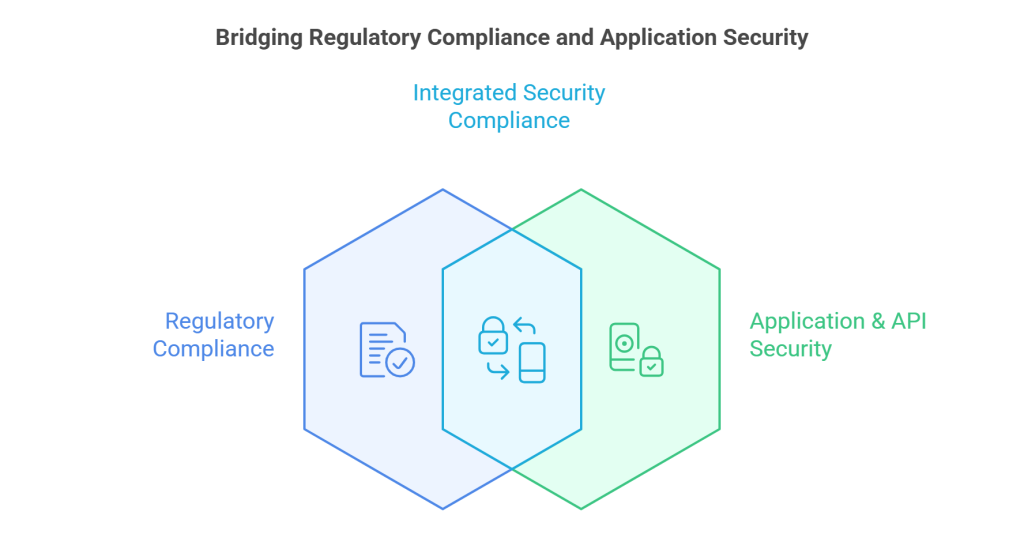
Wattlecorp’s Approach: By mapping regulatory requirements (SAMA, PDPL, and Saudi Aramco CCC) to practical security controls, Wattlecorp helps with seamlessly integrating application and API security directly into the compliance lifecycle. Efforts here include application security testing, API risk assessments, and securing SDLC alignment. We also make sure that compliance goes in line with your systems’ existing security posture when explicitly handling sensitive financial data. The prime objective is to close the gap between regulatory intent and operational reality.
Success Metrics:
- Decreased critical and high-risk application and API vulnerabilities before embarking on regulatory audits.
- Application security posture better aligned with Saudi regulatory requirements.
- Risk-based security validation with enhanced audit outcomes.
3.Reactive Compliance that Fails During Real Incidents
The Myth: Compliance controls automatically stand up to cybersecurity incidents when documented and periodically reviewed.
The Reality: Real-world incidents don’t go by audit assumptions, definitely not for the Saudi-based financial sector. In reactive compliance, controls are primarily utilized to maintain regulatory checklists. However, the likelihood of them breaking down due to high-pressure incidents like live attacks, system outages, and data exposure events is high. When incident responses, detection, and recovery are not tested against real-world scenarios, they cause operational disruption, regulatory escalation, and reputational fallout. These are high enough to convey that companies cannot simply guarantee compliance on paper. Controls like Commercial Registration (CR) and NCA Cybersecurity Standards, i.e., ECC-22024 do mandate robust governance and proactively maintaining compliance by upholding cybersecurity.
Also Read : Achieving PDPL Compliance in Saudi Arabia: Expert Tips for 2026
Wattlecorp’s Approach: Converting reactive readiness to operational resilience, Wattlecorp altogether shifts the compliance scenario to continuous assessments by comprehensively validating controls against real-world threat scenarios. This is facilitated through incident simulations, technical testing, and control effectiveness assessments. Our GRC experts help ensure total functionality of Saudi-specific compliance frameworks against pressure by aligning real-world incident response capability with regulatory expectations.
Success Metrics:
- Improved incident response rates with real-world cybersecurity incidents.
- Reduced downtime and financial-cum-operational impact through tested incident response plans (IRPs).
- Effective demonstration of regulatory readiness under live-incident condition.
4.Cloud & Data Privacy Risks Not Properly Governed
The Myth: Cloud migration makes it easier to ensure stronger security with a built-in compliance that assures data protection and fulfils privacy requirements.
The Reality: Fintech organizations, particularly payment service providers (PSPs) in Saudi Arabia rely on cloud platforms for agility and scalability. Cloud platforms like SCCC by CTC have been known to support rapid growth and expansion to a majority of such firms since 2022. Regardless of how beneficial and secure these cloud environments are, these can eventually turn out to be significantly risky if not governed properly.
Maintaining data privacy and compliance are extremely crucial, specifically when this concerns handling data on the cloud. Strict governance is also a dire necessity for effective data residency management, access controls, encryption, and shared responsibility models.

Regulators (both SAMA and NCA) expect demonstrable control over sensitive financial and personal data as the first step to achieving compliance. Financial services like PSPs should oblige by the same, especially as far as ensuring data protection and safeguarding data privacy is strictly concerned regardless of where these are stored or hosted.
Wattlecorp’s Approach: By effectively managing cloud data privacy risks, aligning cloud security controls with SAMA regulatory requirements and data protection standards, we at Wattlecorp simultaneously engage in mapping data flow and validating privacy controls, thus acting as your first line of defense. Ascertaining that data stays auditable across both hybrid and cloud-native environments is what follows to help you achieve compliance in all its meaning and worth.
Success Metrics
- Data location, access, and protection gaining improved visibility across cloud environments.
- Reduction in compliance gaps, those specifically related to data privacy and residency.
- Improved cloud governance and data protection controls resulting in enhanced regulatory confidence.
5.Security Programs Not Scaling with Regulatory and Business Growth
The Myth: Security and compliance frameworks, once established, will defend an organization on an ongoing basis.
The Reality: Saudi financial institutions are scaling rapidly, fueled by digital transformation, new products released, partnerships, expansions, and most importantly, cloud migration. Accompanying these are the well-established security and compliance programs that are designed to be adaptable and scalable.
No matter how sophisticated these may be, they cannot guarantee compliance in the long run, Issues like these often lead to fragmented controls and compliance gaps with increased risk exposure, not to exclude operational complexity.

Saudi-based regulators like SAMA and NCA increasingly demand compliance programs to evolve alongside business growth. Maintaining strict governance for security and compliance controls is a dire necessity for achieving regulatory maturity and ensuring business continuity.
Wattlecorp’s Approach: Our security and compliance experts at Wattlecorp design risk-based compliance and security programs that scale with your organization’s growth strategy. Our penetration testing service for our clients in Saudi Arabia particularly involves aligning security controls with compliance frameworks on a continuous note. Adapting our governance models to evolving regulatory requirements and business objectives is central to these processes. An approach like this helps ensure long-term resilience without operational bottlenecks for your organization.
Success Metrics
- A strengthened compliance posture that stays consistent with business expansion and digital growth.
- Significant reduction in rework and control redesign following regulatory updates.
- Sustained alignment among security strategy, regulatory expectations, and business goals.
Closing Thoughts
For the leading financial institutions in Saudi Arabia, achieving compliance with prominent regulatory bodies goes far beyond checklist practices on a one-time basis.
Globally recognized frameworks like PCI DSS (Payment Card Industry Data Security Standard) mandate both technical and organizational requirements for financial entities that process, store, or transmit credit/debit card information.
As regulatory standards evolve at pace in Saudi Arabia, financial institutions, particularly the PSPs, may find it excessively challenging to keep up. Though critical, these can be challenging enough and highly require external expertise rather than internal efforts alone to navigate them effectively and achieve desired outcomes. Seeking the right regulatory compliance partner is crucial in this regard, and this is where Wattlecorp fits in.
From treating compliance as a risk management discipline to offering evidence-driven security, we at Wattlecorp efficiently take care of your compliance needs by offering solutions that are measurable, time-bound, and relevant.
Having gained enough expertise on these grounds, we’ve helped a good number of the prominent financial institutions in Saudi Arabia achieve regulatory compliance, earning trust and credibility in the event.
Our outcome-focused engagements combined are inclined to make you resilient against emerging cyber threats. And we staunchly believe security is the driving force to both deriving and sustaining compliance, continuously and relentlessly.
When it comes to meeting regulatory requirements in Saudi Arabia while strengthening cybersecurity posture, financial organizations can consider Wattlecorp’s support.
You can also go through our NCA Financial Sector Security Assessment page to explore how we seamlessly blend in security to provide you compliance solutions that scale with your business growth.
Compliance is not reactive or checklist driven. It’s continuous, risk-based, and more appropriately, synonymous with security.